Riding County Roads Around Caliente
The thought of taking your ATV or UTV out for a spin around a charming, quiet town like Caliente, Nevada, might bring up a mix of excitement and a little bit of anxiety. You’ve probably heard stories, or maybe even experienced the frustration, of trying to figure out where you can legally ride your off-highway vehicle (OHV) on paved roads. It feels like every county, every city, and even every small town has its own set of rules, and what's okay in one spot can land you a hefty ticket in another. This guide aims to cut through that confusion, giving you a clear picture of how to legally and safely navigate the county roads around Caliente, so you can focus on enjoying the stunning Lincoln County landscape.
Understanding Nevada's Road Legal Landscape for OHVs
Nevada, like many states, has a complex set of regulations when it comes to riding off-highway vehicles on public roads. It’s not a simple yes or no, which is often where the frustration really sets in for riders who just want to explore. The laws are designed to balance public safety with access for enthusiasts, and understanding them is your first step to a trouble-free ride around Caliente.
The "Large ATV" Designation
One of the most crucial distinctions in Nevada law is the "Large ATV" designation. This isn't just about the physical size of your machine, though that's certainly a factor. Nevada Revised Statute (NRS) 490.043 defines a "large all-terrain vehicle" as a vehicle that is at least 50 inches wide, weighs less than 2,500 pounds, and has a non-straddle seating position. It also requires the vehicle to have four or more wheels and, critically, a bed or cargo box or seating for at least two people. So, while your nimble two-seat sport quad might fit the width and weight criteria, it won't qualify for the "Large ATV" designation because it lacks that specific cargo bed or seating for more than two, or the specific seating position requirement. This distinction is vital because only a vehicle meeting the "Large ATV" definition can even begin the process of getting a special decal that allows limited road use. Without this designation, your machine is generally restricted to off-road trails, even if it has all the bells and whistles. [What Nevada's NRS 490.043 Counts as a Large ATV] delves deeper into these specific requirements, which are often a source of confusion for riders moving from other states or upgrading their machines.
General Rules for Road Use
Even if your UTV qualifies as a "Large ATV" and you get the necessary road-use decal, Nevada's statewide rules still impose significant limitations. The primary rule to remember is the "two-mile limit." Generally, a registered "Large ATV" can only travel up to two miles on a paved highway to get from one unpaved road or trail to another, or to access services like fuel or food. This isn't a free pass to cruise through town; it's a very specific, limited allowance. Furthermore, OHVs are generally prohibited on interstate highways entirely. Cities with populations over 100,000 (like Las Vegas, Henderson, or Reno) have even stricter rules, often requiring designated OHV routes within their limits, or banning OHV road use altogether. You'll also find strict rules for crossing a highway on an ATV in Nevada, usually requiring you to do so at an intersection and proceed directly across without traveling along it. These general restrictions are in place to ensure rider safety and minimize conflicts with conventional traffic, even in less populated areas.
County Authority and Local Ordinances
Here's where things get interesting, and where towns like Caliente come into play. Nevada law actually grants counties the power to decide for themselves whether to open or close their "minor county roads" to OHV traffic. This is a critical distinction, as it allows rural areas, which often have a strong OHV culture and depend on tourism from riders, to be more accommodating than larger, urban centers. A county can pass an ordinance to either expand or restrict OHV use beyond the state's general two-mile rule for large ATVs on certain roads. This flexibility means that while the statewide laws set a baseline, it's always worth checking the local ordinances for the specific county you plan to ride in – in this case, Lincoln County – because they can override or supplement the state's general provisions. Many smaller towns, including Caliente, understand the importance of OHV access to their local economies and often have more open policies on minor roads.
Navigating County Roads Around Caliente
Riding your OHV around Caliente offers a fantastic way to experience the rugged beauty of Lincoln County, often leading you directly from town to vast stretches of public land. But just because it's a smaller, more rural area doesn't mean you can throw caution to the wind regarding road rules. Knowing which roads are permissible and how to use them respectfully is key.
What Makes a Road a "Minor County Road"
The term "minor county road" is incredibly important for OHV riders in Nevada, especially in areas like Caliente. Unlike major state routes or U.S. highways that are managed by the Nevada Department of Transportation (NDOT), minor county roads are typically maintained by the local county road department. These are generally lower-speed, often unpaved or lightly paved roads that connect rural communities, provide access to ranches, or lead to trailheads on public land. Around Caliente, many of these roads wind through scenic canyons, open desert, or connect to the extensive network of routes on Bureau of Land Management (BLM) land. Identifying these roads on a map (often marked with "County Road" or a local name rather than a state route number like SR 317 or US 93) is crucial. They are the arteries that allow legal OHV travel between points without solely relying on dirt trails. Understanding [Which Nevada County Roads Qualify for ORVs] is essential for safe and legal travel, as not all county roads are created equal in the eyes of the law, and some might still be closed to OHVs by local ordinance.
Permitted Roads and Common Sense
In Lincoln County, where Caliente is located, you'll generally find a more OHV-friendly environment than in more populated areas. Many of the minor county roads around Caliente are indeed open to properly equipped and registered "Large ATVs" for direct travel to and from trail systems. This means you can often ride your UTV right from your campsite or lodging in Caliente, down a county road, and straight onto a dirt trail without having to trailer your machine everywhere. This convenience is a huge draw for riders in the area. However, it's not a free-for-all. Always apply common sense: keep your speeds down, especially near residences or businesses, and be exceptionally aware of other traffic – cars, trucks, and even pedestrians. The roads here might be quiet, but they are still shared spaces. If you're traveling through the main part of Caliente, stick to the most direct route, and always prioritize safety over convenience. Respecting speed limits and traffic laws isn't just about avoiding a ticket; it's about maintaining a good reputation for OHV riders in the community and ensuring continued access.
Crossing Major Highways Near Caliente
While many minor county roads around Caliente are open to OHVs, you'll inevitably encounter major state routes like US 93 or SR 317 (which leads to the Kershaw-Ryan State Park and other recreation areas). As mentioned, Nevada law generally prohibits extended travel along these highways. However, you are typically allowed to cross them directly at an intersection to connect two permitted OHV routes or a county road with a trail. For instance, if you're riding a county road on one side of US 93 and want to access a trail on the other side, you'll need to approach a designated intersection, signal your intention, and cross the highway as safely and directly as possible. This isn't the time for sightseeing; it's about quick, efficient transit across a more dangerous road. Always be extra vigilant for fast-moving traffic on these state routes, as drivers may not expect to see an OHV. Prior planning with a map can help you identify the safest and most legal crossing points, ensuring your adventure doesn't get cut short by an unsafe maneuver or a citation. [Crossing a Highway on an ATV in Nevada] offers more detailed guidance on how to execute these crossings safely and legally.
Essential Equipment and Rider Responsibilities
Riding your "Large ATV" on county roads around Caliente is a privilege that comes with responsibilities, not least of which is ensuring your machine is properly equipped for road use. Beyond the machine, the operator also has specific duties to fulfill, including proper licensing and insurance. Ignoring these requirements can quickly turn a fun day into a costly one, and nobody wants that.
Required Road-Legal Equipment
To legally operate a "Large ATV" on permitted Nevada county roads, your machine needs to meet certain equipment standards that go beyond what's typically required for off-road-only use. This isn't just about having lights; it's about having visible lights. You'll need working headlights that are visible from at least 500 feet, a taillight, and a stop lamp (brake light) visible from 500 feet. Reflectors are also crucial, particularly on the rear, to enhance visibility from all angles. A horn is required for signaling, and at least one mirror (typically a rear-view mirror) is necessary for situational awareness of traffic behind you. For UTVs, seat belts must be worn by all occupants, and a spark arrestor is mandatory on both road and trail to prevent wildfires. Many riders choose to upgrade their machines with aftermarket accessories to meet these requirements, and companies like SuperATV offer a wide range of DOT-compliant lighting, mirrors, and other accessories that can help you meet these specifications and ensure your machine is road-ready. Investing in quality components from a reputable brand helps ensure you're not just checking a box, but actually enhancing your safety. You can find more specific details on [Nevada Equipment List for Road-Legal UTVs].
Driver's License, Insurance, and Registration
Just like driving a car, operating a "Large ATV" on Nevada county roads requires specific documentation and qualifications. First and foremost, the operator must possess a valid driver's license. This isn't an optional extra; it's a fundamental requirement for anyone behind the wheel on a public road, even a minor county road. For younger riders, there are specific age and supervision rules to consider, particularly on county roads. [Nevada Driver's License Rules for UTV Road Use] provides a comprehensive look at these requirements.
Secondly, you absolutely need proof of liability insurance. Nevada law, specifically NRS 485.185, mandates minimum liability coverage for any vehicle operated on public roads, and your road-legal "Large ATV" is no exception. This protects you and others in the event of an accident. Make sure your insurance card is always with you, as deputies in Lincoln County will certainly be checking for it during any roadside stop.
Finally, your "Large ATV" must be properly registered with the Nevada DMV and display a valid [Nevada Large ATV Decal Cost]. This decal indicates that your machine has met the state's requirements for limited road use. It's distinct from the standard off-highway vehicle registration decal. Without this decal, even if your machine has all the right equipment, you are not legally allowed to use it on county roads. Always keep your registration card with you, preferably in a waterproof pouch, as dust and moisture are common enemies of paper documents in the desert.
Safe Riding Practices and Local Considerations
Riding on county roads around Caliente demands a different mindset than blasting across open desert or navigating technical trails. Here, you're sharing the road with other vehicles, including trucks, cars, and even agricultural equipment. Always ride defensively, assuming other drivers might not see you. Maintain a safe following distance and be predictable in your movements. Dust can be a significant issue, especially on unpaved county roads, so consider visibility for yourself and those around you. If you're riding in a group, spread out enough to allow the dust to settle, or wear appropriate eye protection and face coverings.
When passing through small communities like Caliente, be extra courteous. Slow down, wave to locals, and minimize noise. The continued access for OHVs on these roads relies heavily on a good relationship with residents and law enforcement. Lincoln County deputies are generally understanding of OHV use, but they will not hesitate to issue citations for unsafe riding or violations of the law. Show them you're a responsible rider, and you'll likely have a much more enjoyable and stress-free experience.
Planning Your Ride Around Caliente
Caliente is a fantastic base for exploring the diverse landscapes of Lincoln County, with endless opportunities for off-highway adventure. The ability to use county roads to connect these experiences adds a layer of convenience that riders truly appreciate. Effective planning, however, is key to making the most of your trip and ensuring a smooth, safe outing.
Connecting to Local Trails
One of the greatest advantages of legal OHV access on county roads around Caliente is the seamless transition from town amenities to exhilarating trails. Caliente sits at a crossroads, offering access to numerous trail systems, including sections of the [Silver State Trail and Four Nevada State Parks] and a vast network of BLM-managed lands. You can ride out of town on a minor county road, and often within minutes, find yourself on a dirt road or designated trail leading to stunning canyons, historic mining sites, or panoramic viewpoints. This interconnectedness allows you to create much longer, more varied loop rides without the constant need to load and unload your machine onto a trailer. Always consult local maps, such as the Nevada Trail Finder, and even talk to locals or employees at area businesses to get the most up-to-date information on trail conditions and connections. You might find some excellent routes by linking up [Riding County Roads Around Pioche] to the east with other trails accessible directly from Caliente.
Fuel, Supplies, and Services
Lincoln County is vast and sparsely populated, which is part of its charm, but also a factor you must consider when planning your rides. While Caliente has basic services like fuel, food, and lodging, these can be few and far between once you venture out onto the trails and county roads. Always start your ride with a full tank of gas, and consider carrying extra fuel in approved containers, especially if you plan an extended trip. Packing sufficient water, snacks, a first-aid kit, and basic tools for minor repairs is not just a good idea; it's essential for desert riding. Cell service can be spotty or non-existent in many remote areas, so don't rely on your phone for navigation or emergencies. A satellite messenger or GPS device is a wise investment for peace of mind. SuperATV, for instance, offers various storage solutions and mounts for carrying extra fuel, water, and recovery gear on your UTV, making it easier to be self-sufficient on those long, remote rides. Being prepared means you can focus on the adventure, not on whether you'll make it back to civilization.
Understanding Local Enforcement
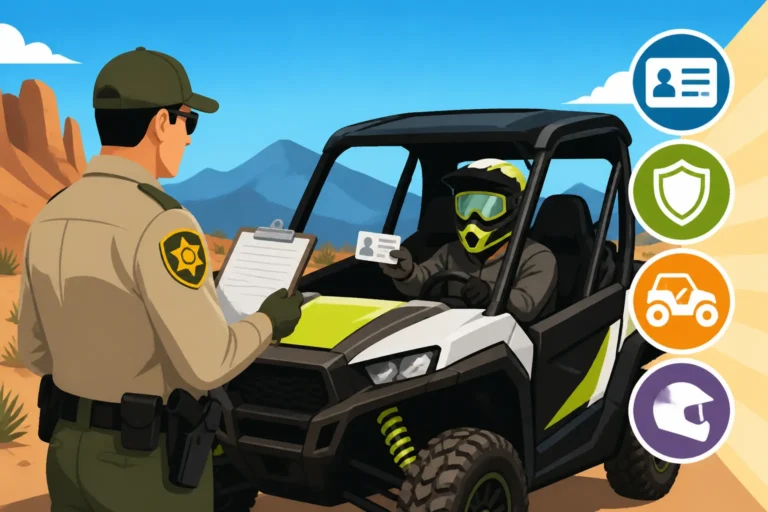
When riding on county roads near Caliente, it's wise to understand the role of local law enforcement, primarily the Lincoln County Sheriff's Office. Deputies are familiar with OHV activity in the area and generally support responsible riding. However, they are also tasked with enforcing all traffic laws and OHV regulations. This means they will be looking for proper registration, valid driver's licenses, proof of insurance, and adherence to equipment requirements. If you're stopped, be polite, cooperative, and have your documents readily accessible. They are there to ensure everyone's safety, including yours. Understanding [Lincoln County Deputies and OHV Paperwork] is crucial here, as it outlines what they might ask for and what constitutes valid proof of compliance. Respecting the law and acting courteously goes a long way in ensuring positive interactions and continued OHV access in these beautiful rural areas.
| Requirement | Description | Key Points |
|---|---|---|
| "Large ATV" | Vehicle must be at least 50" wide, <2,500 lbs, non-straddle seating, 4+ wheels. | Must have a cargo bed OR seating for 2+ (excluding driver on a 2-seater quad) to qualify. |
| Headlights | Visible from at least 500 feet. | Must be operational and aimed correctly. |
| Taillight & Stop Lamp | Taillight visible from 500 feet; stop lamp (brake light) visible from 500 feet. | Essential for rear visibility, especially when braking. |
| Reflectors | Mounted on rear; visible at night. | Often integrated into taillight assemblies, but check for additional discrete reflectors. |
| Horn | Audible signaling device. | Standard equipment on most UTVs; can be aftermarket for ATVs. |
| Mirrors | At least one rear-view mirror. | Critical for situational awareness of traffic behind you. Many SuperATV options available. |
| Spark Arrestor | Approved type on exhaust system. | Mandatory for fire prevention, on and off-road. |
| Seat Belts | Required for all occupants in a UTV. | Must be worn properly at all times when operating on roads. |
| Driver's License | Valid, current driver's license. | Absolutely mandatory for the operator. |
| Liability Insurance | Proof of minimum liability coverage (NRS 485.185). | Carry your insurance card. |
| Registration Decal | Valid Nevada "Large ATV" road-use decal. | Distinct from standard OHV decal; proves limited road-legal status. [Nevada Large ATV Decal Cost] is separate from regular OHV registration. |
Disclaimer
This article is for general informational purposes only and does not constitute professional advice. Laws, prices and regulations vary by location and change over time. Consult a qualified professional for guidance on your specific situation.