Riding County Roads Around Pioche
There's nothing quite like the freedom of exploring Nevada's backcountry on your ATV or UTV, especially when you're in a historically rich area like Pioche. However, many riders hit a snag when they want to connect trails, grab a bite, or fuel up in town without having to load their machine onto a trailer. The question of whether you can legally ride your off-highway vehicle (OHV) on county roads can be confusing, with different rules depending on where you are. This guide will cut through the noise, explaining exactly what you need to know to safely and legally navigate the county roads around Pioche and beyond.
Understanding Nevada's Rules for County Road Access
Nevada, like many western states, offers a fantastic playground for OHV enthusiasts. But when it comes to riding on public roads, things get a bit more nuanced than simply hitting the dirt. The state differentiates between various types of roads, and your ability to ride your ATV or UTV on them hinges on these distinctions and your machine's setup.
What Qualifies as a "Minor County Road" in Nevada?
First off, let's talk about what Nevada considers a "minor county road." This isn't just any paved road you see. Generally, these are unpaved, secondary roads maintained by the county, often leading to trailheads, remote campsites, or connecting small communities. They are typically not state highways or major thoroughfares. The key here is "minor." You're not going to be cruising down a bustling state route, but those dusty, gravel roads winding through the hills and valleys around Pioche? Those are often fair game under state law. It's about discerning between the main arteries and the smaller capillaries of the road system. [What Makes a Road a Minor County Road] explains this concept in more detail, helping you identify these permissible routes.
The state's general statute (NRS 490) allows for OHV use on these minor county roads, but there's a significant caveat: counties have the power to enact their own ordinances that can further restrict or even prohibit OHV use on all county roads within their jurisdiction. This means what's legal in one county might not be in another, even if the road looks similar. For areas like Pioche, which is in Lincoln County, it's crucial to be aware of any specific local rules. Lincoln County, known for its vast open spaces and OHV opportunities, generally allows for more freedom, but understanding [Which Nevada County Roads Qualify for ORVs] is essential. Always keep an eye out for signage, and if you're ever in doubt, it’s best to err on the side of caution.
The "Large All-Terrain Vehicle" Designation
Nevada law also introduces the concept of a "Large All-Terrain Vehicle" (LATV). This designation is critical because it's the only way an OHV can be legally ridden on designated county roads, even minor ones, for purposes beyond simply crossing a road. The definition is very specific: a machine must have four or more wheels, weigh less than 8,000 pounds, be less than 80 inches wide, and crucially, have a factory-installed seating capacity for at least two people with a truck bed capable of carrying a load. This is why most side-by-sides (UTVs) can qualify, but traditional two-seat sport quads, despite their power, generally do not. [What Nevada's NRS 490.043 Counts as a Large ATV] provides the full breakdown, and it’s often a point of confusion for riders. For example, your powerful two-seat sport quad, while amazing on the trails, will likely fail [Why a Two-Seat Sport Quad Fails Nevada's Test] because it lacks that specific truck bed requirement, even if it has passenger seating. This means that to ride legally on county roads around Pioche, your machine almost certainly needs to be a UTV, specifically one that meets the LATV criteria.
Meeting the Requirements for Road Use in Pioche
So, you've got a UTV that qualifies as a Large All-Terrain Vehicle, and you've confirmed that the county roads you're eyeing around Pioche are open to OHV traffic. Fantastic! But before you hit the pavement (or gravel), there's a strict checklist of equipment, registration, and personal requirements you absolutely must meet. Ignoring these can lead to fines, a towed machine, and a seriously bad day.
Registration and Decals
First and foremost, your UTV needs to be properly registered and display a current Nevada OHV decal. This isn't just for trail riding; it's a prerequisite for any road use. The decal proves your machine is recognized by the state and that you've contributed to the fund that maintains our incredible trail system. The decal must be affixed in a visible location, typically on the left side or rear of the machine, as specified by Nevada law. For a comprehensive look, see [Nevada's Large All-Terrain Vehicle Decal]. Without it, you're not even getting out of the driveway, let alone onto a county road.
Essential Equipment for Street Legality
This is where many riders get tripped up. Turning your trail-ready UTV into a road-legal machine requires specific equipment to ensure safety and visibility for other drivers. Think of it like taking a dirt bike and needing to add mirrors and turn signals before riding on the street. Here’s what you’ll need:
- Headlights and Taillights: These must be functional and visible from at least 500 feet. Many stock UTVs come with adequate lights, but if you've upgraded or modified, ensure they still meet this visibility standard. [Nevada Headlight Requirements for Road Use] and [Nevada Taillight and Reflector Rules] cover the specifics.
- Stop Lamp: A working brake light is non-negotiable, activating when you apply the brakes. [Nevada Stop Lamp Requirement for UTVs] has the details.
- Reflectors: Your machine needs appropriate reflectors, or your taillights might suffice if they meet specific criteria.
- Horn: A functional horn, audible from 200 feet, is essential for alerting other drivers or pedestrians. This is a common add-on for many OHVs. Brands like SuperATV offer easy-to-install horn kits that ensure you meet this safety requirement without a fuss.
- Mirrors: You need at least one rearview mirror, typically on the left side, that provides a clear view of the highway to the rear for at least 200 feet. Many riders opt for sturdy side mirrors to enhance visibility and safety. [Nevada Mirror Requirements for a Road UTV] has the full scoop. Again, companies like SuperATV are popular choices for durable, trail-tested mirror solutions that hold up to both on-road and off-road conditions.
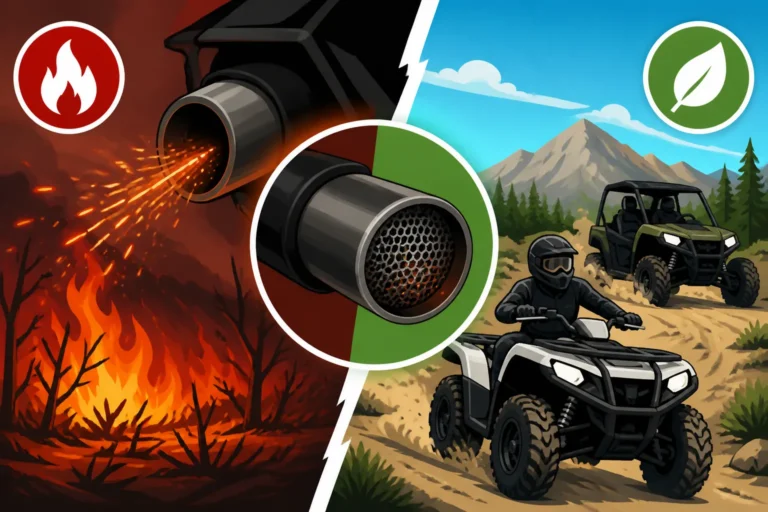
- Spark Arrester and Muffler: Your exhaust system must have a spark arrester that is free from defects and a muffler that is in good working order to keep noise levels reasonable and prevent wildfires. [Nevada Spark Arrester Requirement] and [Nevada Muffler Rules for Road Riding] are critical, especially when sharing roads with residents.
- Seat Belts: If your UTV has factory-installed seat belts, they must be worn by all occupants while on the road.
- DOT-Approved Tires: While not explicitly mentioned in all sections of Nevada law for minor county road use, it's generally a wise and often necessary practice to have DOT-approved tires for any public road travel to ensure proper grip and handling characteristics, particularly on paved sections.
Meeting these requirements ensures your machine is safe and visible, both for you and for anyone else on the road. For a comprehensive overview, consult [Nevada Equipment List for Road-Legal UTVs].
Driver's License, Insurance, and Age Restrictions
Beyond your machine, you, the operator, have requirements too:
- Valid Driver's License: You must possess a valid driver's license to operate an OHV on a Nevada county road. A learner's permit or restricted license may not be sufficient. [The Driver's License Nevada Wants on Roads] clarifies this.
- Liability Insurance: Just like a car, your UTV needs liability insurance when operating on public roads. This protects you and others in case of an accident. Keep proof of insurance with you. [Liability Insurance Nevada Requires Under NRS 485.185] outlines the minimum coverage.
- Age Limits and Supervision: The minimum age to operate an OHV on a county road is generally 16 years old with a valid driver's license. For riders under 16, strict supervision rules apply, and they typically cannot operate an OHV on public roads even with adult supervision. Passengers also have age and restraint rules; children must be appropriately seated and restrained. [Nevada Minimum Age to Ride on a County Road] and [Nevada Rules for Riders Under 16 on Roads] are essential reading if you plan on riding with younger family members. If you're carrying a passenger, especially a child, make sure you understand [Nevada Helmet Rules for Passengers] and general passenger safety.
The Two-Mile Pavement Limit
One of the most important rules to remember is Nevada's "2-mile limit" for paved county roads. While you can typically ride on unpaved minor county roads without this restriction (assuming they're open to OHVs), if a county road is paved, you are generally limited to riding on it for a maximum of two miles to connect trails or access services like fuel or food. You cannot simply ride around town on paved streets for leisure. [Nevada's 2-Mile Limit on Paved Highway] explains this critical nuance. This means you can often use a short stretch of paved road to get from the trail to the gas station in Pioche, but not for an extended sightseeing tour of the town's historic district on your UTV.
Here's a quick summary of the key equipment required for riding a Large ATV on Nevada county roads:
| Requirement | Description | Example |
|---|---|---|
| Registration/Decal | Current Nevada OHV decal prominently displayed. | Red "NEVADA OHV" sticker on left rear fender. |
| Headlights | Visible from 500 feet, working in day/night. | Stock or aftermarket LED headlights. |
| Taillights | Visible from 500 feet, working in day/night. | Rear brake lights and running lights. |
| Stop Lamp | Activates with brake application. | Standard brake light. |
| Reflectors | Red to rear, white/amber to front/sides, or adequate taillights. | Small reflective stickers or integrated into light housings. |
| Horn | Audible from 200 feet. | Aftermarket electric horn kit (e.g., from SuperATV). |
| Mirrors | At least one rearview mirror, clear view 200 feet behind. | Side-view mirror on the left side. |
| Spark Arrester | USFS-approved, in good condition. | Stamped "USFS Approved" on muffler. |
| Muffler | Prevents excessive noise. | Factory muffler or quiet aftermarket system. |
| Seat Belts | All factory-installed seat belts must be worn. | Standard 3-point harness for driver and passenger. |
| Driver's License | Valid driver's license required. | State-issued driver's license. |
| Insurance | Liability insurance for public road use. | Proof of insurance card. |
Navigating Pioche and Its Surroundings on Your OHV
Once you’re geared up and legal, the adventure truly begins. Pioche, known as Nevada’s “Liveliest Ghost Town,” is nestled in a region rich with history and incredible terrain, making it a fantastic base for OHV exploration. Understanding how to use the local county roads to your advantage will unlock even more riding opportunities.
Leveraging County Roads for Connectivity
The beauty of being able to ride on minor county roads around Pioche is the enhanced connectivity it offers. Imagine you've been exploring the trails in the surrounding hills, perhaps near the historic Pioche aerial tramway, and you're running low on fuel. Instead of needing a trailer to get to the gas station, you can often use a short segment of an approved county road. This freedom to [Ride to the Trailhead, Not to the Store] is a game-changer for long-distance riders and those who prefer to keep their machines on the dirt as much as possible.
These roads can also link various trail systems, allowing for longer, more diverse rides. For example, you might be able to use a county road to connect a trail system north of Pioche to another one heading towards Caliente, turning two separate outings into one epic adventure. [Riding County Roads Around Caliente] offers similar opportunities for connecting trail networks. Just remember to always observe the 2-mile paved road rule and stick to unpaved county roads for longer stretches of travel.
Safety and Etiquette on Pioche's Roads
Riding your OHV on any public road, even a quiet county road, means sharing the space with other vehicles, residents, and potentially livestock. Here are some essential tips for a safe and respectful ride:
- Visibility is Key: Even with all your lights and reflectors, OHVs are smaller than cars and can be harder to spot. Consider adding a tall whip flag, especially if you're transitioning from dunes to county roads. For riders who want maximum visibility, upgrading to brighter LED lights or adding auxiliary lights (especially from reputable brands like SuperATV) can significantly improve your presence on the road, particularly during dawn, dusk, or in dusty conditions.
- Yield to Others: Always be prepared to yield to larger vehicles, horses, cyclists, or pedestrians. Assume they might not see you.
- Control Dust and Speed: On unpaved county roads, excessive speed kicks up a lot of dust. This isn't just an annoyance; it's a safety hazard for you and anyone else on the road. Drive at a reasonable speed, especially when approaching homes or other vehicles, to minimize dust and maintain control.
- Watch for Livestock and Wildlife: The areas around Pioche are rural, and you might encounter cattle, horses, or deer on the roads. Drive defensively and be ready to stop.
- Plan Your Fuel and Supplies: While county roads offer access to towns, always plan your fuel stops. Small towns like Pioche or Caliente have services, but they might not be open 24/7, and distances can be deceiving. Always carry extra water, particularly in Nevada's arid climate.
- Be Mindful of Local Residents: You're a guest on these roads. Keep noise levels down, especially in residential areas, and avoid riding through private property. Respect fences and gates. If you encounter a gate, leave it as you found it – open if it was open, closed if it was closed.
By following these guidelines, you'll not only have a more enjoyable experience but also help ensure that OHV access to these valuable county roads remains open for everyone. Exploring the historic sites and vast landscapes accessible via county roads around Pioche, such as the old mining roads or routes connecting to sites like Cathedral Gorge State Park (while being mindful of park rules), is an unforgettable experience, especially when you can do it legally and responsibly. [Riding County Roads Around Pioche] can be a true highlight of your Nevada adventure.
Disclaimer
This article is for general informational purposes only and does not constitute professional advice. Laws, prices and regulations vary by location and change over time. Consult a qualified professional for guidance on your specific situation.