Why a Sport Quad Never Passes the Test
It’s a dream many off-road enthusiasts share: taking your beloved sport quad for a quick spin down to the local diner or even just across town to reach the next dirt trail without having to load it onto a trailer. Unfortunately, if you own a two-seat sport quad in Nevada, that dream often crashes into the harsh reality of state laws. This guide is here to walk you through exactly why your lean, mean, trail-eating machine just doesn't make the cut for street legality in the Silver State, and what your options are for enjoying the open road and the dirt.
Understanding Nevada's "Large ATV" Definition
Nevada's vehicle codes can feel like a maze, and when it comes to making your off-highway vehicle (OHV) street legal, there's one specific hurdle that sport quads simply cannot clear. The state has a very particular definition for what it considers a "Large All-Terrain Vehicle" – the only category of OHV that can legally be registered for limited street use.
Seating Capacity and Vehicle Design
The core of the issue lies in Nevada Revised Statute (NRS) 490.043, which outlines what constitutes a "Large ATV." This isn't just a technicality; it's a foundational difference in vehicle design that separates most sport quads from street-legal eligibility. For an OHV to qualify as a Large ATV in Nevada, it must be designed by the manufacturer to carry four or more occupants, or be equipped with a truck bed.
Think about that for a moment. Most sport quads, by their very nature, are built for speed, agility, and performance in off-road environments. They are typically single-rider machines, or at most, designed for two people to ride tandem. The idea of a four-seat sport quad, let alone one with a dedicated truck bed, goes against their fundamental design philosophy. They're built for thrills, not hauling passengers or cargo on paved roads.
The Core Design Flaw of Sport Quads
This seating or truck bed requirement is the ultimate roadblock for your typical sport quad. Whether you ride a nimble Yamaha YFZ450R or a powerful Suzuki Quadracer, these machines are built with a narrow frame, a saddle-style seat (or two, if it's a factory two-up model), and no provision for a truck bed. They're designed to be ridden actively, shifting your body weight to control the machine through turns and over obstacles. Trying to add a "truck bed" to such a machine would not only be impractical but would fundamentally alter its dynamics, making it unsafe and certainly not manufacturer-designed.
Even if you managed to somehow modify your sport quad with an aftermarket kit to add a third or fourth seat (which itself would be highly dubious for safety), it still wouldn't meet the "designed by the manufacturer" criterion. Nevada's law is clear: it needs to come from the factory that way. This is where side-by-sides (UTVs) often have an advantage, as many are purpose-built with multiple seats and/or cargo beds.
What Nevada's NRS 490.043 Counts as a Large ATV
Let's dig a little deeper into the specific language that creates this barrier. NRS 490.043 states that a "large all-terrain vehicle" is an all-terrain vehicle that "has a test weight of more than 900 pounds, but not more than 2,500 pounds, and is designed by the manufacturer to: (a) Carry four or more occupants; or (b) Be equipped with a truck bed."
The test weight part is often met by larger UTVs, but the critical part for sport quads is always that second clause. A Polaris RZR XP 1000, for example, often passes the test weight and can be configured for four seats, making it a prime candidate for a [Nevada Large ATV Decal]. A typical two-seat sport quad, even if it met the weight, would never meet the seating or truck bed design requirement. It’s not just about adding accessories; it's about the vehicle's inherent, factory-intended purpose and structure. This means all the cool aftermarket parts from companies like SuperATV, while fantastic for performance and customization off-road, can't change the fundamental classification of your sport quad for street legality in Nevada.
Beyond Seating: Other Street-Legal Requirements
Even if a sport quad could somehow magically meet the Large ATV definition, there's a whole host of other equipment and regulatory hurdles that machines designated for street use in Nevada must overcome. These are important to understand because they paint a broader picture of what true street legality entails, regardless of vehicle type.
Essential Safety Equipment for Road Use
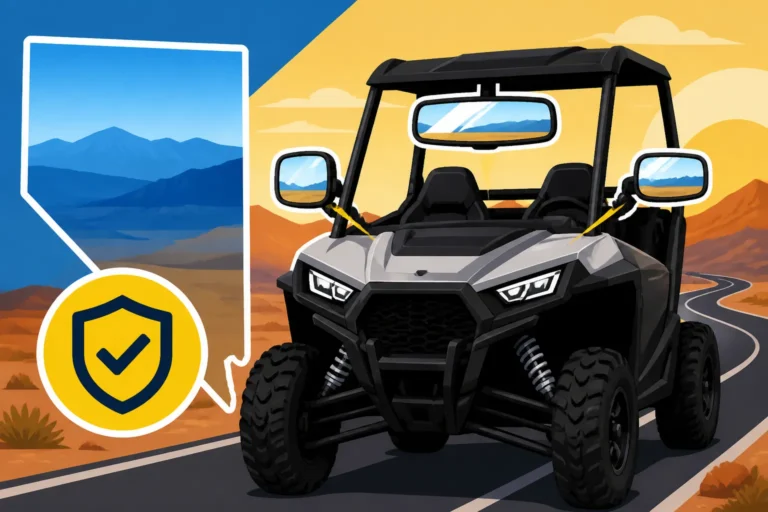
For any Large ATV to be considered road-legal in Nevada, it needs to meet a specific list of equipment requirements designed to ensure it's safe for sharing public roads with other vehicles. This isn't just about having some lights; it's about having the right kind of lights, and much more.
- Headlights and Taillights: These must be visible from 500 feet, both front and rear. Your off-road lights might be bright, but are they compliant in terms of beam pattern and visibility?
- Stop Lamp: A functioning stop lamp (brake light) is non-negotiable, activating when the brakes are applied.
- Reflectors: You'll need reflectors on both the front and rear, and often to the sides as well, to enhance visibility, especially at night.
- Muffler and Spark Arrester: While essential for off-road trail etiquette and fire prevention, these also have sound limit requirements for road use.
- Mirrors: A rear-view mirror is mandatory, providing at least 200 feet of visibility to the rear. Many off-road machines don't come stock with street-legal mirrors.
- Horn: A working horn is needed to alert others to your presence.
- Tires: Your tires must be DOT (Department of Transportation) approved, meaning they're rated for road use. Those aggressive knobby tires perfect for mud and rocks might not be street legal.
- Windshield: While not explicitly required for all street-legal OHVs, many UTVs that do gain street status come with them, and they offer a layer of safety on paved roads.
- Seat Belts: For multi-passenger vehicles, seat belts are a must.
Trying to retrofit all these items onto a sport quad designed for minimalism and aggressive off-road performance is a significant undertaking, both financially and technically. The compact design of a sport quad simply doesn't lend itself to easily integrating all this extra equipment in a functional and safe manner.
Insurance and Driver's License Mandates
Beyond the physical equipment, operating a Large ATV on Nevada roads comes with specific legal responsibilities for the driver and owner.
- Liability Insurance: Just like a car, if you're riding a street-legal OHV on Nevada roads, you must carry proof of liability insurance. [Insurance and Nevada OHV Registration] is a separate, but critical, topic. This isn't usually something owners consider for a pure off-road machine, but it's essential for road use.
- Driver's License: You need a valid driver's license to operate any vehicle on Nevada's public roads, including a Large ATV.
- Minimum Age: There are specific age requirements for operating these machines on public roads, and supervision rules for younger riders that differ from off-road regulations.
These requirements highlight that making an OHV street legal isn't just about a decal; it's about integrating it into the broader framework of road vehicle regulations, which sport quads generally avoid.
The Impossibility of Plating a Sport Quad
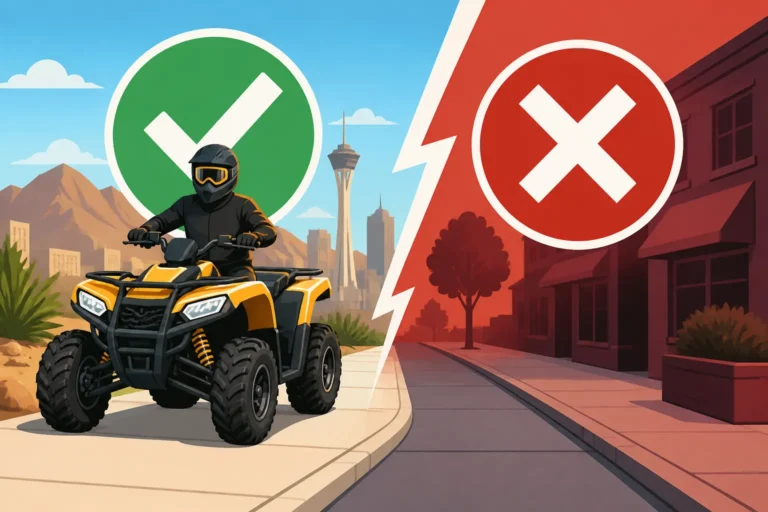
This brings us back to the core issue: you cannot "plate" a typical two-seat sport quad in Nevada for general road use. The state explicitly does not issue traditional license plates for OHVs. Instead, street-legal Large ATVs receive a special decal that grants them limited access to certain county roads. Since your sport quad cannot meet the fundamental definition of a "Large ATV" – namely the four-seat or truck bed requirement – it will never be eligible for this special decal, regardless of how many mirrors or horns you bolt onto it.
It's a frustrating reality for many, especially if you see similar machines seemingly street legal in other states. Nevada's laws are specific, and they prioritize utility and capacity for road-going OHVs over the performance-oriented design of a sport quad. Even aftermarket parts from brands like SuperATV, which enhance performance and utility for off-road use, cannot bypass this fundamental legal distinction.
The Reality of Riding a Sport Quad in Nevada
So, if your sport quad can't be street legal, does that mean you can't enjoy it in Nevada? Absolutely not! Nevada is an incredible state for off-road enthusiasts, and there are countless miles of trails and vast open areas where your sport quad truly shines. It's all about understanding where and how you can ride legally and safely.
Where You Can Ride Your Sport Quad Legally
Nevada boasts some of the most diverse and thrilling off-road terrain in the country. This is where your sport quad is truly meant to be ridden:
- Designated OHV Trails: State and federal land agencies (like the BLM and Forest Service) maintain extensive trail systems specifically for OHVs. These trails are often marked for difficulty and permissible vehicle types. Think about places like the [Logandale Trails Outside Las Vegas], with its challenging rock crawling and sandy washes, or the expansive network around [Ely and Eastern Nevada Adventures].
- Dune Riding Areas: Nevada is home to iconic dune riding spots such as [Sand Mountain: Nevada's Great Basin Dune] near Fallon, or the more accessible [Nellis Dunes and the Las Vegas Skyline] right outside Las Vegas. These are perfect playgrounds for a high-performance sport quad.
- Open BLM Land: Much of Nevada consists of vast stretches of Bureau of Land Management (BLM) property where cross-country travel is allowed in many areas, provided you respect environmental restrictions and designated closures. Always check local BLM maps and regulations before heading out.
- Private Land: Of course, if you own private property or have permission from the landowner, you can ride your sport quad there without state registration, as long as you're not traversing public roads to get there.
To legally ride on public land in Nevada, your sport quad does need to be registered and display a current Nevada OHV decal. This decal acts as your permit for using these incredible public lands and helps fund trail maintenance and enforcement. [Nevada's $20 OHV Decal and What It Covers] is money well spent for access to these areas.
The Limited Paved Road Use Exemption
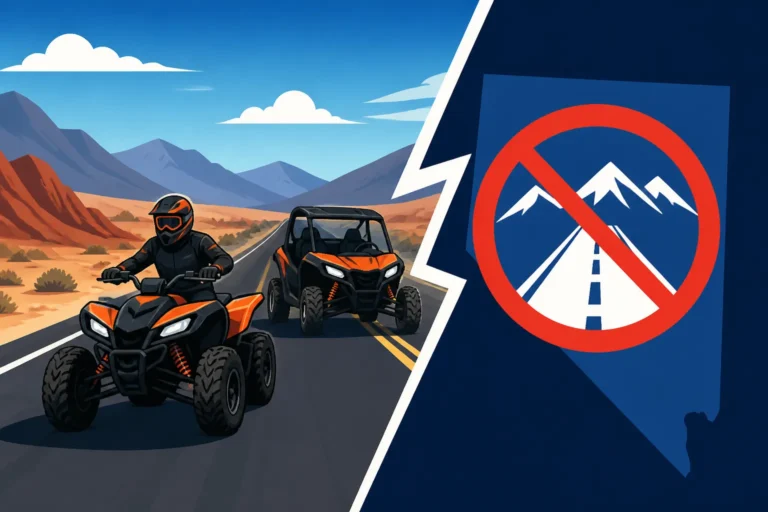
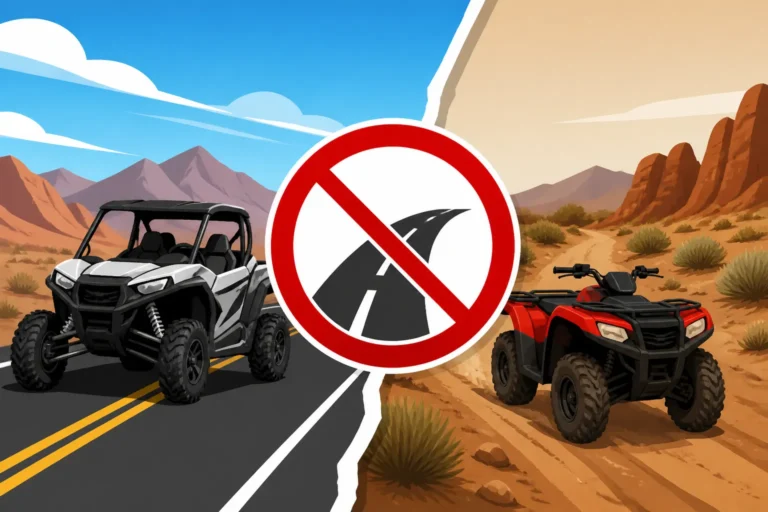
Now, there is a very small exception for all OHVs, including sport quads, when it comes to paved roads. Nevada law allows OHVs to cross a highway at a right angle if the crossing is made safely, and you can ride along the shoulder or edge of a paved highway for up to two miles to connect designated trails. This "two-mile rule" is critical: it's for connecting trails, not for casual riding or commuting to the store.
For example, if you're riding a network of dirt trails and one segment requires you to briefly use the shoulder of a county road to get to the next section of dirt, you might be able to do so for up to two miles. However, this is always subject to local county ordinances; some counties may have stricter rules or even prohibit OHV use on all their paved roads. [Nevada County Roads Open to UTVs] provides a general overview, but it’s always best to check with local authorities for specific regulations in your riding area, like [Washoe County Ordinance 1507] or those in Lincoln County.
It's a huge misconception that this two-mile allowance means you can zip around town on your sport quad. A law enforcement officer will quickly educate you that this exception is strictly for trail connectors, and you’ll likely face a citation for non-compliance if you're using it as an excuse for general road travel.
Why Street-Legal Conversion Kits Fall Short
You might have seen various "street-legal conversion kits" advertised online or through aftermarket parts companies. These kits often include turn signals, mirrors, horns, and other accessories designed to meet some states' requirements for street legality. Companies like SuperATV produce fantastic products that enhance the safety and functionality of your OHV, and they are excellent for adding these features if you're in a state with more lenient laws, or if you simply want those features for increased safety on the trail.
However, for Nevada, these kits are largely irrelevant for sport quads seeking street legality. They address the equipment requirements, but they cannot magically transform a two-seat sport quad into a "Large ATV" as defined by NRS 490.043. No matter how many DOT-approved tires or LED turn signals you add, if your machine wasn't designed by the manufacturer with four seats or a truck bed, it simply won't qualify for the special street-legal decal in Nevada. The fundamental design definition remains the impassable barrier.
Alternatives for Street-Legal Off-Road Fun
If the dream of riding your OHV on paved roads in Nevada is truly important to you, and your sport quad just isn't cutting it, don't despair! There are definitely other avenues to explore that do align with Nevada's regulations for limited street use.
Embracing the Side-by-Side
This is where the side-by-side (UTV) truly shines in Nevada. Many UTV models, especially those designed for utility or family recreation, meet Nevada's "Large ATV" definition right off the showroom floor.
- Four Seats: Models like the Polaris RZR XP 4, Can-Am Maverick X3 MAX, or the Kawasaki Teryx4 are designed for four occupants, making them eligible under the seating capacity clause.
- Truck Bed: Utility-focused UTVs, such as the Can-Am Defender or Polaris Ranger, come equipped with a truck bed, also making them eligible. These machines are built for work and play, offering both cargo capacity and often multiple seating options. [Registering a UTV Versus a Quad in Nevada] is a topic many people explore when looking at these options.
Once a UTV meets this initial "Large ATV" definition, then the aftermarket kits from companies like SuperATV that provide turn signals, horns, and mirrors become incredibly useful. They help you outfit your already compliant UTV with the necessary safety equipment to legally obtain and display a [Nevada Large ATV Decal]. This decal then grants you the limited access to designated county roads that is so sought after.
Other Options for Paved Road Access
If a Large ATV isn't quite what you're looking for, or if you need even more extensive road access, there are other types of vehicles that might fit the bill:
- Golf Carts and Low-Speed Vehicles (LSVs): In certain communities or on specific low-speed roads, golf carts and LSVs can be street legal. These vehicles have very specific speed and design limitations, but they can be a great way to get around local areas if your needs are confined to short, low-speed trips. Their regulations are distinct from OHVs. [Nevada Golf Cart Street Rules] and [Nevada Low-Speed Vehicle Rules] are separate categories entirely.
- Dirt Bikes: While not an ATV, many dirt bikes can be legally converted to street-legal motorcycles in Nevada, allowing them full access to roads. This involves adding lights, mirrors, horns, and sometimes engine modifications, and requires traditional motorcycle registration and plating. This is a very different path from the OHV route.
Focusing on the Off-Road Experience
Ultimately, for many sport quad owners, the thrill isn't about hitting the pavement; it's about conquering the dirt, jumping dunes, and navigating challenging trails. Nevada offers an abundance of these opportunities. Instead of trying to force your sport quad into a street-legal role it wasn't designed for, lean into its strengths.
Invest in proper off-road safety gear, get your OHV registered with its [Nevada's Annual OHV Registration] decal, and explore the incredible designated riding areas and vast public lands across the state. Remember, while you might not be able to ride your sport quad to the grocery store, you can certainly ride it through some of the most breathtaking desert landscapes in the country, which, for many, is the far superior experience anyway. Enjoy your ride where it's truly meant to be!
| Feature/Requirement | Sport Quad (Typical 2-seat) | Large ATV (Typical 4-seat UTV or with Truck Bed) |
|---|---|---|
| Seating Capacity | 1-2 occupants, saddle-style seats | 4+ occupants OR equipped with a truck bed (factory design) |
| Street Legal Eligibility | No (fails "Large ATV" definition) | Yes (meets "Large ATV" definition, with proper equipment) |
| Nevada Decal for Roads | Not eligible for Large ATV decal | Eligible for Large ATV decal |
| Headlights/Taillights | Often basic, off-road specific | Required to be DOT-compliant, visible 500ft |
| Stop Lamp (Brake Light) | May or may not have one, or not compliant | Required |
| Mirrors | Not typically stock | Required (rear-view, 200ft visibility) |
| Horn | Not typically stock | Required |
| Tires | Off-road knobby, not DOT-approved | Required to be DOT-approved |
| Insurance | Not required for off-road | Required for road use |
| Driver's License | Not required for off-road (age limits apply) | Required for road use |
| Aftermarket Conversion Kits | Cannot change fundamental "Large ATV" classification | Useful for adding required equipment once classified |
| Primary Use in Nevada | Designated OHV trails, dunes, open BLM land | Designated county roads (limited), OHV trails, dunes |
Disclaimer
This article is for general informational purposes only and does not constitute professional advice. Laws, prices and regulations vary by location and change over time. Consult a qualified professional for guidance on your specific situation.