Nevada Open Container Rules on an ATV
It's an age-old dream for many of us who love the Nevada outdoors: capping off a fantastic day of trail riding or dune carving with a cold beverage around the campfire. The open spaces, the quiet desert air – it feels like the perfect setting. But when you're out there with your ATV or UTV, navigating the vast public lands and occasional county roads, the rules around alcohol, especially open containers, can get incredibly murky. Nobody wants a fun day to turn into a costly citation or, worse, a dangerous situation. This guide is here to untangle the confusion surrounding Nevada's open container laws as they apply to off-highway vehicles, helping you understand where you can and can't have that frosty drink, and what happens if you get it wrong.
Understanding Nevada's Open Container Laws On and Off-Road
Navigating Nevada's diverse terrain on an ATV or UTV offers unparalleled freedom, but that freedom comes with a responsibility to understand the law. One area that often causes confusion is open container laws. While you might feel miles away from "the road" out on a dusty trail, the legal definitions can be surprisingly broad and encompass many areas where off-highway vehicles operate. It’s crucial to distinguish between merely transporting beverages and actively consuming them in a manner that could lead to legal trouble.
The General Rule: No Open Containers in Moving Vehicles
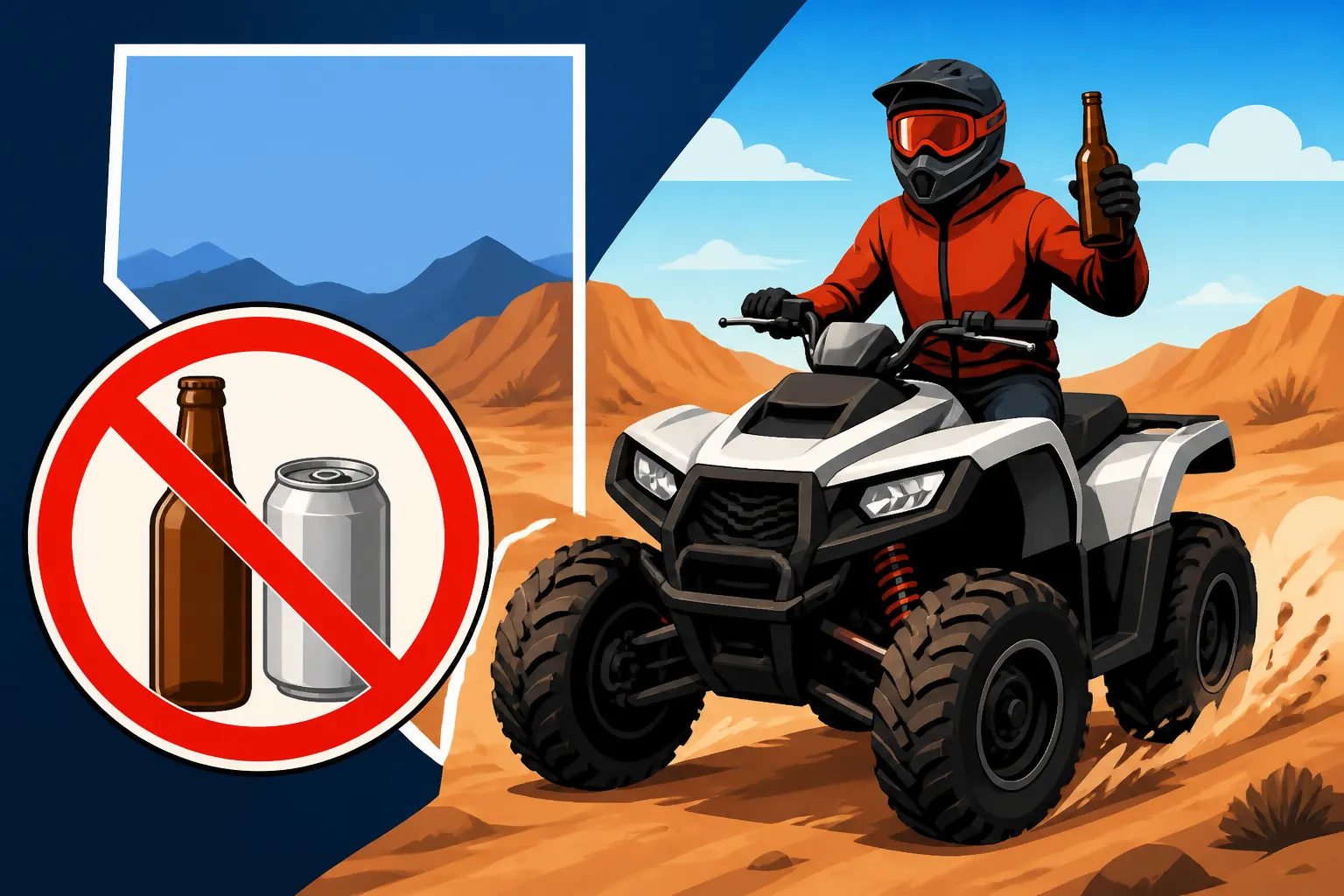
Let's start with the fundamental principle that most people are familiar with: Nevada law, like many other states, prohibits open containers of alcoholic beverages in the passenger area of a motor vehicle that is being operated on a public highway or roadway. This isn't just about cars and trucks; it extends to any "motor vehicle" when it's actively in motion on these types of surfaces. For off-road enthusiasts, this means if your UTV is street legal and you're driving it down a designated [Nevada County Roads Open to UTVs] to get to a trailhead, an open beer in the cup holder is a definite no-go.
The purpose of this law is straightforward: to prevent impaired driving and maintain public safety. An open container in plain view can be an immediate red flag for law enforcement, signaling potential impairment. Imagine you're riding your side-by-side from your campsite to another spot just a short distance down a public access road. Even if it's just a quick hop, if you or a passenger has an open alcoholic beverage, you're potentially in violation. This applies to everyone in the vehicle, not just the driver.
Defining "Open Container" and "Public Roadway" in Nevada
So, what exactly counts as an "open container" under Nevada law? Generally, it's any container of an alcoholic beverage that has been opened, has had its seal broken, or whose contents have been partially removed. This includes a can of beer with a popped top, a bottle of wine with a removed cork, or even a mixed drink in a thermos if it's readily accessible to the driver or passengers in an operating vehicle. The key is "readily accessible" and "opened." A sealed six-pack tucked away in a cargo box by SuperATV is usually fine, but a single can chilling in your console is not.
The term "public roadway" or "highway" is where it can get a bit tricky for OHV riders. Nevada's definitions can include not just paved roads, but also many unpaved county roads, forest service roads, and even some designated trails maintained by federal or state agencies. While you might feel like you're "off-road" on a dirt path deep in the desert, if that path is officially designated as a public right-of-way or part of a public transportation network, the open container laws often apply. This is why understanding your route and what kind of land you're on is so important. A remote trail could still fall under the umbrella of a public thoroughfare where these rules are enforced by local deputies or BLM rangers.
Applying Open Container Rules to ATVs and UTVs in Off-Road Settings
The perception that "anything goes" once you leave the pavement is a common misconception that can lead to significant legal headaches for ATV and UTV riders. While the wild west spirit of Nevada might feel limitless, even vast expanses of public land have rules governing alcohol consumption and open containers. The crucial factor often hinges on whether your vehicle is considered "operating" and the specific jurisdiction you're in.
The Nuance of BLM Land and Designated OHV Areas
Many of us spend countless hours enjoying the incredible network of trails and open areas on Bureau of Land Management (BLM) land throughout Nevada. When you're out on [Riding BLM Land in Nevada], you might assume state road laws don't apply. However, federal regulations often mirror state laws, especially concerning safety and public conduct. While an open container might not be explicitly prohibited while parked at a campsite on BLM land, it is almost certainly prohibited if you're actively driving your ATV or UTV, even on a designated dirt trail.
Designated OHV areas, such as the popular Logandale Trails or the vast expanse of Sand Mountain, are fantastic places to ride. These areas are managed by agencies like the BLM, and they have specific rules in place. While some areas might have more relaxed rules about consumption when parked, the act of operating your machine with an open container in the passenger compartment will generally put you in violation. Rangers patrolling these areas, such as those [What Rangers Check at Sand Mountain], are looking for safe and responsible operation, and an open container is a clear indicator that someone might be operating under the influence. It's not just about paved roads; if it's a public trail, the rule often holds.
When Your ATV Becomes a "Vehicle" Under Open Container Laws
The distinction between a parked vehicle and an operating vehicle is paramount here. If you've pulled over at a scenic overlook, parked your machine, and are enjoying a non-alcoholic beverage or even a responsibly consumed alcoholic drink (provided you're done riding for the day), that's generally fine. The problem arises when you are actively driving or riding with an open container. At that point, your ATV or UTV is treated much like any other "vehicle" under the law.
This means if you're cruising a dry lake bed, exploring [Nevada Rules for Riding a Dry Lake Bed], or traversing a graded fire road, and you have an open alcoholic beverage in a cup holder or accessible to the driver or passenger, you are running a significant risk. Law enforcement, whether it's a county sheriff's deputy or a BLM ranger, will view this as an open container violation. The machine's capability for road travel, even if you're off the pavement, is a key factor. Products like a secure cargo box from SuperATV can be incredibly useful for transporting sealed beverages, ensuring they stay out of sight and are not "readily accessible" while you're moving, thus avoiding any ambiguity or potential issues.
Consequences of Violating Open Container Laws on an ATV
Ignoring open container laws, especially when operating an ATV or UTV, can lead to much more than a slap on the wrist. The legal system takes these violations seriously, often seeing them as precursors to more severe offenses like impaired driving. A quick moment of oversight or a misunderstanding of the rules can quickly escalate into a situation that costs you money, time, and potentially your privilege to operate your machine. It’s a harsh reality that many riders unfortunately discover firsthand.
Fines, Citations, and Potential Impoundment
If a law enforcement officer, whether it's a sheriff's deputy or a BLM ranger, observes an open container in your operating ATV or UTV, you're likely to receive a citation. The specific fines can vary, but they are never insignificant and can certainly put a damper on your riding budget. Beyond just the fine, an open container violation can lead to other complications. For instance, an officer might then have reasonable suspicion to investigate further for impaired driving.
In more serious cases, especially if combined with other violations or signs of impairment, your off-highway vehicle could even be impounded. Imagine being stranded miles from anywhere because your UTV was towed away due to a combination of an open container violation and suspected DUI. This scenario isn't just an inconvenience; it's a major expense and disruption. [What a Nevada Deputy Asks for at a Roadside Stop] often includes questions about alcohol, and an open container in plain view provides immediate grounds for deeper investigation.
The Link to DUI and Impaired Driving
This is where the rubber truly meets the road, or in our case, the tires meet the dirt. An open container in your ATV or UTV is often the first step toward a DUI investigation. Nevada's DUI laws apply just as strictly to operating an off-highway vehicle on public land as they do to driving a car on a paved highway. There is no special exemption for being "off-road." If you are found to be operating your machine while under the influence of alcohol or drugs, you face the same severe penalties as if you were in a car: heavy fines, potential jail time, loss of driving privileges (for any vehicle), and significant legal costs.
The dangers of impaired riding are amplified in the off-road environment. Uneven terrain, sudden obstacles, and the sheer challenge of controlling a powerful machine become exponentially more hazardous when your judgment and reaction times are compromised. It's not just your safety at risk, but that of your passengers and other riders on the trail. Law enforcement officers are vigilant about preventing [Nevada DUI Rules for ATV Riders], and an open container is a direct indicator of potential impairment. Utilizing secure storage solutions, like the robust cargo boxes offered by SuperATV, isn't just about protecting your gear; it's also about preventing any appearance of impropriety, keeping alcoholic beverages out of sight and out of mind until you're safely parked and done riding for the day.
Best Practices for Responsible Riding and Beverage Management
Enjoying the vast landscapes of Nevada on your ATV or UTV is an incredible experience, and there's no reason why it can't include responsible enjoyment of beverages, too. The key is understanding the rules and adopting smart practices to ensure everyone's safety and avoid unnecessary legal trouble. It’s all about planning ahead and making conscious choices that reflect respect for the law and the riding community.
Storing Beverages Safely and Legally
The easiest way to avoid an open container violation is to store all alcoholic beverages properly. This means they should be sealed, unopened, and ideally, out of the passenger compartment and out of reach of the driver and passengers while the vehicle is in motion. A dedicated cooler, secured in the bed of your UTV or on a cargo rack, is an excellent choice. Even better, consider a lockable cargo box from a reputable brand like SuperATV. These provide not only security but also protection from dust and the elements, essential for [Keeping Paperwork Dry in a Dusty Machine] and keeping your drinks clean.
The best practice is to only consume alcoholic beverages when your riding is completely finished for the day, and you are safely parked at a designated campsite or on private property. For instance, when you're settling in for the night at a spot where [Nevada OHV Rules for Camping Beside Your Machine] allow, that's the time to relax with a beverage. While riding, focus on non-alcoholic hydration, like water or sports drinks, which are crucial for staying safe in the Nevada heat. You can even use the same SuperATV cargo solutions for carrying extra fuel or supplies, like those mentioned in [Nevada Rules for Carrying Fuel Cans], demonstrating their versatility for all your storage needs.
Prioritizing Safety and Avoiding Legal Trouble
Ultimately, the goal is always to have a fun, safe, and legal riding experience. This means prioritizing safety above all else. If you plan to have alcoholic beverages at your campsite, designate a driver who will not consume any alcohol if there's any chance of moving the machine, even for a short distance. Better yet, avoid mixing riding and alcohol entirely, as the challenging terrain and focus required for off-road operation demand your full attention and unimpaired judgment.
Remember that enforcement officers, including those working on [Nevada OHV Rules for Riding Federal Land], are there to ensure public safety. By adhering to open container laws and avoiding any semblance of impaired operation, you not only protect yourself and your companions but also contribute to a positive perception of the OHV community. A secure storage system on your machine, like many of the durable accessories available from SuperATV, not only helps you comply with open container laws by keeping drinks stowed away but also ensures that any important gear or emergency supplies are always safely accessible, promoting a more responsible and enjoyable adventure. Planning your rides, knowing the rules of the land, and practicing responsible beverage management will ensure your Nevada adventures are memorable for all the right reasons.
| Scenario | Open Container Permitted? | Driver/Passenger Status | Best Practice for Alcohol Storage |
|---|---|---|---|
| Operating ATV/UTV on Public Road | No | All Occupants | Sealed, out of reach, in cargo box |
| Operating ATV/UTV on Public Trail | No | All Occupants | Sealed, out of reach, in cargo box |
| Parked at Designated Campsite | Yes (responsible use) | No Longer Operating | Enjoy responsibly, only when parked |
| Parked on Private Property | Yes (responsible use) | No Longer Operating | Enjoy responsibly, only when parked |
| Transporting Sealed Alcohol | Yes | All Occupants | Secured in cooler/cargo box |
Disclaimer
This article is for general informational purposes only and does not constitute professional advice. Laws, prices and regulations vary by location and change over time. Consult a qualified professional for guidance on your specific situation.