What Qualifies as a Large ATV in Nevada
It’s a common frustration for off-road enthusiasts in Nevada: you've got this incredible side-by-side, perfectly capable of handling rough terrain, and you just want to get it from your driveway to the nearest trailhead without trailering. But then you hear whispers of "Large ATVs" and special decals, and suddenly the rules feel as muddy as a springtime wash. This guide is here to clear up the confusion, walking you through exactly what Nevada considers a "Large ATV" and what that designation means for your riding adventures on county roads.
Understanding Nevada's "Large ATV" Designation: More Than Just Size
When Nevada lawmakers talk about a "Large ATV" in the context of street legality, they’re not just looking at the physical dimensions of your machine. It’s not simply about how wide or long it is, or even how many horsepower it cranks out. Instead, the focus is on specific design and functional characteristics that differentiate certain utility-focused off-highway vehicles (OHVs) from traditional sport quads or dirt bikes. This distinction is absolutely crucial because it dictates whether your machine can legally access designated public roads in the Silver State.
The Legal Foundation: What NRS 490.043 Really Says
The heart of the matter lies within Nevada Revised Statute (NRS) 490.043. This is the legal text that carves out the specific definition for what the state calls a "large all-terrain vehicle." Without diving too deep into dense legal jargon, the statute essentially identifies an off-highway vehicle (which includes side-by-sides, UTVs, and sometimes even specialized utility quads) as a "large ATV" if it meets a very particular set of criteria. This isn’t a blanket permission for all UTVs to hit the pavement; it's a carefully drawn line designed to allow certain types of machines to traverse limited road sections while keeping others strictly off-road. Many riders are surprised to find their favorite sport machines don't make the cut, purely because of this statutory language. Understanding [What Nevada's NRS 490.043 Counts as a Large ATV] is the first step in figuring out if your machine qualifies.
It's About Function, Not Just Dimensions
Forget the image of a giant, monster-truck-sized ATV. The term "Large ATV" in Nevada isn't about sheer bulk. It's fundamentally about functionality and design intent. The state is looking for machines that are built more for utility, transport, and work, rather than pure sport. Think of it this way: is your machine primarily designed to carry passengers and gear, potentially for agricultural purposes or trail maintenance, or is it built for high-speed thrills and aggressive cornering? This functional distinction is key. For example, a two-seat sport UTV might be physically large, but it often lacks the specific features Nevada requires for the "Large ATV" designation. The intent here is to allow utilitarian vehicles to bridge gaps between trails or access services, not to turn every side-by-side into a street racer.
Key Criteria for a Nevada Large ATV: Seating and Cargo
So, what exactly does NRS 490.043 look for? It boils down to a couple of very specific design elements: seating capacity and the presence of a cargo bed. These aren't suggestions; they are hard requirements that your machine must meet to be considered a "Large ATV" in Nevada. Many riders get caught out on these points, assuming their multi-seat UTV is good to go, only to find it doesn't quite fit the bill because of a missing feature or an incorrect interpretation of the seating rule.
The Two-Seating Rule: Why Your Sport Quad Won't Qualify
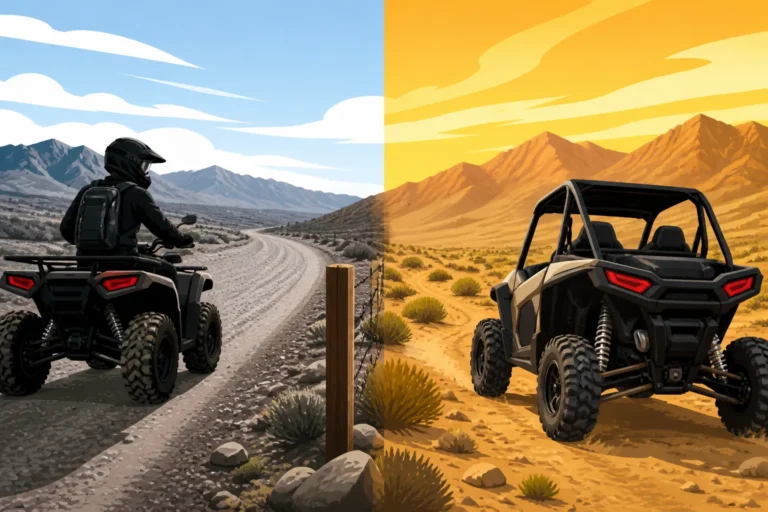
First up is the seating arrangement. For an OHV to be classified as a "Large ATV," it must be designed by the manufacturer to carry at least two but no more than four persons. This is where many traditional ATVs (quads) immediately fall short. Even if your quad is a large, powerful machine, it's typically designed for a single rider, or perhaps a rider and one passenger (tandem seating). These configurations do not meet the minimum two-seat side-by-side arrangement required by the statute. This is also why many two-seat sport side-by-sides, while great for trails, often fail this part of the test if they lack other crucial elements. You might think your machine is a "large ATV" just because it’s a UTV, but if it doesn't clearly provide seating for at least two people side-by-side, it's out. This distinction is often the core reason [Why a Two-Seat Sport Quad Fails Nevada's Test] for this designation, as they're not built with the required seating configuration in mind.
The Indispensable Cargo Bed Requirement
Perhaps the most critical, and often overlooked, requirement is the cargo bed. Nevada law specifies that a "Large ATV" must be equipped with a bed or a utility box that is designed for and capable of carrying tools or cargo. This isn't just about having a tiny storage compartment under the seat or a small rack for a cooler. We're talking about a distinct, built-in cargo area, like a pickup truck bed, designed to haul significant weight and volume.
Consider a utility-focused UTV, like a Polaris Ranger or a Can-Am Defender. These machines almost always come standard with a dedicated cargo bed, perfect for hauling feed, tools, or camping gear. That functionality is precisely what the law is looking for. This is often the clincher, the feature that truly separates a utilitarian side-by-side from a pure sport machine. Even if your sport UTV has a small rear rack, it's usually not considered a "bed or utility box designed for carrying tools or cargo" in the eyes of the law. This is exactly [Why a Defender's Truck Bed Meets Nevada's Definition] and makes it a prime candidate for the "Large ATV" decal. Many aftermarket parts from companies like SuperATV offer robust cargo solutions, but the machine must be designed by the manufacturer with this capability in mind. If you've just bolted a small box onto a sport machine, it likely won't satisfy this requirement for the initial classification.
Why the "Large ATV" Designation Matters for Nevada Riders
You might be wondering why Nevada even bothers with this specific classification. It all comes down to road access, which is a huge deal for riders who want to connect trails, visit a small town for gas, or simply avoid lengthy trailer rides for short distances. Without this designation, many otherwise capable machines would be completely confined to off-highway terrain, creating major logistical headaches for riders.
Accessing County Roads: The Gateway to Trails
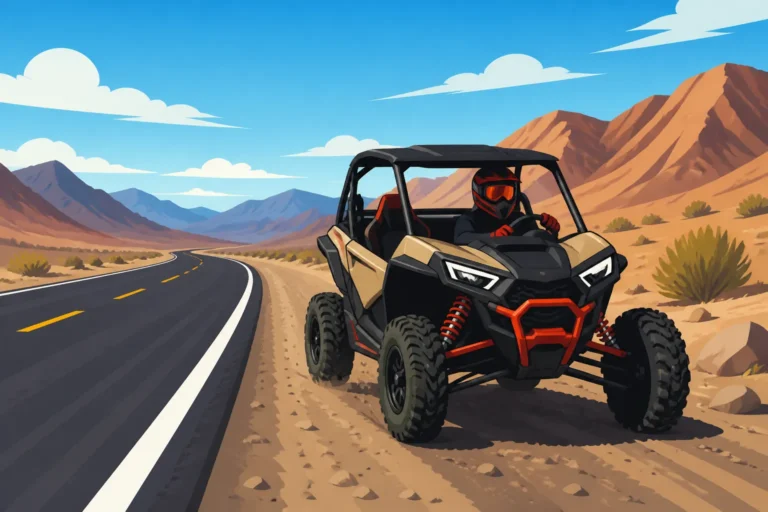
The primary benefit of having your machine designated as a "Large ATV" and receiving the corresponding decal is the ability to legally operate it on certain Nevada county roads. This is an absolute game-changer for many riders. Imagine you're at Logandale Trails, and you want to ride to a different section that's separated by a paved county road. Or perhaps you're out near Pioche and need to cross a short stretch of pavement to get to the next dirt path. The "Large ATV" decal makes these transitions possible, turning what would be a frustrating and potentially illegal detour into a seamless part of your adventure. It means you can often ride directly from your camp to the trailhead, or even pop into a small town like Caliente for a quick bite or some supplies. For those with a legitimate [Nevada Street Legal UTV Requirements] question, this designation is often the answer.
Navigating the "2-Mile Limit" and Designated Routes
It’s crucial to understand that the "Large ATV" decal is not a license to roam freely on all public roads. Nevada has strict limitations. Generally, you’re often restricted to minor county roads, and even then, there's typically a [Nevada's 2-Mile Limit on Paved Highway] for general travel. Some cities and counties, like Washoe County with its Ordinance 1507, have also enacted specific rules or banned OHV use on certain county roads altogether. However, the "Large ATV" designation can open doors to specifically designated routes within these areas, which are often signed and intended for this purpose. This allows for critical connections, letting riders get to the fun parts without having to load up their machines. You'll need to know [Nevada County Roads Open to UTVs] in the areas you plan to ride, as the rules can vary from county to county. Always check local ordinances before venturing onto paved roads.
Common Machines That Qualify and Those That Don't
Let's get practical. Which machines typically fit Nevada's "Large ATV" definition, and which ones, despite their size or power, often fall short? This is where many riders make assumptions, so understanding the nuances can save you a lot of headache and potential citations.
Side-by-Sides That Fit the Bill (and Modifications You Might Need)
Generally speaking, most modern utility-oriented side-by-sides are strong contenders for the "Large ATV" designation. Think about popular models like:
- Polaris Ranger: These are almost textbook examples, with their bench seating for two or more, and a dedicated dump bed for cargo.
- Can-Am Defender: Similar to the Ranger, the Defender series, especially with its robust cargo capacity, fits the bill perfectly.
- Honda Pioneer: Many Pioneer models offer flexible seating and cargo options that align with the statute.
- Kawasaki Mule: These utility workhorses are designed specifically for the kind of functions Nevada's law envisions.
- Yamaha Wolverine X2/X4: While leaning towards sport, many Wolverine models still incorporate a functional cargo bed and multi-person seating, making them eligible.
Even with these qualifying machines, remember that simply owning one isn't enough. You still need to go through the official registration and decal process. Sometimes, riders enhance their machines with accessories from brands like SuperATV, adding things like stronger suspension components or protective gear. While these upgrades improve the riding experience, they don't change the underlying factory design that determines "Large ATV" eligibility. What does matter is whether the machine, as manufactured, meets the seating and cargo bed criteria. If you have a two-seater UTV that doesn't have a cargo bed, but you add one, it might still not qualify as it needs to be designed by the manufacturer with that capability.
Why Traditional ATVs (Quads) Are Excluded
This is often the hardest pill for quad riders to swallow. Despite how powerful or physically imposing some ATVs can be, traditional quads, even the large utility models, almost universally fail to meet the "Large ATV" criteria in Nevada. The primary reasons are:
- Seating: Quads are designed for straddle-style riding, typically accommodating one rider, or one rider and a tandem passenger. They lack the side-by-side seating for two or more persons that the law requires.
- Cargo Bed: While many utility ATVs have front and rear racks, these are not considered a "bed or utility box designed for carrying tools or cargo" in the same way a UTV's dump bed is. The legislative intent clearly differentiates between a rack system and a dedicated cargo bed.
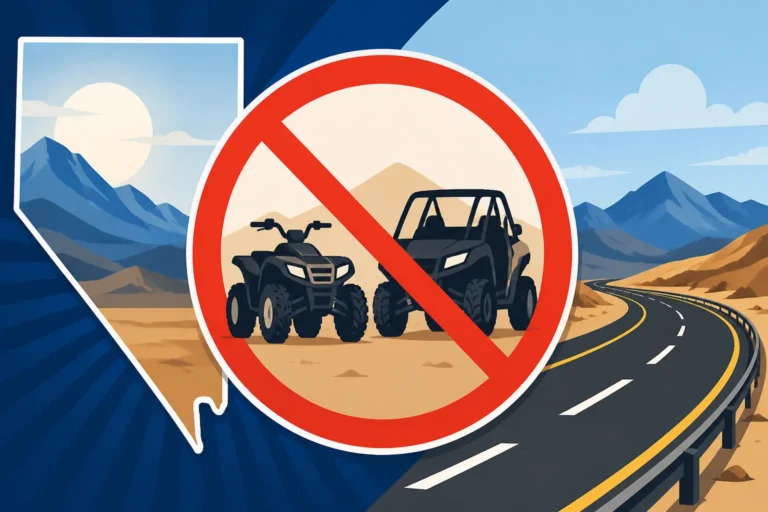
So, if you're riding a Honda Foreman, a Yamaha Grizzly, or any other quad, no matter how much gear you can strap to it, it won't qualify for a "Large ATV" decal and cannot legally operate on county roads in Nevada, beyond permissible crossings. This distinction is crucial for understanding [Can a Two-Seat Quad Get a Nevada Road Decal?]. The short answer is almost always no, due to these fundamental design differences.
Getting Your Machine Legally Recognized: The Large ATV Decal Process
So, you've confirmed your side-by-side meets the "Large ATV" criteria. Fantastic! But the journey to legal road use isn't over. You'll need to navigate the state's registration process to obtain the specific "Large ATV" decal. It's not overly complicated, but it does require attention to detail and the right paperwork.
Required Paperwork and Inspections
To apply for the [Nevada's Large All-Terrain Vehicle Decal], you’ll generally need to provide the following to the Nevada Department of Motor Vehicles (DMV) OHV Section:
- Proof of Ownership: This is typically your manufacturer's certificate of origin (MCO) if new, or a Nevada title or properly signed-over out-of-state title if used.
- Application Form: You'll complete a specific application form (often OHV-001 or similar, depending on your situation).
- Bill of Sale: If you bought the machine recently, a bill of sale is important.
- VIN Inspection: This is critical. Nevada requires a Vehicle Identification Number (VIN) inspection to ensure the machine’s identity and confirm it matches your paperwork. The trick here is that the Nevada DMV itself will not perform this inspection for OHVs. You'll need to go to a licensed Nevada OHV dealer or ask a sworn law enforcement officer to complete the inspection and verify the VIN. Knowing [Who Can Do a VIN Inspection in Nevada] beforehand saves a lot of wasted time.
- Payment for Fees: There will be fees associated with titling (if applicable) and the "Large ATV" decal itself. You might also encounter [Nevada Title Fees for a Resident Machine] if you're getting a new title.
Once you have all your ducks in a row, the DMV OHV Section will review your application to ensure your machine indeed fits the statutory definition of a "Large ATV." This is where the seating and cargo bed requirements are officially checked.
Where to Apply and What to Expect
You can submit your application and supporting documents either by mail to the Nevada DMV OHV Section in Carson City or in person at select DMV locations. Some licensed OHV dealers are also authorized to process registrations, which can be a convenient option. They often know the paperwork inside and out and can help ensure everything is correctly filled out.
Once approved, you'll receive your "Large ATV" decal. This decal looks different from a standard OHV decal, often larger and clearly marked to indicate its special designation. You'll need to affix this decal in the prescribed location on your machine. Keep your registration card with you whenever you ride, as it serves as proof of your machine's legal status. The process itself isn't instantaneous, so don't wait until the day before your big trip to apply. Plan ahead for [Nevada OHV Registration Processing Times].
Limitations and Important Considerations for Large ATV Riders
Having that "Large ATV" decal is empowering, opening up new riding possibilities. However, it's vital to remember that it's not a blanket "street legal" pass. Nevada has very specific rules that apply to "Large ATVs" on public roads, and ignorance of these rules won't save you from a citation.
Not a "Street Legal" Free Pass: Understanding the Restrictions
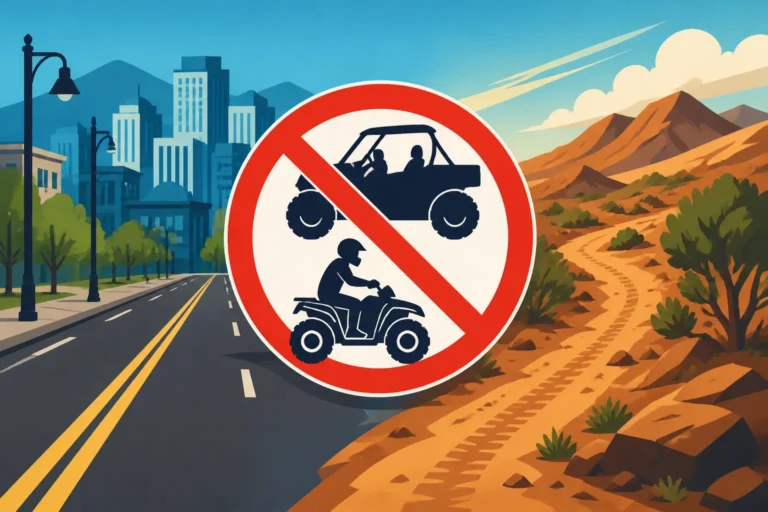
The biggest misconception is that a "Large ATV" decal makes your UTV fully street legal, like a car or motorcycle. This is absolutely not the case. The decal grants you limited privileges on specific types of roads under certain conditions. You can't just drive your "Large ATV" down the Las Vegas Strip or on an interstate highway. The permission is generally restricted to minor county roads, often for the purpose of connecting trails or accessing services. You are typically forbidden from riding on state highways (except for crossing them), and certainly not on interstates. Cities with populations over 100,000, like Las Vegas, Reno, or Henderson, generally prohibit OHV use on city streets unless explicitly designated, and often even then, the "Large ATV" rules don't apply. Knowing [Nevada Rules for Riding a Dry Lake Bed] is one thing, but understanding the intricate road rules is another.
Here’s a quick overview of critical limitations:
- Road Types: Generally limited to county roads, often unpaved or lightly used.
- Distance: Often limited to [How Far You Can Ride Pavement in Nevada], typically a 2-mile limit for non-designated routes.
- Speed Limits: You must adhere to the posted speed limits.
- Designated Routes: Some areas may have specific designated routes for "Large ATVs."
- Time of Day: Night riding on roads often has additional equipment requirements.
Insurance, Driver's License, and Other Road Rules
When you operate your "Large ATV" on a public road, even a minor county road, you transition from off-road regulations to a hybrid set of rules that include standard vehicle codes. This means:
- Driver's License: The operator must possess a valid driver's license. No learners permits or unlicensed driving on public roads, even minor ones.
- Insurance: You must carry liability insurance. [Insurance Nevada Requires for Road Use] is non-negotiable for any vehicle operating on public roads, including "Large ATVs."
- Equipment: Your "Large ATV" must be equipped with certain safety features required for road use, even if it's just a short hop. This typically includes:
- Headlights and Taillights: Operational and visible from 500 feet.
- Stop Lamp: A working brake light.
- Reflectors: Often required if taillights don't meet certain criteria.
- Mirrors: At least one rearview mirror.
- Horn: An audible warning device.
- Spark Arrester and Muffler: Your machine must have a U.S. Forest Service-approved spark arrester and a muffler that keeps sound within legal limits. Aftermarket exhaust systems from companies like SuperATV can often meet these, but always double-check compliance.
- Seat Belts: If equipped from the factory, they must be worn.
- Helmets: While not always required for adults in an enclosed UTV on roads, children may still need helmets, and off-road helmet rules are often stricter. [Nevada Helmet Law for Road Riding] outlines these specifics.
Always carry your driver's license, insurance card, and vehicle registration with you when operating your "Large ATV" on any public road. Law enforcement officers, whether it's a Nevada State Trooper or a local county deputy, will be looking for these documents during a roadside stop. Staying informed and compliant ensures your riding experiences are fun, safe, and legal.
| Feature | Traditional ATV (Quad) | Utility-Oriented Side-by-Side (Large ATV) |
|---|---|---|
| Seating | 1-2 person, straddle or tandem | 2-4 person, side-by-side seating |
| Cargo Capability | Racks, limited storage | Dedicated cargo bed/utility box |
| Primary Design | Sport, recreation, light utility | Utility, transport, work, recreation |
| NV "Large ATV" Status | No, does not qualify | Yes, if meeting specific criteria |
| Road Access | Limited (crossings only, not travel) | Limited county road travel (with decal) |
| Required Equipment for Road Use | N/A (not for road travel) | Headlights, taillights, brake light, mirror, horn, insurance, driver's license |
Disclaimer
This article is for general informational purposes only and does not constitute professional advice. Laws, prices and regulations vary by location and change over time. Consult a qualified professional for guidance on your specific situation.