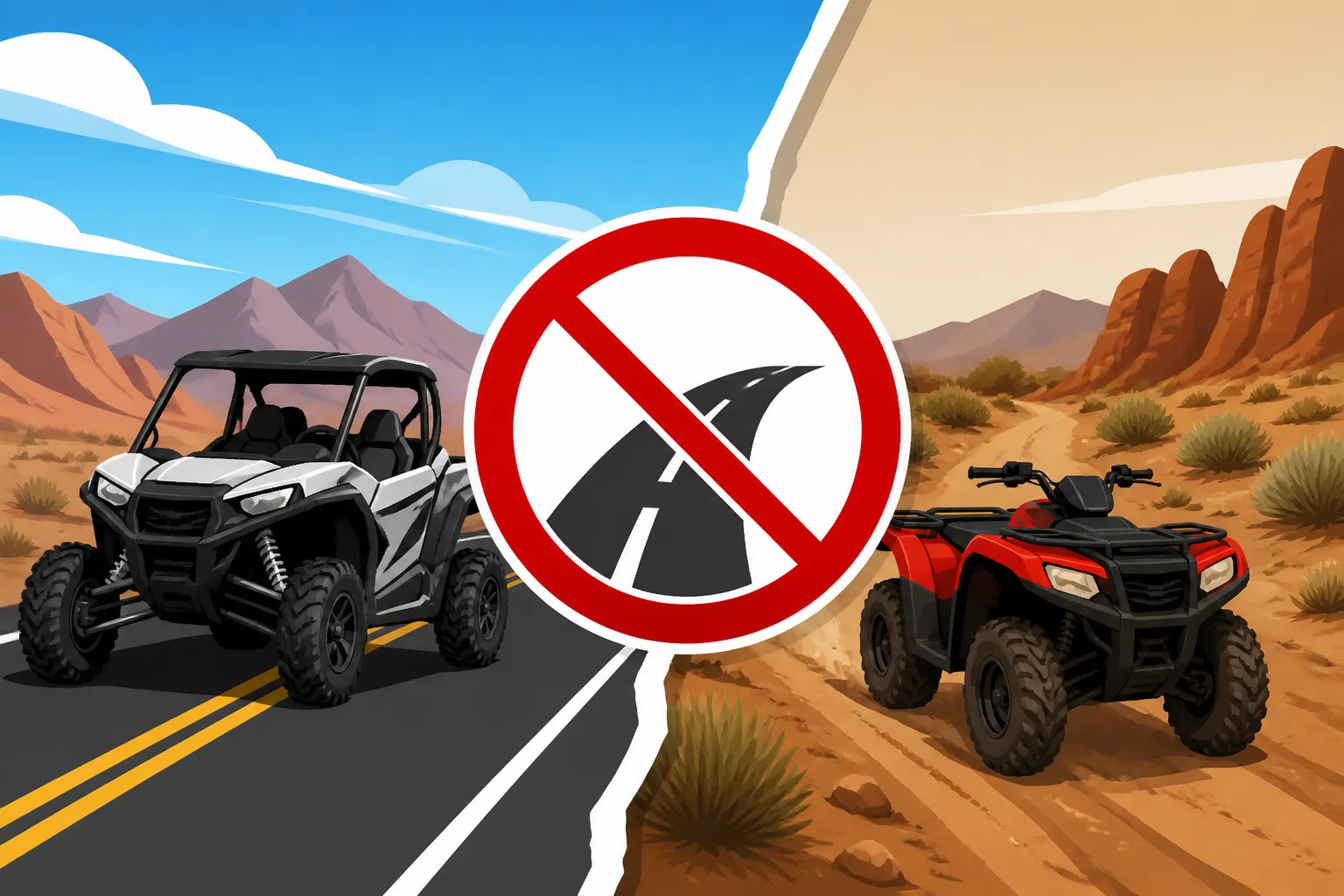
Nevada’s Ban on Interstate Riding
It can be incredibly frustrating to hear that your powerful ATV or UTV, which you've painstakingly equipped and maybe even registered for limited road use, is still banned from certain major thoroughfares. Nevada's rules around riding off-highway vehicles on interstates are often misunderstood, leaving riders confused and at risk of a hefty ticket. This comprehensive guide will break down exactly why Nevada prohibits OHVs on interstate highways, what defines these roads, the narrow exceptions you might encounter, and what you absolutely need to know to stay legal and safe.
Understanding Nevada's Interstate Riding Prohibition
Navigating Nevada's vast and beautiful landscapes on your ATV or UTV is an incredible experience, but it comes with a distinct set of rules, especially when it comes to paved roads. One of the most common points of confusion and frustration for riders is the strict ban on off-highway vehicles on interstate highways. It's not just a suggestion; it's a fundamental part of the state's vehicle code, designed with specific safety and traffic flow considerations in mind. For many riders, the idea of a "street legal" UTV implies full road access, but Nevada draws a very clear line in the sand—or rather, on the asphalt.
The Core of the Ban: Safety and Federal Designation
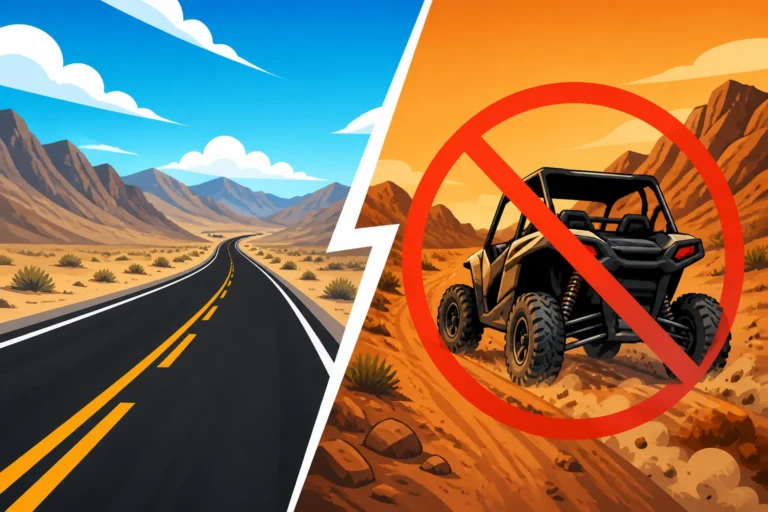
At its heart, the prohibition of ATVs and UTVs on interstate highways in Nevada boils down to safety and the fundamental design and purpose of these major arteries. Interstate highways, by their very nature, are built for high-speed, high-volume traffic. Think about the average speed on I-15 heading to Las Vegas or I-80 across the northern part of the state. You're talking about vehicles traveling at 70, 75, or even 80 miles per hour. Most off-highway vehicles, even those capable of decent speeds, are simply not designed to safely operate at sustained highway speeds alongside cars, trucks, and semi-trailers. Their braking distances, acceleration capabilities, and overall structural integrity are optimized for off-road conditions, not for merging into fast-moving highway traffic.
Beyond the raw speed, there's the issue of federal designation. Interstate highways are part of the national highway system, often receiving federal funding and adhering to a different set of standards and regulations than local or even state routes. These designations come with specific rules regarding vehicle types, weights, and capabilities that off-highway vehicles simply don't meet. It's a matter of infrastructure and intended use. Putting an OHV, no matter how robust or modified, into that environment creates an unacceptable risk for the OHV operator and everyone else on the road. The state wants to protect you and other motorists from potentially dangerous encounters on roads not designed for your machine.
Differentiating Between Highways and County Roads
This is where many riders get tripped up, thinking "highway" means any paved road. In Nevada, it's crucial to understand the distinction between a major state or interstate highway and a "minor county road" or other designated route where OHV use might be permissible. While the ban on interstate riding is absolute, certain county roads do allow properly equipped and registered ATVs and UTVs. The key is in the classification and the specific ordinances enacted by individual counties and cities. [Which Nevada County Roads Qualify for ORVs] talks more about this. A dirt road maintained by the county, or even a low-speed paved road connecting rural communities, is a world away from the multi-lane, limited-access design of an interstate.
An interstate highway, like I-580 around Reno, will have specific signage, limited entry and exit points, and often multiple lanes of travel in each direction. It is explicitly designed to move traffic efficiently and rapidly over long distances. In contrast, a minor county road might be a two-lane asphalt strip winding through a rural area, with numerous stop signs, lower speed limits, and residential or agricultural access points. These are the kinds of roads where the state's "large ATV" designation might come into play, allowing for limited, specific travel. Your local jurisdiction will have ordinances dictating whether you can ride on these less-trafficked routes, so always check with the county or city before you head out.
What "Interstate" Really Means for OHVs
When Nevada law refers to "interstate highways" in the context of OHV prohibitions, it's talking about the high-speed, federally designated routes marked with the distinctive red, white, and blue shield emblem. These are the roads that connect states and carry a significant volume of traffic at high speeds. It's not referring to every paved state route or even every multi-lane highway. For instance, while a major state route like US-95 or US-50 might feel like a highway, they are distinct from the interstates and have different regulations. [US 93 and the Roads You Cannot Ride Along] provides more detail on specific major routes.
The important takeaway is that OHVs are generally prohibited from operating on any highway that is part of the Interstate System or any controlled-access highway. Controlled-access highways are those with interchanges instead of at-grade intersections, designed to allow vehicles to enter and exit only at specific points, thus maintaining higher speeds and traffic flow. This includes most major freeways. The goal is to keep slower-moving or less robust vehicles out of traffic environments where they could become a hazard. This rule is absolute, regardless of how many turn signals or mirrors you've installed on your machine.
The Two-Mile Paved Road Exception: A Narrow Window
While Nevada maintains a firm stance against OHV use on interstates, it's not entirely black and white when it comes to all paved roads. There are specific, very limited circumstances under which a properly registered and equipped off-highway vehicle can legally operate on a paved surface. This often misunderstood "two-mile rule" is a lifeline for many riders who need to connect trails or access services, but it comes with strict parameters and is by no means an open invitation to cruise down main street. It's a specific exemption, not a general allowance.
Navigating the 2-Mile Rule for Access
Nevada law includes a provision that allows OHVs to operate on paved public highways for a distance of up to two miles, but only under very specific conditions. This isn't for joyriding; it's explicitly for accessing an OHV trail or riding area from a staging point, crossing a highway from one legal riding area to another, or getting to a service area (like a gas station) when there's no reasonable alternative. Imagine you're at the end of a long day of riding near Logandale Trails and the nearest gas station is just across a state route. This rule is designed for exactly that kind of scenario, allowing you to briefly use the pavement to reach essential services or continue your adventure.
However, this privilege comes with responsibilities. Your machine must be properly registered with a valid [Nevada's Large All-Terrain Vehicle Decal] and meet specific equipment requirements for road use, even for this limited distance. This includes functional headlights, taillights, brake lights, mirrors, a horn, and spark arresters. You also need to have a valid driver's license and proof of liability insurance, just like you would in a regular car. The "two miles" is a maximum, and it's always implied that you should use the shortest possible route. Deputies aren't looking to catch you, but they are vigilant about people abusing this exception to simply cruise around town. [How Far You Can Ride Pavement in Nevada] offers more specifics.
Restrictions Within City Limits and Designated Routes
It's absolutely vital to remember that the two-mile rule, and any general allowance for OHV use on paved county roads, can be further restricted by local ordinances. Just because the state allows it, doesn't mean your specific city or county has to. Many cities, especially larger ones like Las Vegas, Reno, Henderson, or Sparks, have very strict ordinances prohibiting OHVs on most, if not all, city streets. These municipalities often designate very specific routes, if any, where OHVs are permitted, usually for direct access to trailheads. [Nevada Cities That Require Designated OHV Routes] explores this in detail.
For instance, you might be able to ride your UTV down a designated two-mile stretch of county road outside Mesquite to get to the trailhead, but you certainly can't cruise through the middle of the city's commercial district. These local rules override the state's general provisions when they are more restrictive. It's the rider's responsibility to know and follow these hyper-local regulations. Always check the official websites of the city and county where you plan to ride. Ignorance of the law is never an excuse, and a citation in a city that explicitly bans OHVs can be a costly lesson.
Crossing Major Highways: A Controlled Maneuver
Beyond the two-mile travel rule, Nevada law also allows OHVs to cross certain paved highways, provided the crossing is done safely, at approximately a 90-degree angle to the road, and at an intersection or designated crossing point. This isn't about driving along the highway; it's about getting from one side to the other when your trail system is bisected by a paved road. Think of it as a brief, intentional interruption of your off-road journey, rather than an extension of it.
Again, the same rules apply: your OHV must be legally equipped for road use (even for a quick crossing), you need a valid driver's license, and proof of insurance. You must yield to all vehicular traffic on the highway and exercise extreme caution. This kind of crossing is common in areas where trail networks span large tracts of public land that might be divided by state routes or major county roads. For example, if you're riding in Logandale, you might encounter a paved state road like SR 169 that you need to cross to access another section of trails. [Nevada Rules for Crossing a State Route] is a good resource here. This is another area where "street legal" modifications, perhaps from a company like SuperATV, can provide the essential equipment (like turn signals and horn) to make these brief road uses as safe and compliant as possible.
The Challenge of Street Legalizing Your OHV in Nevada
The term "street legal" for an OHV in Nevada can be a bit of a misnomer, or at least, it often leads to false expectations. While it is absolutely possible to modify and register your ATV or UTV for limited street use in the Silver State, this "street legality" comes with significant limitations, especially concerning high-speed, multi-lane highways. Understanding these nuances is crucial before you invest in modifications or plan your rides. Your machine might be perfectly legal for a short hop down a county road, but it will never be legal for cruising on I-80.
Equipment Requirements for Road-Legal Use
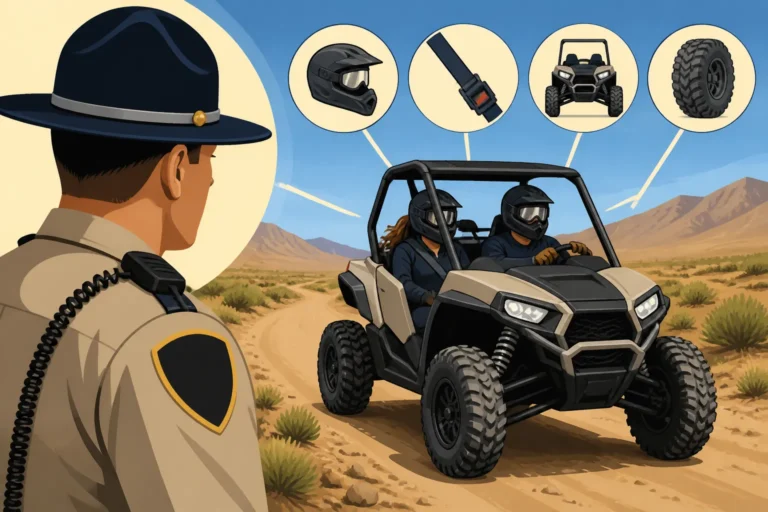
To even consider any form of road use, even the limited two-mile exception or county road travel, your off-highway vehicle must meet a stringent set of equipment requirements. This isn't just about having lights; it's about meeting specific safety standards to integrate, however briefly, with regular road traffic. The list includes:
- Headlights and Taillights: These must be fully functional and visible for a specified distance, typically 500 feet. [Nevada Headlight Requirements for Road Use] covers this.
- Stop Lamp: A functional brake light is non-negotiable, activating when you apply the brakes.
- Reflectors: Additional reflectors may be required, although sometimes a taillight can substitute for a rear reflector.
- Turn Signals: Front and rear turn signals are essential for communicating your intentions to other drivers.
- Horn: A working horn to alert others to your presence.
- Mirrors: At least one rearview mirror is typically required, allowing you to see traffic approaching from behind.
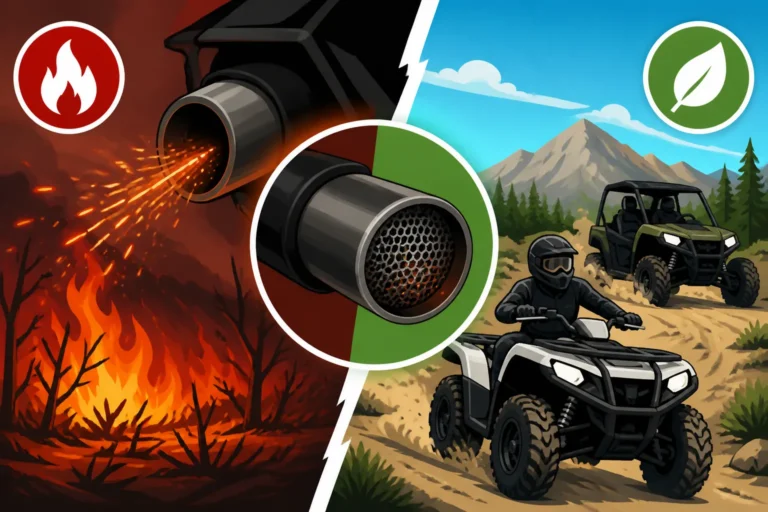
- Muffler and Spark Arrester: To control noise and prevent wildfires, especially when riding near populated areas or dry vegetation.
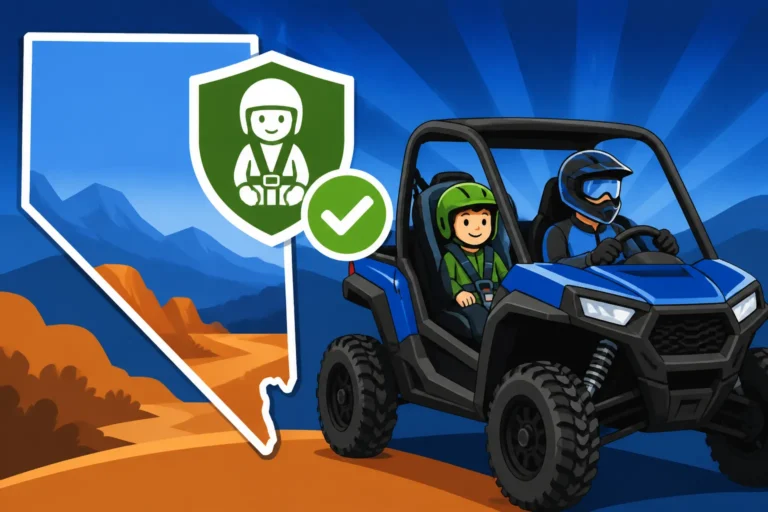
- Seat Belts: If your UTV has seats, it must have functional seat belts for all occupants, and they must be worn.
- Tires: While not explicitly "DOT-approved" for all road use, your tires must be in good condition and appropriate for the terrain you're traversing, including any paved sections.
Companies like SuperATV offer a wide range of accessories and full "street legal kits" that can help you meet many of these requirements. These kits often include mirrors, turn signal kits, and horns specifically designed for OHVs. While these products are invaluable for making your machine compliant, remember they are only part of the puzzle; the vehicle itself must fit Nevada's definition of a "large ATV" for any broader county road use, and even then, interstates are off-limits.
Why a Street Legal Kit Isn't Enough for Interstates
Even if you go all out, install every imaginable piece of safety equipment, and truly make your UTV shine with compliant lights and signals, a "street legal kit" will never make your OHV legal for interstate highway travel in Nevada. The reason goes back to the fundamental design and classification of these vehicles. Nevada's definition of a "large ATV" for road use is very specific. It focuses on features like seating for at least two people and a minimum cargo bed size, or seating for at least four people. This excludes most sport quads and even many two-seat sport side-by-sides from broad county road access. [Why a Two-Seat Sport Quad Fails Nevada's Test] highlights this.
More importantly, the interstate ban isn't about individual equipment; it's about the vehicle's inherent characteristics as an off-highway machine. These vehicles simply do not meet the federal safety and design standards for sustained high-speed highway travel. They lack the crashworthiness, the highway-rated tires, the specific emissions controls, and the overall engineering required for safe operation alongside passenger cars and commercial trucks at freeway speeds. No aftermarket kit, no matter how comprehensive, can fundamentally transform an OHV into a vehicle meeting those federal highway standards. The kit makes it compliant for limited, low-speed paved road use as allowed by state and local law, not for freeway cruising.
The "Large ATV" Designation and Its Limits
Nevada created the "large ATV" designation specifically to allow some UTVs (and sometimes certain ATVs) to access minor county roads. This was a response to the growing popularity of side-by-sides and their utility in rural and recreational settings. However, this designation is a carefully crafted compromise, not a free pass. To qualify as a "large ATV" for road use, your machine typically needs to meet specific criteria, often revolving around its size, seating capacity, or cargo-carrying ability. For example, a UTV with four seats or a cargo bed of a certain dimension might qualify, while a two-seat sport quad would not. [What Nevada's NRS 490.043 Counts as a Large ATV] provides the legal definition.
Even with this designation and a valid [Applying for a Nevada Large ATV Decal], your riding privileges on paved roads remain highly constrained. You're still subject to the two-mile rule for connecting trails or services, and you're still banned from interstate highways and most controlled-access freeways. Many cities and counties also have ordinances that limit where even a "large ATV" can operate within their boundaries. The "large ATV" decal grants you access to specific types of county roads, but it does not magically turn your OHV into a highway-capable vehicle. It's a key distinction that too many riders overlook, leading to tickets and frustration.
Consequences of Violating Nevada's Road Rules
Ignoring Nevada's specific rules regarding OHV use on paved roads, particularly the ban on interstate highways, can lead to much more than just a stern warning. Law enforcement officers, from state troopers to county deputies and park rangers, are well-versed in these regulations and are prepared to enforce them. The consequences can range from significant financial penalties to the loss of your riding privileges and even the impoundment of your machine, turning what should be an enjoyable day of riding into a very expensive headache.
Citations and Fines for Improper Road Use
The most immediate consequence of riding your OHV where it's not allowed is a citation. These aren't minor parking tickets; they are often treated as moving violations and can carry substantial fines. Riding an OHV on an interstate highway, for instance, is a serious offense that can result in a hefty fine that could easily run into the hundreds of dollars. Beyond the financial hit, such a citation might also result in points on your driver's license, affecting your insurance rates, or in some cases, even leading to a misdemeanor charge. [Nevada Fines for No Large ATV Decal] gives an idea of related penalties.
The fines aren't limited to just interstate violations. Using your OHV on city streets where it's prohibited, or exceeding the two-mile limit on a paved road, can also lead to citations. Law enforcement officers at popular riding areas like Sand Mountain, Logandale, or Nellis Dunes are especially vigilant, knowing that riders sometimes try to cut corners by using prohibited paved roads. They'll check your registration, your equipment, and where you're riding. It's a much better use of your time and money to trailer your machine to the appropriate staging area than to risk a ticket for a short, illegal jaunt down a prohibited road.
Impoundment and Other Severe Penalties
In more egregious cases, or for repeat offenders, law enforcement has the authority to impound your off-highway vehicle. Imagine being miles from home, having your UTV towed away, and then facing not only a hefty fine but also impound fees, daily storage fees, and administrative costs to get your machine back. This can quickly add up to thousands of dollars, far exceeding the cost of any registration or necessary modifications. It's a real risk, especially if you're caught riding on an interstate or engaging in reckless behavior on prohibited roads.
Beyond impoundment, there can be other severe penalties. If your illegal road use contributes to an accident, you could face charges related to reckless endangerment or negligent operation, in addition to civil liability for any damages or injuries. If you're riding an unregistered machine or operating without a valid driver's license, those are additional offenses that layer on top of the initial violation, compounding the legal and financial burden. It's simply not worth the risk to save a few minutes or avoid trailering.
The Risks Beyond Legal Repercussions
While the legal and financial consequences are significant, they aren't the only risks. The core reason for these prohibitions, especially on interstates, is safety. Operating an OHV at high speeds on a highway designed for cars and trucks puts you in extreme danger. Your machine is less visible, less stable at highway speeds, and offers minimal protection in a collision with a much larger, faster vehicle. The potential for serious injury or even fatality is incredibly high.
Beyond direct collisions, you risk breakdowns, blowouts, or other mechanical failures that are far more dangerous on a busy interstate shoulder than on a quiet trail. Imagine trying to change a tire or deal with an engine issue on the side of I-15 with semi-trucks thundering past at 75 MPH. It's a nightmare scenario. Furthermore, by riding where you shouldn't, you erode public trust and support for the OHV community as a whole. Every illegal act contributes to a negative perception, potentially leading to further restrictions and closures of legal riding areas. Responsible riding means respecting the rules, both for your safety and for the future of the sport.
Reciprocity and Out-of-State Machines on Nevada Roads
Many riders crossing state lines assume that if their ATV or UTV is street legal in their home state, it automatically grants them the same privileges in Nevada. Unfortunately, this is a common misconception that can lead to frustrating encounters with law enforcement. While Nevada does have some reciprocity for out-of-state OHV registrations for off-road use, that reciprocity generally does not extend to street legal classifications or the use of major highways. Nevada's laws are what apply when you're riding within its borders.
The Misconception of Out-of-State Plates
It's common to see OHVs in Nevada with license plates from states like Arizona, Utah, or Montana, where street legal conversions might be more straightforward or broadly recognized. Riders from these states often believe that their home state's plate or street legal registration makes them fully compliant for road use, including major highways, in Nevada. This is simply not true. Nevada has its own distinct laws regarding what constitutes a street-legal OHV and, crucially, where it can be operated. An out-of-state plate on an OHV does not supersede Nevada's ban on interstate riding or its specific requirements for other paved roads. [Riding Nevada Trails on a South Dakota Plate] and [Why a Montana Plate Does Not Help in Nevada] address this directly.
While your out-of-state OHV registration decal (like an Arizona OHV sticker or a California Green Sticker) might be recognized for off-road trail use for a limited period in Nevada, your "street legal" designation from another state typically carries little weight when it comes to riding on Nevada's paved roads, especially interstates. You are still subject to Nevada's rules, which means no interstates, and limited access to other paved roads only if your machine meets Nevada's specific "large ATV" criteria and local ordinances permit. Deputies at a roadside stop will care about Nevada law first and foremost.
Nevada's View on Other States' Street Legal Classifications
Nevada's legal framework for OHVs is primarily focused on off-road use and the carefully defined "large ATV" category for limited on-road access. It doesn't have a broad mechanism to accept or "cross-validate" the varying definitions of "street legal" from other states, particularly for vehicles that don't fit its own classification. What might be fully street legal and allowed on all roads (except interstates) in Arizona, for example, might still be restricted to only off-road use or very specific county roads in Nevada. [Nevada Reciprocity With Arizona] details the limits of this.
The differences can be quite stark. Some states have specific categories for "recreational off-highway vehicles" that allow them on nearly any road except interstates, provided they meet certain equipment standards. Nevada, on the other hand, maintains a more conservative approach, especially regarding the types of roads OHVs can use. The state prioritizes safety and traffic flow on its higher-speed routes, regardless of how another state classifies your machine. Always plan your route, and if you intend to use any paved roads in Nevada, ensure your vehicle is compliant with Nevada's equipment requirements and you are adhering to its specific use restrictions.
Riding Between Nevada and Bordering States
For riders who live near the border and frequently cross into Nevada, understanding these distinctions is paramount. If you're coming from California, for example, your "Green Sticker" allows you to ride off-road in Nevada, but it offers no special privilege for paved roads. [Moving a California Green Sticker Machine to Nevada] makes this clear. Similarly, if you're coming from Utah with a street-legal UTV, you cannot simply ride it on Nevada's main highways. You'll need to trailer your machine to designated staging areas.
Many popular riding spots, such as the areas around Mesquite, Laughlin, or Sandy Valley, are right on the state line. It's incredibly tempting to hop across for a quick ride or to access a different trail system. However, the moment you cross into Nevada, you are governed by Nevada's laws. This means being aware of the specific state and county regulations for that area. Just because you can ride your UTV down a city street in Mesquite, Arizona, doesn't mean you can do the same when you cross the border into Mesquite, Nevada. Always verify the rules for your specific location within Nevada to ensure a legal and enjoyable ride.
| Feature | Nevada Rules for OHV on Paved Roads | Interstate Highways (Nevada) | Typical Out-of-State "Street Legal" OHV |
|---|---|---|---|
| Primary Use | Limited access to minor county roads, crossing highways, connecting trails | Strictly Prohibited for OHVs | Often broader road use, excluding interstates |
| Max Paved Distance | 2 miles for access/crossing, local ordinances vary | 0 miles | Varies by state, often unlimited on non-interstates |
| Equipment Req. | Headlights, taillights, brake light, turn signals, mirrors, horn, etc. | Not Applicable (prohibited) | Varies by state, usually similar to NV requirements |
| Driver's License | Required | Not Applicable (prohibited) | Required |
| Insurance | Required | Not Applicable (prohibited) | Required |
| "Large ATV" Rule | Specific definition for road-legal UTVs, not all OHVs qualify | Not Applicable (prohibited) | Varies by state, may not have similar classification |
| Reciprocity | OHV registration (for off-road use) has limited reciprocity | None | None for "street legal" status on NV roads |
| Penalties | Fines, impoundment, points on license | High fines, impoundment, serious charges | N/A (your machine is subject to NV penalties) |
Disclaimer
This article is for general informational purposes only and does not constitute professional advice. Laws, prices and regulations vary by location and change over time. Consult a qualified professional for guidance on your specific situation.