Nevada Rules for Hunting From an ATV
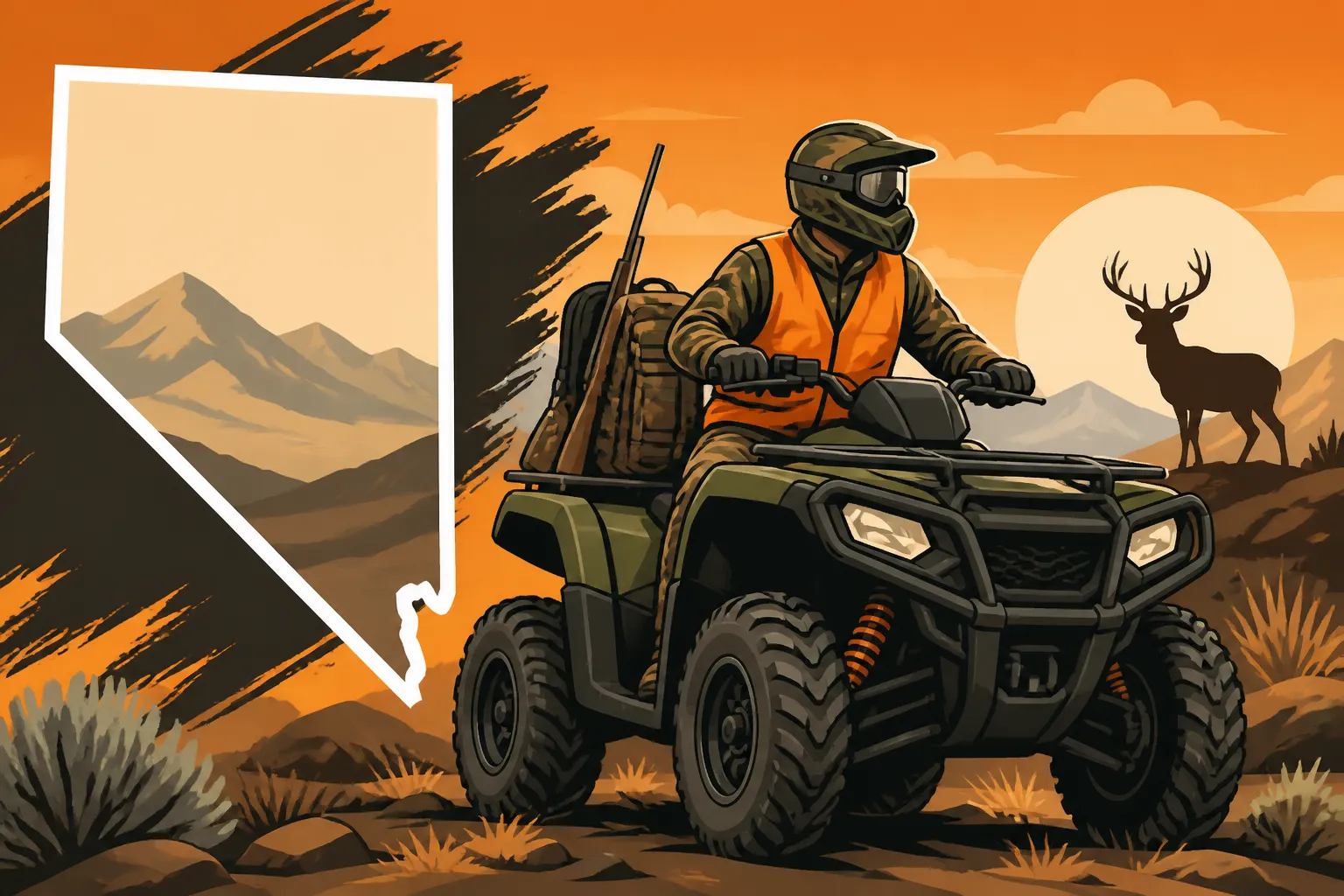
Hunting from an ATV in Nevada can make a remote area easier to reach, but the machine does not give you permission to hunt from it or ride anywhere you choose. The practical distinction is important: use the ATV for lawful access, then stop and hunt on foot where you have permission and the season’s rules allow.
Use the ATV to reach a hunt, not to take game
Treat the ATV as transportation, not as part of the hunt. Nevada hunting rules generally restrict taking wildlife from a motor vehicle and using a vehicle to pursue, harass, or drive animals. The details can depend on the species, method of take, location, and any disability-related authorization, so check the current Nevada Department of Wildlife (NDOW) regulations for the hunt you plan to make.
A sensible plan is to ride to a lawful parking spot, shut off the machine, and leave it there before you begin hunting. Don’t shoot from the seat, use the ATV to push animals toward another hunter, or follow wildlife with the vehicle to improve a shot. Even if an ATV can physically reach an animal, that does not make the approach a legal hunting method.
This distinction also helps with firearm handling. Before setting out, check the current rules for transporting firearms in a vehicle and the regulations for your specific hunt. As a cautious practice, unload the firearm before loading or unloading it from the ATV, keep it pointed in a safe direction, and secure it so it cannot fall or shift. Don’t handle a firearm while the machine is moving.
| Situation | Safer approach |
|---|---|
| Riding to a hunting area | Use an open, lawful route and follow the rules for the land you’re crossing. |
| Spotting game from the ATV | Observe without chasing, harassing, or using the vehicle to drive wildlife. |
| Preparing to hunt | Stop, park, and leave the machine before pursuing game on foot. |
| Carrying a firearm | Check current transport rules; handle it safely and never while riding. |
| Reaching private or restricted land | Get permission or confirm access before entering. |
Hunting authorization and vehicle authorization are separate. A hunting license, tag, or permit does not automatically authorize riding on a closed route, crossing private property, or operating an unregistered machine where registration is required. Likewise, an OHV decal does not grant permission to hunt or enter land that is closed to the public.
For the machine side of the trip, review Nevada OHV Registration and Proof of Ownership and Nevada OHV Permits Explained. If the ATV is registered or decaled in another state, confirm whether Nevada recognizes that credential for your situation; Nevada OHV Reciprocity With Other States explains why it’s worth checking rather than assuming a home-state sticker is enough.
Check the route, land access, and vehicle rules
An ATV can only help with a hunt if the route is open to that type of vehicle. Nevada has a mix of public, private, and restricted land, and public ownership alone does not mean every route is open to motorized travel. On federal land, use the applicable travel-management map and follow posted closures. For broader guidance, see Nevada Rules for Riding Federal Land and Nevada Rules for Riding a Closed Route.
Before leaving, identify the specific route you plan to ride and confirm it is open for motorized use. A line on a general recreation map may be a hiking route, a closed road, or a boundary rather than an ATV route. Local signs and current land-manager notices matter. If the map is unclear, contact the managing agency or landowner before relying on that route.
Public land is not one blanket permission
A hunting area can include several kinds of land with different rules. You might start on a county road, pass onto federal land, and approach a private parcel or a protected area. Each transition can change what’s allowed. Do not assume that a legal hunting location is also a legal place to ride, park, camp, or cross.
Plan a route that stays on open roads and trails. Avoid cutting across hillsides, washes, vegetation, or unmarked ground to shorten the trip. If the route ends at a closed gate or boundary, turn around; a hunting plan is not a reason to bypass a closure. For access across private land, obtain permission from the owner rather than treating a map’s public-land shading as enough.
Livestock areas need particular care. Slow down around animals, give them room, and leave gates as you found them. Don’t ride through a herd or use an ATV to move animals out of your way. Nevada Rules for Riding Near Livestock covers the practical access issues that can arise around grazing land.
Roads and trails have different requirements
An OHV registration decal is not the same thing as permission to ride on a public road. Nevada’s rules for road use can differ from off-highway rules, and a machine that is registered for off-road use is not automatically legal on every road. If the route includes pavement or a county road, check whether that particular road is open to your machine and whether additional equipment, licensing, or insurance rules apply. The rules in Riding County Roads Legally in Nevada can help you assess a road segment.
Don’t use a shoulder, ditch, or roadside as an informal way around a closed trail. Nor should you assume that a road shown on a map is open to OHVs just because regular vehicles use it. Confirm the road’s status and follow signs at the entrance.
If your hunt crosses into another state, check that state’s route rules and registration requirements as well. Reciprocity can apply to vehicle credentials, but it does not override local closures or hunting regulations.
Match your plan to the hunt and the season
Hunting rules can change by species, hunt unit, season, weapon, and the method you use to take game. Read the current NDOW regulations for your exact hunt before you travel, including any conditions attached to your license or tag. Check for restrictions on hunting methods and areas, not just the dates printed on a tag.
It also helps to separate the hunt plan from the ride plan. Write down the access route, the point where you intend to park, and the area you plan to cover on foot. Confirm that both the route and the hunting location are allowed. If conditions change—such as a closure, fire restriction, or weather event—be prepared to use another lawful route or cancel the ride.
A map and a hunting tag do not replace checking boundaries on the ground. Bring current maps, know which side of a boundary you are on, and avoid firing toward roads, buildings, other people, or areas you cannot clearly identify. If you are hunting near a road, make sure your position and line of fire comply with applicable restrictions; never shoot from, across, or along a public road.
Be especially cautious around other recreation users. Nevada public lands may be shared by hunters, hikers, livestock operators, and other riders. Keep speeds controlled, give people and animals space, and don’t assume that a quiet route will remain empty. A stopped ATV should not block a trail or create a hazard for someone approaching from either direction.
A practical pre-ride checklist
A short check before leaving can prevent a lawful hunt from turning into a registration, access, or safety problem. Use this list as a starting point, then add any requirements that apply to your hunt and machine.
- Confirm the hunt details. Verify the current season, hunt area, weapon and method rules, and all conditions for your license or tag with NDOW.
- Check the route. Use current travel information to confirm each road and trail is open to your ATV. Look for temporary closures and land boundaries.
- Confirm ownership and permission. Make sure you can access the land and have permission for any private property you need to cross.
- Check the machine’s credentials. Carry the required registration or decal information for the places you will ride. If the ATV is from another state, check Nevada’s current reciprocity rules.
- Plan where to stop. Choose a lawful place to park that does not block a route, damage vegetation, or intrude on private or restricted land.
- Secure your equipment. Carry firearms safely and follow current transport rules. Secure other gear so it cannot fall off or interfere with controls.
- Prepare for a remote ride. Bring water, navigation, basic repair and recovery equipment, and a way to contact help appropriate to the area. Tell someone where you plan to go and when you expect to return.
- Recheck conditions before departure. Weather, fire restrictions, road conditions, or closures may change the plan. If the route is no longer open, choose another legal option.
A hunting trip also puts extra strain on an ATV: added equipment, uneven ground, and long distances from help can turn a small mechanical problem into a serious delay. Keep loads balanced, stay within the machine’s limits, and avoid carrying a firearm in a way that could be struck by branches or snagged during a rollover. If you need to stop on a slope, choose stable ground and secure the machine before unloading gear.
The most reliable rule is simple: ride only where motorized travel is allowed, keep the ATV out of the act of taking or pursuing wildlife, and follow the current rules for your particular hunt. When a route, land boundary, or exception is unclear, pause and verify it with the responsible agency before riding in.
Disclaimer
This article is for general informational purposes only and does not constitute professional advice. Laws, prices and regulations vary by location and change over time. Consult a qualified professional for guidance on your specific situation.