Nevada Reciprocity With Oregon
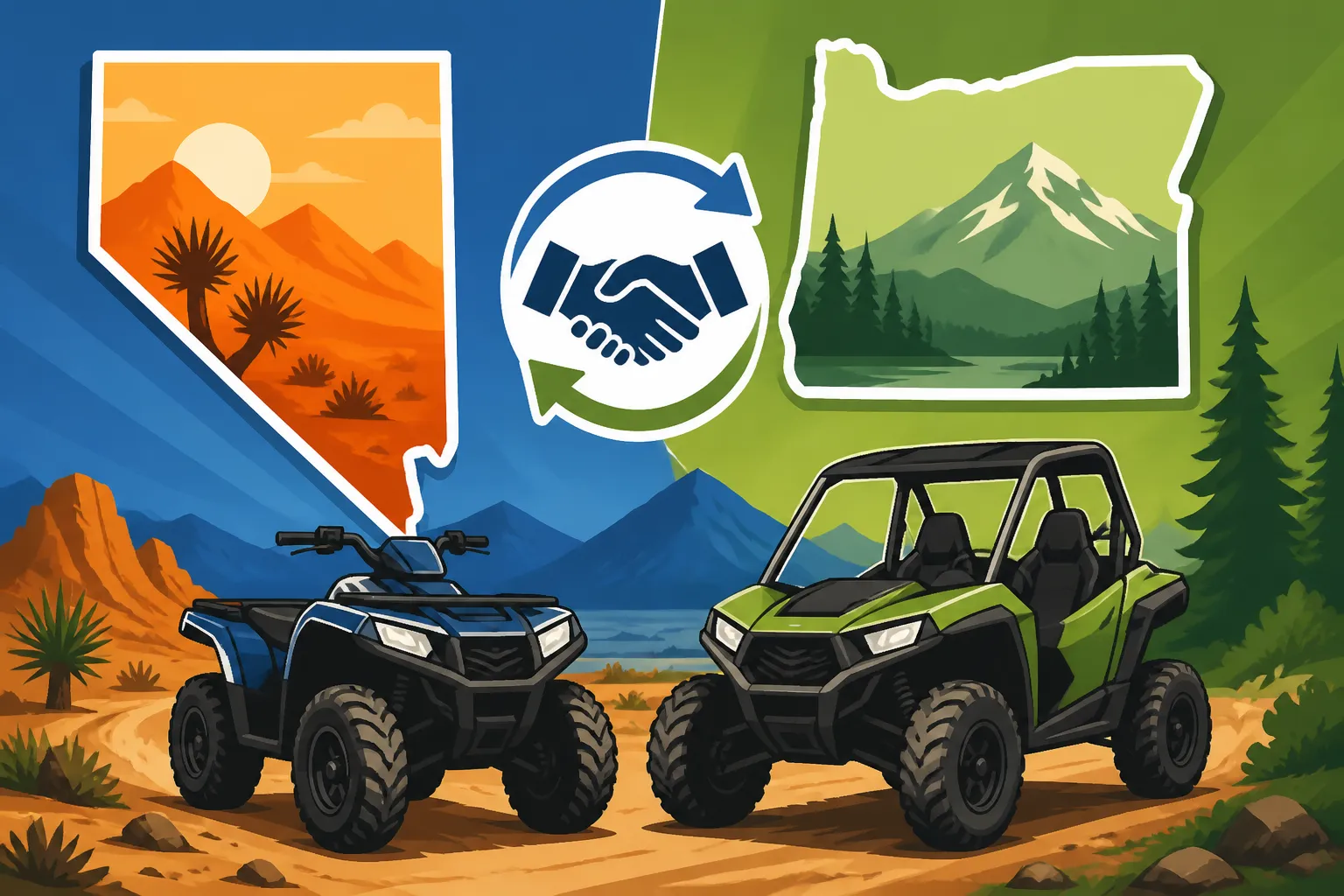
Oregon riders can generally use a properly permitted ATV or UTV in Nevada under reciprocity, but an Oregon document is not a blanket pass for every machine or every trip. The key questions are whether the permit is current, whether it covers your vehicle, and how long you’ll ride in Nevada. Check those details before hauling your machine across the state line.
How Nevada reciprocity works for Oregon machines
Nevada generally allows a nonresident to ride an out-of-state OHV under a limited reciprocity exemption when the machine has valid registration or a qualifying permit from its home state. For an Oregon rider, that means the paperwork needs to be valid for the particular ATV or UTV—not merely proof that you paid a fee or once held a permit.
Nevada also limits how long an out-of-state machine can use the exemption. The commonly stated window is 15 days. After that, the visitor may need to obtain a Nevada OHV decal rather than relying on the Oregon credential. Check Nevada’s current instructions before your trip, especially if you expect to ride on several separate days or make repeated visits. Don’t assume that the period resets just because you leave and return; confirm how Nevada counts the days for your situation.
The Nevada decal serves as the state’s OHV registration and trail permit. Reciprocity can save a short-term visitor from obtaining that Nevada decal, but it does not remove other requirements: the Oregon credential must remain valid, the machine must meet any rules for the area, and the rider must follow local closures and land-use restrictions. For the basics of Nevada’s system, see Nevada OHV Reciprocity With Other States and Nevada’s 15-Day Window for Out-of-State Machines.
A useful way to think about the rule is:
| Before riding in Nevada | What to check |
|---|---|
| Oregon paperwork | Is it current and valid for this exact machine? |
| Vehicle type | Does the Oregon credential cover this ATV or UTV classification? |
| Time in Nevada | Are you within the limited reciprocity period? |
| Ride location | Is the route open to your type of machine? |
| Proof on the ride | Can you show the permit or registration if asked? |
Reciprocity is about whether Nevada accepts an out-of-state credential for its OHV registration requirement. It does not automatically authorize riding on every road, trail, parcel of public land, or private property.
Which Oregon paperwork to bring
Oregon uses an ATV permit system, with requirements that can depend on the machine and where it will be operated. That makes the exact document important. Bring the current Oregon permit or registration that applies to your machine, and make sure the identifying details match the vehicle.
Before leaving, check the Oregon credential for:
- Its expiration date or other validity period.
- The machine or vehicle class it applies to.
- Any vehicle identification or owner details shown on the document.
- Display instructions, including whether a decal must be attached to the machine.
- Any separate Oregon requirements that apply to the way you use the vehicle at home.
A paper receipt, old permit, bill of sale, or photograph of an expired decal is not a substitute for current authorization. If the machine has recently changed owners, make sure the Oregon paperwork has been updated or that you have confirmation of what remains valid during the ownership transfer.
Pay particular attention when bringing a machine that is registered or permitted in more than one state, a borrowed machine, or a vehicle whose Oregon paperwork is unclear. Nevada’s reciprocity exemption is tied to valid out-of-state authorization, so a document that does not clearly cover the machine can create a problem even if the machine was previously used legally in Oregon.
If you are unsure whether an Oregon ATV permit qualifies for Nevada reciprocity in your case, contact the Nevada OHV program before traveling. Describe the machine, the specific Oregon document you hold, and the length of your planned stay. Ask whether the document is accepted for that vehicle and what evidence you should carry. For more on the general visitor rule, see Nevada’s Nonresident Exemption in NRS 490.082 and Which Visitors the Nevada Exemption Leaves Out.
What to do before a Nevada trip
A quick paperwork check can prevent a frustrating stop at a trailhead or roadside. Use this process before loading the machine:
- Identify the machine. Confirm whether it is an ATV, UTV, or another OHV type, and note its VIN. The vehicle category can affect which paperwork applies.
- Check the Oregon credential. Confirm that the permit or registration is current and belongs to the machine you plan to bring.
- Confirm Nevada acceptance. If the document is an Oregon ATV permit rather than a registration document, or the machine’s status is unusual, ask Nevada whether it qualifies for reciprocity.
- Count your Nevada riding days. Plan around the limited 15-day exemption and confirm how Nevada applies that period. If your trip may go beyond it, ask what you need to do to register the machine in Nevada.
- Check the destination’s rules. Verify that the route or recreation area is open and that your machine is allowed there. Land managers may impose requirements separate from registration.
- Keep proof accessible. Carry the current credential and any supporting paperwork in a place where it can be shown without unpacking the whole vehicle.
A waterproof document sleeve can help protect paperwork from dust, mud, and weather. Some riders use a small pouch kept with the machine’s gear; a sleeve sold through Amazon is one option, but any durable, readable storage method works. Keep a backup photo on your phone if useful, but treat it as a backup rather than a guaranteed replacement for the required document.
If you are also taking the machine across other state lines, check each state’s rules separately. Nevada’s acceptance of an Oregon credential does not establish that another state will accept it. Riding Nevada on an Oregon Permit offers a closer look at that specific visitor situation, while Nevada’s Registration Decal as Your Permit explains what the Nevada decal covers when a visitor needs one.
What reciprocity does not cover
An accepted Oregon permit does not make an ATV or UTV street legal in Nevada. OHV registration and road-use authorization are different matters. A machine that is legal to ride on an open off-highway route may still be prohibited from a public street or road. Road access depends on Nevada law, the machine’s equipment and classification, and the rules of the local jurisdiction.
Reciprocity also does not override:
- A route closure, seasonal restriction, or land-manager rule.
- Private-property boundaries or permission requirements.
- Restrictions on vehicle types or travel outside designated routes.
- Safety requirements that apply to the rider or machine.
- Any separate pass or fee charged for a particular recreation area.
Keep the Oregon document where you can show it, and use the route’s posted signs and current land-management information to decide where you can ride. If your stay may exceed the reciprocity period, the machine’s paperwork is uncertain, or you plan to use a road, resolve those questions before the ride rather than relying on the Oregon permit alone.
Disclaimer
This article is for general informational purposes only and does not constitute professional advice. Laws, prices and regulations vary by location and change over time. Consult a qualified professional for guidance on your specific situation.