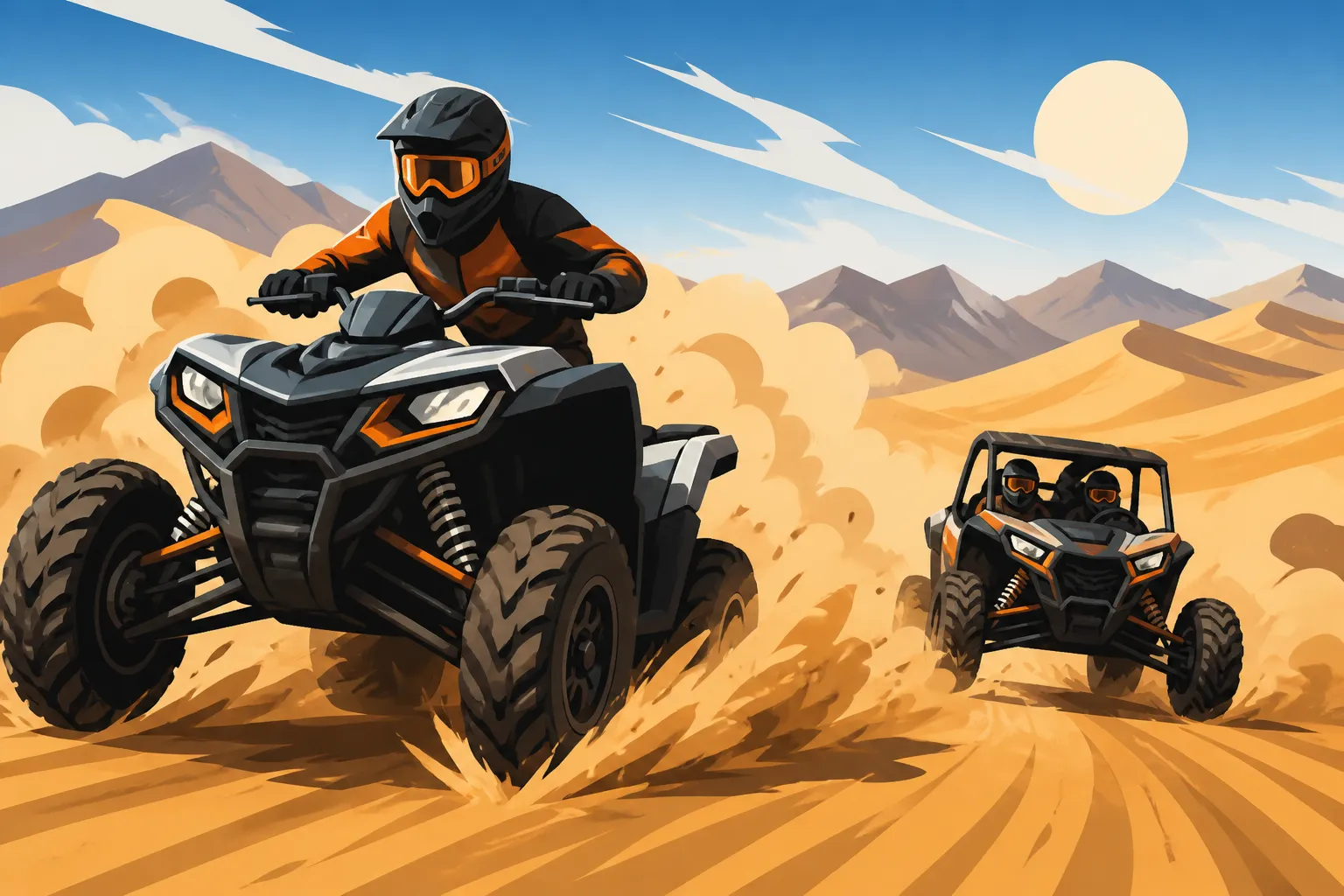
Dust and Traffic at Nellis Dunes
Dust and traffic can make a ride at Nellis Dunes feel hectic, especially when several machines share the same sandy route and visibility drops behind a group. This guide explains why the area gets dusty, how to ride more predictably around other people, and what to plan before you unload so you can spend less time guessing and more time riding safely.
Why Dust and Traffic Build Up at Nellis Dunes
Many riders share open terrain
Nellis Dunes is a popular riding area near Las Vegas, so the experience can change noticeably with the day, time, and number of riders. ATVs, UTVs, dirt bikes, and other off-highway vehicles may be moving across the same broad landscape. Unlike a narrow trail with one obvious direction of travel, open dune terrain can give riders several possible lines—and make it harder to anticipate where someone else will go.
That freedom is part of the appeal, but it also creates busy moments. A machine may crest a rise while another rider approaches from the other side. Someone looking for a place to stop may slow suddenly, while a faster group comes up behind them. Dust can hide those movements, leaving less time to react.
If you’re planning a first visit, it helps to set expectations before you arrive. The area may not feel quiet or organized like a single-track trail, especially during popular riding periods. [Nellis Dunes on a Saturday] offers a useful companion topic for thinking about busier conditions, while [Nellis Dunes for Beginners] can help you consider whether the terrain and riding environment suit your experience level.
Tires and wind keep dust moving
Loose, dry sand and soil can create a dust cloud when tires spin or several vehicles pass along the same line. A machine ahead may leave dust hanging in the air, and a breeze can carry it across nearby routes. Even when the rider in front has moved on, the view may remain obscured for a short time.
The dust can also make distance difficult to judge. A vehicle that looks far away may be closer than it seems, or you may not see a rider approaching from the side until the cloud shifts. On a busy day, this effect can repeat throughout the ride as different groups cross or re-use the same areas.
Conditions are not identical every visit. Wind, recent weather, soil moisture, and traffic all affect how dust behaves. Don’t assume that a route that felt clear earlier in the day will stay clear later. Before setting out, check any available land-management updates and local conditions, and be prepared to change your plan if visibility becomes uncomfortable.
Blind rises add another traffic hazard
A dune crest can block your view of the ground beyond it. That means you may not see a stopped machine, a rider climbing the opposite side, or a group gathered just over the top until you’re close. A dusty approach makes the problem worse because it can hide both the terrain and other riders.
Approach rises at a speed that lets you stop within the distance you can see. Avoid charging over a crest without knowing what is on the other side, and don’t stop right at the top where approaching riders may not have time to avoid you. If you need to pause, move well away from active travel lines and make sure your group is visible.
These habits matter even when the area seems open. An unobstructed view across one stretch does not mean the next slope or crossing is clear.
How to Ride More Safely in Dust and Shared Traffic
Create space instead of following a dust cloud
When you can no longer see clearly, don’t keep accelerating and hope the dust will clear. Ease off, increase your following distance, and move to a safe place away from the route if you need to wait. Following closely makes it harder to spot a rider slowing down or choosing a different line, and it puts you inside the thickest part of the dust.
Agree on a simple group plan before riding. For example, decide that everyone will slow down if the leader disappears from view, and choose a safe meeting point away from a crest or crossing. If a rider falls behind, don’t have the rest of the group turn around suddenly in a busy area. Stop somewhere visible and clear, then regroup in an orderly way.
A basic rule is to ride at a pace that matches what you can see—not the speed of the vehicle ahead. If the dust is so thick that you cannot identify the route or see other riders, take a break until conditions improve.
Make your movements easy to read
Predictable riding gives other people more time to respond. Keep a steady line when practical, avoid abrupt turns across another rider’s path, and look carefully before crossing a visible track or joining a more traveled route. If you need to stop, signal your intention when possible and move out of active traffic rather than pausing in a narrow passage.
At intersections or spots where several lines meet, slow down and look in every direction. Don’t assume that a rider coming through the dust has seen you. A flag or other visibility equipment may help make a machine easier to notice, but it does not replace cautious speed and clear sight lines. Review [Nevada Sand Dune Flag and Whip Rules] before your trip so you understand the relevant equipment expectations.
Shared-terrain etiquette matters too. Give slower riders room, avoid crowding people who are learning, and don’t roost sand toward another group. For more on considerate habits in a mixed-use riding area, see [Nevada Trail Etiquette on Shared Dunes].
Choose stopping places carefully
A quick stop to adjust goggles or check a map can become risky if you pull over on a crest, in a low-visibility turn, or where riders naturally climb and descend. Look for a place that is well off the active line, has good visibility in both directions, and gives your whole group room to gather without blocking others.
Before starting, tell everyone what to do if the group gets separated. A phone map can help with orientation, but battery life, reception, and downloaded map coverage may vary. Some riders use onX Offroad to review routes and save mapping for offline reference; it’s still wise to confirm access and closures with land-management information and avoid treating a phone screen as a substitute for looking at the terrain.
If you’re riding with children or less experienced drivers, keep the group compact enough to stay coordinated without bunching together in dust. Give each rider space, set a conservative pace, and take breaks before fatigue makes it harder to notice traffic.
Planning a Lower-Stress Visit
Think about timing, parking, and the first ride
The best time to ride depends on your comfort with traffic and changing conditions. A quieter period can make it easier to get oriented, but conditions can vary, and no time guarantees an empty riding area. If you’re hoping for a shorter outing, [Nellis Dunes for a Quick Evening Ride] may help you think through what to plan for a brief visit. Check current access information before traveling rather than assuming that a familiar entrance or route is open.
Give yourself time to unload, organize helmets and goggles, and agree on a route before the machines start moving. Rushing to follow another group can put you into terrain or traffic that doesn’t match your experience. If you’re towing a machine, identify a suitable place to park and unload in advance; [Where to Park a Trailer at Nellis Dunes] is relevant when you’re sorting out arrival logistics.
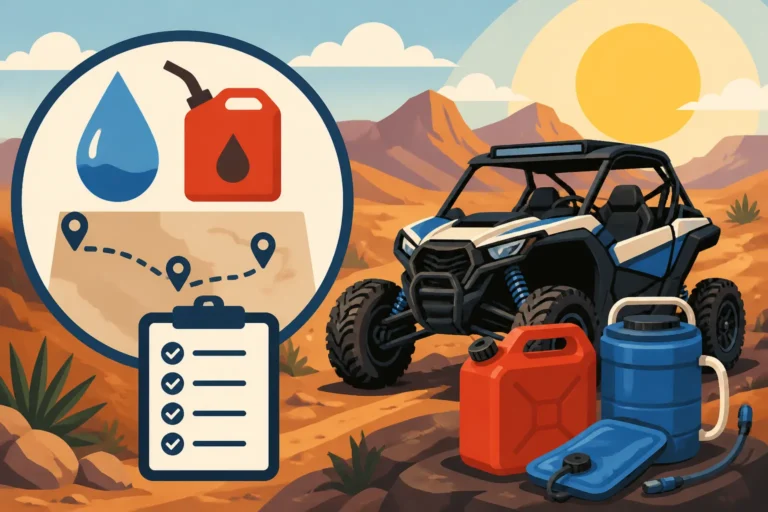
Pack drinking water, eye protection, and a way to secure important items against dust. Keep registration and other necessary documents protected, and make sure every rider understands the group’s stopping and regrouping plan. Nellis Dunes is commonly treated as a day-use riding destination, so review [Why You Cannot Camp at Nellis Dunes] if you’re planning an overnight trip nearby.
Use mapping as one planning tool
A map can help you understand the broad layout and identify possible routes, but open desert terrain can make it easy to misread a line on a screen. Keep checking the ground in front of you, watch for other machines, and turn around rather than pushing ahead when a route becomes unclear or unsuitable.
Apps such as onX Offroad can be useful for preparing a ride and keeping a digital map available. Save what you need before leaving areas with reliable service, and carry a backup plan for navigation. Map layers do not guarantee that a route is open, passable, or appropriate for your machine, so check current land-management information as well.
For a broader look at places to ride around the region, see [Nevada OHV Areas Near Las Vegas]. Before leaving home, also check [Nevada Trail Closures to Check Before You Go]. A closure, restriction, or access change can affect where you may ride even if a route still appears on a map.
Make a simple decision table before unloading
A short check-in can help your group decide whether to ride, wait, or change plans. Use the conditions you can actually observe rather than relying on assumptions about how the area will be.
| What you notice | Safer response |
|---|---|
| Dust makes it hard to see the next section | Slow down, increase space, or stop well off the active route |
| You cannot see beyond a dune crest | Approach cautiously and avoid stopping at the top |
| Several groups are using the same crossing | Yield where appropriate, look both ways, and cross predictably |
| A rider in your group disappears from view | Regroup at a clear, agreed-upon place rather than turning suddenly |
| The route or access status is uncertain | Pause and check reliable land-management information |
| Someone is tired, overheated, or uncomfortable | Take a break in a safe location or end the ride |
The goal isn’t to eliminate dust or traffic—those are part of riding a popular open area. It’s to leave enough room and time to respond when visibility changes. If conditions make that difficult, taking a break or choosing another plan is a sensible riding decision, not a failed trip.
Disclaimer
This article is for general informational purposes only and does not constitute professional advice. Laws, prices and regulations vary by location and change over time. Consult a qualified professional for guidance on your specific situation.