Booking a Nevada ATV Tour
Booking a Nevada ATV Tour
Booking an ATV or UTV tour in Nevada involves more than choosing a date. The right trip depends on where you want to ride, who is driving, what the price includes, and how much time you have for the whole outing. Use these checks to compare tours, avoid counter surprises, and book an experience that fits your group.
Choose the kind of ride you actually want
Start with the experience, not the vehicle name in a headline. “ATV tour” can mean a guided ride on individual quad bikes, a guided side-by-side trip where you drive a UTV, or a passenger ride in a machine driven by a guide. Some listings use “ATV” loosely for several kinds of off-road vehicles. Confirm exactly what you will operate and who will be behind the wheel before paying.
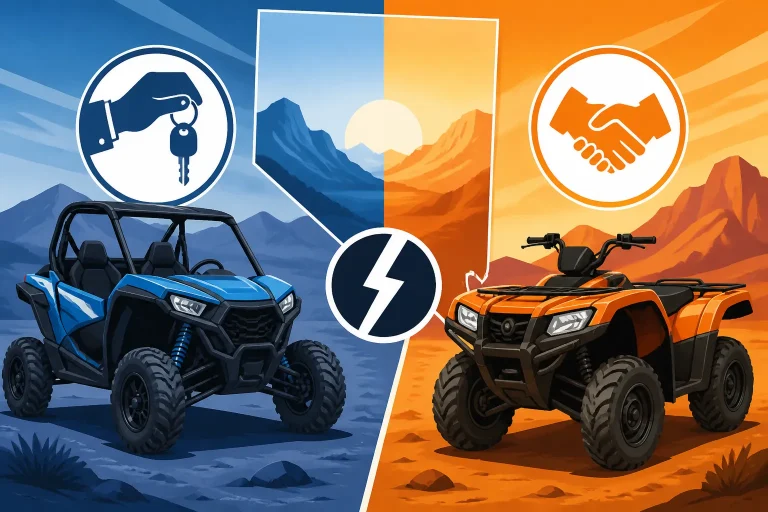
A quad is a straddle-seat vehicle with handlebars, usually intended for one rider. A UTV, often called a side-by-side, has a seat and steering wheel like a small car and may carry a passenger. A guided tour can also mean different things: the guide may drive a lead vehicle, ride alongside the group, or accompany guests in a vehicle. Ask how the group stays together and what happens if a rider needs assistance.
Think about the kind of terrain you want. Nevada tours may focus on desert trails, open sandy areas, rocky routes, or scenic landscapes. A dune ride can feel very different from a route over hard-packed dirt and uneven rock. If you have never ridden before, ask whether the route is designed for beginners, how the guide adjusts the pace, and whether the tour includes practice before leaving the staging area. Nevada ATV Tours for Beginners can help you consider what makes a first ride more manageable.
| Tour feature | What to clarify before booking | Why it matters |
|---|---|---|
| Vehicle | Quad, two-seat UTV, or larger side-by-side | Determines who drives, who rides as a passenger, and how the group is arranged |
| Guide setup | Guide in a lead vehicle, riding with guests, or following the group | Sets expectations for instruction, supervision, and pace |
| Terrain | Dunes, desert trails, rocky ground, or a mix | Helps you judge whether the ride suits your comfort and experience |
| Ride time | Time actually operating the vehicle | “Tour duration” may include transport, check-in, instruction, and breaks |
| Starting point | Tour office, trailhead, hotel pickup, or another meeting point | Affects your travel plan and the time needed before departure |
| Included equipment | Helmet, goggles, water, or other gear | Helps you avoid assuming that every operator provides the same items |
Separate the time on the machine from the total length of the outing. A listing might describe a half-day experience while including transportation, safety briefing, equipment fitting, and travel to the riding area. Conversely, a shorter scheduled tour can still require extra time for check-in and return travel. Ask the operator for the expected schedule from arrival through return, not only the advertised riding duration.
Also decide whether you want a guided tour or a self-guided rental. A guided outing generally gives you an arranged route and a person to lead the ride. A rental may give you more control over timing, but it can put more responsibility on you for navigation, route choice, and recovery planning. For a first desert ride, the structured format of a guided trip may be reassuring; experienced riders may prefer to compare the terms of a rental. See Renting an ATV in Nevada if you are weighing those options.
Compare locations, meeting points, and transportation
Nevada is a large state, and a tour described as “Las Vegas” may depart from the city, a nearby meeting point, or a riding area outside town. A short listing description is not enough to plan your day. Confirm the exact pickup or check-in location, how you get there, and how long the transfer takes. If you are staying on the Strip or elsewhere in the valley, ask whether hotel pickup is available for your specific booking or whether you must arrange your own ride.
A tour with transportation can simplify logistics, but check what the transportation covers. “Pickup included” may apply only to selected hotels, pickup zones, or departure times. It may also mean a shared transfer with an early departure and a fixed return schedule. If you are driving yourself, ask where to park, when to arrive, and whether the meeting location is the same as the riding area. Do not assume that a tour’s advertised city is the place where the engines start.
Travel time can affect how much riding fits into your plans. A remote desert route may offer a very different setting from a quick trip close to town, but getting there can take a meaningful part of the day. If you have a flight, show, restaurant reservation, or other fixed commitment, leave a generous buffer after the scheduled return. Tours can run behind because of check-in, equipment fitting, group instruction, or conditions on the route. Nevada ATV Tours With Hotel Pickup is useful when transportation is a major part of your decision, and Nevada ATV Tours That Start in Las Vegas can help narrow down the available location types.
When comparing places to ride, focus on the kind of landscape and pace you want rather than assuming every desert tour is interchangeable. Some outings emphasize open riding; others are built around scenic stops, photo opportunities, or a particular area. Ask whether the itinerary stays on designated routes and whether the guide can adjust the route for the group’s ability and the day’s conditions. If a specific landmark is important to you, confirm that it is part of the actual itinerary rather than simply visible in promotional images.
For tours outside a major city, check whether the operator expects you to arrive with your own transportation. There may be few convenient alternatives near a remote staging area, and mobile coverage or rideshare availability can be limited. For multi-day plans, consider lodging, meals, fuel stops, and how you will reach the tour site. A tour that looks close on a map can still involve a long drive on local roads.
Before booking, compare the meeting details on the operator’s own confirmation with the third-party listing, if you are using one. Save the address and the operator’s contact information offline. If the meeting location changes, you want to know before setting out. When a listing gives a general area instead of a precise address, contact the operator and get clear arrival instructions before payment.
Check who can drive and who can ride
Age, license, height, weight, and passenger requirements can determine whether a tour works for your group. These rules are set by the tour provider and can vary by vehicle and activity. Do not rely on a general statement in a short listing when a child, teenager, or passenger is involved. Ask the operator to confirm the requirements for the exact machine and date you are considering. Nevada Rental Age and License Rules is a helpful starting point, but a tour provider’s current conditions still need to be checked directly.
Find out whether each participant will drive or whether some people will ride as passengers. A person who is old enough to participate may not meet the minimum age or license requirement to operate the vehicle. In a two-seat UTV, the driver and passenger may have different eligibility rules. If your group includes children, ask about minimum ages for drivers and passengers, whether child seats or other restraints are available or required, and whether the vehicle is appropriate for each child’s size.
Confirm who must bring a driver’s license and what types of licenses the operator accepts. If the tour is outside the United States, or a participant has a foreign license, ask whether that changes the documentation requirement. Do not assume that a passenger needs the same documents as a driver. Make sure everyone knows what identification is required at check-in and whether the booking name must match the person presenting it.
Ask about weight or fit limits discreetly and specifically. Some vehicles have individual or combined passenger limits, and those limits can affect which machine the operator assigns. If the tour involves two passengers in a vehicle, confirm whether the combined load matters. It is better to address fit before paying than to discover at check-in that a participant cannot be accommodated. Nevada ATV Rental Weight Limits offers more context on why vehicle assignments can depend on participant fit.
Experience requirements deserve the same attention. A tour described as beginner-friendly may still require participants to control a vehicle on uneven ground, follow instructions, and keep a safe distance from other riders. Ask whether a first-time driver can participate, how much instruction is provided, and whether a participant can switch to a passenger role if they are uncomfortable. Never assume that a guide can take over driving a guest’s vehicle midway through the route.
For a group with different comfort levels, discuss the options before making one reservation. A confident driver may want a more challenging route while a first-time rider prefers an easier pace. The operator may offer different tour types or may need the group to stay together. Ask whether all participants must ride the same route and whether there is a suitable alternative for anyone who decides not to drive.
Be direct about medical or mobility concerns that could affect safe participation. The operator can explain the vehicle’s access, seat and restraint setup, and whether its route is appropriate. Do not wait until arrival to raise a limitation that might require a different vehicle or arrangement. The goal is not to share unnecessary private information; it is to verify that every participant can get in, ride securely, and follow the safety instructions.
Understand the price and what the booking includes
A headline price is only one part of the cost. The amount shown may be per person, per vehicle, or for a specific seating arrangement. A two-seat vehicle might be priced differently from an individual quad, and a passenger may have a separate charge or be included in the vehicle booking. Check the unit carefully: a low per-person figure does not necessarily tell you the total for your party.
Look at the checkout page for taxes, booking fees, equipment charges, transportation, and optional add-ons. Operators and booking platforms may present these items differently, so compare the final amount due rather than just the search result. Prices and inclusions can change; check the provider or booking platform for current figures and the terms attached to your selected date. Nevada ATV Tour Cost per Person explains the cost questions worth asking before you commit.
Ask what the base booking covers. It may include the vehicle, guide, helmet, goggles, and a safety briefing, but do not assume every tour includes all of them. Water, snacks, protective clothing, transportation, or photos may be included, offered separately, or not available. If an item matters to you, have the operator confirm it in writing. “Gear provided” can mean only required protective equipment, not comfortable clothing for the weather.
Damage deposits, damage waivers, and insurance are particularly important. A refundable hold is not the same thing as insurance, and a waiver may not cover every type of damage or incident. Ask how a deposit is collected and released, what kinds of damage remain the renter’s responsibility, whether a waiver is optional, and what exclusions apply. Read the actual terms before accepting them at the counter. Nevada Rental Insurance and Waivers gives you a framework for comparing these protections.
| Cost or term | Question to ask |
|---|---|
| Base rate | Is it charged per rider, per vehicle, or by another unit? |
| Passenger | Is a passenger included, charged separately, or subject to limits? |
| Transportation | Is pickup included for your hotel or meeting point? |
| Equipment | Which protective items are supplied, and what should you bring? |
| Deposit or hold | Is a card hold required, and when is it released? |
| Damage coverage | What does a waiver cover, and what exclusions or deductibles apply? |
| Cancellation | What changes, refunds, or credits are allowed, and by when? |
| Extras | Are photos, food, fuel, or other services included or optional? |
If you are booking through a marketplace, read both the marketplace’s booking information and the activity provider’s terms. A platform can make it easier to compare options, but the local operator may set the vehicle, safety, and participation rules. Viator may show different tour formats in one search, for example; check the supplier details and final terms for the specific experience rather than applying one listing’s conditions to another. Similarly, a Polaris Adventures listing may help you find a vehicle experience, but availability and the precise tour arrangement depend on the participating provider.
Save a copy of the complete booking description and the checkout terms. Keep confirmation of the vehicle type, date, number of drivers and passengers, pickup arrangement, included equipment, and any special requirements. If the listing changes after booking, your saved details make it easier to ask the operator what applies to your reservation.
Book through a platform or directly with the operator
Booking platforms can be convenient when you want to compare several activities in one place, check date availability, and keep confirmation details together. They may also offer customer support or a structured cancellation process. But a platform listing can summarize rather than fully explain the operator’s rules. Read the fine print and identify who actually runs the ride.
Booking directly with an operator can make it easier to ask detailed questions about a particular vehicle, pickup location, or participant requirement. The trade-off is that you may need to compare providers yourself and understand the operator’s own payment and cancellation process. Neither method is automatically better. Choose based on how much detail you need and how clearly the booking terms explain the experience.
Whichever route you choose, check these details before entering payment information:
- Confirm the date, start time, time zone, and number of participants.
- Verify the exact vehicle type and whether each booking is for a rider, passenger, or vehicle.
- Read the eligibility rules for every driver and passenger in your group.
- Confirm the meeting point or pickup area and the arrival time.
- Check what is included, what costs extra, and whether a deposit or damage hold applies.
- Read the cancellation, rescheduling, and late-arrival terms.
- Provide accurate participant and contact information, then save the confirmation and operator contact details.
If something in the listing is vague, ask the provider before booking rather than guessing. Good questions are specific: “Does this reservation include one UTV for two people?” is more useful than “What is included?” “Is pickup available from this hotel on this date?” is more useful than assuming a citywide pickup area. Request the answer in a message or email so the details are easy to refer to later.
Check whether the booking is confirmed immediately or only requested. A reservation request can require the operator to approve the date, vehicle, or group size. Do not book nonrefundable travel arrangements around an unconfirmed activity unless you understand the risk. If you have a large group, ask whether everyone can be accommodated on the same departure and whether separate bookings will be treated as one party.
Avoid booking multiple overlapping activities simply because a listing appears flexible. Check the actual start and end schedule, travel time, and arrival requirements. A delayed return or long transfer can affect later plans. If your itinerary is tight, ask the operator how much time guests should leave between the tour and another commitment.
Once booked, review the confirmation shortly before the outing. Reconfirm the address, arrival time, clothing guidance, and whether the operator has sent any weather or route updates. Keep the booking platform’s support information and the local operator’s contact information available. If a question arises on the day, contacting the operator directly is often the fastest way to clarify the meeting plan.
Prepare for Nevada’s weather and desert conditions
Nevada’s desert conditions can change what feels comfortable and safe on a ride. Heat, sun, wind, dust, and cold mornings can all affect the experience. A sunny forecast in town does not necessarily tell you what conditions will be like at a higher, more exposed, or more remote riding area. Check the forecast near the actual tour location and follow the operator’s clothing and equipment advice.
Wear practical clothing that covers skin and can get dusty. Closed-toe shoes are a sensible choice for operating or riding in an off-road vehicle. Avoid loose items that can interfere with the controls or get caught. Bring eye protection if the operator permits or recommends it, but confirm whether goggles are supplied and whether they fit over prescription glasses. A helmet should be correctly fitted; do not assume a personal helmet will be accepted without checking.
For warm-weather rides, consider sun protection, breathable layers, and water. Ask whether drinking water is provided and whether you may carry your own bottle. A group should not assume that a tour stop or staging area has supplies. Nevada ATV Tours in Summer Heat covers the seasonal concerns to consider, but the operator’s instructions for your date and location should guide your final preparation.
Dust is part of many off-road outings. If you are sensitive to dust or have a condition affected by airborne particles, ask about the route, vehicle spacing, and available face coverings. A trailing vehicle can encounter more dust than the lead vehicle, and wind direction can change during a ride. Do not expect a tour to eliminate dust exposure. If you have a significant health concern, discuss it with a qualified professional and the operator before booking.
Ask whether the tour proceeds in poor weather and how the provider handles unsafe conditions. Rain can change traction or make some routes unsuitable; strong wind, dust, extreme heat, or other conditions may lead to a delay, route change, or cancellation. The operator’s safety decision and the written booking terms determine what happens next. A weather forecast is not a guarantee that a tour will run as planned, so know the rescheduling policy before the day.
Desert outings also require realistic expectations about facilities and connectivity. A remote route may have limited cell service, few restrooms, and no convenient place to buy supplies. Use the restroom before departure if advised, arrive with what you need, and keep essential medication accessible according to the operator’s rules. Tell the guide if you feel unwell during the ride rather than trying to push through.
Finally, listen carefully to the pre-ride briefing. It should cover controls, spacing, signals, speed, route behavior, and what to do if the group stops or someone has trouble. Ask questions before the vehicles depart. Do not attempt a maneuver or route feature that is beyond your comfort simply because another rider is doing it. The guide’s instructions and the group’s pace are part of the experience, not obstacles to getting the most out of it.
Know the cancellation, change, and day-of rules
Cancellation policies differ between providers and booking channels, so read the terms tied to your exact reservation. Look for the deadline to cancel, whether a refund or credit is offered, how rescheduling works, and whether changes depend on availability. Check what happens if the operator cancels because of weather, mechanical issues, or another operational reason. A policy that applies to one tour may not apply to another, even when the activities look similar. Nevada ATV Tour Cancellation Policies is a useful companion when reviewing these terms.
Pay attention to the time zone and method required for a cancellation or change. A deadline may be based on the tour’s local time, and a message sent through a booking platform may not count as a completed cancellation until it is processed. Keep written confirmation of any change. If your plans shift, contact the provider as soon as possible rather than waiting until the final cancellation window.
Check the late-arrival rule. Many tours operate on a group schedule and may not be able to wait for a late guest. Confirm how early you should arrive for paperwork, safety instruction, and gear fitting. If pickup is included, learn whether the vehicle waits at your hotel or leaves at a set time. Build in extra time for traffic and navigation, especially when you are unfamiliar with the area.
On the day, bring the required identification and any driving documents specified in the confirmation. Do not bring valuables that are difficult to secure, and ask where personal items can be stored. If you expect to take a phone or camera, make sure it can be secured and used safely; handling a device while driving is not a substitute for a proper photo stop.
At check-in, carefully review any waivers, rental agreements, and damage terms before signing. Ask questions about an unfamiliar term. Confirm the vehicle condition and report visible damage to staff before departure, following the operator’s process for documenting it. Make sure you understand what to do if the vehicle develops a problem, someone becomes separated, or a participant feels unable to continue.
Do not treat a scheduled duration as a guaranteed return time for a tightly timed onward commitment. Check with the operator about the normal total outing length and leave a buffer. If there is a flight or other important appointment, a tour on the same day may be a poor fit unless you can allow for delays and travel back.
After the tour, follow the return instructions and ask how any deposit or card hold is handled. If you believe a charge or damage assessment is incorrect, document the issue promptly and use the operator’s stated process. Keep your confirmation, receipts, and relevant messages until the transaction is fully resolved.
Frequently Asked Questions
Do I need prior ATV or UTV experience to book a Nevada tour?
Not always. Some tours are designed for beginners, but requirements and route difficulty vary. Ask how much instruction is provided and whether the operator accepts first-time drivers on your selected departure.
Is a Nevada ATV tour the same as renting a machine?
No. A guided tour generally includes an arranged route and guide, while a rental may leave more route planning and navigation to you. Check what supervision and support each option provides.
Does the advertised tour length mean that much time riding?
Not necessarily. The total duration may include check-in, safety instruction, equipment fitting, transportation, and stops. Ask how long participants typically operate the vehicle.
Can children participate?
Possibly, depending on the operator, vehicle, age, size, and whether the child will drive or ride as a passenger. Confirm the exact requirements with the provider before booking.
What should I check before paying?
Verify the vehicle and seating arrangement, driver and passenger eligibility, meeting or pickup location, included equipment, final cost, deposit or damage terms, and cancellation policy.
Disclaimer
This article is for general informational purposes only and does not constitute professional advice. Laws, prices and regulations vary by location and change over time. Consult a qualified professional for guidance on your specific situation.