Open Shafts and Why You Stay on the Road
Nevada’s old mining roads can look like an invitation to explore, especially near ghost towns and historic workings. But an unmarked shaft may be hidden by brush, loose rock, or a thin crust of soil. This guide explains why staying on an established, open route matters, how to plan a safer ride, and what to do if you spot a mine hazard.
Why Nevada’s old mine openings are dangerous
A shaft can be hard to see until you are close
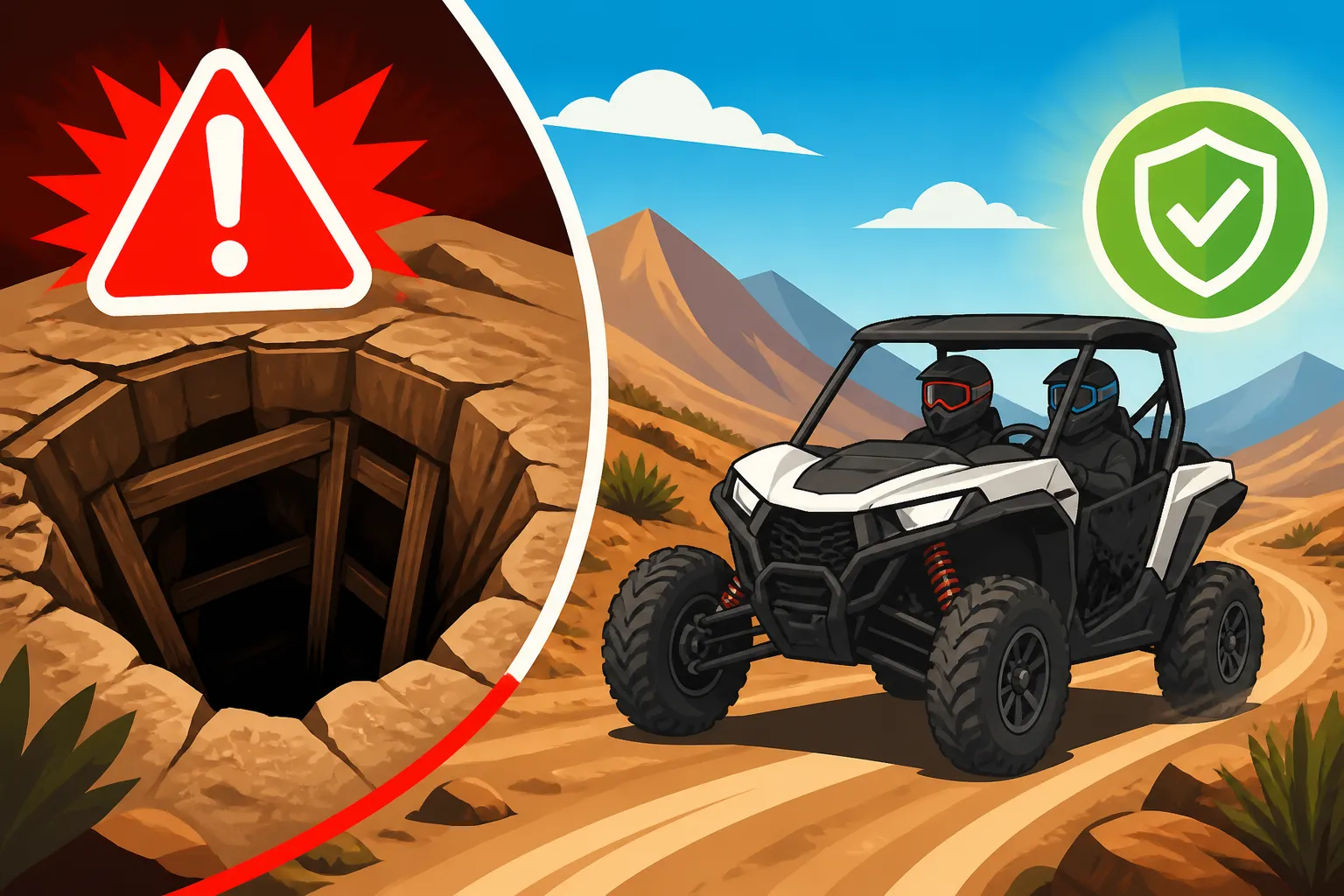
Nevada’s mining history left openings in remote, rugged places. Some are obvious vertical holes; others are partly covered by debris, concealed by vegetation, or tucked just off a road or trail. From a moving ATV or UTV, you may not notice one until you are too close to stop safely.
The ground around an opening can be as dangerous as the opening itself. Weather, erosion, and years of exposure can weaken the rim. A surface that looks firm may break under a person, a tire, or the weight of a machine. Loose rock and steep slopes can also make it difficult to back away once you have approached.
Distance and visibility matter. A sunny ride can still include deep shadows, dust, glare, and uneven terrain that hide a hazard. At a place that looks quiet and abandoned, the lack of people nearby does not mean the ground is stable or safe.
An old mine is not a safe place to investigate
A mine opening may lead to an unstable tunnel, a steep drop, or a network of workings that is not visible from the surface. There can be falling rock, loose timbers, sudden changes in elevation, and poor footing. The air may also be unsafe, even when an opening looks open and ventilated. Do not enter to look around, retrieve an item, or help someone without trained rescue support.
A shaft’s history can be unclear, too. What looks like an abandoned prospect may be on private land, an active mining claim, or within an area with specific access restrictions. A road nearby does not automatically give you permission to leave it or approach the workings. For a broader overview of hazards riders may encounter, see Nevada Mining Road Hazards and Riding Near an Active Mine.
If you find an opening that appears unmarked or damaged, keep your distance and tell your group to do the same. Do not move barriers, add a marker, or try to cover the opening. If it appears to present an immediate danger, report its location to the appropriate land manager or emergency services.
Stay on routes that are open and appropriate for your machine
A visible road is not always an open road
In Nevada, a track on the ground does not necessarily mean you are allowed to ride it. It could be a closed route, a private access road, or an old mining track that is not open to motorized travel. Conversely, a route may be legal but unsuitable for your machine or the conditions that day.
Before setting out, check current travel information for the land you plan to cross. Look at official maps and route designations, and confirm restrictions with the managing agency when details are unclear. A navigation app such as onX Offroad can help you review routes and orient yourself, but it should not be treated as permission to ride. Compare its information with official land-management guidance and local notices. See Reading a BLM Travel Management Map and Riding Open BLM Land Versus Marked Trail for more on understanding route access.
Be especially cautious around historic mining areas. A road may lead close to a shaft, cut, or tailings pile, and the easiest-looking line across the landscape may cross ground you should not enter. Treat fences, gates, warning signs, and closed-route markers as boundaries—not as obstacles to work around. If you cannot confirm that a route is open, choose a known route instead.
Keep your tires on the road, not on the edge of a route
It can be tempting to pull off a road to get a better look at a ruin, take a photo, or make room for another group. Near old workings, that small detour can put a person or machine onto unstable ground. Keep the group on the traveled surface and stop only where there is a wide, stable place to do so without blocking the route.
If a road narrows or the surface becomes questionable, do not ride closer to an opening to inspect it. Turn around only if you can do so safely on firm ground. Avoid driving over loose material, disturbed earth, or a mound that may conceal an opening. When in doubt, backtrack along the route you already know rather than scouting across the surrounding terrain.
| What you encounter | Safer response |
|---|---|
| An opening or dark depression near the road | Stop well back on stable ground and keep others away |
| A warning sign, fence, or barrier | Respect it and do not cross, move, or bypass it |
| A route that is not shown as open on the map you checked | Do not assume it is legal; verify with the land manager |
| Dust, poor visibility, or uncertain ground | Slow down, increase spacing, and avoid exploring off-route |
| A person who has fallen into an opening | Call emergency services; do not enter after them |
Route planning is also part of hazard prevention. Use onX Offroad or another mapping tool to review the route before leaving, save the information you may need offline, and share your plan with someone who is not riding with you. Then cross-check access and closure information with official sources. A digital line on a screen cannot show every unstable edge, newly fallen barrier, or change in ground conditions.
For practical guidance on where vehicle travel is allowed, read Nevada Rules for Riding Federal Land and [Nevada Rules for Riding a Closed Route]. If you are unsure whether a route crosses a boundary or whether access is permitted, Calling a BLM Field Office Before a Ride can help you identify the right questions to ask.
Plan a ride that reduces the chance of encountering a hazard
Do the homework before you unload
A little preparation can prevent the familiar “we’ll just see where this road goes” moment from turning into a difficult situation. Pick a route that matches your group’s experience, machine, fuel range, and daylight. Check access information before the trip, and look for notices that may affect the route. Weather matters too: rain can wash out a road or expose new hazards, while wind and dust can make it harder to see the edges of the track.
When a route passes through mining country or near a ghost town, plan to stay on established roads rather than treating every visible track as an invitation. If you use onX Offroad to prepare, save a route and an offline map before you lose cell coverage. Keep an independent backup, such as a paper map or a second device, and remember that a navigation tool does not replace signs or official closures.
Tell someone where you are going and when you expect to return. In remote areas, a small delay can become a bigger problem if nobody knows where to start looking. Bring enough water, fuel, and basic emergency supplies for the route and possible delays. For more trip-planning ideas, see Nevada Ghost Towns You Can Ride To and Flash Flood Season in the Desert.
Set group rules before the ride begins
Agree on a simple rule: nobody leaves the marked or confirmed route to investigate a mine opening. This matters even when one rider is experienced or believes the ground looks solid. Group members should know that they can call a stop if visibility drops, a barrier appears, or the route becomes uncertain—without feeling pressured to keep up.
Use enough space between machines to keep dust from blinding the next rider, while maintaining a distance that lets the group stay together. On a narrow road, avoid bunching up near a turn, a steep edge, or an area with poor visibility. If a rider stops, signal the group and stop at a safe distance rather than gathering around the hazard.
Before the ride, identify who will navigate and who will keep track of the group. Make sure everyone knows how to turn around, what to do if separated, and how to contact help. A mapping app can help the group follow the planned route, but the plan should include a clear turnaround point if the route is closed, washed out, or unsafe.
What to do if you find an opening or someone is hurt
Stop, keep people back, and report the hazard
If you see an opening, do not ride closer to get a photograph or inspect its depth. Stop on stable ground well away from the edge. Tell the rest of the group to stay back, and do not walk around the opening looking for a better angle. Loose ground may extend farther than the visible rim.
If it is safe to do so, note your location using a map, GPS coordinates, or a recognizable nearby landmark. Share that information with the relevant land manager or emergency services, especially if the opening is unmarked, a barrier has failed, or someone could easily approach it from the road. Do not attach your own sign or try to repair a fence; that can put you in danger and may interfere with the land manager’s response.
When you report it, describe what you observed without approaching to gather more details. For example, you can explain that there is a dark opening close to a named road or provide a location from your device. The goal is to help the responsible agency find the hazard—not to investigate it yourself.
Never enter a mine to attempt a rescue
If someone falls into a shaft or mine opening, call 911 immediately and give the clearest location you can. Do not climb down after them, even if they are responsive or appear close. A second person entering an unstable or unsafe space can quickly become another casualty, and a rescue may require specialized equipment and training.
Keep other riders away from the opening and make sure no one drives or walks across the surrounding ground. If you can communicate with the injured person from a safe position, do so without approaching the edge. Follow instructions from emergency dispatchers and wait for trained responders.
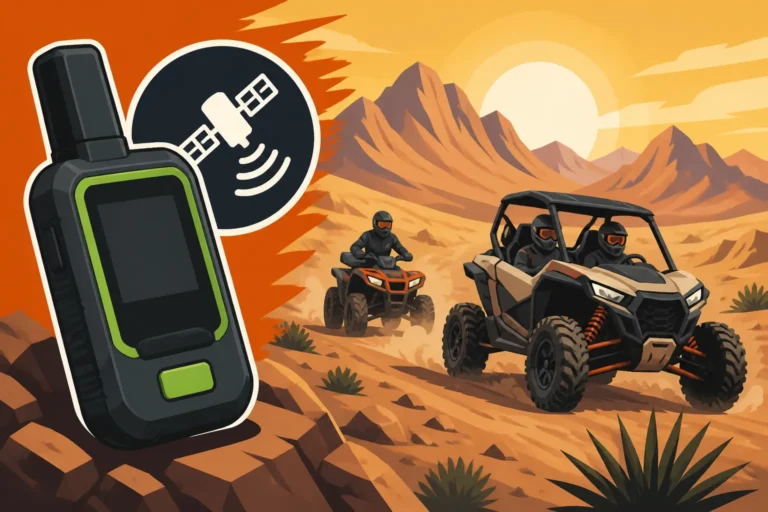
If the incident occurs far from reliable cell service, use the communication or emergency equipment you planned to carry. Tell dispatch or responders about the nearest access road, the number of people involved, and any visible hazards. Do not move the injured person unless staying in place creates an immediate danger and emergency personnel direct you to act.
Old mine sites can be fascinating reminders of Nevada’s past, and many riders enjoy visiting historic communities and mining country. The safer way to explore is to confirm that your route is open, stay on it, and give every shaft or uncertain patch of ground a wide berth. When a road is unclear or a warning appears, turning around is a sound riding decision—not a missed adventure.
Disclaimer
This article is for general informational purposes only and does not constitute professional advice. Laws, prices and regulations vary by location and change over time. Consult a qualified professional for guidance on your specific situation.