Wild Horses on the Trail
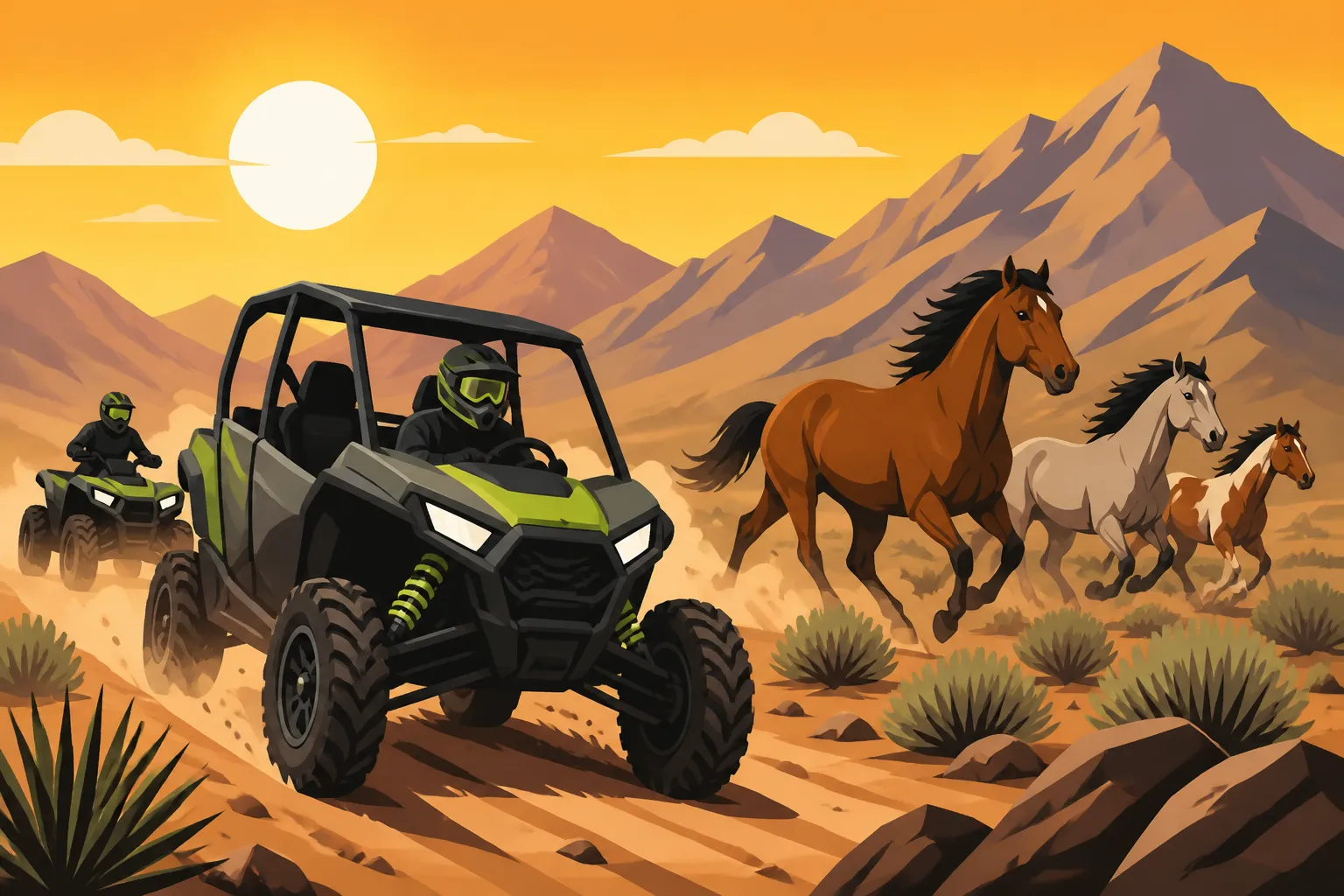
A wild horse can appear around a bend before you have much time to react, especially on a dusty Nevada trail with limited visibility. The safest response is to slow down early, give the animals room to move, and avoid startling or pursuing them. This guide explains how to ride responsibly around wild horses and plan a safer route through Nevada’s shared public lands.
Why wild horses need extra space on Nevada trails
Horses may react unpredictably to a machine
Wild horses are accustomed to moving across broad stretches of Nevada, but that does not mean they are comfortable around ATVs and UTVs. An engine’s noise, a sudden approach, or a machine appearing over a rise can startle them. A horse might bolt, change direction, or move toward another horse in the group. Even a calm-looking animal can react quickly when it feels cornered.
This can become dangerous for both riders and horses. A horse that runs across a trail may collide with a machine, while a rider who swerves suddenly could lose control on loose gravel or sand. The risk is not limited to a direct impact: dust, poor sightlines, and other riders following close behind can turn a small surprise into a larger problem.
Treat every horse sighting as a reason to slow down and reassess the situation. Do not assume the animals will stay where they are, move off the trail, or understand that you are trying to pass. Leave them a clear escape route rather than surrounding them with machines.
A herd is more than the horse you first notice
If you see one horse, look carefully for others. A group may be spread out, hidden behind brush, or positioned beyond a curve. Foals can be especially hard to see from a seated riding position, and a mare may react protectively if a rider gets too close.
Pause at a safe distance and scan the area before moving again. Avoid riding between horses, separating a young horse from the group, or passing through the middle of a herd. If the horses are on both sides of the route, wait until they have moved naturally and you have a clear way through without squeezing past them.
This is where patience matters more than making up time. On a busy riding day, waiting a few minutes can feel frustrating, especially if other machines are behind you. But pressing forward can cause the animals to scatter and can put everyone in a worse position. Signal to your group that you are stopping, then give the horses time to decide where they want to go.
Public land is shared ground
Nevada riding areas can include routes used by motorized riders, wildlife, livestock, hikers, and other visitors. An open-looking track is not automatically a place where riding off the route is appropriate. Stay on routes that are open to your machine and respect area signs and closures. For broader context on riding within designated areas, see Riding BLM Land in Nevada and Where Cross-Country Travel Is Still Allowed.
The same principle applies when a horse is near the trail: do not create a new path around the animal by cutting through vegetation or crossing sensitive ground. If you cannot pass safely on the established route, wait or turn back. A short delay is preferable to disturbing the herd or leaving a lasting track where riding is not allowed.
What to do when you encounter wild horses
Slow down before you reach the herd
The best response begins before you are close. If a horse is visible ahead, ease off the throttle and reduce speed gradually. Sudden braking, revving, horn use, or sharp steering can add to the commotion. Keep enough room to stop without skidding, especially on sand, loose rock, or a downhill stretch.
If visibility is limited, ride at a pace that lets you stop within the distance you can see. This is sensible trail riding anywhere in Nevada, but it matters even more where brush, terrain, or dust can hide animals. Avoid following another machine so closely that its dust cloud blocks your view.
When your group stops, leave space between machines and keep the engines as quiet as practical. Do not crowd the trail edge in a way that blocks the horses’ route. If another rider is approaching from behind, calmly let them know there are animals ahead so they can slow down too.
Wait, give them room, and pass only when it is safe
There is no universal distance that makes every encounter safe. The right amount of space depends on the terrain, the size of the group, the horses’ behavior, and whether they have a clear path away from you. If a horse turns toward your machine, pins its ears, bunches with the herd, or starts moving rapidly, increase the distance rather than trying to pass.
When the horses are moving away from the route, stay stopped until they have cleared it and are no longer likely to cross back in front of you. If they remain on or beside the trail, wait for a natural opening. Never try to make them move by accelerating toward them, circling around them, or revving the engine.
If the route is narrow and there is no safe way past, turn around when you can do so without approaching the animals. That may mean backing up slowly to a wider spot or choosing another open route. It is inconvenient, but it is safer than squeezing a machine between a horse and a fence, steep slope, vehicle, or herd.
Keep the whole group under control
A lead rider should alert the rest of the group early and stop somewhere with good visibility. Riders behind should not pass the stopped machines or approach the horses from another direction. If you are riding with children or inexperienced drivers, make sure they know to stay seated, keep their hands on the controls, and wait for instructions.
A large group can be more intimidating than one machine. Keep the group together without clustering close to the horses, and do not surround the herd. If you are riding with a guide or club, follow the person managing the stop rather than trying to take a shortcut around the group.
Shared-trail courtesy is important in these moments. The advice in Nevada Trail Etiquette on Shared Dunes applies beyond dunes: communicate clearly, avoid creating unnecessary noise and dust, and make room for other trail users.
How to plan a ride through horse country
Check the route before you leave
Before riding, review the route and the land manager’s current information for access, restrictions, and closures. A route shown on an app may not be open to motorized travel, and conditions can change. Start with official travel information where available, then use a mapping app as a planning aid rather than as permission to ride anywhere.
Tools such as onX Offroad can help you study routes, identify nearby roads, and prepare an offline map before entering areas with weak cell service. Use it to support your planning, not to replace posted signs or official travel rules. For a broader route-planning approach, see Reading a BLM Travel Management Map and Nevada Trail Maps Worth Downloading.
It also helps to have a backup route. If horses, a washout, a closure, or heavy dust makes your planned route unsuitable, you will have a safer option than improvising across unmarked ground. Check Nevada Trail Closures to Check Before You Go before heading out, and save the map for offline use if the area may have limited coverage.
| Situation | Safer response | Avoid |
|---|---|---|
| Horses visible ahead | Slow down early and stop with room to spare | Approaching quickly to get a closer look |
| Herd on the trail | Wait for a clear route or turn back | Riding between horses |
| Dust blocks visibility | Stop or move at a very slow pace until visibility improves | Following close behind another machine |
| Horses move toward you | Give them more space and keep an escape route open | Revving, honking, or trying to push them away |
| No safe passing room | Back away carefully or choose another open route | Cutting off-trail through brush |
Prepare for limited signal and changing conditions
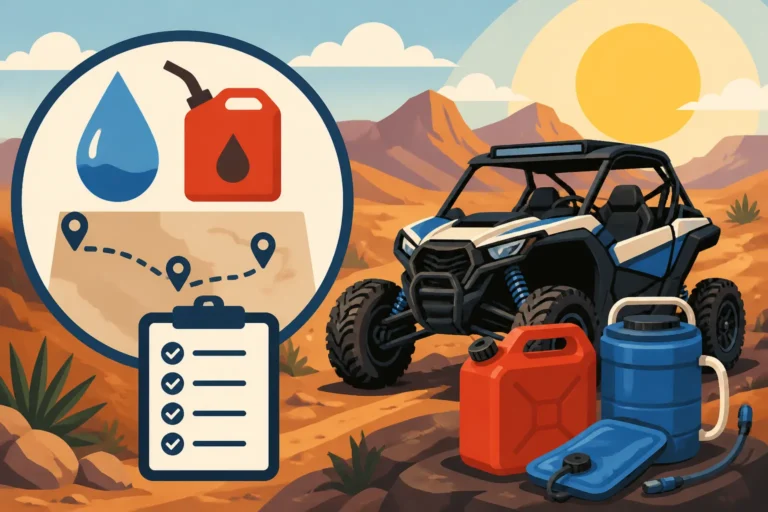
Cell service can be unreliable on remote Nevada routes. Download maps before leaving, tell someone where you plan to ride, and set a reasonable return time. Carry water, basic repair supplies, and enough fuel for your planned route and a possible detour. For practical planning in remote areas, read Cell Coverage on Nevada Trails and Water and Fuel Planning in Nevada.
Dust can make a horse encounter harder to manage by reducing visibility and adding noise. Leave extra space behind other machines and stop if you cannot see the route ahead. Heat can also affect riders and machines, so plan breaks and keep an eye on your cooling system. Desert Heat and Your Cooling System covers another part of preparation that is easy to overlook when the main focus is the ride itself.
If you encounter a closure, damaged route, or a situation that appears to need attention, note your location and follow the relevant land manager’s guidance for reporting it. Do not approach horses to take photos, inspect an injury, or check for markings. A zoomed photo from a safe distance is less disruptive than walking toward the animals.
Habits that protect horses and riders
Do not feed, chase, or touch the horses
Feeding wild horses can encourage them to approach people and vehicles, increasing the chance of a future conflict. Do not offer food or water, even if an animal looks thin or thirsty. Keep snacks and trash secured, and never leave food behind at a trailhead or campsite.
Do not chase horses for a photo or video, and do not try to herd them away from a route. A phone camera or binoculars can help you observe from a distance without closing in. If the horses move away, let them go; do not follow them on foot or by machine.
If you are unsure how close is too close, create more space. A good photo is never worth provoking a panicked response, separating a foal, or putting a rider between animals.
Respect livestock and private property too
A horse on a trail may be wild, privately owned, or part of a nearby ranch operation. From a distance, it may not be possible to tell. Regardless, slow down, give the animal room, and do not interfere with gates, fences, or livestock operations. For guidance that focuses on animals managed as livestock, see Nevada Rules for Riding Near Livestock.
Do not open a gate and leave it unsecured, and do not cross private land just because a track appears to connect two public routes. If a fence or sign makes the route unclear, stop and confirm where you are before continuing. A navigation app can help you understand your location, but it cannot grant access where you do not have it.
Make calm choices even when plans change
A horse encounter may delay your ride or force a change of route. That can be disappointing, particularly if you have driven a long way to reach the trail. Still, the safest ride is not always the one that follows the original plan. Turning around, waiting, or choosing a different route is part of responsible riding.
Before moving again, check that everyone in your group is ready, the animals have room to move, and the route ahead is visible. If dust or terrain hides the herd, wait longer rather than guessing. Good decisions in these moments protect both the animals and the people who share the trail.
Disclaimer
This article is for general informational purposes only and does not constitute professional advice. Laws, prices and regulations vary by location and change over time. Consult a qualified professional for guidance on your specific situation.