Low Dunes and Why They Ride Differently
Low dunes can look easier than a tall dune field, but they ask for a different kind of riding. Their smaller slopes may offer less room to build momentum, and changing sand, hidden dips, and nearby traffic can make route choice more important than climbing skill. This guide explains what to expect, how to adjust your technique, and how to plan a safer Nevada ride.
What makes low dunes ride differently
Shorter slopes leave less room to build momentum
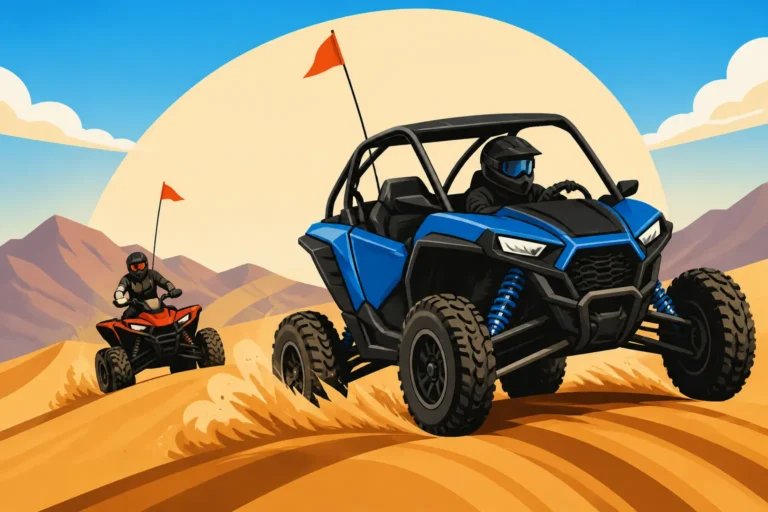
On a tall, open dune, a rider may have a long approach and a broad face to climb. Low dunes often have shorter, rolling slopes instead. That can make each rise feel abrupt: you may reach the base before you have settled into a comfortable line, or find that the far side drops sooner than expected.
The answer is not simply to go faster. Speed can help a machine keep moving through soft sand, but carrying too much into a short crest can make it harder to react to what is beyond it. Approach at a controlled pace, keep a clear view of the route, and avoid accelerating toward a ridge if you cannot see the landing or downslope.
Small changes in terrain can change the feel of a route
A low dune field may seem gentle from a distance, yet the surface can vary from firm, packed sand to loose, soft patches. Wind and recent use can reshape the edges and leave dips or ruts that are hard to spot from the seat. A line that felt smooth on an earlier lap may not feel the same after more traffic or a change in conditions.
This unevenness is one reason low dunes reward attention and smooth inputs. Sudden steering or throttle changes can unsettle a machine, especially when one wheel reaches softer sand than the others. Look ahead, keep your hands relaxed, and make small adjustments rather than trying to correct every bump sharply.
The ridges can hide what is on the other side
A low crest can still block your view. Another rider, a stopped machine, a steep drop, or a crossing track may be hidden just beyond it. The risk is easy to underestimate because the dune does not look dramatic.
Treat every ridge as a blind crest unless you can see over it. Slow down before reaching the top, choose a route with a clear view where possible, and do not stop in a spot where someone approaching from behind may not see you. These habits matter at popular riding areas, where different machines and skill levels may share the same terrain.
For a broader look at how Nevada’s dunes differ, see [Nevada's Dune Riding Areas Compared]. If you are deciding between destinations, [Winnemucca Dunes Along Nevada's US 95] and [Sand Mountain: Nevada's Great Basin Dune] offer useful starting points for comparing the kind of sand terrain you may encounter.
Choosing lines and adjusting your riding
Read the terrain before committing
Before you ride into a new section, take a moment to scan for the slope, surface, traffic, and available exits. Look for a line that is visible from beginning to end, not merely one that appears smooth at the entrance. If a crest hides the far side, approach cautiously or choose another route.
A sensible line is not always the straightest or most exciting one. A gentle route with room to turn around may be a better choice than a steep or blind rise, especially if you are riding with a newer operator, a passenger, or a machine that is heavily loaded. If you are uncertain, stop in a visible, safe place and check the route on foot rather than committing to a guess.
Use steady throttle and avoid abrupt corrections
Soft sand can slow a machine, so a consistent pace can help maintain forward movement. But “steady” does not mean holding the throttle open regardless of conditions. Ease into the terrain, keep enough momentum to move smoothly, and adjust gradually when the surface changes.
Sharp turns and sudden braking can make it harder to keep control. Give yourself room to turn, especially when descending or crossing another track. If the machine begins to bog down, avoid spinning the tires aggressively; pause, assess the situation, and consider whether a safer route or assistance is needed.
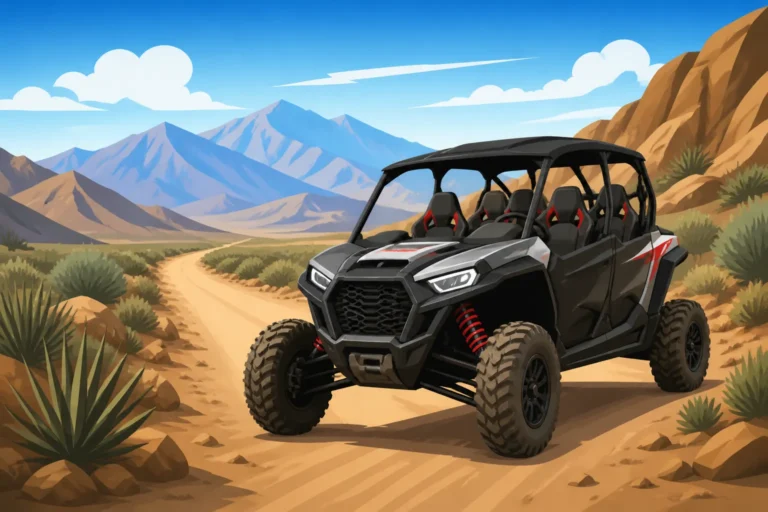
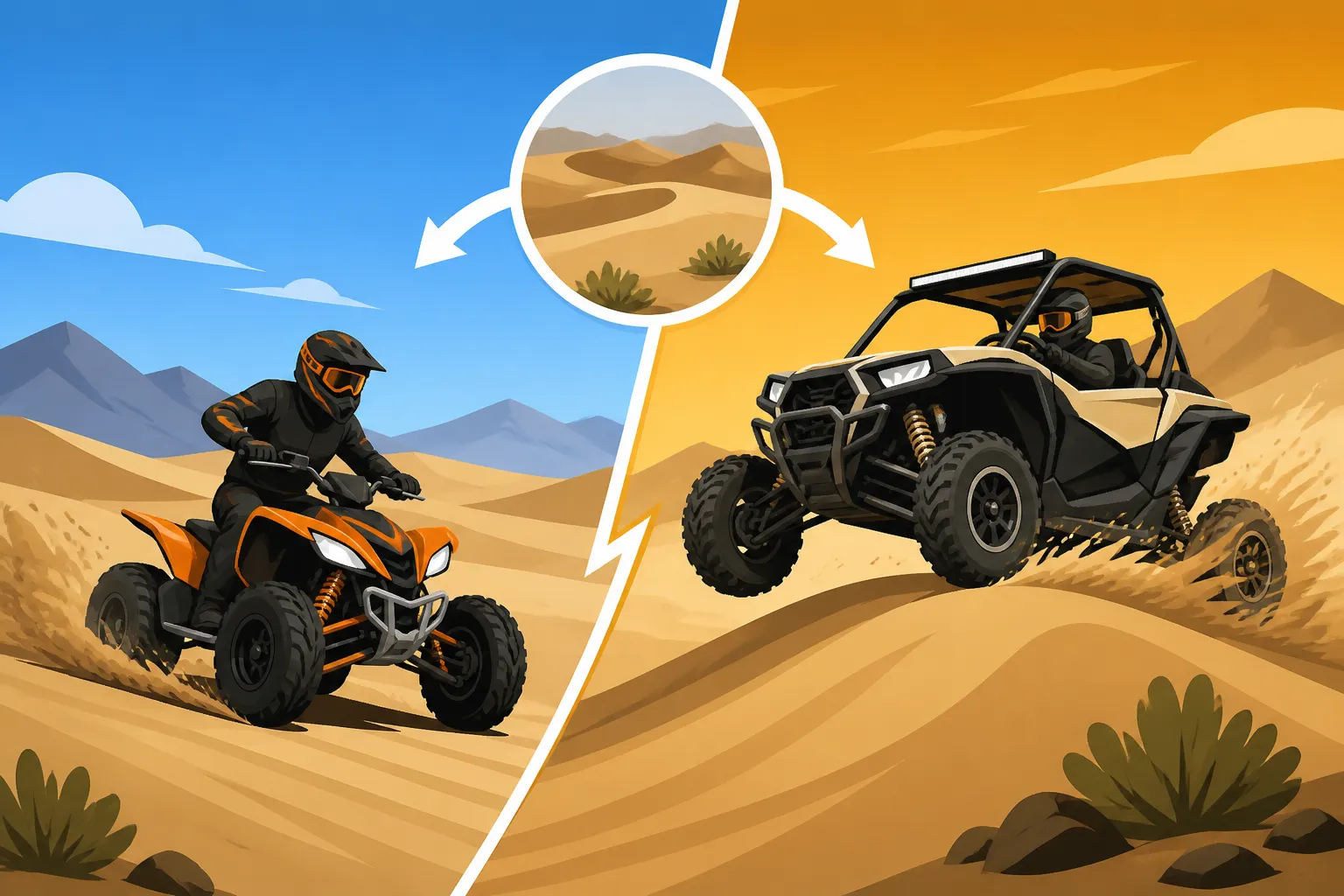
For side-by-sides, account for the vehicle’s wider footprint and longer stopping distance. A line that seems open to a quad may be narrow or awkward for a UTV, and a quick steering correction may not be practical. Keep a comfortable following distance and agree on simple signals with your group before entering a busy area.
Match the route to the rider and machine
A low dune can be a sensible place to build confidence, but it is not automatically easy for every rider. A beginner may find frequent blind crests more stressful than a single, visible slope. Likewise, a powerful machine may respond differently in loose sand than a smaller or heavier setup.
Make the ride fit the least experienced person in the group. Choose terrain where they can practice stopping, turning, and judging sand without pressure to keep up. If someone gets uncomfortable, regroup in a visible spot and take a calmer route rather than treating the next ridge as a challenge to overcome.
Destination research can help you decide whether the terrain suits your group. [The 40 Miles of Winnemucca Sand] describes a broad riding area, while [The 600-Foot Dune Near Fallon, Nevada] gives a sense of the contrasting scale associated with Sand Mountain. A tall dune and a rolling low-dune area can both be demanding, but in different ways.
Planning a Nevada low-dune ride
Check access, route information, and conditions
Before leaving, confirm that the area is open to riding and review the route information for the specific place you plan to visit. Public-land access, closures, and designated routes can vary by location. A map can help you understand where you are going, but it does not replace posted restrictions or local signs.
A mapping app such as onX Offroad can be useful for preparing a route and keeping track of your position, particularly when trail junctions or access roads are unfamiliar. Download or save the information you need before heading out, and do not assume that mobile service will be available once you are away from town. You can also compare tools and preparation ideas in [Nevada Trail Maps Worth Downloading] and [Planning a Ride With Trail Finder].
Check conditions close to departure as well. Wind, rain, and heavy use can affect sand and visibility. If the weather has changed or the route looks different from what you expected, be willing to shorten the ride or choose a different area.
Prepare for heat, dust, and a slower pace
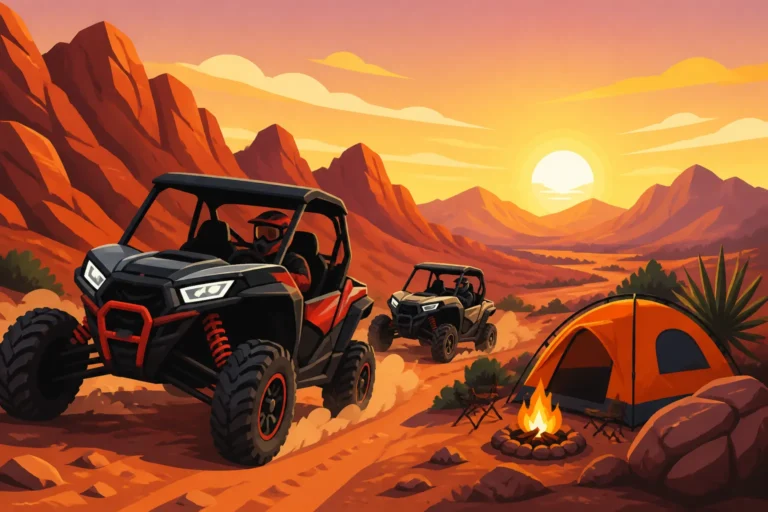
Even a short ride can become uncomfortable if you underestimate the desert environment. Carry more water than you expect to need, protect your eyes from dust, and plan breaks before riders become tired. Fatigue can make it harder to judge distance and react smoothly to terrain.
Tell someone where you are going and when you expect to return. Keep essential paperwork and a phone or navigation device protected from dust. If you use onX Offroad or another map tool, make sure you know how to use it before you are navigating under pressure; a saved route is more useful when you can read it confidently.
A conservative plan should include time for regrouping, minor stops, and unexpected delays. Low dunes may appear close together, but repeatedly climbing, descending, and navigating around other riders can take more energy than a casual look at the landscape suggests.
Keep your group visible and predictable
At a shared riding area, predictable behavior helps everyone. Avoid stopping just beyond a crest, where an approaching rider may not see you. When regrouping, move to a broad, visible area away from active lines of travel. Keep enough space between machines to see hazards and respond without abrupt braking.
Agree on a simple plan before starting: where to regroup, how to signal a stop, and what to do if someone takes a different line. If a rider gets separated, having a known meeting point and a map on hand is more reassuring than trying to improvise in unfamiliar terrain. An app such as onX Offroad may help a group orient itself, but riders should still communicate and stay aware of the ground around them.
For a destination near Las Vegas, [Nellis Dunes and the Las Vegas Skyline] provides another point of comparison. The right area depends on your experience, the machine you are bringing, and the kind of terrain you want—not simply on which dunes look most impressive in a photo.
Common mistakes on low dunes
Assuming a small dune is automatically safe
Low height does not remove the risks of soft sand, blind crests, collisions, or getting stuck. Riders sometimes relax because the terrain looks mild, then carry too much speed into a rise or follow a track without checking where it leads.
Stay deliberate even when the dunes seem manageable. Keep your speed appropriate to visibility, leave room to stop, and avoid following another machine so closely that you cannot see its path. If the route becomes more difficult than expected, turn around while you still have a clear, safe option.
Chasing a track without checking the landing
A set of tire marks can look like a ready-made route, but it may lead over a crest you cannot see or into terrain that does not suit your vehicle. Tracks can also be misleading when the sand has shifted since they were made.
Use existing tracks as clues, not guarantees. Check the slope and the far side before following a line, and do not cross into an area where you cannot see approaching riders. If visibility is poor, slowing down or choosing another route is usually the better call.
Letting the group stretch too far apart
It is easy for faster riders to pull ahead while newer riders take more time to navigate each rise. A long gap makes it harder to share warnings and can leave someone unsure which way the group went.
Set a pace that allows everyone to stay connected. Regroup at safe, visible points rather than at blind crests, and check in before changing areas. A little patience keeps the ride more enjoyable and reduces the chance that someone feels pressured into a line they would not choose on their own.
Disclaimer
This article is for general informational purposes only and does not constitute professional advice. Laws, prices and regulations vary by location and change over time. Consult a qualified professional for guidance on your specific situation.