Nevada Riding Areas With RV Hookups Nearby
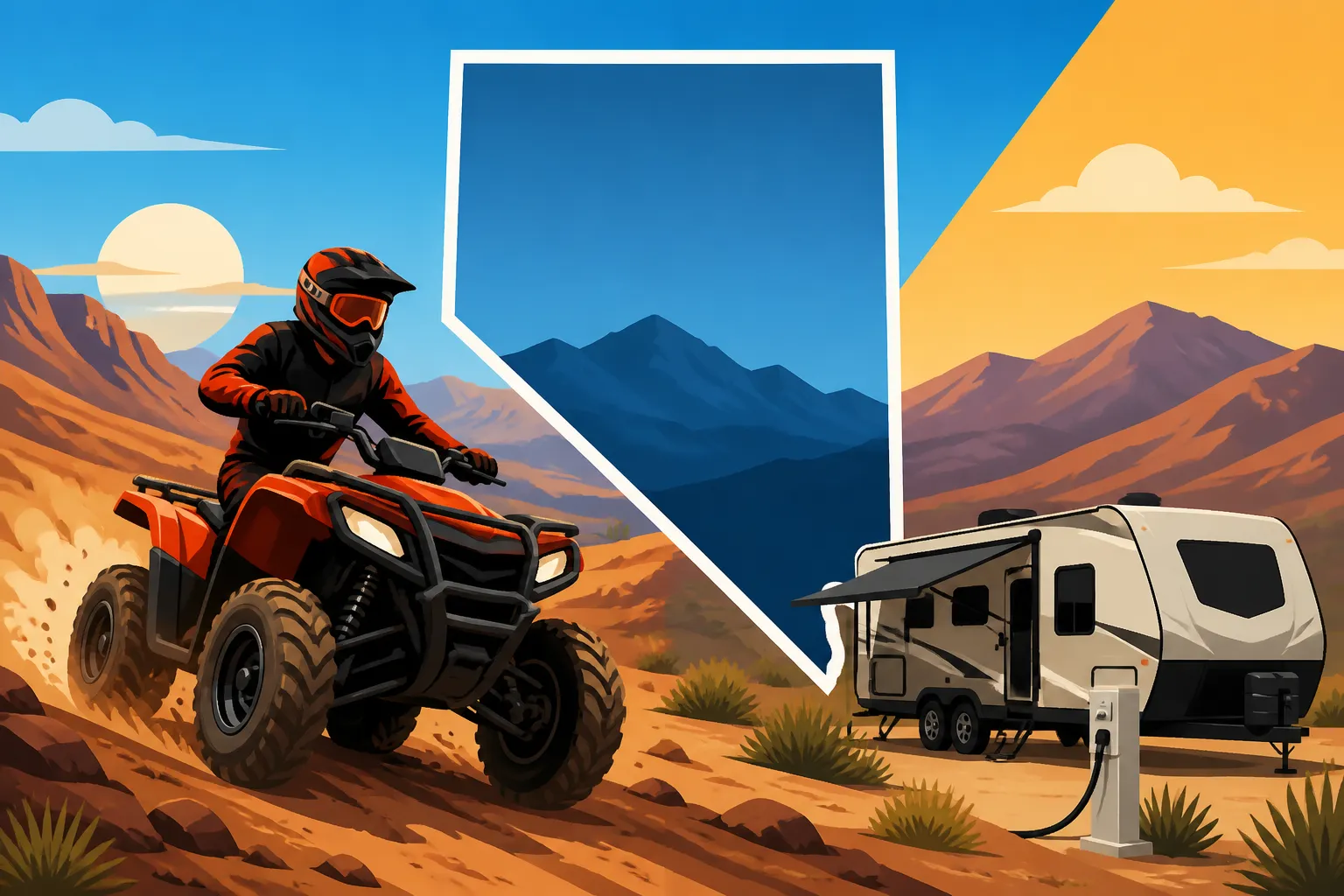
A Nevada ride can end with a dusty machine, tired passengers, and an RV that still needs a place to plug in. The trick is matching your riding area to a nearby town or campground with suitable hookups, then confirming the route, access, and site details before you leave home. This guide walks through practical base-camp options and the questions worth asking.
How to choose a Nevada riding area with RV hookups nearby
Decide whether you want to camp at the trailhead or in town
Many Nevada riding areas offer space to camp, but that does not mean an RV site has electrical, water, or sewer hookups. A remote staging area can be a great fit if you are self-contained and want to unload close to the ride. If you need reliable power, a dump station, or a place to refill water, a developed RV park in a nearby town may be the more comfortable choice.
Think about the whole trip rather than just the distance between the campground and the trail. A site that looks close on a map might involve a long drive on a rough road, a slow trailer approach, or a separate haul to the riding area. Before booking, ask the campground how large a rig it can accommodate and whether the route is suitable for your trailer.
It also helps to decide which hookups matter most. Some travelers mainly need electricity to run an air conditioner after a hot day. Others need full hookups because they are staying several nights or traveling with a larger family. Be specific when you call: “Do you have an RV site?” is not the same as asking whether that site has the services you need.
Match your ride and your RV to the same base
A family on a short weekend ride may be happiest near a town with groceries, fuel, and a developed place to stay. A group planning long days on sand may prefer a closer staging area, even if the RV site has fewer services. The right setup depends on whether you want to spend your time riding, relaxing at camp, or making trips into town.
Also consider the machine you are bringing. A side-by-side and trailer need room to park and turn, while several machines can require more space than a standard RV site provides. Ask whether you can leave a trailer attached, park an additional vehicle, or store equipment on the site. These details can make the difference between an easy arrival and a stressful one.
For route planning, use a current map and confirm access restrictions with the relevant land manager or local office. onX Offroad can help you compare mapped roads and riding areas while planning, but map information should not replace checking local closures, land boundaries, and campground directions. Save the route before you lose cell service, and keep a second way to navigate.
Compare the main tradeoffs before you reserve
| Base-camp style | Best for | What to confirm |
|---|---|---|
| Developed RV park in a nearby town | Hookups, supplies, and a more serviced stay | Actual site hookups, trailer space, route time, and availability |
| Campground near a riding area | Less driving to the staging area | Whether hookups exist, road conditions, and current access |
| Remote dispersed or staging-area camping | Riders who are self-contained and want a rustic trip | Camping rules, water, waste disposal, fire restrictions, and services |
If you are still weighing destinations, [Nevada ATV Camping Spots] offers a useful next step for thinking about camping styles and trip logistics. For a broader look at ride locations, [Nevada OHV Areas Near Reno] can help you compare northern Nevada options with southern and central alternatives.
Riding areas near towns and RV services
Sand Mountain and Fallon
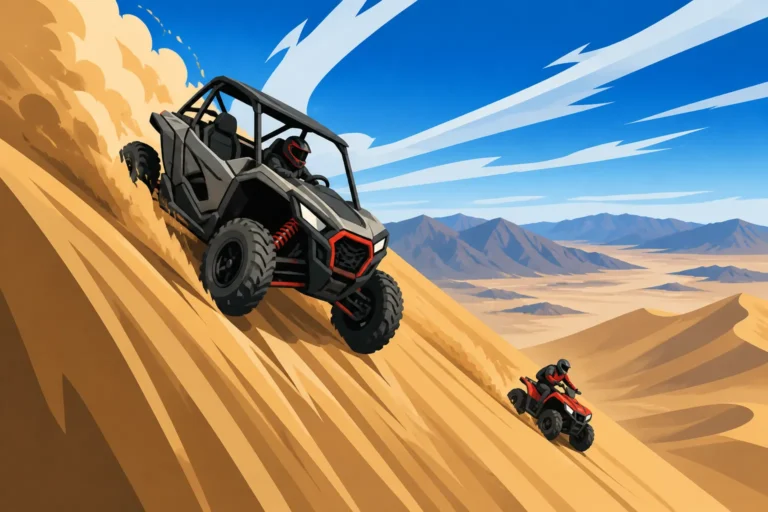
Sand Mountain Recreation Area is a well-known destination east of Fallon, with broad dunes and marked routes that draw riders from across the state. The recreation area is remote compared with a developed town campground, so do not assume that camping near the riding area means having RV hookups. If power, water, or a dump station is essential, investigate RV options in Fallon and confirm the actual amenities directly with the provider.
Fallon can work as a practical town base for riders who want access to supplies and a developed place to return to after a day on the sand. The tradeoff is the drive between town and the dunes. If you are towing, check the approach and plan your ride-day schedule around the time it takes to load, travel, and unload. The area overview in [Sand Mountain: Nevada's Great Basin Dune] helps put the riding destination in context, while [Driving to Sand Mountain on Nevada's US 50] is relevant when planning the approach.
Sand can be hard on both people and equipment. Bring more drinking water than you expect to use, protect stored gear from dust, and make sure your RV’s cooling and electrical needs are covered during warm weather. Before you commit to a campground, ask whether the site has enough room for your trailer and whether you can keep a machine-hauling vehicle parked there during the ride.
Logandale and the Moapa Valley
Logandale Trails, near the Moapa Valley and northeast of Las Vegas, offers a very different feel from the open dunes at Sand Mountain. The area is known for desert scenery and a network of routes through varied terrain. For an RV trip, look into accommodation and services around the Moapa Valley, Overton, or farther back toward the Las Vegas region, and confirm exactly which facilities offer the hookups your rig needs.
The main planning question is how much daily driving you are willing to do. Staying nearer to the trails can reduce the morning commute, while choosing a more developed base may give you easier access to supplies and services. If your RV is large, do not rely on a general map estimate alone. Ask about road surfaces, turning space, and whether a long trailer can comfortably reach the site.
Review [Logandale Trails Outside Las Vegas] as you decide whether this area fits your group. A route-planning tool such as onX Offroad can help you organize a ride plan and identify mapped roads, but confirm that routes are open and appropriate for your vehicle before heading out. Keep the RV on roads intended for it; a mapped line does not guarantee that a road is suitable for a large motorhome or trailer.
Nellis Dunes and Las Vegas
Nellis Dunes is close to the Las Vegas area, which can make it appealing to riders who want an urban base with access to restaurants, shops, and a wider range of lodging and RV options. That convenience comes with a practical tradeoff: the riding area is not a full-service RV campground. You will need to plan where the RV stays, how you will transport machines, and how much time you want to spend driving between camp and the ride.
Las Vegas can be a sensible choice for a short outing or a mixed trip where some people ride and others prefer city activities. Before booking, check whether the RV facility can accommodate your rig and trailer, whether it allows you to store equipment, and how you will handle secure parking. If you plan to ride early, consider traffic and the time needed to reach the staging area.
The local overview in [Nellis Dunes and the Las Vegas Skyline] can help you picture the setting. Use onX Offroad or another reliable mapping option to organize your route, then verify the access point and current land-use information before you depart. Do not assume that a road shown near the dunes is open to OHV travel or that every nearby parking area allows overnight camping.
Other Nevada bases worth considering
Winnemucca Dunes and Winnemucca
Winnemucca Dunes lies near the city of Winnemucca, making it a possible choice for riders who want a desert riding destination with town services within reach. As with other remote riding areas, distinguish between camping close to the dunes and staying at a developed RV site in town. Confirm the location, hookup type, and route with the campground before treating it as your base.
This option may suit travelers crossing northern Nevada or building a longer trip around the region. Check fuel and supply plans, particularly if your riding schedule includes long days away from town. Be realistic about how much time you want to spend towing or hauling between your site and the ride. [Winnemucca Dunes Along Nevada's US 95] provides destination context for planning that part of the trip.
If you are bringing a large rig, ask about maneuvering space and access roads rather than relying only on a campground’s general description. A compact site that works for a small travel trailer may not be comfortable for a motorhome with a separate machine trailer. Confirm that you can park all vehicles and still keep the tow vehicle accessible.
Silver State Trail towns
The Silver State Trail links riding opportunities across a broad stretch of central and eastern Nevada, so choosing one RV base for the entire route may not be practical. Towns such as Caliente, Pioche, Alamo, and Panaca can serve as planning anchors, but amenities and availability vary. Contact local campgrounds or visitor services to ask about RV access, hookups, and whether a particular site is open for your travel dates.
For a multi-day trip, consider moving your base rather than trying to drive back to one campground every night. That can make the route more manageable, but it means checking each overnight stop separately. Confirm whether overnight camping is permitted, whether hookups are offered, and whether your machine can be parked securely. A town’s presence on a trail map does not guarantee that it has the kind of RV site you need.
The route-planning guide [Nevada's 260-Mile Silver State Trail] can help you think through the distance and stages. Use a mapping tool, including onX Offroad if it suits your planning style, to organize the route and identify roads to check. Then confirm access and conditions locally; remote Nevada routes can involve long stretches without services, and road or trail conditions may change.
A practical checklist for booking and ride-day planning
Ask campground questions before paying
Call or message the campground with your specific rig details. Share the RV length, trailer length, number of vehicles, and whether you need to keep a machine trailer on the site. Ask whether the assigned site has the hookups you need, not simply whether the property has hookups somewhere on-site.
Also ask about arrival logistics. Can you arrive after dark? Is there room to turn around? Are there restrictions on washing dusty machines, storing fuel, running generators, or parking extra vehicles? Policies differ, and a quick confirmation can prevent awkward surprises after a long drive.
Finally, verify the route from the campground to the riding area. Ask whether the access road is paved or graded, whether it is suitable for your RV, and whether there are seasonal restrictions. If you are unsure, consider keeping the RV at the campground and hauling the machines in a separate vehicle rather than taking a large rig onto unfamiliar roads.
Build a simple trip plan
Before leaving, save campground details, directions, contact information, and trail maps for offline use. A phone may lose service outside town, so do not make your whole plan depend on being able to load a map once you arrive. [Nevada Trail Maps Worth Downloading] is a useful companion topic for preparing your navigation.
Write down your fuel and water plan, including where you can refill between rides. Pack for dust, sun, and sudden changes in desert conditions, and tell someone where you intend to ride. If you are camping away from services, check waste-disposal options and pack out what you bring in.
On ride day, confirm that the route is open and that your group understands the meeting point and return plan. Keep the RV parked in an appropriate area, carry the required registration and other documents, and avoid entering private land or closed routes. A little preparation is less exciting than unloading at the trailhead, but it is what keeps the trip from turning into a preventable headache.
Disclaimer
This article is for general informational purposes only and does not constitute professional advice. Laws, prices and regulations vary by location and change over time. Consult a qualified professional for guidance on your specific situation.