What a Deputy Asks for at a Roadside Stop
There's nothing quite like hitting the open trail or cruising a scenic county road in your ATV or UTV, but that freedom can come with a sudden stop if a law enforcement officer has questions. Getting pulled over on your off-highway vehicle, especially when you think you're riding legally, can be a bit jarring and even a little intimidating. This guide will walk you through exactly what a deputy, ranger, or other law enforcement officer in Nevada will typically ask for and observe during a roadside stop, helping you feel prepared and confident.
Understanding Why You Were Stopped
Nobody wants to interrupt a fantastic ride to deal with a law enforcement stop, but sometimes it happens. It's rarely random; there's usually a specific reason an officer decided to pull you over. Understanding these common triggers can help you avoid them, or at least be prepared when they do occur.
Location, Location, Location: Where You're Riding Matters
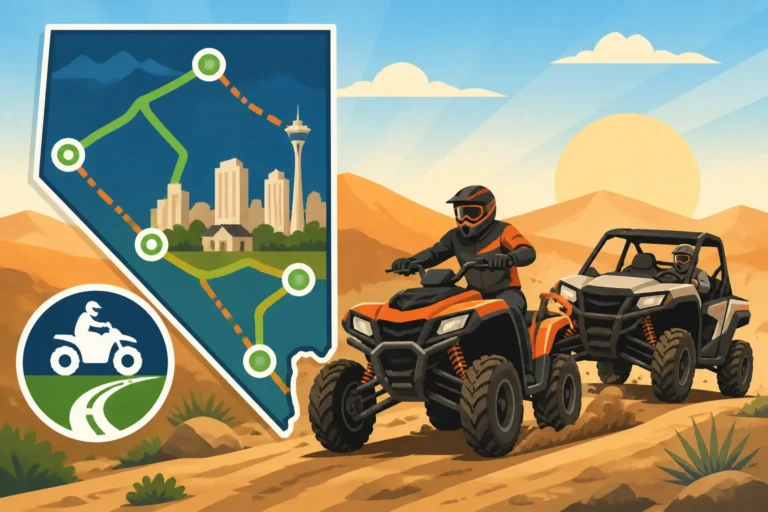
One of the biggest reasons an ATV or UTV gets pulled over in Nevada is simply being in a place it shouldn't be. Our state has a lot of open land and many trails, but it also has strict rules about where off-highway vehicles can and cannot operate, especially on paved surfaces. For instance, you absolutely cannot ride your ATV or UTV on interstate highways, and most major state routes are also off-limits except for direct crossings. Many city streets, particularly in denser urban areas like Las Vegas or Reno, are also prohibited zones for OHVs, unless specifically designated for such use by a local ordinance.
You might think you're just cutting through a subdivision to get to the dirt, but if that subdivision is within city limits, you could be breaking the law. Officers often patrol these transitional areas, knowing that riders sometimes push the boundaries. While some rural county roads might be open to "large ATVs" with the proper designation and equipment, a deputy will be quick to question you if you're on a paved highway without the necessary street-legal setup. Keep in mind that places like Mesquite are known for being more OHV-friendly on certain streets, but even there, you can't just ride anywhere. Always know the local rules for your chosen riding area. Understanding permissible routes and the [Nevada's 2-Mile Limit on Paved Highway] can save you a lot of trouble.
Equipment, Operation, and Obvious Violations
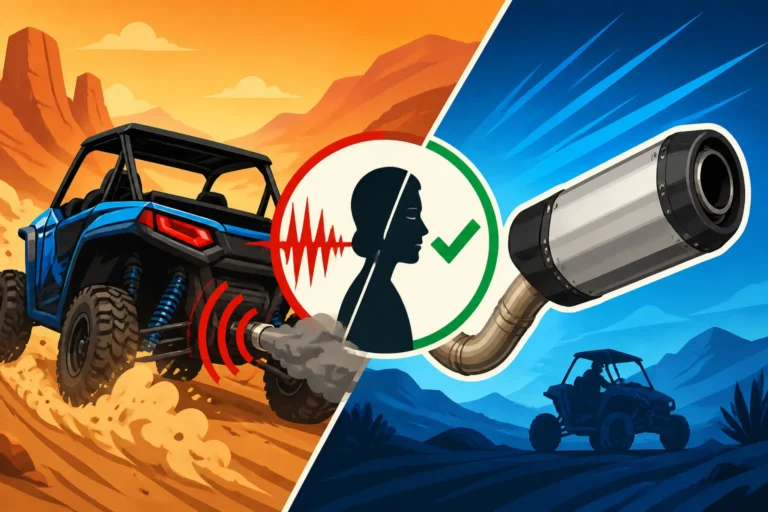
Beyond location, your machine's setup and how you're operating it can draw unwanted attention. Deputies are trained to spot violations related to safety, noise, and legal compliance. A loud aftermarket exhaust system, for example, can be an immediate red flag, leading an officer to investigate further into your machine's overall legality. In specific dune areas like Sand Mountain, neglecting to display a proper whip flag is a common reason for a stop, as it's a critical safety requirement.
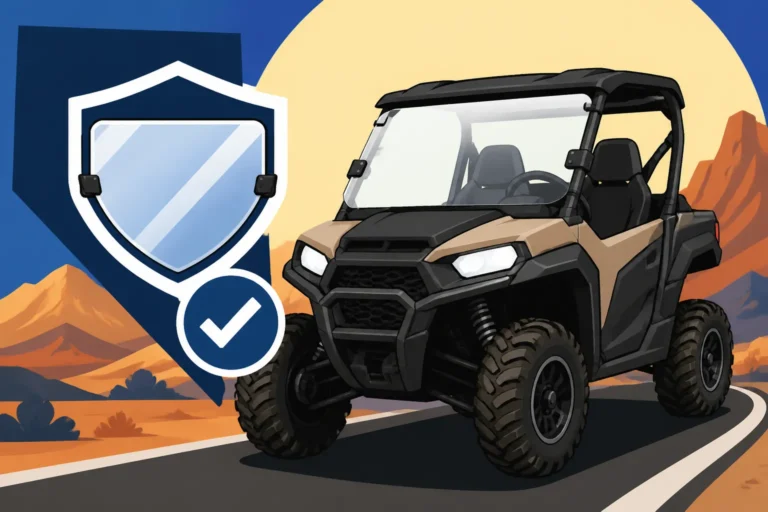
Furthermore, safety concerns, such as multiple passengers crammed onto a two-seater UTV or an ATV, will almost certainly prompt a stop. Officers are looking out for the safety of riders, especially minors. If you have children riding without helmets, or without proper supervision, that's another clear reason for a law enforcement intervention. Essentially, anything that looks unsafe, excessively loud, or out of place for the specific riding environment you're in can trigger a stop. Familiarize yourself with the [Nevada Equipment List for Road-Legal UTVs] if you plan to venture onto any paved county roads.
The Essential Documents Deputies Want to See
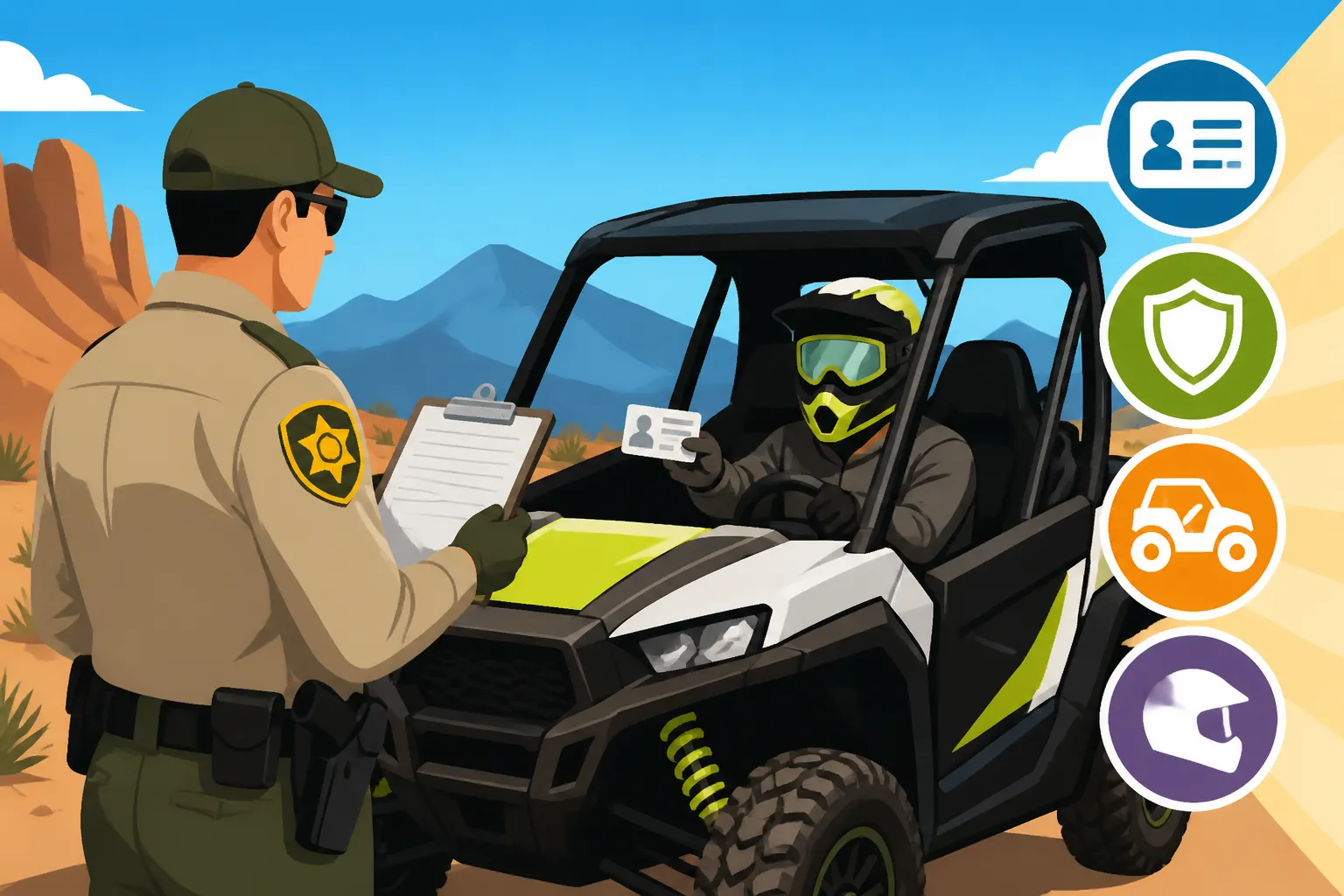
Once you're stopped, the first thing a deputy will almost always ask for is your paperwork. This is where being prepared really pays off. Having everything in order and easily accessible can make the difference between a quick interaction and a prolonged hassle.
Proof of Ownership and Registration
In Nevada, the most critical piece of identification for your off-highway vehicle is its registration decal. Unlike street-legal vehicles that get a metal license plate, OHVs get a sticker that needs to be affixed to the machine. This decal proves your machine is registered with the state, and a deputy will immediately look for it. It usually goes on the left side or rear of the machine, as outlined in [Left Side or Rear: Where the Decal Goes].
Along with the decal, you absolutely need to have your physical OHV registration card with you. This card contains important information about your machine and its owner. If you've recently purchased your ATV or UTV, especially from a private seller, you have a limited time to get it registered in your name. Nevada has a [Nevada's 30-Day Clock After a Purchase] for this, and an officer may ask about the date of purchase if your registration is very new or still pending. For those riding "large ATVs" on designated county roads, you'll also need to have applied for and received your specific [Nevada Paperwork for a Large ATV Decal] which indicates the machine meets the criteria for limited road use. Without these crucial documents, you could face fines for an unregistered machine, which can really put a damper on your day.
Driver's License and Insurance for Road Use
If you're operating your OHV on any public road—even a dirt county road or a designated paved route—a valid driver's license is non-negotiable. It's the same requirement as driving a car or truck. A deputy will ask to see it, just as they would during any traffic stop. Make sure you have your [Carrying a License on a County Road Ride] readily available.
Furthermore, if your OHV is equipped and designated for limited road use (as a large ATV), you'll also need to provide proof of liability insurance. This isn't usually required for purely off-road riding, but the moment you hit a public roadway, it becomes mandatory. The officer will want to see an insurance card or declaration page specific to that machine, showing it's covered for road use. Don't assume your regular car insurance covers your UTV on the street; it often doesn't! Always check your policy. The officer will be checking for [Insurance Nevada Requires for Road Use] and want to see [Proof of Insurance for a UTV on a County Road]. If you're riding a machine that's allowed on certain county roads, this is a must-have.
Age and Supervision for Younger Riders
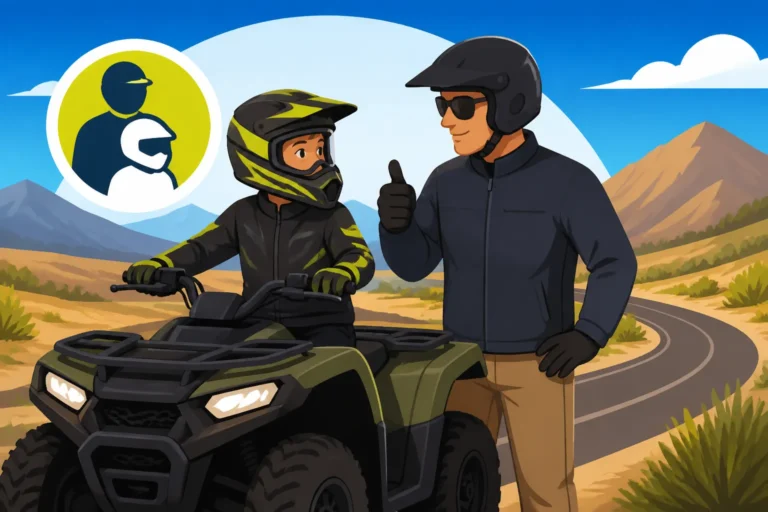
Nevada takes the safety of young OHV riders seriously, especially when it comes to operating on roads or even certain trails. If you're riding with a minor, or if a minor is operating an ATV or UTV, a deputy will definitely inquire about their age and whether they're being properly supervised. There are specific rules regarding the minimum age to operate an OHV on public lands and roads, and strict helmet requirements for younger riders, regardless of where they are riding.
For example, if you have a teenager driving a UTV on a county road, the officer will want to know if they meet the minimum age requirement and if you, as an adult, are providing proper [Supervising a Teenager on a County Road]. Additionally, [Nevada Helmet Law for Road Riding] applies to all riders and passengers under the age of 18 when on a road or highway, and often in other situations too. An officer might also ask about any safety course certifications, though these are typically voluntary for most riders in Nevada. Being able to demonstrate that you're adhering to these safety regulations shows you're a responsible rider.
Beyond Paperwork: What Else a Deputy Observes
A roadside stop isn't just about documents; it's also about what the officer sees, hears, and smells. Deputies are trained to observe a multitude of factors that indicate compliance, safety, and responsible operation. These non-verbal cues and visual assessments play a significant role in how the stop proceeds.
Machine Compliance and Safety Gear
The visual inspection of your machine is critical, especially if you're on a road where OHVs have limited access. An officer will quickly scan for basic safety equipment. Do you have a working headlight and taillight? These are essential, especially if you're riding at dusk or in low-visibility conditions. Are your tires DOT-approved if you're attempting to be road-legal? What about mirrors and a horn? These are key components of [Nevada Street Legal UTV Requirements]. Aftermarket modifications, while often making your ride more fun, can also attract attention. A loud exhaust system, for instance, might exceed local sound ordinances, prompting an officer to investigate further than just your registration.
Many riders proactively upgrade their machines to meet these standards. For instance, if your UTV lacks side mirrors or a horn, essential for legal road use, browsing options from SuperATV could be a good starting point. They offer a range of accessories designed to help get your machine compliant for those specific road conditions. Ensuring your machine has a properly functioning exhaust system that meets sound regulations, perhaps with an aftermarket spark arrester, is also key – something quality parts, including those from SuperATV, can address. Officers are also on the lookout for a secure spark arrester, which is a fire prevention device, especially crucial during Nevada's hot, dry seasons.
Rider and Passenger Conduct
Your behavior, and that of any passengers, is under scrutiny from the moment the deputy initiates the stop. Open containers of alcohol are a definite no-no, as DUI laws apply just as strictly to OHV operators as they do to drivers of cars. Any signs of impairment will lead to a much more serious investigation. Beyond that, the number of people on your machine compared to its design capacity is important. Carrying too many passengers, especially children, is an immediate safety concern and can result in a citation. For UTVs, deputies will expect to see seatbelts being worn by all occupants.
Furthermore, basic rider etiquette matters. Are you courteous and respectful? Do you appear to be in control of your machine? Reckless operation, such as weaving excessively, speeding on a dirt road, or performing stunts in an inappropriate area, will naturally draw the attention of law enforcement. Even something as simple as not yielding the right-of-way can escalate a friendly wave into a full-blown stop.
Decal Placement and Readability
It might seem minor, but the placement and condition of your OHV registration decal can be a quick indicator to a deputy. Is your decal clearly visible? Is it current and not expired? Is it affixed in the correct location on your machine? If your decal is peeling, faded, or covered in mud to the point of being unreadable, it suggests either carelessness or an attempt to obscure its validity. This can prompt an officer to pull you over just to verify the decal's details and confirm it's still current.
Nevada law specifies where the decal should be placed – usually the left side or the rear. If it's on the front, or tucked away where it's hard to see, that alone can lead to questions. A deputy will also check the expiration date. A machine with an expired decal is just like driving a car with expired tags and will likely result in a citation. Make sure your decal is always clean, clearly visible, and properly affixed in the location specified by the state to avoid unnecessary stops.
Dealing with a Roadside Stop Gracefully (and Legally)
Getting stopped can be stressful, but how you react can significantly influence the outcome. Staying calm, being cooperative, and understanding your rights are key to navigating the situation as smoothly as possible.
Staying Calm and Cooperating
When a deputy signals for you to pull over, the first step is to do so safely and promptly. Find a clear, level spot away from traffic, if possible. Once stopped, turn off your engine and keep your hands visible, perhaps on the handlebars or steering wheel. This immediately signals cooperation and helps the officer feel safe. Fumbling around in pockets or compartments can be misinterpreted, so be deliberate with your movements.
When the deputy approaches, remain polite and answer their questions truthfully. Avoid arguing or becoming defensive. Even if you believe you've done nothing wrong, a roadside stop is not the time to debate the law. Simply provide the requested information and documents. A calm, respectful demeanor can often lead to a quicker, more amicable resolution, perhaps even just a warning instead of a citation. Remember, they're simply doing their job to enforce the rules that keep everyone safe on our public lands and roads.
Presenting Your Documents
Once the deputy asks for your license, registration, and proof of insurance, calmly retrieve them. It's a smart practice to keep these vital documents in a waterproof bag or container, especially given the dusty and sometimes wet conditions often encountered while riding. [Keeping Paperwork Dry in a Dusty Machine] is crucial. Trying to pull out a soggy, unreadable registration card doesn't make a good impression.
If you've just bought your machine and are within the [Nevada's 30-Day Clock After a Purchase] to get it registered in your name, be ready to explain that and possibly show a bill of sale or temporary paperwork. Don't try to hide anything; transparency is always best. Clearly state what documents you have and present them without delay. Having them organized and easily accessible will save time and show the officer you're prepared and respectful of the rules.
Understanding Potential Outcomes and Rights
After reviewing your documents and assessing the situation, the deputy will decide how to proceed. This could range from a verbal warning and a friendly reminder about regulations to a formal citation for violations. Common citations include riding in a restricted area, operating an unregistered machine, or lacking proper safety equipment where required. The fines for these can vary depending on the specific violation and county.
While you should always be cooperative, it's also important to know your rights. You have the right to remain silent if answering further questions could incriminate you beyond the immediate reason for the stop. You can politely state that you prefer not to answer questions without legal counsel present. However, you must still provide your identification and vehicle documents as requested. If you receive a citation and believe it's unjustified, you have the right to challenge it in court. Always get the officer's name and badge number, and if possible, note the time and location of the stop. But remember, a roadside stop is not the place for legal arguments; save those for a courtroom if it comes to that.
Here's a quick overview of common items an officer might request or check during a stop:
| Category | Items to Have Ready (On-Road) | Items to Have Ready (Off-Road) | Officer Observations |
|---|---|---|---|
| Documents | Driver's License | OHV Registration Card | Valid/Current Decal Placement |
| OHV Registration Card | Driver's License (for operator) | Decal Readability | |
| Proof of OHV Liability Insurance | |||
| Bill of Sale (if recently purchased) | Bill of Sale (if recently purchased) | ||
| Machine | OHV Decal (Large ATV if applicable) | OHV Decal | Functional Lights (Head/Tail/Brake) |
| Headlights/Taillights (working) | Spark Arrester | Operational Muffler/Sound Level | |
| Mirrors (rearview, side) | Proper Seating Capacity | ||
| Horn | Tire Type (DOT vs. non-DOT) | ||
| Spark Arrester | |||
| Rider/Safety | Helmet (if under 18 or specific areas) | Helmet (if under 18) | Proper Supervision of Minors |
| Seatbelts (for UTVs) | Signs of Impairment (DUI) | ||
| Open Containers of Alcohol | |||
| Reckless Operation |
Disclaimer
This article is for general informational purposes only and does not constitute professional advice. Laws, prices and regulations vary by location and change over time. Consult a qualified professional for guidance on your specific situation.