Riding Out of Amargosa Valley to the Dune
There's nothing quite like the open desert, and for many of us, the call of Amargosa Big Dune, with its soaring faces and sprawling sands, is practically irresistible. But if you're staging your ride out of Amargosa Valley, you might be scratching your head about that short stretch of pavement or graded dirt road you need to cover to get from your camp or lodging to the actual dune riding area. It’s a common frustration: you just want to get to the dirt, but the thought of a ticket for an illegal road hop can put a damper on your whole day. This guide is here to walk you through exactly how to navigate that short but crucial journey, legally and safely, so you can focus on conquering the dunes.
Navigating the Short Stretch: From Amargosa Valley to Big Dune's Edge
The Amargosa Big Dune stands as a beacon for off-road enthusiasts in Nye County, Nevada, offering exhilarating climbs and vast open areas perfect for ATVs and UTVs. While it feels incredibly remote, getting there often involves a brief interaction with the local road system, even if it's just a few hundred yards. Understanding this transition is key to a hassle-free experience.
The Allure of Amargosa Big Dune and Its Unique Access
Amargosa Big Dune isn't just another pile of sand; it's a prominent feature near the town of Amargosa Valley, beckoning riders with its dramatic slopes and panoramic views. Many riders set up base camp or stay in local accommodations in Amargosa Valley, making the proximity of the dune incredibly appealing. The challenge arises because the direct path from many staging areas to the dune itself often involves traversing designated county roads for a short distance. This isn't like pulling off an interstate directly onto public land; there's a subtle but significant legal line you need to be aware of. The dune itself, managed by the Bureau of Land Management (BLM), has specific access points that might require this brief road use, and simply "assuming" it's all open desert can lead to unpleasant surprises from a passing deputy. For those new to the area, knowing what to expect can alleviate a lot of anxiety.
Understanding the Road Segment: Minor County Roads and Designated Routes
The roads leading out of Amargosa Valley towards Amargosa Big Dune are typically a mix of minor county roads—some paved, some graded dirt—that connect the small community to the surrounding BLM lands. These aren't major highways, but they are still public roads subject to Nevada's traffic laws. The key distinction here is that while many miles of Nevada's backcountry are open to OHV use, certain "county roads" are treated differently, even if they look like simple dirt tracks. For many riders, the idea of their trusty off-road machine being subject to street laws seems counterintuitive, especially in such a rural setting. However, neglecting these rules can lead to citations. It's not about prohibiting fun, but about ensuring safety and order where vehicles interact with traditional traffic lanes, even if that traffic is sparse. Many riders might come equipped with aftermarket accessories from brands like SuperATV to enhance off-road performance, but these might not be enough for the short road sections.
The Practicalities of Making the Jump to the Dunes
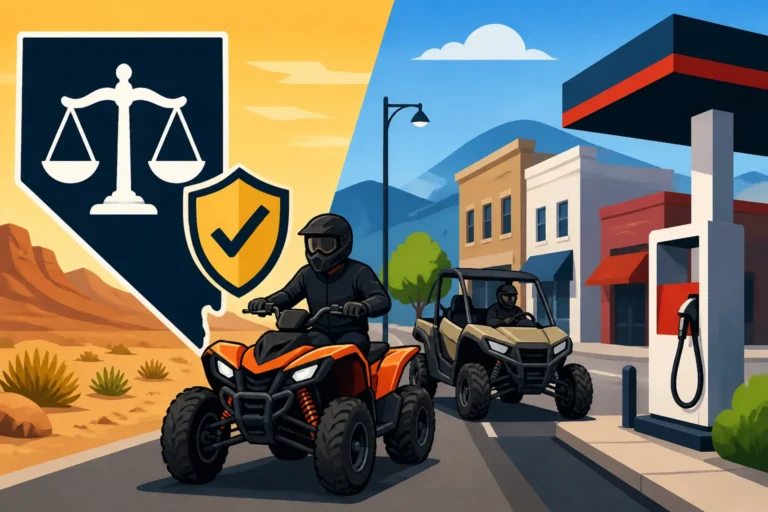
So, how do you actually get from Amargosa Valley proper to the off-road freedom of the dune? The most common scenario involves a short ride on a county road to a designated staging area or directly onto BLM land where cross-country travel is permitted or an OHV route begins. For instance, you might leave a gas station or a local rental office, ride a mile down a paved or gravel road, and then turn onto a dirt track that leads directly to the dune. This short "jump" is where careful planning comes in. You need to know if your machine is legally equipped for that specific road segment, even if it's only for a few minutes. Think of it as a temporary detour into the "street legal" world before you dive back into the dirt. Without proper understanding, what seems like a harmless shortcut can quickly become a costly lesson in Nevada OHV law.
Legal Considerations for That "Quick Hop" on Nevada Roads
Nevada has specific rules about where and how off-highway vehicles can operate on public roads. It's not a free-for-all, even in remote areas like Amargosa Valley. Understanding these regulations is paramount to avoiding fines and ensuring your trip is nothing but fun. This is especially true when you're making that transition from pavement to sand.
When Your OHV Needs More Than Just a Nevada Decal for Road Use
Simply having your [Nevada's $20 OHV Decal and What It Covers] on your ATV or UTV is fantastic for riding on designated trails and open BLM land. However, that decal alone doesn't grant you carte blanche to ride on all Nevada roads. Nevada law differentiates between general OHV use and what it considers "street-legal" operation for specific types of machines on certain roads.
Specifically, Nevada Revised Statutes (NRS) 490.060 states that an OHV cannot be operated on a highway except to cross it, or operate on a paved highway shoulder for up to 2 miles to connect to a trail. However, there's a crucial exception: "large ATVs." A large ATV (defined in [What Nevada's NRS 490.043 Counts as a Large ATV]) can be ridden on minor county roads if properly equipped and registered with a special "Large ATV" decal. Most standard ATVs and smaller UTVs, while fun off-road, typically don't meet this "large ATV" definition or possess the required equipment. So, if your UTV or ATV doesn't qualify as a "large ATV" and isn't equipped for street use, that short ride to the dunes might be a no-go on a county road, even if it's just gravel. This is where many riders get tripped up, thinking "dirt road equals off-road," but that's not always the case legally.
Essential Gear and Rules for Briefly Hitting Pavement
If your machine does qualify as a large ATV and you obtain the special decal, or if you're riding a standard OHV on a specifically designated route (which are rare for short hops like this), you still need to meet certain equipment requirements for road use, even for short distances. This isn't just about avoiding a ticket; it's about safety when mixing with other traffic.
Here's a quick look at what Nevada generally requires for a "large ATV" on designated county roads:
| Requirement | Description | Applicability |
|---|---|---|
| Nevada OHV Decal | Standard off-highway registration decal. | All OHVs on public land. |
| Large ATV Decal | Special decal for machines meeting specific size/weight criteria. | Required for street-legal access to minor county roads. |
| Headlights | Visible from 500 feet, operational both day and night. | Required for road use, especially at night or low visibility. |
| Taillights/Brake L. | Visible from 500 feet (taillight), clearly signals braking. | Required for road use. |
| Rearview Mirrors | At least one, providing a clear view of the rear. | Crucial for road safety. SuperATV, for instance, offers robust mirrors. |
| Horn | Audible from 200 feet. | Required for warning other vehicles. |
| Seatbelts (UTVs) | Must be worn by all occupants if equipped. | Essential safety for UTVs on roads. |
| Driver's License | Valid driver's license for the operator. | Required for operating any vehicle on a public road. |
| Insurance | Liability insurance that meets Nevada's minimum requirements. | Critical for any vehicle on a public road. |
| Spark Arrestor | USFS-approved spark arrester. | Required off-road and on roads to prevent fires. |
| Helmet (Under 18) | Required for riders and passengers under 18 years old. | General Nevada law, stricter for road use (all ages if on roads). |
You can find more detailed information about these requirements in guides like [Nevada Street Legal UTV Requirements] and [Nevada Equipment List for Road-Legal UTVs]. Remember, deputies in Nye County often patrol these areas, and they know the laws. Don't assume that just because you're in the middle of nowhere, nobody is watching.
Navigating Local Ordinances and Designated Routes
While state law provides a framework, counties and even specific municipalities in Nevada have the power to further restrict or permit OHV use on local roads. This means that a particular county road near Amargosa Valley might be open to "large ATVs," while another, seemingly identical one, could be closed by local ordinance. It's a patchwork that can be confusing, to say the least.
Before you plan to ride any segment of a road, even for a short distance, it's always wise to check with the local Bureau of Land Management (BLM) office or the Nye County Sheriff's Department for any specific local ordinances impacting the roads around Amargosa Big Dune. While [Nevada County Roads Open to UTVs] generally outlines the state-level permission for large ATVs, local rules can override or add restrictions. For instance, some areas might have specific "designated OHV routes" that allow certain machines to connect to trails, but these are typically marked. Without such markings or clear information, assume standard road rules apply. The frustration of trying to figure out these localized nuances is real, especially for visitors who just want to enjoy the vast desert.
Prepping Your Machine and Yourself for Amargosa's Sands
Even if you successfully navigate the short road segment, the Amargosa Big Dune itself presents its own set of challenges and requires proper preparation. The desert environment is beautiful but unforgiving, and a little foresight can prevent a lot of headaches.
Machine Readiness: Tires, Flags, and the Desert Environment
Once you're off the county road and onto the sands of Amargosa Big Dune, your focus shifts entirely to off-road performance and safety.
- Tires: For dune riding, paddle tires are highly recommended, especially for climbing the steep faces. While standard knobby tires might get you around on the flats, they'll struggle in deep, soft sand. Ensure your tires are properly inflated for sand (often lower pressure than trail riding). Many riders invest in robust tire and wheel combos, perhaps from a brand like SuperATV, to tackle the varied terrain.
- Whip Flags: A brightly colored whip flag, typically at least 8 feet tall when mounted, is mandatory on the dunes. This ensures visibility over crests and in bowls, preventing collisions with other riders. Make sure it's securely mounted and in good condition. [Amargosa Big Dune in Spring] can be a popular time to ride, meaning more traffic and a greater need for visibility.
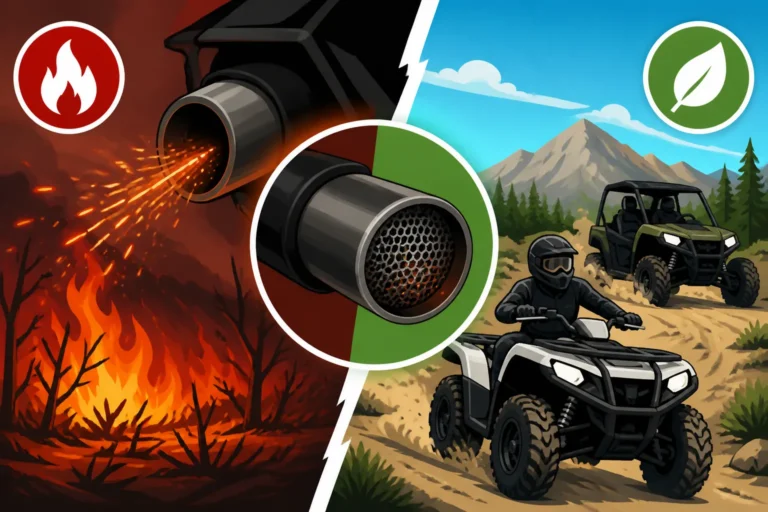
- Spark Arrester: All OHVs operating on public lands in Nevada must be equipped with a U.S. Forest Service-approved spark arrester to prevent wildfires. This isn't just a dune rule, but a general requirement for safe desert riding.
- Maintenance: Check your oil, coolant, brakes, and general machine condition before heading out. The dunes are hard on equipment, and a breakdown far from the staging area is no fun. Carry basic tools and a tire repair kit.
Rider Preparedness: Water, Communication, and Emergency Plans
Your personal preparation is just as important as your machine's. The Nevada desert, especially around Amargosa Valley, can be extreme.
- Hydration: This cannot be stressed enough. Carry far more water than you think you'll need. Dehydration is a serious risk, even on cooler days. For an article on [Carrying Water for a Desert Ride], check out our other tips. Electrolyte drinks are also a good idea.
- Sun Protection: Sunscreen, hats, long sleeves, and sunglasses are essential. The sun can be intense, even in winter.
- Communication: Cell service can be spotty to non-existent at Amargosa Big Dune. Carry a satellite messenger or a two-way radio (like a GMRS radio) for emergencies. Let someone know your route and expected return time.
- First Aid: A well-stocked first aid kit is a must for any off-road adventure.
- Navigation: While the dune is a distinct landmark, it's easy to get disoriented. Carry a GPS device or a reliable navigation app on your phone (with downloaded maps).
- Footwear and Clothing: Wear sturdy, closed-toe shoes or boots. Dress in layers, as desert temperatures can fluctuate dramatically between day and night.
Respecting the Environment: Staying on Open Trails and Protecting the Desert
Riding at Amargosa Big Dune comes with the responsibility of protecting this unique environment.
- Stay on Designated Areas: While much of the dune is open to riding, be aware of any signs indicating sensitive areas or closures, particularly for wildlife habitats.
- Tread Lightly: Avoid creating unnecessary new tracks. Stick to existing routes and open areas.
- Pack It In, Pack It Out: Leave no trace. Take all your trash with you. This includes small items like zip ties or broken flags.
- Wildlife: The desert is home to various wildlife. Be aware of your surroundings and give animals their space.
- Fire Safety: Campfires (if permitted in designated areas) must be completely extinguished. No fireworks are allowed on BLM land.
Beyond the Direct Route: Alternative Access and Common Pitfalls
While riding directly from Amargosa Valley to the dune might seem convenient, sometimes trailering your machine is the safer, more compliant option. It all depends on your machine, your comfort level with road laws, and the specific staging area you're trying to reach.
Trailer vs. Riding: Weighing the Convenience and Compliance
For many, the simplest and most foolproof way to get their OHV from Amargosa Valley to Amargosa Big Dune is to trailer it. This completely bypasses the need for your ATV or UTV to be street-legal, as it's not being operated on the road under its own power. You can load up your machine, drive to a designated staging area near the dune (often just off a main road), unload, and immediately hit the dirt.
Pros of Trailering:
- No Street Legal Requirements: You don't need a [Nevada Large ATV Decal Cost], mirrors, horn, or even a driver's license to transport it.
- Increased Safety: Your OHV isn't exposed to road traffic, which can be dangerous, especially on a machine not designed for high-speed road travel.
- Peace of Mind: You eliminate any worry about receiving a ticket for illegal road use.
- Carries More Gear: Your tow vehicle can carry extra fuel, water, tools, and emergency supplies easily.
Cons of Trailering:
- Requires a Truck/Trailer: Not everyone has access to a suitable tow vehicle and trailer.
- More Setup Time: Loading and unloading can take time.
- Finding Parking: You'll need adequate parking for your truck and trailer at the staging area.
For those who want the convenience of riding directly, consider investing in the necessary [Nevada Street Legal UTV Requirements] if your machine qualifies, and ensure you have all the proper paperwork, including current registration and insurance. Remember, even if you just moved to the state, you have a deadline to get your machine registered here, as explained in [Nevada OHV Registration After You Move In].
Avoiding Fines and Frustrations: Common Mistakes to Sidestep
It's easy to fall into common traps when trying to get to the dunes. Here are some pitfalls to avoid:
- Assuming All Dirt Roads Are Off-Road: This is perhaps the biggest mistake. A dirt road can still be a "county road" with the same legal requirements as a paved one. Always verify the road status.
- Ignoring Local Signs: Look for signs indicating "OHV Prohibited," "Designated OHV Route," or "No Motorized Vehicles." These are there for a reason and can save you from a fine.
- Riding Without Proper Decals/Equipment: Don't think a short hop means you can skip the [Nevada Equipment List for Road-Legal UTVs]. Law enforcement doesn't differentiate based on distance.
- Not Wearing a Helmet on Roads: While Nevada has nuanced helmet laws for off-road use, when you're on a road, even briefly, stricter rules apply, especially for youth. Always consult [Nevada Helmet Law for Road Riding].
- Lack of Insurance or Driver's License: These are non-negotiable for operating any vehicle on a public road, even if it's a "large ATV" for a short distance.
- Crossing a State Route Illegally: If your route involves crossing a state highway (like SR 373 or US 95 around Amargosa Valley), there are very specific rules about how and where you can do it. Generally, you must cross at a 90-degree angle and proceed directly across without driving along the highway. [Nevada Rules for Crossing a State Route] provides more details.
By being informed and prepared, that short journey from Amargosa Valley to the exhilarating sands of Amargosa Big Dune can be just another fun part of your adventure, rather than a source of stress. Enjoy the ride!
Disclaimer
This article is for general informational purposes only and does not constitute professional advice. Laws, prices and regulations vary by location and change over time. Consult a qualified professional for guidance on your specific situation.