Lincoln County Highways Closed to OHV Travel
Anyone who loves exploring the vast, open spaces of Nevada on an ATV or UTV knows the incredible freedom it offers. But that freedom often comes with a hefty dose of confusion, especially when you're trying to figure out which roads are fair game and which are strictly off-limits. One of the biggest headaches can be navigating the rules in places like Lincoln County, where the scenic routes often include state highways that, despite appearing quiet and inviting, are legally closed to off-highway vehicles. This guide is here to clear up that frustration and lay out exactly which Lincoln County highways you absolutely cannot ride an OHV on, and why.
The Fine Line: General Nevada Rules for OHV Road Use
Before we dive specifically into Lincoln County, it's crucial to understand the foundational rules that govern OHV use on public roads across Nevada. Many riders assume that if a road isn't paved or doesn't have a high speed limit, it's automatically open. Unfortunately, that's a common misconception that can lead to a ticket or, worse, a dangerous situation. Nevada law draws a very distinct line, and understanding it is your first step to legal and safe riding.
Nevada's 2-Mile Pavement Limit and Its Real-World Impact
Nevada law, specifically NRS 490.060, grants a very limited allowance for OHVs to operate on paved public highways: you can cross a highway if it’s safe to do so, and you can ride along the shoulder or extreme right of a highway for a maximum of two miles to get from one unpaved road or trail to another. This "two-mile rule" is a lifeline for many riders who need to connect trail segments, but it's not an invitation to cruise down the highway for extended periods or for purely recreational purposes. Imagine you're at the end of a fantastic trail ride near Caliente, and the next trail segment is just across U.S. 93. You can carefully cross, or perhaps ride the shoulder for a short distance to the next dirt access point, but you absolutely cannot ride down U.S. 93 itself to get to a gas station or restaurant. The intention here is minimal, necessary travel, not convenient transportation.
This rule often catches people off guard. You might see a beautiful, wide-open stretch of road with no traffic for miles, and it just seems natural to take your UTV right down it. But that two-mile limit is rigorously enforced, and deputies aren't looking for good intentions, they're looking for compliance. The spirit of the law is about accessing off-road trails, not creating a shortcut on a state-maintained route.
Highway Versus County Road: A Critical Distinction
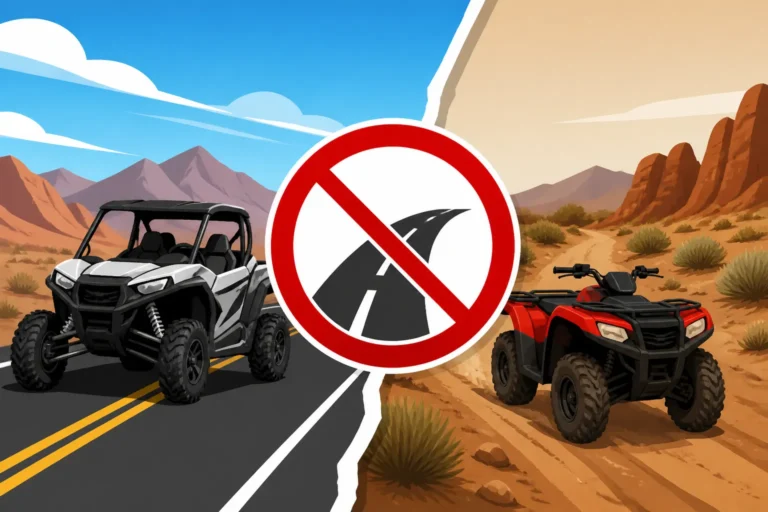
Here’s where a lot of the confusion lies: what's the difference between a highway and a county road? In Nevada, the distinction is paramount for OHV users. Generally, state highways (like those prefixed with US or SR, such as US 93 or SR 317) are under the jurisdiction of the Nevada Department of Transportation (NDOT) and typically have much stricter rules regarding OHV access. They are designed for cars and trucks, often with higher speed limits and greater traffic volumes, even in rural areas.
County roads, on the other hand, are maintained by individual counties. While some county roads may be paved, many are dirt or gravel. Crucially, counties have the authority to designate specific county roads as open for OHV use through local ordinances. This means that a dirt road might be perfectly legal for your quad, while a paved state route just a few yards away is entirely off-limits. This is why you really need to do your homework before you head out, because the rules can literally change from one side of a T-junction to the other. For a deeper dive into where you might actually be able to ride, check out [Riding County Roads Legally in Nevada].
Lincoln County's Specific Highway Restrictions
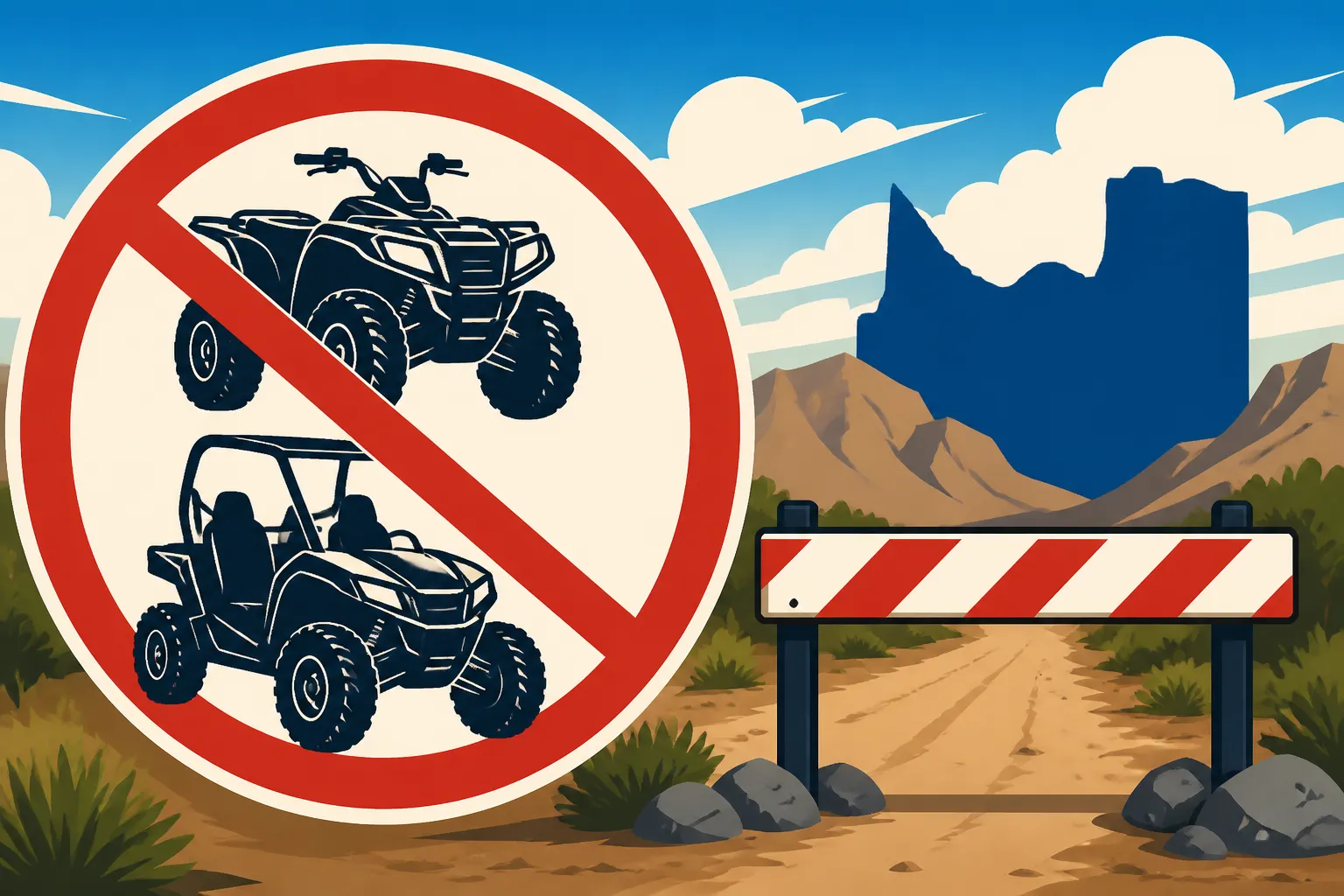
Now, let's zero in on Lincoln County. This vast, beautiful county is a paradise for off-road enthusiasts, with countless miles of trails, mining roads, and remote landscapes waiting to be explored. However, its major state highways are unequivocally closed to general OHV travel, regardless of how remote they seem. Ignoring these restrictions isn't just a legal risk; it's a safety hazard.
Which State Routes Are Off-Limits in Lincoln County
In Lincoln County, the big ones to watch out for are U.S. Route 93 (US 93) and State Route 375 (SR 375), famously known as the "Extraterrestrial Highway." These are primary travel corridors, even if traffic can be sparse at times. While you might be tempted to use them to get from one trail system to another, or even just to pop into a small town like Alamo or Rachel, you simply cannot do so on your OHV except for the very limited crossing or two-mile shoulder rule described earlier. The law is explicit: [US 93 and the Roads You Cannot Ride Along] and [SR 375 and Riding the Extraterrestrial Highway] are generally not for your quad or side-by-side.
It's a genuine point of frustration for many riders. You're out in the middle of nowhere, maybe 50 miles from the nearest town, and the paved highway seems like the most direct, easiest path. But these highways are critical infrastructure for conventional vehicles, and the state's concern for safety and traffic flow overrides the convenience of OHV riders. Even if you've kitted out your UTV with every road-legal accessory imaginable from a brand like SuperATV—think turn signals, horn, and mirrors—it doesn't change the fundamental legal classification of these state highways. Those accessories are fantastic for legal county roads, but they won't make a highway legal for your OHV.
The Rationale: Why Highways Are Different
You might wonder why these specific highways are so strictly controlled. It really boils down to safety and the design purpose of the road. State highways are engineered for higher speeds, larger vehicles, and more consistent traffic patterns. OHVs, by their nature, are typically slower, less visible, and handle differently than conventional cars and trucks. Mixing high-speed highway traffic with OHVs creates a dangerous situation for everyone involved. The risk of a serious accident increases exponentially when a UTV, designed for rugged terrain, attempts to keep pace or share space with vehicles traveling at 65 mph or more.
Furthermore, state highways often have different maintenance schedules and funding sources than local county roads. The regulations are in place to preserve the integrity of these major transportation arteries and ensure the safety of the motoring public. This isn't just some arbitrary rule; it's a practical measure based on extensive traffic engineering and safety studies. Even on a remote stretch of US 93 where you might not see another vehicle for an hour, the potential for danger remains, and the law treats it as such.
The "Designated Route" Exception and Its Highway Reality
Nevada law does provide a mechanism for local jurisdictions to open certain roads to OHV traffic. This is where the concept of "designated routes" comes into play. However, it's crucial to understand how this applies, or more accurately, doesn't apply, to state highways.
County Ordinances and Local Control
Nevada Revised Statute (NRS) 490.070 allows local governments, specifically counties and cities, to designate specific roads or highways within their jurisdiction for OHV use. This is fantastic news for county roads! For example, a county might pass an ordinance opening certain dirt or even paved county roads that connect neighborhoods to trailheads, or provide access to remote camping spots. You might see signs explicitly stating "OHV Route" or similar markings. This local control gives counties the flexibility to tailor OHV access to their unique landscapes and community needs, and it's how you can legally get from, say, downtown Logandale to the famous Logandale Trails.
However, this local control primarily applies to roads under county jurisdiction. While theoretically a county could seek to designate a segment of a state highway, this is incredibly rare and usually only occurs under very specific, controlled circumstances, often with extensive state-level approval. For the most part, major state highways like US 93 and SR 375 remain outside the scope of such local designations for general OHV travel.
The Reality for Major State Routes
In practical terms, do not expect to find a major state highway in Lincoln County (or most other Nevada counties, for that matter) designated as an open OHV route. The state's interest in maintaining the primary function and safety of these roads generally supersedes local desires to open them for OHVs. While some small towns might have limited, clearly marked "OHV friendly" streets for very short distances to access services, these are almost universally not state highways.
So, while you might hear about designated routes in other areas, always assume that US 93, SR 375, and other state highways in Lincoln County are off-limits for your OHV unless you see explicit, official signage from NDOT (which is highly unlikely for extended travel). If you’re riding near Logandale and need to cross SR 169 to get to the [Valley of Fire ATV Tours From Las Vegas] area, remember the strict rules for crossing. The safest bet, if you need to travel along or across these routes, is to trailer your machine.
Navigating Lincoln County: Practical Tips for OHV Riders
Lincoln County offers some of Nevada's most spectacular and remote off-roading. With careful planning and adherence to the rules, you can have an incredible adventure. But ignoring the highway restrictions can quickly turn a fun trip into a stressful, expensive, or even dangerous one.
Planning Your Route Away From Prohibited Highways
The best advice for riding in Lincoln County is to plan your route meticulously. Don't rely solely on general mapping apps that might show a direct line down a highway. Instead, use dedicated OHV maps, consult BLM (Bureau of Land Management) travel management plans, and check with local ranger stations or trusted OHV groups for current information on legal trails and roads. Many resources exist to help you find appropriate routes that avoid state highways.
When you're looking at your map, specifically identify all US and SR routes and plan your crossings or connections very carefully. It's often better to take a slightly longer, entirely off-road route than to risk a short illegal stint on a highway. Even if you're using a device with advanced GPS features, manually verify that your planned path steers clear of the big state routes. Look for ways to connect trails through designated county roads or over unpaved segments.
Trailer Up for the Long Haul
Sometimes, the simplest and safest solution is to trailer your OHV. If you need to travel a significant distance between trail systems that are separated by a state highway, or if you want to access a town that's only easily reached via a state route, loading your quad or side-by-side onto a trailer is the way to go. This might seem like an inconvenience, but it completely eliminates the risk of fines, safety hazards, and the stress of wondering if a deputy is just around the bend.
Think of it as part of the adventure preparation. Many riders heading to the Silver State Trail, for example, will trailer their machines to designated trailheads in places like Caliente, Alamo, or Pioche, even if their ultimate destination is further down the trail. This allows them to enjoy the trails themselves without worrying about getting into trouble on a public highway. Consider robust trailers and towing accessories from a company like SuperATV to ensure your machines are transported safely and efficiently.
Knowing Your Machine's Limits and Legalities
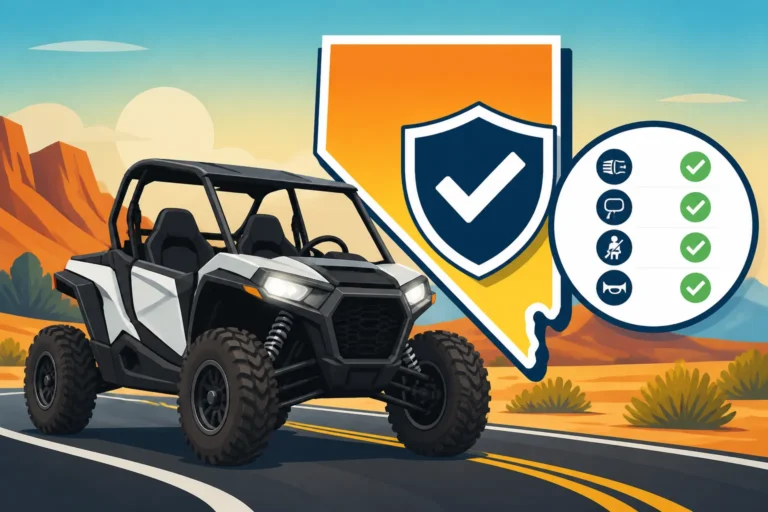
Even when you're on designated county roads, it's vital to ensure your machine meets all other Nevada requirements. This includes proper OHV registration (your current decal is your proof!), and if you're riding on any public road (even a legal county road), you need specific equipment like headlights, taillights, a horn, and mirrors. While these are not related to the highway ban, they are crucial for any legal road-based riding. If you're unsure about what's needed, it's wise to review the full list of [Nevada Street Legal UTV Requirements].
| Road Type | OHV Use in Lincoln County | Key Considerations |
|---|---|---|
| US Highways (e.g., US 93) | Generally Prohibited | Limited to 2-mile shoulder travel or direct crossing only. |
| State Routes (e.g., SR 375) | Generally Prohibited | Limited to 2-mile shoulder travel or direct crossing only. |
| Paved County Roads | Check Local Ordinance | May be open if specifically designated by Lincoln County. |
| Unpaved County Roads | Check Local Ordinance | Often open, but verify designation and always ride responsibly. |
| BLM Trails/Roads | Generally Permitted | Vast network, but check maps for specific closures/restrictions. |
Consequences of Riding Where You Shouldn't
The rules regarding OHV use on state highways in Nevada, especially in counties like Lincoln County, are serious. Ignoring them can lead to a range of unpleasant consequences, from a simple conversation with a deputy to significant financial penalties and even safety risks.
Fines and Citations from Lincoln County Law Enforcement
Lincoln County Sheriff's deputies, Nevada Highway Patrol troopers, and even BLM rangers are well aware of the regulations concerning OHV use on highways. If you're caught riding your ATV or UTV on a prohibited section of US 93 or SR 375, you can absolutely expect to receive a citation. The penalties for violating OHV laws can include substantial fines, and depending on the severity and context, your machine could even be impounded. This is not the kind of souvenir you want from your trip to Lincoln County.
Imagine getting a ticket for riding down SR 375 when you thought it was okay. That fine could easily eat into your vacation budget, and dealing with it from out of state can be a major hassle. It's a much better use of your time and money to ensure you're riding legally in the first place. You can find more information about [Nevada Fines for No Large ATV Decal] (even if you have a decal, riding where you shouldn't falls under similar enforcement). When you're stopped, a deputy will be looking for proper registration, safety equipment, and whether you're on a legal route. For a breakdown of what they check, consider reading [What a Nevada Trooper Looks For on a County Road].
Safety Risks on High-Speed Highways
Beyond the legal and financial ramifications, there's the critical issue of safety. Riding an OHV on a highway designed for high-speed traffic puts you, your passengers, and other motorists at extreme risk. OHVs lack the crash protection of a car, are less visible, and are not designed for the sustained speeds or dynamics of highway driving. A moment of inattention from a passing driver, or an unexpected maneuver on your part, could have catastrophic consequences.
Even if you're an experienced off-road rider, the environment of a state highway is completely different. The wind blast from passing vehicles, the sudden appearance of heavy trucks, and the lack of escape routes all contribute to a dangerous situation. It's simply not worth the risk. Stick to the designated trails and county roads where your machine and your skills are best suited, and where you can enjoy the vast beauty of Lincoln County safely and legally.
Disclaimer
This article is for general informational purposes only and does not constitute professional advice. Laws, prices and regulations vary by location and change over time. Consult a qualified professional for guidance on your specific situation.