What a Washoe County Deputy Checks First
Many of us have been there – enjoying a fantastic ride out in the Nevada backcountry or even just heading to a trailhead, only to see those flashing lights in the rearview mirror. It can be a moment of instant anxiety, especially if you're not entirely sure what an officer is looking for. This guide is all about shedding light on what a Washoe County Deputy will typically check first when they pull over an ATV or UTV rider, helping you ride with confidence and stay compliant in Nevada's diverse and often wild landscapes.
The Initial Documents a Deputy Will Request
When a deputy approaches your machine in Washoe County, their priority is usually to establish that you and your off-highway vehicle (OHV) are legally permitted to be where you are and that you meet basic operating requirements. This often starts with asking for specific documents, much like a traffic stop on a paved road. Being prepared with these essentials can make the interaction smooth and quick, allowing you to get back to enjoying your ride. It’s not about them trying to ruin your fun; it’s about ensuring everyone’s safety and compliance with state and local regulations that protect our beautiful riding areas.
Proof of Registration and Decal
The very first thing a Washoe County Deputy will usually look for, and often ask for, is proof that your OHV is properly registered in Nevada. This means having a valid Nevada OHV registration decal clearly displayed on your machine. This decal isn't just a sticker; it's tangible proof that you've paid your fees and are contributing to the very trails you ride. They'll want to see the physical decal, ensuring it's current and hasn't expired. An expired decal is one of the quickest ways to turn a friendly chat into a citation, so always double-check its validity before you head out.
Beyond just seeing the decal, they'll likely ask for the actual registration card. This card contains important information linking your machine's Vehicle Identification Number (VIN) to your name and the decal number. Think of it like your car's registration. You wouldn't drive your car without it, and the same goes for your ATV or UTV on public lands. [What a Nevada OHV Decal Actually Proves] is that you've met these fundamental requirements. Keep this card handy, perhaps in a waterproof bag or container, so it doesn't get damaged by dust or water during your adventures. A good place for paperwork is often a small, sealed pouch attached inside a storage box or even a pocket in your riding gear.
It's common for deputies to cross-reference the decal number with the registration card, and sometimes even the VIN on the machine itself. This is to prevent fraudulent use or ensure the machine hasn't been reported stolen. If you've just purchased a machine, remember Nevada has a [Nevada's Thirty-Day Registration Deadline] to get everything squared away. Missing this deadline can also lead to unnecessary complications. Getting your OHV registered, like when you are [Registering an ATV in Nevada], is fairly straightforward, but neglecting it can cause real headaches out on the trail.
Operator's License and Age Verification
Just like driving a car, operating an OHV, especially on roads or trails where law enforcement patrols, requires you to be of a certain age and often hold a valid driver's license. For adults, a standard driver's license is typically sufficient proof of identity and operating privilege. A Washoe County Deputy will ask to see this, so have it readily accessible. It's not just about knowing who you are, but confirming you have the basic legal qualification to operate a motor vehicle.
When it comes to younger riders, the rules can get a little more nuanced, and deputies are particularly vigilant here for everyone's safety. Nevada has specific age restrictions for operating OHVs on public lands, and supervision requirements for minors. If a rider appears to be underage, the deputy will certainly inquire about their age and whether a supervising adult is present and compliant with state law. It’s crucial to know [Nevada Minimum Age to Ride Off-Road] and [Nevada Supervision Rules for Young Riders] before allowing a child to operate a machine, even if it's a youth model.
Many parents ask if their child needs a special license or permit. While Nevada doesn't have a mandatory OHV safety course for all riders, it's highly recommended, especially for younger operators, and deputies appreciate riders who demonstrate responsibility. For anyone operating an OHV, especially on designated trails or county roads, being able to provide proper identification and demonstrate compliance with age requirements is paramount. Don't leave home without your license, and ensure any young riders with you meet all legal requirements.
Proof of Ownership (Title, Bill of Sale)
While not always the first document requested, a Washoe County Deputy may certainly ask for proof of ownership, especially if there's any ambiguity or concern regarding the machine's status. This typically means your OHV title or a valid bill of sale. The title is the definitive document proving you legally own the machine. It contains crucial details like the VIN, make, model, and year, linking it directly to you. If you're buying a used ATV, make sure you know [What a Nevada ATV Bill of Sale Should Carry] and that you get a properly filled-out one. This is vital.
It can be a real pain if you've recently purchased your OHV and haven't yet transferred the title into your name. Deputies understand the process takes time, but they still need to see some form of legitimate ownership transfer. A dated bill of sale, especially if notarized or on official dealer letterhead, goes a long way in proving your legitimate possession of the machine while the title transfer is pending. Services like LawDepot offer templates for bills of sale, which can be incredibly useful to ensure all the necessary legal information is included, giving you peace of mind and demonstrating your due diligence to an officer.
Think about it: an OHV without any proof of ownership can raise red flags for theft or illegal possession. It's a preventable situation. Always carry a copy of your title or a robust bill of sale. If you're riding a machine that's not registered to you – perhaps you borrowed it from a friend or family member – it's a good idea to have a written permission note from the owner, along with a copy of their registration and title. This foresight can save you a lot of hassle and explain the situation clearly to a deputy. [Titling an Off-Highway Vehicle in Nevada] is a crucial step in formalizing ownership.
| Document | Purpose | Why a Deputy Checks It |
|---|---|---|
| Nevada OHV Registration | Proof machine is legally registered | Confirms compliance, funds trails, prevents citations |
| Valid OHV Decal | Visual proof of current registration | Quick identification, ensures decal is displayed |
| Driver's License/ID | Operator identification & age verification | Verifies legal age to operate, confirms identity |
| OHV Title | Proof of legal ownership | Prevents theft, confirms legitimate possession |
| Bill of Sale (if new) | Temporary proof of ownership | Shows recent purchase while title transfer is pending |
| Permission Letter (if borrowed) | Proves owner's consent to operate | Avoids suspicion of theft, clarifies possession |
Beyond Paperwork: Machine Compliance Checks
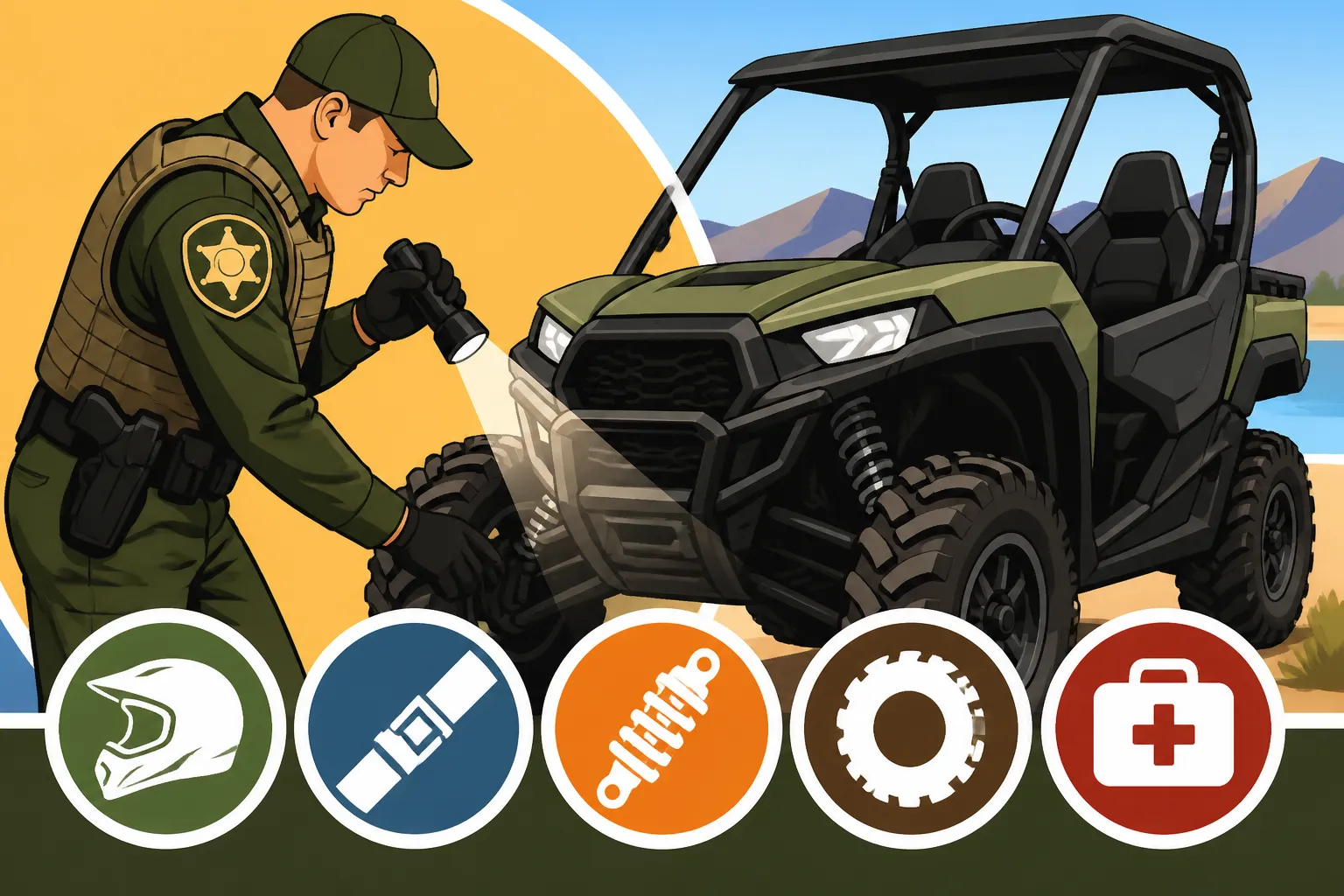
Once the initial paperwork is in order, a Washoe County Deputy might shift their attention to the machine itself. It’s not just about what you carry in your wallet or glove box; it’s also about how your ATV or UTV is equipped and maintained. These checks are typically focused on safety, environmental protection, and ensuring your machine meets the standards set for riding on public lands. Many of these regulations exist to protect our shared natural resources and keep everyone safe out on the trails.
Safety Equipment (Helmet, Spark Arrester)
Safety is paramount in OHV recreation, and deputies are trained to look for crucial safety equipment. One of the most common checks, especially for riders under a certain age or in specific riding scenarios, is helmet compliance. Nevada has specific [Nevada Helmet Rules Off-Road Versus On-Road], and a deputy will observe whether riders are wearing appropriate head protection. It’s not just a suggestion; it’s a non-negotiable safety measure that can save lives. They're looking for DOT-approved helmets, properly secured, and worn by anyone who needs to be wearing one according to state law.
Another critical piece of equipment they'll often check for is a spark arrester. This isn't just a "nice to have"; it's a legal requirement for any OHV operating on public lands in Nevada, especially in a county like Washoe which has vast expanses of wildland. A spark arrester prevents incandescent particles from escaping your exhaust and potentially igniting a wildfire. Deputies are well aware of the fire danger in our arid climate, so they'll often visually inspect your exhaust system to ensure a functioning, Forest Service-approved spark arrester is installed. [Why a Spark Arrester Matters on Road and Trail] cannot be overstated in a state prone to wildfires. Neglecting this could result in a significant fine and a contribution to fire risk.
Proper Decal Placement and Condition
We talked about having a valid registration decal, but its placement and condition are also important. A Washoe County Deputy needs to be able to easily identify your machine's registration status. Nevada law specifies where the decal should be affixed – typically on the left-rear side of a quad or the left side of a side-by-side. If your decal is missing, obscured, or so faded it's unreadable, it defeats its purpose and can lead to a stop.
Think of it from a deputy's perspective: if they can't clearly see your decal from a reasonable distance, they have to assume it's either missing or expired. This means they'll need to pull you over to verify. [Left Side or Rear: Where the Decal Goes] is something every Nevada OHV rider should know. If your decal starts peeling off due to desert heat or rough riding, consider ordering a replacement promptly. You want to make it as easy as possible for law enforcement to confirm your compliance without having to stop you unnecessarily. A legible, properly placed decal is a sign of a responsible rider.
Sound Levels and Modified Exhaust
While perhaps not as immediate a check as a helmet or visible decal, a deputy might certainly take notice of your machine's exhaust sound. Nevada has regulations regarding OHV sound limits, particularly on public lands. Excessive noise isn't just an annoyance to other riders and residents; it can also disturb wildlife and impact the overall outdoor experience. If your machine is roaring through the landscape with a modified, overly loud exhaust, it's definitely something that can draw unwanted attention from law enforcement.
Many aftermarket exhaust systems are designed for performance, but not all of them meet legal sound requirements. If a deputy observes your machine creating what they deem to be excessive noise, they may investigate further. This could involve an inspection of your exhaust system or a sound test if they have the equipment. It's best practice to ensure your OHV's exhaust system is in good working order and complies with state regulations. Being mindful of [Nevada Sound Limits on Public Land] helps preserve access to riding areas and avoids potential citations. LawDepot also provides resources for understanding local regulations that might impact your vehicle's modifications.
Common Reasons for Stops and What to Expect
Beyond the basic checks, there are specific scenarios and locations in Washoe County that are more likely to lead to an interaction with law enforcement. Understanding these common triggers can help you anticipate potential stops and ensure you're always riding within the rules. Deputies aren't just out to catch people doing wrong; they're patrolling to ensure safety, protect the environment, and enforce regulations that keep our trails open and enjoyable for everyone.
Designated OHV Areas and Restricted Zones
Washoe County is vast, with a mix of private, state, and federal lands. While many areas are open to OHV use, there are also clearly designated OHV areas and, conversely, restricted zones where OHVs are prohibited or limited. Deputies frequently patrol these areas to ensure riders are staying within the legal boundaries. For instance, riding in environmentally sensitive areas, wilderness study areas, or areas closed for restoration can quickly lead to a stop and a citation.
Always know where you're riding. Consult current maps and signage before heading out. The BLM (Bureau of Land Management) and Forest Service provide maps outlining permissible OHV routes and areas. If you're spotted riding off-trail in a "closed" area or on private property without permission, a deputy will definitely intervene. Ignorance of the rules, unfortunately, is not a valid excuse. [Nevada Trail Closures to Check Before You Go] is a critical step in your ride planning.
Road Crossings and Paved Surface Riding
Nevada has specific, limited provisions for OHVs to operate on certain paved public roads, typically minor county roads, and often with stringent requirements. However, this is NOT a carte blanche to ride your ATV or UTV down any paved street in Washoe County. Deputies are particularly watchful for OHVs operating illegally on paved roads. If you're seen riding down a state highway or city street where OHVs are prohibited, you can expect to be pulled over.
Even when crossing a paved road to get from one section of a trail to another, there are rules. You must do so as directly and safely as possible, often only where signs permit. [Nevada Rules for Crossing a State Route] are very clear about this. Any extended riding on pavement, or using main roads for travel to town, is likely to result in a stop. Washoe County, in particular, has [Washoe County Ordinance 1507] which outlines specific rules about OHV use on its roads, so it's vital to be familiar with these local nuances. If your machine does meet the criteria for a "large ATV" and has been specifically decaled for road use, make sure you have all the required equipment like mirrors and turn signals, as a deputy will be looking for those too.
Riding During Fire Restrictions or Closures
Given Nevada's hot, dry climate, fire season is a serious concern, especially in Washoe County with its proximity to wildlands. During periods of high fire danger, land management agencies (like the BLM or Forest Service) will often implement fire restrictions or even full closures of certain areas. Riding an OHV in an area under fire restriction or outright closure is a major offense and a deputy will absolutely stop you.
These restrictions can include bans on open flames, prohibitions on certain types of equipment, and even complete closures of specific trails or entire recreation areas. Deputies are actively enforcing these to prevent devastating wildfires. If you're caught riding during a closure, expect a stern interaction and a hefty fine. Always check current fire danger levels and restrictions before heading out, especially during the warmer months. These restrictions are often posted at trailheads, on agency websites, and sometimes even reported by local news.
Proactive Steps for a Worry-Free Washoe County Ride
Riding in Washoe County and throughout Nevada is an incredible experience, offering vast landscapes and thrilling trails. The key to enjoying it without unnecessary stress or legal trouble is to be proactive and prepared. A little foresight before you head out can save you a lot of grief and ensure your interactions with law enforcement are brief and positive. It’s all about being a responsible, informed rider.
Pre-Ride Checklist and Document Organization
Before every ride, especially when exploring new areas or making a longer trip, make it a habit to run through a quick pre-ride checklist. This isn't just about your machine's mechanical readiness; it's also about your legal readiness. This means gathering all your essential documents: your driver's license, your OHV registration card (remember [Nevada's Annual OHV Registration] needs to be current!), and either your title or bill of sale. Double-check that your OHV decal is current and clearly visible.
Think about how you'll carry these documents. The desert isn't kind to paper. Investing in a durable, waterproof document holder or a sealed plastic bag is a smart move. You want to make sure your [Keeping Paperwork Dry in a Dusty Machine] is a priority, so it remains legible for any deputy who might need to inspect it. Many riders take photos of their documents on their phone as a backup, but always be prepared to show the physical copies. LawDepot can assist you in creating legally sound documents like bills of sale or permission letters, which can then be organized into your ride kit. Having everything organized and accessible, adhering to a full [Nevada OHV Registration Paperwork Checklist], demonstrates responsibility and respect for the law.
Understanding Local Ordinances and State Laws
Nevada state law provides the overarching framework for OHV operation, but local ordinances, like those in Washoe County, can add specific restrictions or allowances. It's your responsibility as a rider to know and understand both. For instance, while the state might have general rules, a specific county might have additional restrictions on noise, hours of operation in certain areas, or even specific designated routes.
Before venturing into a new riding area, take a few minutes to look up the local rules. The county's official website, the local BLM field office, or even a quick call to the local Sheriff's office (non-emergency line, of course!) can provide invaluable information. Clubs and online forums for local riders can also be great resources, but always cross-reference with official sources. Understanding these nuances, such as [Washoe County Ordinance 1507] or specific local road rules, means you're less likely to inadvertently break a rule and face a stop by a deputy.
Using Reliable Resources for Information
In today's digital age, information is abundant, but not all of it is accurate or up-to-date. When it comes to OHV regulations, always seek out reliable and official sources. The Nevada Department of Motor Vehicles (DMV) OHV Section website is your primary resource for registration and titling information, including details on [Nevada OHV VIN Inspection Requirements]. For trail maps, closures, and land use rules, consult the Bureau of Land Management (BLM) and the U.S. Forest Service websites for the specific districts you plan to ride in.
Nevada also has organizations like the [The Nevada Commission on Off-Highway Vehicles] which is a fantastic resource for understanding where your registration fees go and finding information on trail grants and riding opportunities. These bodies work to ensure sustainable OHV recreation. Don't rely solely on word-of-mouth or outdated forum posts. Bookmark the official sites, download current maps, and check for alerts, especially during fire season. Being informed is your best defense against unexpected stops and ensures you have the most enjoyable and compliant ride possible in Washoe County.
Disclaimer
This article is for general informational purposes only and does not constitute professional advice. Laws, prices and regulations vary by location and change over time. Consult a qualified professional for guidance on your specific situation.