Why the Commission Spends What the DMV Collects
It’s a common scenario: you’ve just gotten your new off-highway vehicle (OHV) or renewed your registration, handed over your hard-earned money at the Nevada DMV, and you’re left wondering, "Where exactly does that money go?" It can feel like your registration fees simply disappear into a vast governmental abyss, with little transparency on how they benefit you, the passionate rider. This guide aims to clear up that confusion, explaining the crucial, two-part system involving the Nevada DMV and the Nevada Commission on Off-Highway Vehicles, and illustrating how your contributions directly support the trails and programs you love.
Understanding Nevada's OHV Registration Process
Many riders assume that when they pay for their OHV registration, the Nevada Department of Motor Vehicles (DMV) simply keeps the funds to cover its own administrative costs. While the DMV certainly handles the initial collection and processing, the journey of your registration fee is far more collaborative and strategically designed. It’s a mechanism intended to funnel resources directly back into the very trails, facilities, and educational programs that enhance the off-roading experience across the Silver State. It’s not just a fee; it’s an investment in the future of Nevada’s OHV recreation.
The Initial Collection: What the DMV Does
When you undertake tasks like [Registering an ATV in Nevada] or a UTV, whether it’s for a brand-new machine or an annual decal renewal, your first interaction is typically with the Nevada DMV. They are the essential front-line administrators. You’ll complete the required paperwork, provide proof of ownership—perhaps a bill of sale or title that you might have drafted using a service like LawDepot—and pay your registration fees. These fees, which are established by state law, fulfill the legal requirement for your machine to display a valid decal whenever you ride on public lands. The DMV's role is to ensure that all statutory requirements are met, processing your application, issuing your distinctive decal, and meticulously maintaining the state's official record of OHV ownership. While this initial step might seem like a straightforward bureaucratic process, it serves as the critical entry point for the funding system that robustly supports the broader OHV community.
Where Your Registration Dollars Initially Go
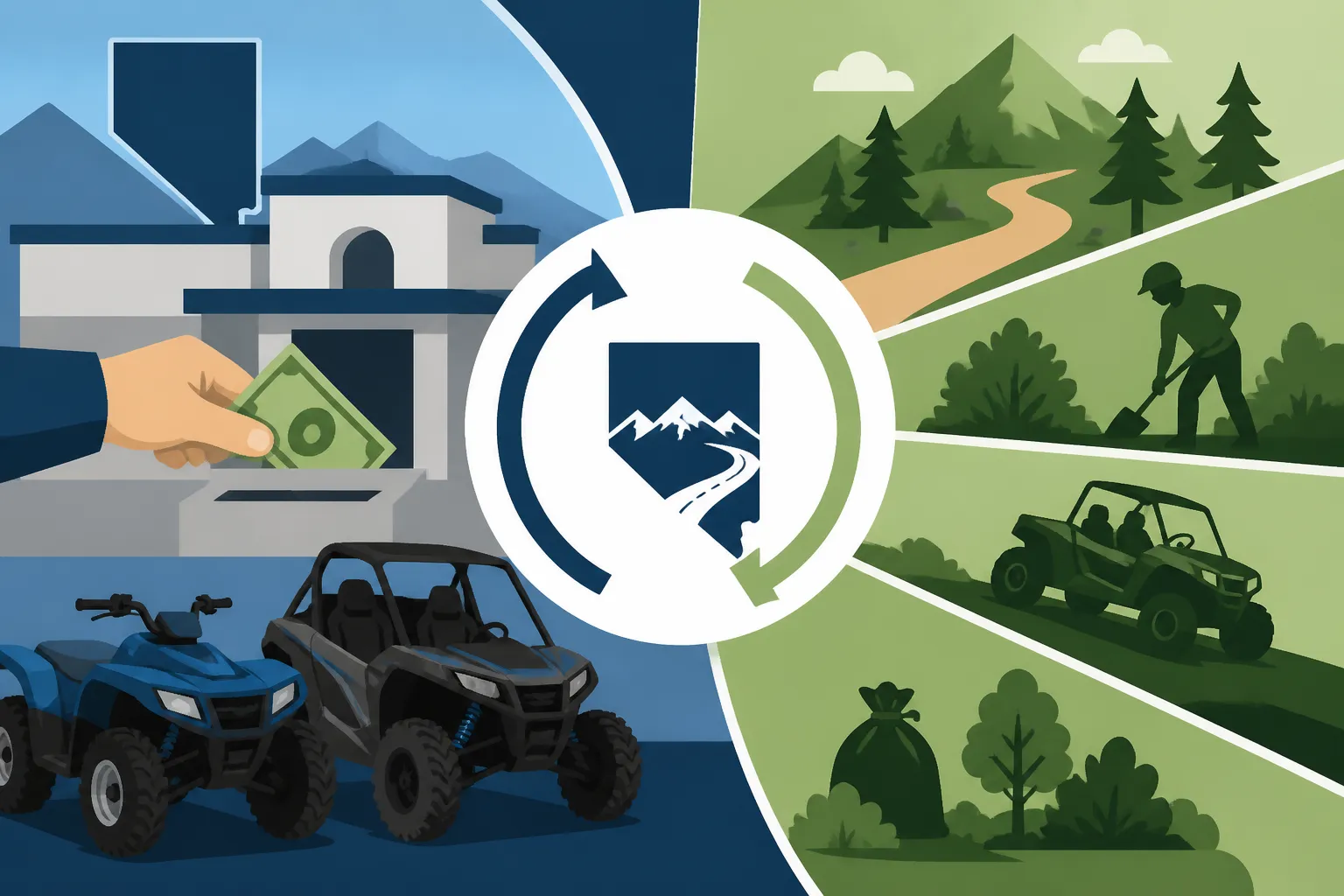
Once the DMV collects your OHV registration fee, that money isn’t simply merged into a general state fund or redirected to unrelated state services. The funds gathered from OHV registrations, including options like the [Nevada OHV Registration Fee for One Year] or the [Nevada OHV Registration Fee for Three Years], are specifically earmarked for off-highway vehicle purposes. They are deposited into a dedicated fund, completely separate from other DMV revenues or general state taxes. This segregation is paramount because it guarantees that the financial contributions made by OHV users remain strictly within the OHV ecosystem. It’s a common misunderstanding that the "DMV" acts as a generic government treasury; however, in this context, they function primarily as a specialized collection agent for a highly targeted program. They diligently track these specific funds before transferring them to the designated authority responsible for their strategic allocation.
The Vital Role of the OHV Decal
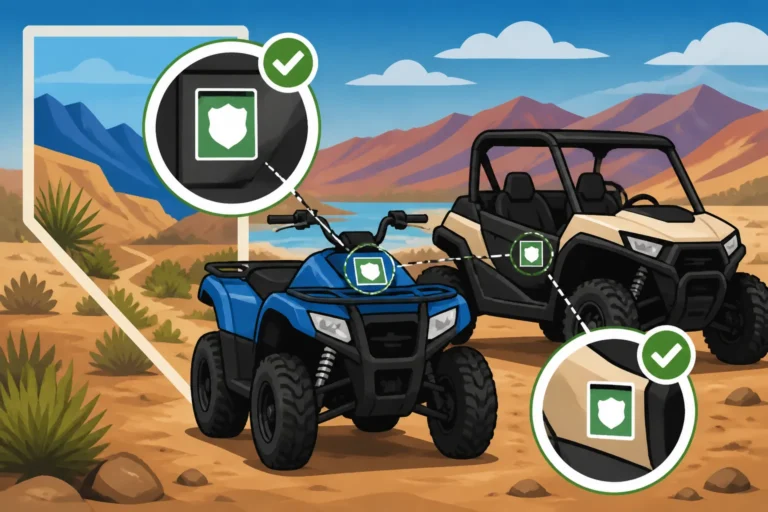
Your [Nevada's $20 OHV Decal and What It Covers] is much more than just a colorful sticker; it functions as your official permit to legally ride on designated public lands throughout Nevada. It serves as tangible proof that you have contributed to the comprehensive system that is responsible for the maintenance and enhancement of those very lands. The decal itself provides visible evidence that you’ve fulfilled your part of the regulatory agreement, allowing you to ride legally and confidently, thereby avoiding potential citations from law enforcement officers patrolling popular off-road destinations such as Sand Mountain or Logandale Trails. The crucial information detailed on your decal and your registration card—documents you should always keep readily accessible, perhaps secured in a waterproof pouch alongside other important paperwork like proof of ownership documents you might generate with LawDepot—is what authorities will verify to confirm your compliance. Without a current decal, you’re not only riding unlawfully, but you’re also failing to contribute to the essential funding stream that ensures our trails remain open, safe, and impeccably maintained. It stands as a clear visual declaration that you are an active and responsible participant, playing a direct role in preserving and expanding access for all members of the riding community.
The Nevada Commission on Off-Highway Vehicles: The Spending Authority
This is where the direct benefits for the OHV community truly materialize. While the Nevada DMV is responsible for the collection of funds, it is the [The Nevada Commission on Off-Highway Vehicles] that holds the state-mandated authority to determine precisely how those dedicated OHV funds are ultimately spent. This distinct separation of duties is incredibly important because it places the critical spending decisions squarely in the hands of a body whose sole focus is the specific needs and interests of off-road enthusiasts, alongside the responsible stewardship of OHV recreation. This isn't some distant, disengaged governmental bureaucracy; rather, it’s a dedicated group of individuals, many of whom are riders themselves or possess expertise in public land management, who intimately understand the unique challenges and abundant opportunities within Nevada's dynamic OHV landscape.
Who the Commission Is and What They Do
The Nevada Commission on Off-Highway Vehicles comprises volunteer members who are thoughtfully appointed from various regions and sectors directly related to off-highway recreation. Their core mission is unequivocal: to actively promote the safe and responsible use of OHVs and to judiciously manage the funds generated through OHV registration fees. The Commission conducts regular public meetings, offering an invaluable, direct channel for individual riders, OHV clubs, and public land managers to express concerns, propose new projects, and directly influence how OHV funding is allocated. This is far from being a mere rubber-stamp committee; it is a highly active and deeply engaged body that meticulously reviews project proposals, thoroughly evaluates current needs, and makes informed, strategic decisions about how best to invest in and enhance the OHV infrastructure across the state. They serve as the dedicated stewards of the OHV fund, ensuring that every dollar collected through your registration fees is utilized effectively and efficiently to directly benefit the wider OHV community. A clearer understanding of [What Nevada OHV Registration Fees Pay For] emerges when one comprehends the vital role played by the Commission.
The Grant Program: How Projects Get Funded
The primary and most impactful mechanism through which the Commission allocates these crucial funds is its robust grant program. Various entities, including federal land management agencies (such as the Bureau of Land Management or the U.S. Forest Service), local governmental bodies, and even qualified non-profit organizations, are eligible to apply for grants from the Commission. These grant applications are meticulously detailed, outlining proposed projects that align with the Commission's overarching objectives. Such projects often include essential trail maintenance and development, the creation of improved facilities, comprehensive safety education initiatives, enhanced law enforcement efforts in OHV areas, or vital environmental restoration work within off-road zones. Consider it a competitive process where highly deserving projects contend for limited but impactful funding. The Commission diligently reviews each application, carefully considering its consistency with state OHV plans, its anticipated benefits for the riding public, and its overall feasibility. This means your registration fee transcends being a simple tax; it transforms into an investment, pooled with contributions from thousands of other riders, and then strategically distributed to generate tangible, positive improvements. This dynamic grant process is extensively detailed in resources such explaining the [Nevada OHV Grant Program Explained].
Types of Projects Funded by OHV Dollars
So, what tangible improvements do these OHV dollars actually bring about? The scope of funded projects is quite extensive and directly enhances your riding experience. A substantial portion of the funds is dedicated to critical trail maintenance and the development of new trail systems. This translates into funds actively being used to repair erosion damage on popular trails, clear dangerous obstacles, or even establish new, environmentally sustainable riding routes. Facilities at widely used riding areas, such as [Sand Mountain: Nevada's Great Basin Dune] or [Logandale Trails Outside Las Vegas], directly benefit from these funds, leading to significant improvements like better staging areas, clearer directional signage, well-maintained restrooms, and effective trash management solutions. Safety and education initiatives also receive high priority funding, supporting programs that instruct new riders on proper trail etiquette, provide essential safety training, or help enforce existing OHV laws to ensure a safe and enjoyable experience for everyone. Occasionally, funding is allocated for specific land acquisitions to improve trail access or for research and mitigation efforts concerning environmental impacts in sensitive areas. For instance, some funds might be used to monitor and protect unique plant or animal species found in proximity to popular riding locations, showcasing a strong commitment to responsible and sustainable recreation. This direct and continuous reinvestment into the OHV community is the fundamental rationale behind this two-tiered system; it unequivocally ensures that your contributed dollars are directly enhancing the sport you are so passionate about.
Why This Two-Tiered System Works for Nevada Riders
Initially, the idea of the DMV collecting funds only for another separate entity, the OHV Commission, to then disburse them might appear to be an unnecessarily complex bureaucratic arrangement. However, this two-tiered system is, in fact, a remarkably effective and intentionally structured model that delivers substantial advantages to Nevada's vibrant OHV community. It shrewdly capitalizes on the specific strengths of each agency while simultaneously mitigating potential inefficiencies, thereby guaranteeing that OHV funds are managed with utmost responsibility and spent in a highly strategic manner. This model has consistently proven its efficacy in channeling resources precisely into the areas that require them most, preventing their dilution within larger, less focused state budgets.
Centralized Collection, Decentralized Spending
A significant advantage of this well-structured system lies in the clear division between collection and spending responsibilities. The Nevada DMV excels at centralized collection; it possesses the established infrastructure and operational capacity across the entire state to efficiently handle registrations, accurately process payments, and issue OHV decals. This streamlines the administrative burden considerably for every rider. Imagine the logistical chaos if every individual trail system or local OHV park were tasked with collecting its own fees—it would be an administrative nightmare! By centralizing the collection process, the state ensures consistency and ease of access for everyone, whether you are completing a new title application or simply renewing your [Nevada's Annual OHV Registration]. Once these funds are collected, they are then seamlessly transferred to the OHV Commission. The Commission, with its specialized focus on OHV recreation, is then uniquely positioned to make decentralized spending decisions. This allows them to effectively target specific needs across Nevada’s diverse riding areas, ranging from the exhilarating dunes near Fallon to the expansive, scenic trails around Ely. This approach fosters a more agile and responsive allocation of resources, precisely tailored to address the unique demands of each distinct region. It is an intelligent method to ensure that while the administrative process remains uniform, the distribution of benefits is flexible and highly pertinent to the needs of local communities. This strategic flexibility enables resources to be deployed where they will generate the most profound impact, whether that involves enhancing signage at [Nellis Dunes and the Las Vegas Skyline] or meticulously maintaining trails in more remote and rugged locales.
Transparency and Accountability in Funding
Another paramount benefit of this organizational structure is the greatly enhanced transparency and accountability it inherently provides. Because the OHV funds are distinctly segregated and diligently managed by a dedicated Commission, it becomes significantly easier for the public to trace exactly where the money originates from and precisely where it is ultimately spent. The Commission operates under full public scrutiny, conducting open meetings and regularly publishing comprehensive reports detailing its grant awards and expenditures. This elevated level of public oversight ensures that all decisions regarding funding are made fairly, impartially, and that the funds are consistently utilized for their explicitly stated purposes. Should you ever have a question about how a particular project was funded, the relevant information is generally made easily accessible to the public. This stands in stark contrast to general tax revenues, which often prove much more challenging to trace back to specific governmental projects. For riders, this system instills a profound sense of confidence that their registration fees are genuinely contributing to the tangible improvement of their sport, rather than simply vanishing into an obscure governmental budget. It actively fosters trust within the OHV community, clearly demonstrating that their financial contributions are deeply respected and managed with the utmost responsibility. This framework provides a clear audit trail and robust public oversight, guaranteeing that every dollar collected serves a defined purpose and yields a measurable, positive outcome for Nevada's off-road enthusiasts. Even when handling the legal aspects of acquiring or selling an OHV, utilizing thorough documentation, perhaps created with the assistance of a service like LawDepot, can further contribute to this overarching environment of transparency and accountability from the ground up.
Maximizing Benefits for the OHV Community
Ultimately, this thoughtfully designed two-tiered system is engineered to maximize the benefits for the entire OHV community. By entrusting a specialized body like the Commission with the critical oversight of fund allocation, decisions are consistently made by individuals who possess a deep, nuanced understanding of the complexities inherent in off-highway recreation. This expertise allows them to effectively prioritize projects that will yield the most significant positive impact on crucial aspects such as trail access, rider safety, and responsible land stewardship. This structured system actively prevents OHV funds from being diluted or misallocated to unrelated causes. Instead, it ensures that the financial contributions generated by riders are directly reinvested into improving the very environments where they ride, enhancing safety measures, and actively promoting the long-term sustainability of OHV recreation throughout Nevada. Whether these funds support essential search and rescue operations, the development of new, accurate trail maps, or vital educational outreach programs, every aspect of the funding is strategically geared towards creating a better, safer, and more accessible riding experience for everyone. When considering registration choices like [One Year or Three Years in Nevada] for your machine, it's important to remember that both options contribute significantly to this vital system that directly serves your passion. This unwavering and dedicated focus ensures that the unique needs of the OHV community are not only recognized but also effectively addressed, thereby fostering a thriving and sustainable environment for riders across the state.
| Entity | Primary Role in OHV Funding | Direct Benefit to Riders |
|---|---|---|
| Nevada DMV | Efficient collection of OHV fees | Streamlined, legal registration process and issuance of decals |
| OHV Commission | Strategic allocation of collected funds | Direct investment in trail maintenance, facilities, safety, education, and access |
| Integrated Two-Tier System | Ensures dedicated funds serve the OHV community directly | Sustainable access, improved infrastructure, and a safer, more enjoyable riding experience for all |
Disclaimer
This article is for general informational purposes only and does not constitute professional advice. Laws, prices and regulations vary by location and change over time. Consult a qualified professional for guidance on your specific situation.