Registering an ATV Bought From a Nevada Private Seller
Buying an ATV or UTV from a private seller in Nevada can feel like a great deal, but the registration process afterwards can quickly become a confusing maze, leaving you wondering if you've got all the right paperwork to make your new machine truly yours and legal to ride. This guide is here to walk you through every step of registering that privately-purchased off-highway vehicle (OHV) in Nevada, ensuring you hit the trails without any unexpected headaches or fines.
The Initial Steps After a Private Purchase in Nevada
You’ve shaken hands, the money has changed hands, and you're the proud new owner of an ATV or UTV. Congratulations! But before you load it up and head straight for the dunes, there are some absolutely critical first steps you need to take to ensure a smooth registration process here in Nevada. Missing these can lead to frustration, delays, and even extra fees.
Securing the Proper Proof of Ownership
When you buy any vehicle, especially an OHV, proof of ownership is paramount. In Nevada, this typically means a properly endorsed title from the seller. If the ATV or UTV has ever been titled in Nevada or another state that issues titles for OHVs, that title is your golden ticket. The seller should sign it over to you in the designated spots, making sure to fill in all the required information like the odometer reading (if applicable and accurate for an OHV), date of sale, and your name as the buyer.
However, many OHVs, especially older ones, might not have a formal title, or the seller might have lost it. This is where a robust bill of sale becomes your absolute best friend. Even if you get a title, a bill of sale is still a smart move, providing a clear record of the transaction. It should include the full names and addresses of both buyer and seller, the date of sale, the purchase price, and a detailed description of the OHV, including its make, model, year, and crucially, the Vehicle Identification Number (VIN). A well-drafted bill of sale can be invaluable if you encounter any questions about ownership down the road, especially if you're attempting to register a machine that doesn't have a clean title history. You might consider using a reputable online service like LawDepot for a template to ensure all necessary fields are included and it stands up to scrutiny.
Understanding Nevada's 30-Day Clock
Nevada law isn't shy about deadlines, and registering your newly acquired OHV is no exception. Once you take ownership of an OHV, you generally have a 30-day window to complete the registration process. This isn't just a suggestion; it's a legal requirement. The clock starts ticking from the date of purchase, which should be clearly noted on your bill of sale or the signed-over title.
Failing to meet this 30-day deadline can result in penalties. The Nevada DMV can assess a late fee, which, while not exorbitant, is an unnecessary cost you can easily avoid with prompt action. Think of it as an incentive to get your ducks in a row quickly. Beyond the financial penalty, riding an unregistered machine after this period could also lead to a citation from law enforcement if you're stopped on public lands or trails. It’s always best to be proactive and submit your paperwork well within that timeframe to keep everything above board and avoid any unwelcome surprises. For more details on avoiding these charges, check out [Nevada's $10 Late Fee on an Expired OHV Decal].
Navigating the VIN Inspection Process
One of the most common stumbling blocks for private party OHV purchases is the VIN inspection. Unlike passenger cars where the VIN is typically verified during the titling process at the DMV, off-highway vehicles in Nevada have a different set of rules. Understanding these rules is key to avoiding frustration.
Why a VIN Inspection is Crucial
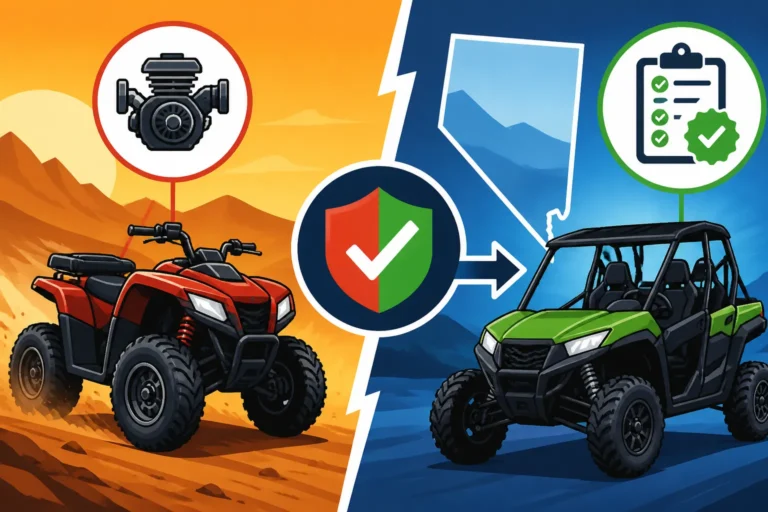
A VIN inspection serves several vital purposes. First and foremost, it verifies the actual existence of the vehicle and confirms that the VIN on the machine matches the VIN on your ownership documents. This is a critical step in preventing the registration of stolen vehicles. The inspector will physically locate the VIN on your ATV or UTV and compare it to the numbers on your title or bill of sale.
Beyond verifying the number itself, the inspection confirms that the vehicle identification number has not been tampered with or altered. It's a layer of security for you, the new owner, and for the state. This process ensures that the machine you're registering is indeed the machine described on your paperwork and that it hasn't been illegally modified or reported stolen. Without a completed and signed VIN inspection form, the Nevada DMV simply won't process your OHV registration application.
Where to Get a Nevada OHV VIN Inspection
This is where many new OHV owners get tripped up. It’s a common misconception that you can just roll your ATV into any Nevada DMV office for a VIN inspection. The reality is, the DMV generally doesn't perform these inspections for OHVs. They handle a vast array of vehicle services, but OHV VIN verification typically falls outside their direct scope. You might want to review [The VIN Inspection Nevada DMV Will Not Do] for further clarification.
So, where do you go? In Nevada, OHV VIN inspections must be performed by one of two types of authorized individuals: a licensed Nevada OHV dealer or a sworn peace officer. For many, a licensed OHV dealer is the easiest option. These dealers are authorized by the state to perform the necessary checks and complete the required paperwork. It’s a good idea to call ahead to your local OHV dealer to schedule an appointment and confirm any fees they might charge for the service. Alternatively, if a dealer isn't convenient, you can request a sworn peace officer – such as a sheriff's deputy, state trooper, or city police officer – to perform the inspection. This often requires setting up an appointment and might depend on their availability and department policies. You can find more specific details on this process in [Which Dealers Can Inspect a VIN in Nevada].
The Nevada OHV Registration Application
Once you have your proof of ownership squared away and your VIN inspection completed, the next big step is to prepare and submit your actual registration application. This involves gathering specific documents and understanding the various fees involved.
Gathering Your Required Paperwork
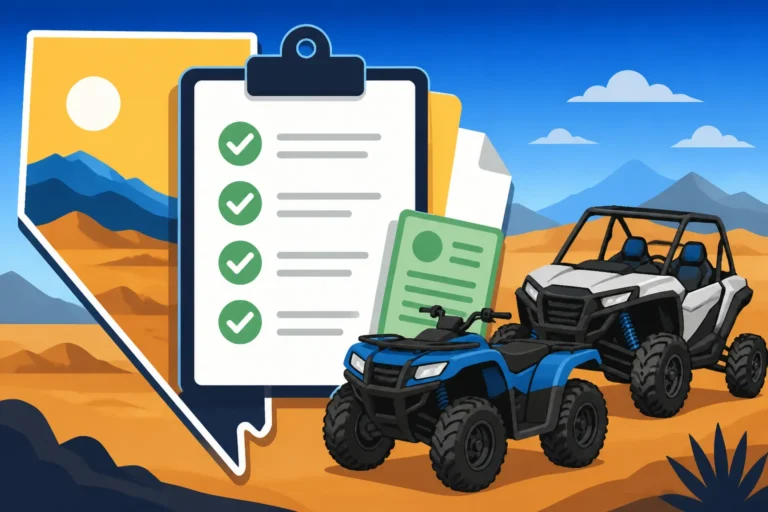
To register an OHV purchased from a private seller in Nevada, you'll need to submit a package of documents to the DMV. Having everything organized before you submit will prevent processing delays. Here’s a checklist of what you’ll typically need:
- Nevada OHV Registration Application (Form OHV-001): This is the primary form you'll fill out, detailing your information and the OHV's specifics. Be sure to fill it out completely and accurately, signing where required. Nevada uses several versions of this form depending on your specific situation; make sure you're using the correct one for a private purchase. For insights into choosing the right form, consider [Why Nevada Has Five Registration Applications].
- Proof of Ownership: This means the properly signed-over title, if available. If no title exists, you'll need your comprehensive bill of sale, often supplemented by an affidavit of ownership if the machine was never titled or the title is lost.
- VIN Inspection Certificate: The completed and signed form from your licensed OHV dealer or sworn peace officer. This is non-negotiable.
- Proof of Nevada Residency: This verifies that you are indeed a resident of the state, usually required for certain applications.
- Payment for Fees: You’ll need to include payment for your registration and any applicable titling fees.
It’s always a good idea to make copies of all your documents for your own records before mailing or submitting them in person. A full list of requirements can be found in [Nevada OHV Registration Paperwork Checklist].
Submitting Your Application and Fees
After carefully gathering all your documents, it’s time to submit them to the Nevada DMV Off-Highway Vehicle Section. You typically have two main options for submission: by mail or in person. Many people opt for mailing their application to the OHV Section in Carson City, which can be convenient, but be aware that processing times can vary. If you prefer to submit in person, you can visit a full-service DMV office.
When it comes to fees, you'll be paying for the registration itself, which can be for either a one-year or three-year period. The choice is yours, with the three-year option often providing a slight saving over renewing annually. [Nevada OHV Registration Fee for One Year] and [Nevada OHV Registration Fee for Three Years] provide more context on these choices. If your machine is being titled for the first time in your name in Nevada, there will also be a title fee. The specific amounts can vary, so it's always best to check the most current fee schedule on the DMV's official website or inquire directly. Once your application is processed and approved, you'll receive your OHV decal, which serves as your proof of registration and must be affixed to your machine. This decal confirms your machine is legally allowed on designated public lands and trails. More on what that decal signifies can be found in [What a Nevada OHV Decal Actually Proves].
Common Hurdles and How to Overcome Them
Even with the best intentions, registering a privately-purchased OHV can present a few unique challenges. Knowing these potential pitfalls ahead of time can help you navigate them smoothly.
What if the Seller Doesn't Have a Title?
This is perhaps the most frequent and frustrating hurdle for buyers of older or less expensive OHVs. Many ATVs and UTVs, especially those manufactured before Nevada's titling requirements were as robust, might never have been formally titled. Or, the seller might simply have lost the title over the years. If you find yourself in this situation, don't despair, but be prepared for extra steps.
Nevada offers pathways to establish ownership without a traditional title, but it requires diligent documentation. Your bill of sale becomes absolutely critical here. It must be as detailed as possible, clearly stating the sale, the vehicle, and both parties. In some cases, you might need to submit an Affidavit of Ownership, swearing under oath to the facts of your purchase and how you came to possess the vehicle. The DMV will likely look for a history of prior registration, even if it was just a decal, to confirm the machine isn't stolen. This process can take longer and might require more communication with the DMV, but it is achievable. Always insist on the most comprehensive bill of sale possible, even if you’re told a title isn't available. Understanding how to handle this situation is key, and you can delve deeper into this topic by reading [Buying a Quad With No Paperwork at All].
Avoiding Pitfalls with the Bill of Sale
A seemingly simple document, a bill of sale can be your greatest asset or your biggest liability. To avoid future issues, ensure your bill of sale includes:
- Full Legal Names and Addresses: Of both the buyer and the seller.
- Date of Sale: Crucial for tracking the 30-day registration window.
- Purchase Price: Clearly stated.
- Detailed Vehicle Description: Make, model, year, and the all-important VIN.
- Signatures: Both buyer and seller must sign. Some even prefer to have signatures notarized, though this isn't always strictly required for OHV registration, it adds a layer of authenticity.
Without a comprehensive bill of sale, proving ownership becomes incredibly difficult, especially if a title is absent. A vague or incomplete bill of sale can lead the DMV to reject your application, requiring you to go back to the seller (who may or may not be cooperative) to get the correct information. Again, using a professional template, perhaps from a service like LawDepot, can help ensure you don't miss any critical details. Both buyer and seller should keep signed copies of the bill of sale for their records. For a more comprehensive guide on what this document should contain, see [What a Nevada ATV Bill of Sale Should Carry].
Dealing with Out-of-State Titles or No Previous Nevada Registration
Sometimes, the private seller might have purchased the OHV in another state and never bothered to title or register it in Nevada, or perhaps they've just moved here. If the machine comes with an out-of-state title, the process is very similar to a Nevada title, but there might be a specific form to complete for bringing an out-of-state vehicle into Nevada's system. [Registering an Out-of-State Machine in Nevada] provides a good overview of this process.
One key difference to be aware of is the titling fee. Nevada sometimes applies a higher title fee for machines that are being titled in the state for the first time after coming from another state, compared to those that have always been registered in Nevada. This isn't always the case, but it's a detail worth checking. The VIN inspection requirement remains the same regardless of whether the machine was previously titled in Nevada or elsewhere. Just be sure to bring all available documentation, including any out-of-state registrations or titles, when you go for your VIN inspection and when you submit your application. To understand the cost implications, you might find [The Higher Nevada Title Fee for a Machine Out of State] particularly useful.
Remember, patience and thoroughness are your best friends throughout this process. By being prepared and understanding the requirements, you can successfully register your privately-purchased OHV and hit the trails legally and confidently.
OHV Registration Document Comparison
| Document Type | Required for All Scenarios? | Key Information It Provides | Special Considerations |
|---|---|---|---|
| Nevada OHV-001 Form | Yes | Applicant details, OHV description, intended use | Choose correct version for private sale |
| Title (Endorsed) | Preferred | Legal ownership transfer, VIN verification | Seller must sign over, ensure all fields are complete |
| Bill of Sale | Strongly Recommended | Proof of purchase, sale date, price, VIN, buyer/seller details | Critical if no title; use LawDepot for thoroughness |
| VIN Inspection | Yes | Verification of VIN on machine, anti-theft measure | Must be done by licensed dealer or sworn officer |
| Nevada Residency Proof | Yes | Confirms eligibility for Nevada registration | Varies, but usually a driver's license or utility bill |
| Previous Registration | Helpful, but not mandatory | Shows prior history, especially useful if no title | Good for establishing ownership chain for older machines |
Disclaimer
This article is for general informational purposes only and does not constitute professional advice. Laws, prices and regulations vary by location and change over time. Consult a qualified professional for guidance on your specific situation.