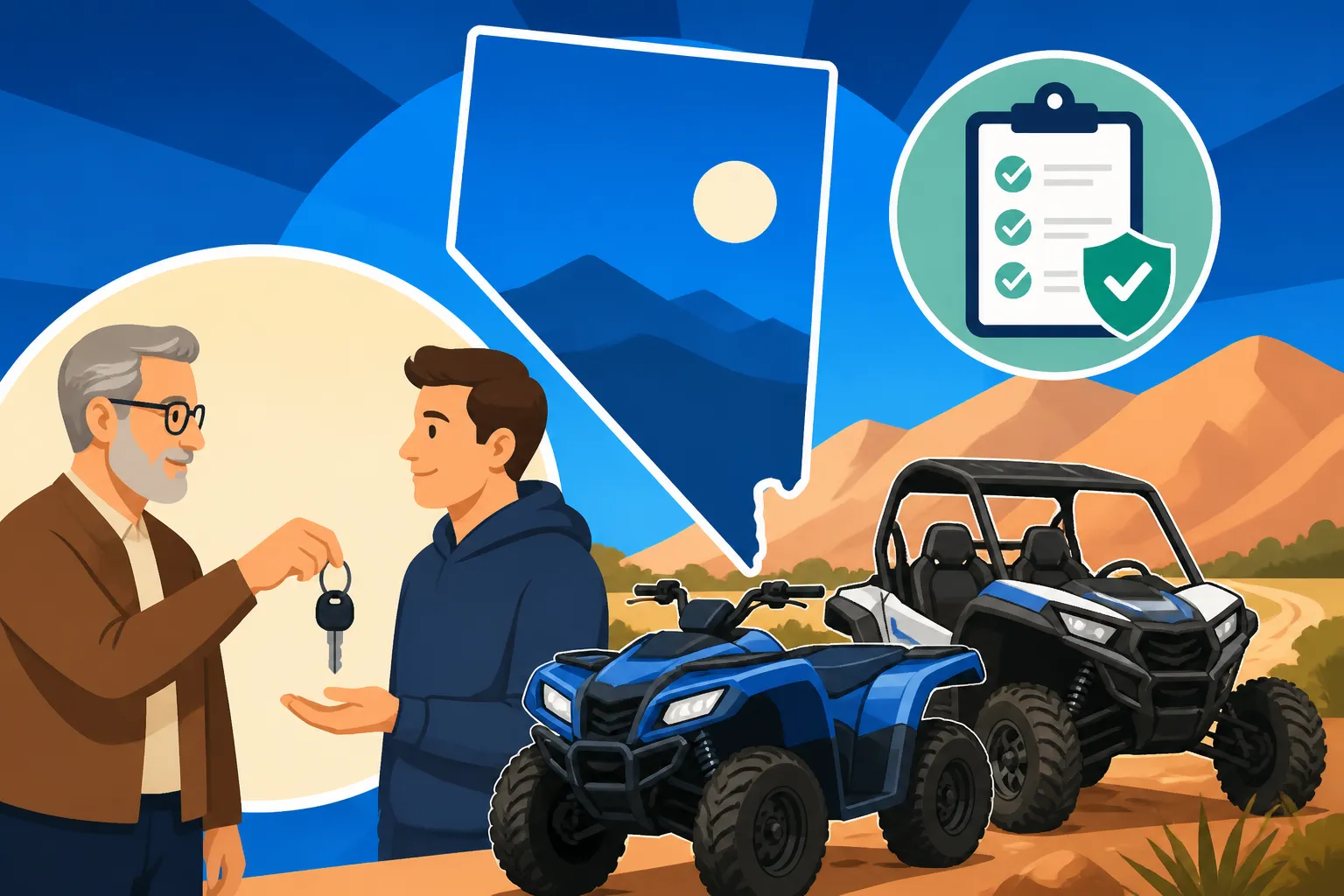
Registering a Machine You Inherited in Nevada
Losing a loved one is incredibly difficult, and amidst the grief, you might find yourself navigating the practicalities of their estate, which can include things like their beloved ATV or UTV. While the thought of riding their machine again might bring comfort, the process of legally transferring and registering an inherited off-highway vehicle (OHV) in Nevada can feel like a daunting and emotionally draining task. This comprehensive guide is here to walk you through every step, helping you understand the unique requirements, gather the right paperwork, and smoothly get that inherited machine registered in your name so you can honor their memory on the trails.
Understanding the Unique Challenges of Inherited OHV Registration
Inheriting an off-highway vehicle isn't as straightforward as buying one from a dealership or even a private seller. There's an added layer of legal and administrative complexity because the original owner is no longer there to sign the title. This process demands a different approach to ensure you become the legal and rightful owner in the eyes of the State of Nevada.
The Emotional Toll and Practicalities
The period following a loss is a whirlwind of emotions and responsibilities. Dealing with paperwork, especially something as specific as OHV registration, can feel like an extra burden when you're already grappling with grief. It’s completely understandable to feel overwhelmed by the thought of tracking down documents or making sense of bureaucratic processes. Many people put off these tasks, but it's important to know that taking care of the legal transfer, even if you do it slowly, prevents headaches down the road.
While there’s no immediate rush to process the transfer—unless you plan to ride the machine on public lands very soon—addressing it in due course will provide peace of mind. Giving yourself time to process everything before diving into the administrative tasks is perfectly fine, but having a clear roadmap can alleviate some of the stress when you are ready to proceed.
Why Standard Processes Don't Always Apply
When you buy an OHV, you typically receive a signed title from the seller and then present that to the Nevada Department of Motor Vehicles (DMV) to transfer ownership. With an inherited machine, there is no "seller" to sign anything. Instead, the DMV needs official legal documentation that proves you are the rightful recipient of the vehicle as part of the deceased's estate. This means relying on documents like a will, a trust, or a court order, rather than a simple bill of sale.
These legal documents establish a chain of ownership that the DMV can recognize. Without them, it would be impossible for anyone to claim ownership of an OHV after its owner passes, creating significant complications for heirs. This unique requirement is why the process differs significantly from a standard sale or purchase.
The Importance of Proper Legal Transfer
Ensuring proper legal transfer of an inherited OHV is crucial for several reasons. First and foremost, it establishes your indisputable ownership, preventing any future disputes or legal challenges from other family members or creditors. Without a clear title in your name, you might encounter issues if you ever decide to sell the machine or even just register it in your name. You wouldn't be able to renew the registration decal, for example, if the machine is still officially registered to the deceased.
Furthermore, proper registration is vital for riding on Nevada's vast network of trails and public lands. Law enforcement officials routinely check for valid registration. If you're stopped and the machine is still registered to a deceased individual, it could lead to complications, even if you are the rightful heir. Even for [A Nevada Machine That Only Rides Private Land], having the title in your name solidifies your ownership.
Gathering the Necessary Documentation After a Loss
The success of registering an inherited OHV hinges on having the correct paperwork. This part can be the most challenging, especially if the deceased's records weren't meticulously organized. Taking a methodical approach to gather everything will save you time and frustration in the long run.
The Deceased Owner's Title and Registration
The absolute cornerstone of registering an inherited OHV is finding the original Nevada Certificate of Title. This document identifies the vehicle by its Vehicle Identification Number (VIN) and lists the previous legal owner. Even if it's an out-of-state title, this document is essential as it proves the deceased's ownership. If the title is lost, don't despair—it happens. You will likely need to apply for a duplicate title in the deceased's name first, which can add a step to the process. [When a Seller Cannot Find the Title]
Beyond the title, also look for any current or expired registration decals or cards. While these aren't proof of ownership themselves, they contain important information like the VIN, the previous owner's name, and the OHV's description, which can be useful for cross-referencing and confirming details. Having the current registration card also helps demonstrate that the machine was actively used and legally registered. [What the Registration Card Must Show]
Proof of Inheritance: Wills, Trusts, and Affidavits
This is where the process diverges significantly from a typical OHV purchase. The Nevada DMV needs legal proof that you are the rightful heir to the vehicle.
- If there is a Will: A certified copy of the deceased's Last Will and Testament is often the clearest path. The will should explicitly name you as the beneficiary of the OHV, or you should be the residual beneficiary who inherits personal property. If the will names an executor, that person will typically facilitate the transfer of assets as outlined in the will.
- If there is a Trust: If the OHV was held in a revocable or irrevocable trust, the trust documents will dictate how the asset is to be distributed. You'll need a copy of the relevant trust agreement, along with the deceased's death certificate, to demonstrate your right to the OHV.
- If there is no Will (Intestate): This is where it can get a bit more complicated. If the deceased passed without a will (intestate), Nevada law dictates how their assets are distributed. In many cases, for smaller estates, a "Small Estate Affidavit" can be used to transfer personal property like an OHV without going through a full probate court process. You'll need to research the specific requirements for a Small Estate Affidavit in Nevada, including any monetary thresholds for its use. Services like LawDepot can provide templates for these crucial legal documents, simplifying a potentially complex process when you're already overwhelmed with grief. These templates can guide you in creating an affidavit that fits Nevada’s general legal requirements.
You will also need a certified copy of the deceased's death certificate, as this document formally proves the owner's passing.
Absence of Key Documents: What to Do
What if you can't find the title, or the deceased never had one for some reason? This situation requires a bit more effort but isn't insurmountable.
If the title is missing, you'll need to apply for a [Replacing a Lost Nevada OHV Title] in the deceased's name (if you are the executor or have legal authority) or follow the process for obtaining a bonded title. This usually involves contacting the DMV for their specific forms and procedures regarding lost titles. You may need to provide proof of heirship along with an affidavit stating the title is lost.
If there was never a title, or if records are extremely sparse, you'll need to gather any other documentation that proves the deceased's ownership. This could include old registration cards, insurance policies naming the OHV, repair receipts, or even purchase agreements. In rare and extreme cases, if no clear proof of ownership exists, you might need to pursue a court order to establish ownership, though this is usually a last resort for an OHV. It's best to consult with the DMV's OHV section or a legal professional if you find yourself in this situation to ensure you follow the correct legal path.
Navigating the Nevada DMV Process for Inherited Machines
Once you have all your documents in order, it's time to tackle the actual registration and titling process with the Nevada DMV. While it might seem daunting, breaking it down into steps makes it more manageable.
Completing the Nevada OHV-001 Form
The central form you'll need is the Nevada OHV-001, "Application for Certificate of Title and/or Registration." While this form is standard for all OHV title and registration applications, how you complete certain sections will differ because of the inheritance.
You, as the heir, will be listed as the "Applicant" and the new "Owner" of the vehicle. The section that typically asks for "Seller Information" will need to reflect the transfer from the deceased's estate. You should clearly indicate on the form, or via an attached statement, that the transfer is due to inheritance. Attach all your proof of inheritance – the certified will, trust document, or small estate affidavit, along with the death certificate – to this application. The DMV needs a clear paper trail connecting the deceased owner to you as the new owner. Understanding [Why Nevada Has Five Registration Applications] helps explain why variations of this form exist, but OHV-001 is the go-to for transfers.
Addressing Title Transfer and Fees
When you inherit an OHV, you're not just renewing an old registration; you're performing a full title transfer. This means you will be subject to Nevada's standard title fees. As of this writing, there's a specific fee for titling an OHV, separate from the registration decal fee. This fee covers the administrative cost of issuing a new certificate of title in your name. [Nevada Title Fees for a Resident Machine]
In addition to the title fee, you will also need to pay for a new OHV registration decal. You'll typically have the option to register for one year or three years, each with its own cost. The total cost will include the title fee and your chosen registration period. [Cost to Title an ATV in Nevada] Make sure you have the funds available for these fees, as the DMV usually requires payment at the time of application.
The VIN Inspection Requirement
A critical step in any title transfer process in Nevada, including for inherited OHVs, is the Vehicle Identification Number (VIN) inspection. The purpose of this inspection is to verify that the VIN on the machine matches the VIN on your title documents, ensuring the vehicle's identity and helping to prevent fraud.
However, here's a crucial point that often catches people off guard: the Nevada DMV itself does not perform VIN inspections for OHVs. [The VIN Inspection Nevada DMV Will Not Do] Instead, you must have the inspection completed by one of two authorized entities:
- A Licensed Nevada OHV Dealer: Many powersports dealerships in Nevada are authorized to perform VIN inspections. It's a good idea to call ahead to confirm their service hours and any associated fees. [Which Dealers Can Inspect a VIN in Nevada]
- A Sworn Law Enforcement Officer: You can also ask a Nevada Highway Patrol Trooper, county sheriff's deputy, or city police officer to perform the VIN inspection. This often involves taking the OHV to a local substation or meeting an officer at an agreed-upon location. [Asking a Sworn Officer to Verify a VIN]
Once the inspection is complete, the authorized individual will typically sign and complete a specific section on your OHV-001 application or a separate VIN inspection form, which you will then submit to the DMV with your other paperwork.
Specific Scenarios and Troubleshooting for Inherited OHVs
Inheriting an OHV can present a variety of unique circumstances. Addressing common scenarios can help you prepare for potential hurdles and ensure a smoother process.
Inheriting a Machine Without a Will
This is a very common situation and can feel particularly confusing. When someone passes away without a will, their estate is considered "intestate," and Nevada law dictates how their assets are distributed. For an OHV, if the total value of the estate falls below a certain threshold (which can change, so always verify the current figure), you might be able to use a Small Estate Affidavit.
A Small Estate Affidavit is a legal document that allows heirs to claim personal property from an estate without going through the lengthy and often expensive probate court process. You, as the heir, would typically sign this affidavit under penalty of perjury, affirming your right to the property. As mentioned, LawDepot offers templates for legal documents like a Small Estate Affidavit that can be adapted for Nevada's requirements. Using such a template can provide a structured starting point for crafting this crucial document, ensuring you include all necessary information to present to the DMV. If the estate is more complex or exceeds the small estate threshold, formal probate might be required, which would involve court proceedings to legally transfer assets.
Machines Co-Owned by the Deceased
If the OHV was co-owned, the transfer process depends on how the title was structured:
- Joint Tenancy (with "OR" on the title): If the title listed "John Smith OR Jane Doe," it generally indicates joint tenancy with rights of survivorship. In this scenario, the surviving owner (Jane Doe) automatically inherits full ownership of the OHV upon John Smith's death. She would typically only need to present the original title, a certified copy of the death certificate, and her identification to the DMV to have the deceased's name removed and a new title issued solely in her name. This usually bypasses the probate process for that specific asset. [Registering a Machine Owned by Two People]
- Tenancy in Common (with "AND" on the title): If the title listed "John Smith AND Jane Doe," it usually indicates tenancy in common. In this case, the deceased's share (John Smith's half) would typically pass through his estate according to his will or intestate laws. The surviving owner (Jane Doe) would still own her half, but John's half would need to be legally transferred to the appropriate heir, potentially requiring probate or a Small Estate Affidavit for his share. The surviving owner would then combine her existing ownership with the inherited share to gain full ownership.
Always carefully review how the names appear on the original title to understand the specific transfer requirements.
Dealing with Out-of-State Inherited Machines
If the OHV you've inherited was titled in another state, the process has an extra layer of complexity. First, you must legally transfer the title into your name according to the inheritance laws and DMV procedures of the original state where the OHV was titled. This means you'll need to work with that state's equivalent of the DMV or its probate court to get a title issued in your name (or acquire their official transfer of ownership documents due to inheritance).
Once you have successfully obtained a title in your name (or equivalent proof of ownership) from the original state, you can then proceed to register the machine in Nevada. This will follow the standard procedure for [Registering an Out-of-State Machine in Nevada], which includes providing the out-of-state title, undergoing a Nevada VIN inspection, and paying the applicable Nevada title and registration fees. Be aware that Nevada may charge [The Higher Nevada Title Fee for a Machine Out of State] for machines coming from out of state.
| Document/Step | Purpose | Notes for Inherited OHV |
|---|---|---|
| Deceased's OHV Title | Proof of original ownership | Essential. If lost, apply for duplicate first. |
| Certified Death Certificate | Verifies previous owner's passing | Required to prove the original owner is deceased. |
| Proof of Inheritance | Establishes your legal right to ownership | Certified Will, Trust Document, Small Estate Affidavit (templates available from LawDepot) |
| Nevada OHV-001 Form | Application for title/registration | Fill out as applicant, clearly indicate inheritance in the "Seller" section or an addendum. |
| VIN Inspection | Verifies machine's identity | Done by licensed Nevada OHV dealer or sworn law enforcement officer, not the DMV. |
| Applicable Fees | Title & Registration costs | Be prepared for standard Nevada title fees and your chosen registration decal fee. |
Beyond Registration: Other Important Considerations
Getting the title and registration squared away is a major hurdle, but there are a few other critical aspects to consider once you're the legal owner of an inherited OHV. These steps ensure you're fully prepared for safe and legal riding.
Insurance for Your Inherited OHV
Once the OHV is officially in your name, securing proper insurance is paramount. Do not assume your existing auto insurance policy will cover an off-highway vehicle, as most standard policies do not. You'll need to obtain a separate OHV-specific insurance policy. This typically includes liability coverage, which protects you financially if you cause an accident that injures others or damages their property.
Liability insurance is especially important if you plan to ride the OHV on designated county roads, as Nevada law may require it for road use. [Insurance and Nevada OHV Registration] You'll want to review your options for collision and comprehensive coverage as well, which can protect your machine from damage, theft, or other unforeseen events. Get quotes from several insurance providers to find the coverage that best fits your needs and budget. [Insurance Nevada Requires for Road Use]
Maintenance and Safety Checks
An inherited OHV might have been sitting unused for a period, or you might not be familiar with its maintenance history. Before you take it out for a ride, a thorough maintenance and safety check is crucial to ensure it's in safe operating condition.
This check should include:
- Fluids: Check engine oil, coolant, brake fluid, and differential fluids. Change them if they appear old, low, or if you don't know when they were last serviced.
- Tires: Inspect tire pressure, tread wear, and for any cracks or damage.
- Brakes: Test both front and rear brakes for proper function and inspect pads for wear.
- Battery: Check the battery's charge and condition, especially if the machine sat for a while.
- Spark Arrester: Ensure the spark arrester is clean and intact, as this is a legal requirement for public land use in Nevada.
- General Inspection: Look for loose bolts, frayed cables, or any other visible damage that could compromise safety.
If you're not comfortable performing these checks yourself, consider taking the OHV to a qualified powersports mechanic for a pre-ride inspection. A well-maintained machine is not only safer but also honors the previous owner by preserving their cherished possession.
The Sentimental Value of the Machine
Beyond the legal and practical aspects, inheriting an OHV often comes with significant sentimental value. This machine might represent cherished memories, a shared passion, or a tangible connection to the person you've lost. Riding it can be a deeply personal way to feel close to them, continuing a tradition or exploring trails they loved.
While the paperwork can be tedious and the process sometimes frustrating, remember the underlying reason for doing it. Taking the steps to legally transfer and register the OHV ensures you can safely and legitimately enjoy those memories on the trails. It transforms the machine from an estate asset into your personal connection, ready for new adventures while honoring the past. Even if you decide to sell the inherited machine later, having a clear chain of ownership, possibly supported by documents like a bill of sale template from LawDepot, will make the process much smoother for the next owner.
Disclaimer
This article is for general informational purposes only and does not constitute professional advice. Laws, prices and regulations vary by location and change over time. Consult a qualified professional for guidance on your specific situation.