What Nevada’s OHV Renewal Form Asks For
That annual reminder that your off-highway vehicle (OHV) decal is about to expire can feel like a little cloud appearing over your weekend plans. Nobody enjoys wading through government forms, especially when all you want to do is get back out on the trails. But understanding exactly what Nevada's OHV renewal form asks for can turn that chore into a quick pit stop before your next adventure. This guide will meticulously break down the renewal process, detailing each section of the form and offering practical advice to make your next renewal as smooth as fresh pavement.
Understanding the Importance of Your OHV Decal Renewal
It's easy to see your OHV decal as just another sticker, another hoop to jump through, but it's much more than that in the Silver State. That little piece of colored vinyl on your quad or side-by-side represents your legal right to ride on designated public lands and trails across Nevada. Letting it lapse isn't just an oversight; it can quickly lead to some frustrating and costly consequences.
The Legal Ramifications of an Expired Registration
Imagine you've loaded up your rig, driven hours to a fantastic riding area like Sand Mountain or the Logandale Trails, only to be stopped by a deputy or a ranger. They ask for your paperwork, and you realize your decal expired last month. That sinking feeling in your stomach? It's completely valid. Riding with an expired registration in Nevada means you're operating your OHV illegally. This isn't just a slap on the wrist; it can result in a citation and fines. A law enforcement officer at a popular riding spot, whether it's the Bureau of Land Management (BLM) land near your favorite camping spot or one of the more organized trail systems, can check your decal and issue a warning or a ticket. It's truly a hassle you don't want to experience when all you planned was a fun day with friends or family.
Beyond the immediate fines, an expired registration could potentially complicate things if you're involved in an incident on the trails. While registration isn't directly tied to insurance in the same way a street-legal vehicle might be, operating an unregistered machine could be seen as a lapse in responsibility. It might not directly void your insurance, but it certainly doesn't help your case if you need to file a claim. Even more frustrating, if your OHV is ever stolen, having an up-to-date registration and title makes it much easier for law enforcement to track and return your machine to you. Without current paperwork, proving ownership becomes a much more arduous process.
How Renewal Fees Support Nevada's Trails
It's natural to grumble about fees, but it's important to remember where some of that money goes. Those fees you pay for your OHV decal renewal aren't just disappearing into a bureaucratic void. A significant portion of them is specifically earmarked to support the very trails and riding areas that we all love to enjoy. Nevada's OHV program is designed to be self-sustaining, with funds often directed to maintaining existing trails, developing new ones, and providing essential facilities at popular staging areas. [What Nevada OHV Registration Fees Pay For] explains this in more detail.
Think about the well-maintained staging areas, the clearly marked trails, the vault toilets, and even the grant programs that help local communities improve their OHV infrastructure. These are often direct results of the registration fees collected by the Nevada DMV and then disbursed by organizations like the Nevada Commission on Off-Highway Vehicles. Every time you renew, you're contributing to the preservation and enhancement of the incredible outdoor recreation opportunities we have here. It helps ensure that future generations of riders will also have access to the same amazing desert landscapes and challenging routes. It’s a collective effort, and your renewal is a part of keeping our riding heritage strong and accessible.
A Deep Dive into the Nevada OHV Renewal Form (OHV-002)
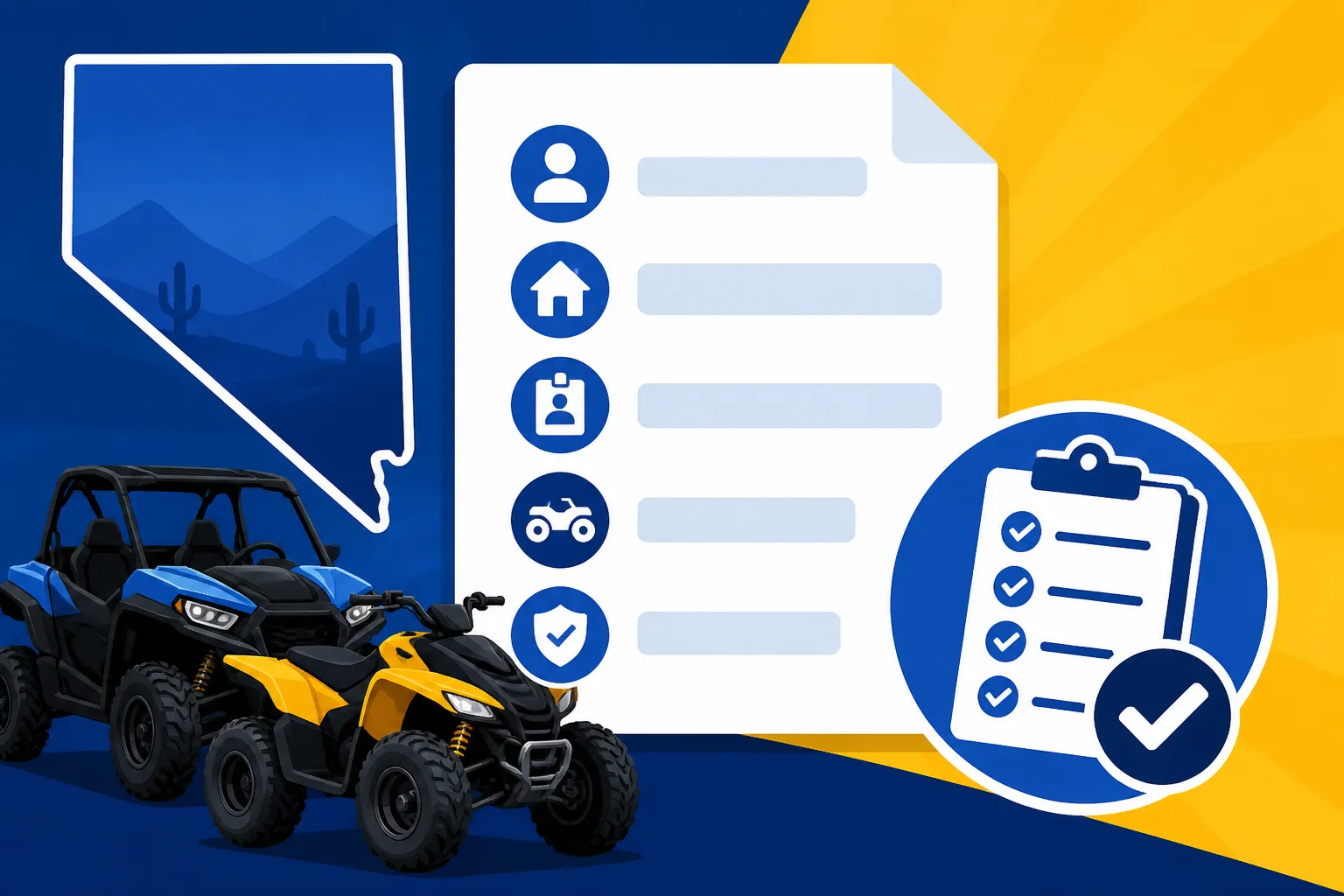
Alright, let's get down to the nitty-gritty: the actual form itself. The Nevada OHV-002 form is specifically for renewing an existing registration. While it might look a little intimidating at first glance, it's pretty straightforward once you understand what each section is asking for. The key is to be accurate and thorough, preventing any delays in getting that fresh decal in your hands.
Section 1: Your Personal and Contact Information
The first part of the form is all about you, the OHV owner. This section typically requires your full legal name, current mailing address, phone number, and sometimes an email address. This information is critical because it's how the DMV contacts you regarding your registration and how they'll send your new decal and registration card once processed.
It's incredibly important to double-check that every detail here is current and matches the records the DMV already has for you. Have you moved since your last renewal? Did you get a new phone number? Even a minor discrepancy can cause your renewal to be flagged, leading to frustrating delays. For instance, if your mailing address is outdated, your new decal might be sent to an old home, leaving you without proof of registration and potentially causing you to incur [Nevada's $10 Late Fee on an Expired OHV Decal] if you don't get the new one in time. This is where having your original registration card handy helps, as it shows exactly what the DMV has on file. If you haven't received a renewal notice, it's often because this information is out of date.
Section 2: Detailing Your Off-Highway Vehicle
This is where you confirm the details of your OHV. The form will ask for information like the vehicle identification number (VIN), year, make, model, and sometimes the engine size. If you're renewing, most of this information should already be pre-filled on the renewal notice you received in the mail, but it's your responsibility to verify its accuracy.
You absolutely need to ensure the VIN on the form exactly matches the VIN physically stamped on your machine. Any mismatch will halt the renewal process faster than a flat tire in the dunes. Errors here can lead to confusion, requiring you to contact the DMV or even visit in person to correct the records. Imagine getting a new decal only to find the VIN on it doesn't match your quad – that's a recipe for a bad day if a ranger checks your paperwork. It’s a good habit to keep a photograph of your VIN on your phone or, even better, a securely stored digital copy of your title or previous registration. Tools like LawDepot can be quite useful for maintaining these kinds of important legal documents securely, ensuring all your vehicle details are easily accessible and consistent across records. This meticulousness can save you immense headaches down the road.
Section 3: Affirming Compliance and Signatures
The final section of the renewal form typically includes certifications and signature lines. Here, you'll be affirming that the information provided is true and accurate to the best of your knowledge. There might also be a declaration stating that your OHV meets specific Nevada operating requirements, such as having a spark arrester. This isn't just boilerplate language; it's a legal statement.
Your signature is crucial. Without it, the form is incomplete and won't be processed. If you're renewing by mail, make sure your signature is clear and matches what the DMV might have on file. If multiple owners are listed on the registration, the form may require all owners to sign, or at least one authorized owner. Always read the fine print in this section. It's the moment you confirm you understand your responsibilities as an OHV owner in Nevada. Skipping this step or signing incorrectly is a common reason for mailed renewals to be returned, delaying your new decal even further.
Navigating Common Challenges During the Renewal Process
Even with a clear understanding of the form, life happens, and things can get a bit messy. It's incredibly common to run into small hiccups during the renewal process, but knowing how to anticipate and handle them can make all the difference.
When Your Information Has Changed Since Last Renewal
One of the most frequent issues riders encounter is outdated personal information. Maybe you moved to a new house, changed your name after marriage, or simply updated your contact number. If the information on the pre-printed renewal notice doesn't match your current details, you can't just ignore it. The DMV needs accurate records to ensure proper communication and delivery of your new decal.
If you've moved within Nevada, you'll generally need to update your address with the DMV. This can often be done online through their main portal, not just the OHV-specific one. If you fill out the renewal form with a new address without officially changing it with the DMV first, it could cause a mismatch and a processing delay. The best practice is to update your address with the DMV as soon as you move, well before your renewal notice even arrives. Similarly, if your name has changed, you'll need to submit documentation to the DMV to reflect that change. Don't simply write your new name on the form; it needs to be an official update supported by legal documents. Always confirm what specific documentation the DMV requires for such changes to avoid repeated trips or submissions.
Dealing with a Lost or Never-Received Renewal Notice
It happens to the best of us: that renewal notice just never shows up. It could be lost in the mail, accidentally tossed with junk mail, or maybe your address was already outdated. Don't panic! Not receiving a renewal notice does not exempt you from the responsibility of renewing your OHV registration on time. [Whether Nevada Sends an OHV Renewal Reminder] is something many riders wonder about, but ultimately, the responsibility rests with you.
If your decal is nearing its expiration date and you haven't received a notice, you can still renew. You can often download a blank OHV renewal form (OHV-002) directly from the Nevada DMV website. You'll need to fill in all the required information manually, including your OHV's VIN, year, make, and model, as well as your personal details. This is another situation where having a copy of your previous registration card or title comes in handy, as it has all the correct information you'll need. You might also be able to look up your OHV's registration status online through the DMV's portal using your VIN, which can confirm the expiration date and sometimes even provide a digital copy of your current registration details. This proactive approach saves you from the potential hassle of expired registration.
Avoiding Late Fees and Penalties
The last thing anyone wants is to pay more than necessary. Nevada, like many states, imposes penalties for late renewals. If you let your OHV registration expire, you'll likely incur a late fee on top of the regular renewal cost. This fee can add an unnecessary expense to your budget and is completely avoidable with a little planning. The [Nevada OHV Late Registration Penalty] is designed to encourage timely renewals.
The key to avoiding late fees is simply being aware of your expiration date. Your decal clearly states the month and year it expires. Even if you don't get a reminder notice, that date is your official deadline. Aim to submit your renewal at least a few weeks before the expiration date to allow for processing time. The DMV offices, especially during peak seasons, can sometimes take a little longer to process mailed applications. Building a buffer into your renewal schedule is a smart move. Set a reminder on your phone, mark it on your calendar, or even ask a friend to give you a nudge. A little foresight can save you money and keep you riding legally without interruption.
Your Options for Submitting Your Nevada OHV Renewal
Once you've filled out your OHV renewal form and double-checked all the details, the next step is to get it to the Nevada DMV. Thankfully, the state offers a few convenient options, allowing you to choose the method that best suits your schedule and preferences.
Renewing Online: Convenience at Your Fingertips
For many riders, renewing online is by far the easiest and quickest option. The Nevada DMV has an online portal specifically for OHV renewals, designed to streamline the process. You'll typically need your current decal number or VIN, along with your personal information, to access your records and complete the renewal. This digital approach saves you a trip to the post office or the DMV office, and you can complete it from the comfort of your home, even in your riding gear after a long day on the trails. [Renewing Nevada OHV Registration Online] is a fantastic resource for this method.
The benefits of online renewal are significant: it's available 24/7, you get immediate confirmation of your submission, and your new decal often arrives faster than if you mail in your form. It also minimizes the chances of errors, as the system will often pre-populate much of your information, requiring you only to verify and pay. Just make sure you're on the official Nevada DMV website to ensure the security of your payment and personal data. Once submitted and paid, you might even be able to print a temporary confirmation that serves as proof of renewal while you wait for your physical decal and card to arrive in the mail. This means less downtime between your old decal expiring and your new one being affixed to your machine.
Renewing by Mail: The Traditional Approach
If you prefer the old-fashioned way or don't have easy internet access, renewing by mail is still a perfectly viable option. You'll need to accurately complete the OHV-002 renewal form, enclose your payment (typically a check or money order, as cash is generally not accepted via mail), and send it to the designated DMV OHV processing center in Carson City.
While mail renewal offers a sense of security for those wary of online transactions, it does come with a few considerations. First, you need to factor in mailing time both ways – the time it takes for your renewal to reach the DMV and the time it takes for your new decal to be mailed back to you. This is why giving yourself a few weeks' buffer before your expiration date is crucial. Secondly, you need to ensure your form is complete and legible, and your payment is correctly filled out. Any missing information or errors can lead to your application being returned, causing further delays. Many riders find it helpful to make a photocopy of their completed form and payment for their records before dropping it in the mail. This way, if there's any question about its submission, you have your own proof. [Renewing a Nevada OHV Decal by Mail] is still a popular choice for many.
In-Person Renewal: When You Need That Human Touch
Sometimes, circumstances dictate that an in-person visit to a Nevada DMV office is your best bet for renewal. This might be the case if you have a complex issue with your registration, if you've missed multiple renewal notices, or if you simply prefer to handle paperwork face-to-face. While not all DMV offices handle OHV renewals directly for immediate decal issuance, you can certainly submit your forms and payment at the counter.
Before heading to the DMV, it's always a good idea to check their website for current operating hours and any specific requirements for OHV services. Bring all relevant documents, including your completed renewal form, your old registration card, and proof of identification. While waiting in line can be a drag, the advantage of an in-person visit is that you can ask questions directly to a DMV representative and potentially resolve any issues on the spot. They can review your form for accuracy and ensure everything is in order before submission. This can be especially reassuring if you've had past issues with renewals or if your situation is a bit unusual.
What Happens After You Send in Your Renewal
You've completed the form, gathered your payment, and sent it off. Now what? The waiting game can be a bit nerve-wracking, especially if your expiration date is looming. Understanding the typical processing times and what to expect next can help ease any anxiety.
Processing Times and What to Expect
Once the Nevada DMV receives your renewal application, it enters their processing queue. The exact processing time can vary depending on the time of year, staffing levels, and the volume of applications they're handling. Generally, online renewals are processed the fastest, often within a few days, as the digital system can automate many steps. Mailed applications will naturally take longer, factoring in transit time and manual handling.
It’s not uncommon for it to take a couple of weeks, or even slightly longer during peak riding seasons, for a mailed renewal to be fully processed. If you're cutting it close to your expiration date, this is precisely why online renewal is often recommended. During this waiting period, your old decal is still valid until its expiration date. However, once that date passes, if you haven't received your new decal, you are technically riding unregistered. If you find yourself in this situation, having a copy of your submitted application or an online confirmation can sometimes act as temporary proof of renewal if you're stopped by law enforcement, though it's not a guaranteed pass. Be prepared to explain your situation and show your proof of submission. [Nevada OHV Registration Processing Times] can fluctuate, so planning ahead is always best.
Receiving Your New Decal and Registration Card
Once your renewal is processed and approved, the DMV will mail out your brand-new OHV decal and an updated registration card. These will typically arrive in the same envelope. The decal is the colorful sticker you affix to your OHV in the designated spot (often the left rear fender for quads or a visible spot on a UTV). The registration card is a small document that serves as your official proof of registration and should be carried with you whenever you're riding. [What the Registration Card Must Show] is important information to know.
When you receive your package, immediately check two things: first, that the decal and card have the correct expiration date, reflecting your renewal. Second, verify that all the information on the registration card—your name, address, and OHV details—is accurate. If you spot any errors, contact the DMV right away to get them corrected. It's much easier to fix a typo soon after receiving the documents than to discover an error when you're being checked by a ranger miles from home. Once you've verified everything, affix your new decal securely and store your registration card in a safe, waterproof place on your OHV. Many riders use small, dry bags or waterproof cases to protect their documents from dust, mud, and water, ensuring they are always legible and accessible. [Keeping Paperwork Dry in a Dusty Machine] is a small but critical consideration for any off-road enthusiast.
Best Practices for Future OHV Registrations and Renewals
Renewing your OHV registration doesn't have to be a yearly scramble. With a few smart habits and a little proactive planning, you can make the process virtually painless for years to come. It’s all about being prepared and organized.
Keeping Meticulous Records for Smooth Sailing
One of the biggest time-savers when it comes to any vehicle paperwork is having accurate, easily accessible records. This means keeping not just your current registration card and title, but also copies of past renewals, bills of sale, and any VIN inspection documents. Think of it as your OHV's permanent file. If any questions arise during renewal, or if you ever need to replace a lost title or registration card, having these documents readily available will make the process infinitely smoother.
Consider creating a dedicated physical folder for your OHV documents, stored in a safe place at home, like a fireproof box. Even better, digitize your important documents. Scan your title, registration cards, and bills of sale, and store them securely in a cloud service or on an external hard drive. For legal documents, having a structured approach can be a lifesaver. Services like LawDepot can be helpful for organizing and sometimes even generating legal documents, giving you a centralized and secure way to manage important papers related to your OHV, from bills of sale when you buy or sell, to ensuring all your ownership records are in one easy-to-access place. This isn't just for renewals; it's invaluable for insurance claims, proving ownership, or even selling your machine later on. [Photos of Paperwork on Your Phone] can also be a good backup.
Setting Reminders and Proactive Planning
The best way to avoid a last-minute rush and potential late fees is to be proactive. Mark your OHV registration expiration date on your calendar, set a recurring reminder on your phone for a month or two before the expiration, or even put a sticky note on your garage wall. The Nevada DMV does send renewal notices, but as we discussed, these can sometimes get lost or be sent to an old address. You cannot rely solely on that paper notice.
A great practice is to simply add a recurring task to your annual to-do list, perhaps around the same time each year. For instance, if your decal expires in June, set a reminder for April or May to check your registration status and prepare for renewal. This gives you ample time to track down any missing documents, update your information with the DMV if necessary, and choose your preferred renewal method. This proactive approach ensures you're never caught off guard and always have a current, valid decal on your machine, ready for your next adventure. That way, when the weekend rolls around, the only thing you're thinking about is kicking up dust, not paperwork.
Disclaimer
This article is for general informational purposes only and does not constitute professional advice. Laws, prices and regulations vary by location and change over time. Consult a qualified professional for guidance on your specific situation.