Replacing a Lost Nevada OHV Title
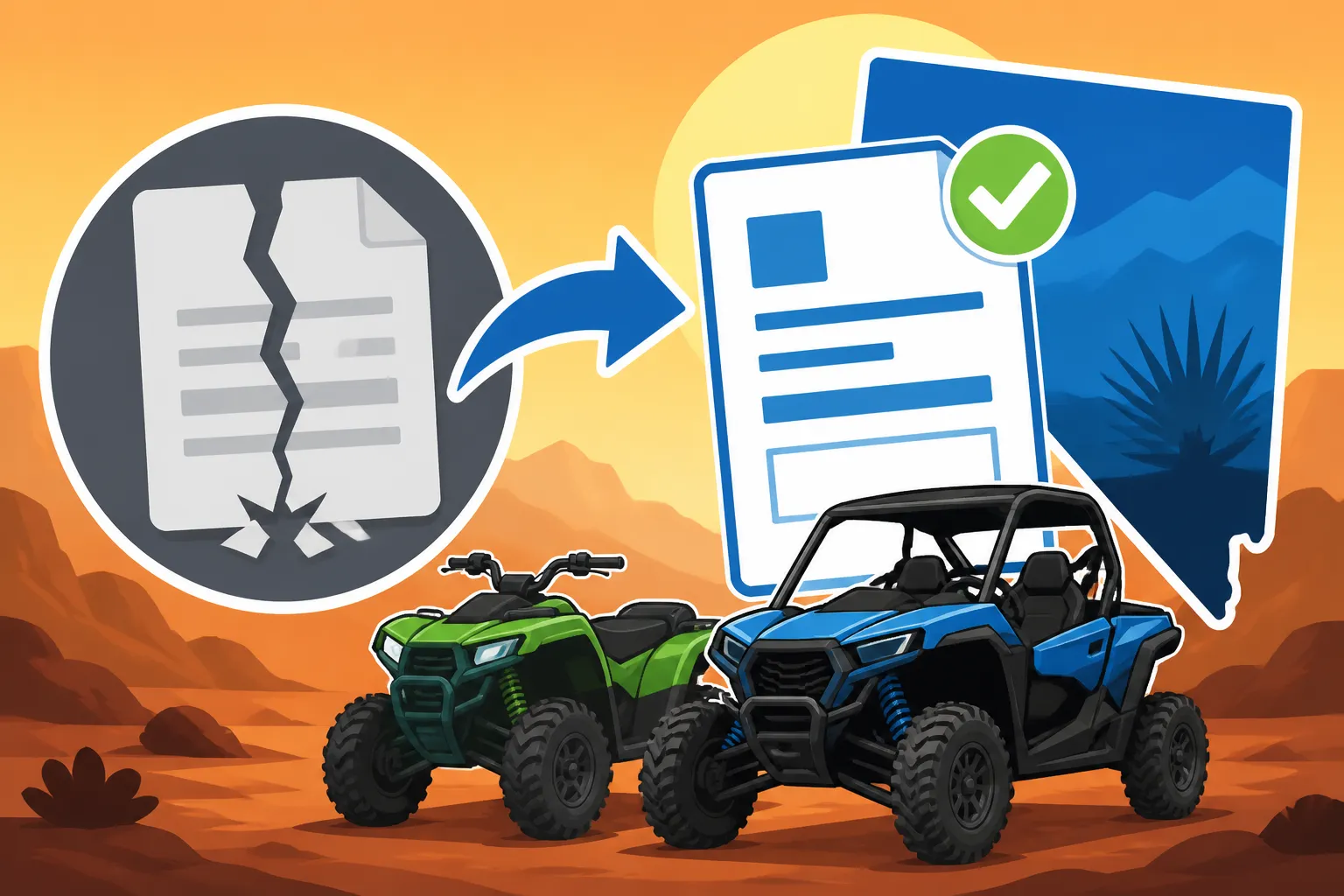
Oh, the sheer frustration that washes over you when you realize that crucial piece of paper is just gone. We’ve all been there, rifling through drawers, digging through old file boxes, and turning the house upside down, all for that elusive Nevada Off-Highway Vehicle (OHV) title. It’s more than just a piece of paper; it's proof of your pride and joy. This guide is here to walk you through exactly what to do when your Nevada OHV title vanishes into thin air, ensuring you can get a replacement without too much headache.
The Panic of a Missing Nevada OHV Title
Losing an important document like your OHV title can feel like a punch to the gut. It's not just about inconvenience; it raises immediate questions about selling your machine, proving ownership, or even just having all your ducks in a row. For anyone who loves hitting the trails and dunes of Nevada, keeping your paperwork in order is part of the game.
Why a Title is So Critical for Your Machine
Your Nevada OHV title is the official document that establishes legal ownership of your all-terrain vehicle (ATV) or utility terrain vehicle (UTV). Think of it as the birth certificate and deed rolled into one for your machine. Without it, proving you actually own that shiny new (or trusty old) quad can be incredibly difficult. This becomes especially clear if you ever decide to sell your machine; a buyer will almost always want to see a clear title to ensure they're not inheriting any past ownership issues or liens. It's the foundational proof of your investment.
Beyond selling, a title is vital for resolving disputes, proving the machine’s origin if it ever gets stolen and recovered, or even for certain types of insurance claims. It connects you, the registered owner, directly to that specific vehicle identification number (VIN). It's the document the state holds as proof, and without it, you're essentially flying blind in the world of vehicle ownership. Having a valid title means peace of mind, knowing your ownership is undisputed. [Titling an Off-Highway Vehicle in Nevada] goes into more detail about how titles are issued in the first place.
Common Scenarios Leading to a Lost Title
Life happens, right? And sometimes, in the whirlwind of daily life, important papers can simply disappear. One of the most common scenarios is during a move. Boxes get packed, unpacked, and sometimes, things just don't end up where they're supposed to be. A title tucked away for safekeeping might become too well-hidden. Another frequent culprit is the payoff of a loan. You settle your balance, expect a clean title to arrive from the lienholder, and then… nothing. Or perhaps it arrived, and you simply misplaced it, assuming it was safe.
Fires, floods, or other household disasters can also sadly destroy documents. Even something as mundane as a cleaning spree can accidentally send an important paper into the shredder. Sometimes, you might have lent your machine or its title to someone, and it never made its way back. Or maybe you had it out for a potential sale that fell through, and in the shuffle, it got lost. These situations are frustrating, but rest assured, you're not alone, and there's a clear path to getting a replacement.
Navigating the Nevada DMV for a Replacement Title
When your original title is gone, the Nevada Department of Motor Vehicles (DMV) is your go-to. While it might sound like a daunting task, they have a clear process in place for issuing duplicate titles. The key is to understand what forms you need, what information to provide, and how to approach the application. Don't worry, it's not as complex as trying to assemble an engine blindfolded!
Understanding the Application for Duplicate Nevada Title
The primary form you'll need to complete is typically the "Application for Duplicate Nevada Title." For Off-Highway Vehicles, this is usually form OHV-012. This document is designed to collect all the essential information about your machine and your ownership. You'll need to provide details like the VIN, make, model, and year of your OHV. It also asks for your personal information as the owner, including your name, address, and how you came to own the vehicle.
It’s crucial to fill this form out accurately and completely. Any missing information or errors can lead to delays, sending you back to square one. Think of it as your official request to the state to recognize your continued ownership and provide you with new proof. Taking your time and double-checking every box on [Walking Through Form OHV-012] can save you a lot of grief later on.
Necessary Supporting Documentation
While the application form is central, you'll also need to gather supporting documentation to verify your identity and ownership. The DMV wants to be absolutely sure they are issuing a duplicate title to the rightful owner. Common documents include:
- Proof of Identity: A valid driver's license, state ID, or other government-issued identification.
- Proof of Ownership: Even if you lost the title, you might still have other documents that prove you own the OHV. This could include a copy of the old registration certificate, a bill of sale from when you purchased the machine, or even a lien release from a bank if you paid off a loan. If you don't have the original bill of sale, services like LawDepot can provide templates for an affidavit of ownership, which might be useful in certain circumstances.
- Lien Release: If there was a lien on your OHV (meaning you had a loan on it), and you've paid it off, you'll need the original lien release document from the financial institution. This proves that the bank no longer has a claim to your title. Without it, the DMV might not be able to issue a clean title directly to you.
Gathering these documents beforehand will make your application process much smoother and faster. Imagine showing up to the DMV with everything ready – it’s a powerful feeling of preparedness!
The Role of a Lienholder in the Process
If you still have an active loan on your OHV, your financial institution (the lienholder) likely holds the original title. In this case, if the title is lost, it's actually their responsibility to request a duplicate. You would typically contact them, explain the situation, and they would initiate the process with the Nevada DMV. The duplicate title would then be sent directly to them.
However, a very common scenario is when you've paid off your loan, but the title either never arrived, or you received it and subsequently lost it. In this instance, you'll need that lien release document. Without the physical, original lien release, the DMV will still show the lienholder as having a claim on the vehicle, preventing them from issuing a clear title in your name alone. Always keep that lien release in a safe place once your loan is paid off! [Nevada OHV Registration Without a Title] is another common situation where you might need to prove ownership differently.
Step-by-Step Guide to Replacing Your Title
Alright, let's break down the actual process into manageable steps. Getting a duplicate title doesn't have to be a bewildering maze. By following these instructions, you'll be well on your way to replacing that lost document and getting back to enjoying your machine on Nevada's incredible trails.
Gathering Your Paperwork and Information
Before you even think about heading to the DMV or putting an envelope in the mail, take a moment to collect everything you need. This preparation phase is crucial.
- Vehicle Information:
- VIN (Vehicle Identification Number): This is paramount. You can find it on your OHV itself (usually stamped on the frame), on your past registration cards, or even on old insurance documents.
- Make, Model, Year: Be precise with these details.
- Owner Information:
- Your full legal name (as it appears on your ID).
- Your current Nevada residential address.
- Your mailing address (if different).
- Contact phone number and email.
- Proof of Identity: Your current, valid driver's license or state ID.
- Proof of Ownership (if available): Any old registration cards, copies of bills of sale, or even photos of the original title if you happen to have them. While not always strictly required for a duplicate if you're the registered owner, it can sometimes help verify information quickly.
- Lien Release (if applicable): The original document from your bank or lender, showing your loan is paid off.
- Application Form: Download and print form OHV-012 (or the equivalent "Application for Duplicate Nevada Title") from the Nevada DMV website. Fill it out completely and legibly.
- Affidavit (if necessary): In very specific cases, if you lack traditional proof of ownership due to unusual circumstances (e.g., inheriting a machine without proper transfer), you might need a sworn affidavit. Services like LawDepot can assist you in drafting such legal documents, although it's always best to consult with the DMV first to see if this is even needed for your situation.
Having all this laid out will prevent multiple trips or calls.
Submitting Your Application
Once your paperwork is meticulously gathered and your form is filled out, it's time to submit your application to the Nevada DMV. You generally have a couple of options:
- In-Person Submission: This is often the preferred method for many, especially if you have questions or want immediate confirmation that your application is complete. You can visit any full-service Nevada DMV office. While the main OHV section is in Carson City, local offices can usually process duplicate title requests. Be prepared for potential wait times, especially during peak hours. Bringing all your original documents, not just copies, is a good idea in case they need to verify anything on the spot.
- Mail Submission: If you prefer, or if you don't live close to a DMV office, you can mail your completed application and supporting documents. It’s highly recommended to send everything via certified mail with a return receipt requested. This provides you with proof that your application was sent and received, which can be invaluable if there are any issues later. Address your package to the Nevada DMV, specifically to the titling section, or follow the mailing instructions on the OHV-012 form.
Regardless of how you submit, make sure you keep a copy of your completed application and all supporting documents for your own records!
Waiting for Your New Title to Arrive
After you've submitted your application, the waiting game begins. The Nevada DMV processes a high volume of requests, so patience is definitely a virtue here. While specific processing times can vary, it’s not uncommon for it to take a few weeks for your new duplicate title to be issued and mailed to you. [Nevada OHV Registration Processing Times] can give you a general idea of current backlogs or expectations.
During this waiting period, avoid calling the DMV daily; it won't speed up the process. If you sent your application via certified mail, you can track its delivery. If you haven't received your title after a reasonable amount of time (e.g., 4-6 weeks), then it would be appropriate to follow up with the DMV. They will typically have a way to check the status of your application using your name or the VIN of your OHV. When it finally arrives, inspect it immediately for any errors and file it away in a very safe, memorable place.
Costs and Fees Associated with a Duplicate Title
Nothing in life is truly free, and getting a replacement OHV title from the DMV is no exception. While the cost isn't usually prohibitive, it's important to be aware of the fees involved so you're not caught off guard. These fees contribute to the administrative costs of maintaining vehicle records and issuing official documents. [Cost to Title an ATV in Nevada] touches on the initial titling fees, and similar charges apply here.
Understanding the Duplicate Title Fee
The primary fee you'll encounter is for the duplicate title itself. This is a set charge by the Nevada DMV for issuing a new official title document. While I can't provide specific current figures (as they can change), expect it to be a modest administrative fee. This fee is non-refundable, so ensure your application is correct and complete before submission to avoid needing to reapply and pay again. It's a small price for regaining legal proof of ownership, especially when considering the potential headaches of trying to sell a machine without a title.
Potential Additional Fees
Beyond the standard duplicate title fee, there might be a few other costs you could encounter depending on your situation or choices:
- Mailing Fees: If you choose to mail your application, you'll pay for postage. Opting for certified mail with a return receipt, while slightly more expensive, is a wise investment for tracking and peace of mind.
- Notary Fees: In some rare circumstances, if an affidavit is required (perhaps for unique ownership situations or missing crucial documents), you might need to get certain signatures notarized. Notaries public typically charge a small fee for their services. Services like LawDepot might offer templates, but the notary fee is a separate charge.
- Expedited Processing: Occasionally, some DMVs or processing centers offer an expedited service for an additional fee, allowing you to get your duplicate title faster. Check with the Nevada DMV to see if this option is available for OHV titles if you're in a particular hurry. This can be beneficial if you have an urgent need, like an impending sale or travel across state lines.
Always budget for these potential additional costs to ensure a smooth process.
| Item/Service | Description | Typical Requirement |
|---|---|---|
| Duplicate Title Application | Form OHV-012 requesting a new title | Required |
| Duplicate Title Fee | State-mandated fee for issuing the new document | Required with application |
| Proof of Identity | Driver's license, state ID | Required |
| Proof of Ownership | Old registration, bill of sale, lien release | Strongly recommended, sometimes required |
| Mailing Costs | Postage, certified mail fees | Optional, if mailing |
| Notary Fees | For affidavits or specific declarations | Rare, circumstantial |
What If Your Circumstances Are Unique?
Life rarely fits neatly into boxes, and sometimes, your situation might be a bit more complex than simply losing a title you once held. Whether you're trying to sell a machine without its title or dealing with a title that never materialized, there are specific steps and considerations to keep in mind.
Selling Without a Title: The Risks and Solutions
Selling an OHV without a title in Nevada is generally not recommended, and frankly, it's usually a red flag for potential buyers. A title is proof of clear ownership, and without it, a buyer has no guarantee that they are purchasing a machine free of liens or ownership disputes. Imagine trying to buy a house without a deed – you wouldn't do it! Most legitimate buyers will demand a clean title.
However, if you must sell without a title (for instance, if the machine is very old and predates titling requirements, or if the title is truly unobtainable despite your best efforts), you'll need to be completely transparent with the buyer. A very detailed bill of sale is absolutely essential, clearly stating that no title is being provided and outlining the reasons why. Using a reputable template from a service like LawDepot for your bill of sale can offer some legal structure. The buyer would then likely need to go through a process of applying for a title by proving prior ownership, which can be complicated and involve inspections or affidavits. Be aware that the value of your machine will likely be significantly lower without a title, and the pool of potential buyers will shrink considerably. For a deeper dive into private sales, check out [Buying a Used ATV Privately in Nevada].
The Title Was Never Issued or Was Lost by a Previous Owner
This is a trickier situation. Perhaps you bought a machine from a private seller who promised to send the title, and it never arrived, or they claimed they lost it. Or maybe you acquired a very old machine before Nevada even required titles for OHVs, and you're now trying to get one.
If the title was never issued in your name, you'll need to go through the initial titling process, not just a duplicate. This typically requires a bill of sale, a VIN inspection, and potentially an affidavit of ownership if the prior owner is unreachable. If the previous owner lost the title and it was supposed to be transferred to you, they are technically the one who needs to apply for the duplicate, as they are still the owner of record. They would then sign over the duplicate title to you. This is why getting the original signed-over title at the point of sale is so critical. If you have a bill of sale but no title, the DMV may require you to follow specific procedures to prove your ownership chain. Sometimes, an old registration or other proof like a notarized affidavit (which LawDepot might help you with drafting) can serve as sufficient evidence, but it's best to discuss your unique situation directly with the DMV's OHV section. [Nevada OHV Title Application Deadline] also applies in these situations.
Addressing Errors on Your New Duplicate Title
Once your duplicate title finally arrives in the mail, don't just tuck it away immediately! Take a moment to thoroughly review every piece of information on it. Check your name, address, the VIN, make, model, and year of your OHV. Even a small typo can cause big headaches down the road.
If you find an error, no need to panic, but you do need to act promptly. Gather the incorrect duplicate title and any documentation that proves the correct information (e.g., your driver's license for a name error, or a previous registration card for a VIN error). Then, contact the Nevada DMV immediately. They will guide you through the process of correcting the error, which typically involves filling out a form, potentially re-submitting some proof, and returning the erroneous title. There shouldn't be a fee for correcting a DMV error, but it will involve some time and effort on your part. Don't delay, as an incorrect title can be just as problematic as a lost one when it comes to proving ownership or selling your machine.
Disclaimer
This article is for general informational purposes only and does not constitute professional advice. Laws, prices and regulations vary by location and change over time. Consult a qualified professional for guidance on your specific situation.