Nevada Citations for an Expired Decal
An expired Nevada OHV decal can turn a routine ride into a citation, but the next step depends on where you were riding, what paperwork you had, and whether the machine qualified for an exemption. Here’s what an expired decal may mean, how to respond to a citation, and how to avoid repeating the problem.
Why an expired Nevada decal can result in a citation
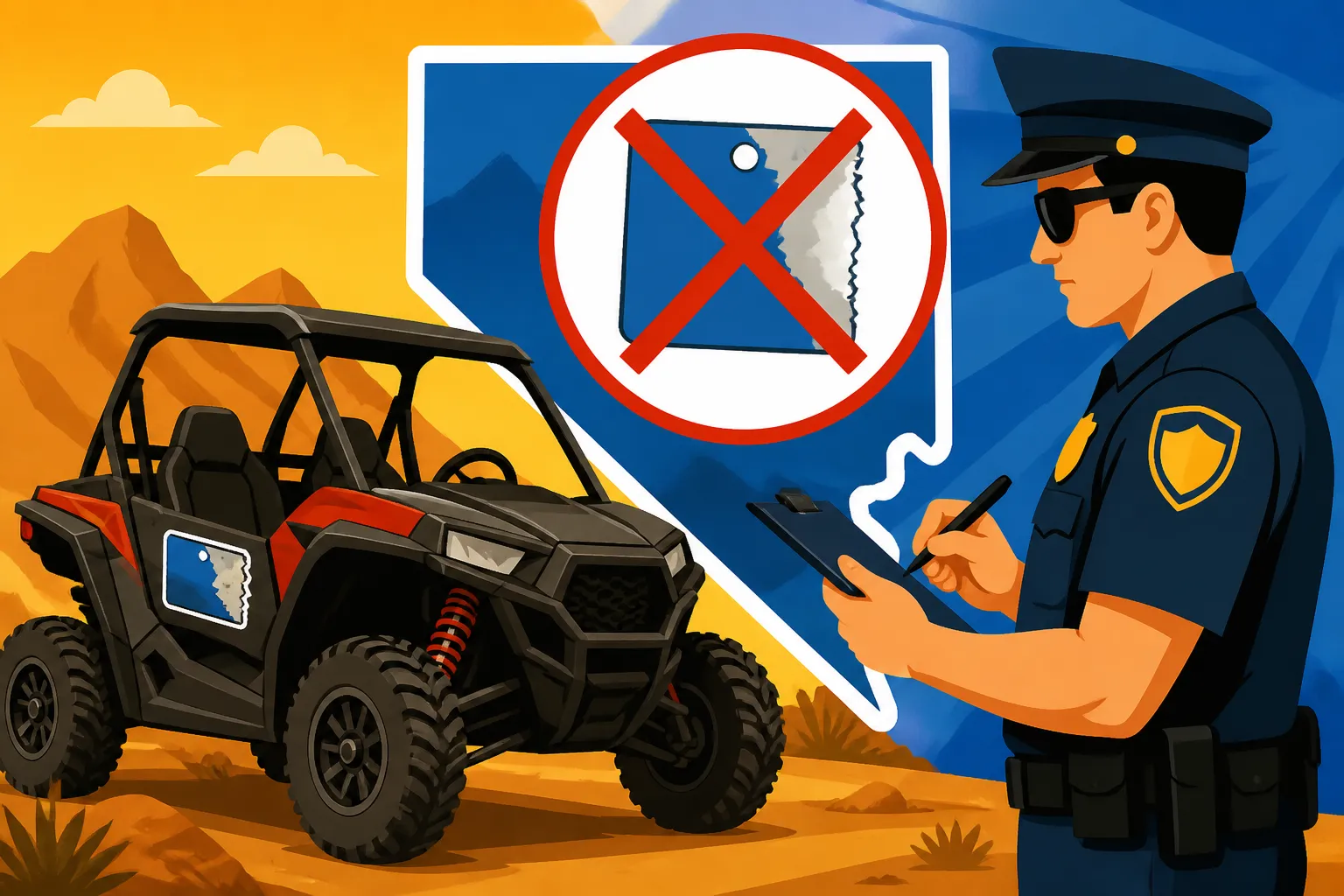
Nevada’s OHV decal is tied to the machine’s registration. If you ride a machine that needs Nevada registration with an expired decal, an officer may treat it as not currently registered. The risk is greatest when you’re riding on public land or at a riding area where registration is checked.
An expired decal does not automatically mean you’ll receive a citation. An officer might issue a warning, cite the registration violation, or take another action allowed in the circumstances. You should not rely on getting a warning, though: the outcome can depend on the location, the facts of the stop, and the officer’s judgment.
The registration decal is also different from a title. A title is ownership paperwork; the decal is evidence of current registration. Having a title, bill of sale, or old registration card does not necessarily make an expired decal valid. For more on the distinction, see What a Nevada OHV Decal Actually Proves.
What officers may check
During a stop or at an access point, an officer may look at the machine’s decal and ask for paperwork that helps establish its identity and registration status. Depending on the situation, that can include:
- Whether a decal is displayed on the machine
- Whether the decal is expired, damaged, or difficult to read
- Whether the VIN on the machine matches the registration documents
- Whether the machine appears to qualify for an exemption
- Whether the machine is registered in another state and qualifies for an exception
- Whether the place you’re riding has separate access or permit rules
A photograph of an old registration card is useful for reference, but it does not extend the registration period. If you need to show that you renewed or that an exemption applies, bring current documents that support that explanation. For more on documentation, see Nevada OHV Registration and Proof of Ownership.
Expired decal versus other riding violations
An expired decal is only one issue an officer might address. Riding in a closed area, crossing private land without permission, or breaking local access rules can lead to separate consequences. Likewise, an OHV registration decal does not make an ATV or UTV legal to ride on any public road. Road use has its own rules, and a standard OHV decal does not replace road-use requirements.
If a citation lists more than one alleged violation, read each item separately. Renewing the decal may address the registration problem going forward, but it does not automatically resolve other allegations or erase a citation already issued.
What to do if you receive an expired-decal citation
A citation is a legal document, not simply a renewal notice. Read it closely and follow the instructions printed on it, including any response deadline, payment directions, and court or agency contact details. The process can vary by issuing authority and location, so use the information on your citation rather than assuming there is one statewide procedure for every case.
Take these steps as soon as practical:
- Keep the citation and record the details. Note the date, location, machine, decal number, and what the officer said. Keep the original document somewhere safe and make a copy or clear photo for your records.
- Check the response instructions and deadline. The citation should tell you where to respond and how. If anything is unclear, contact the court or agency named on the document before the deadline.
- Confirm the machine’s registration status. Check the registration card and any renewal confirmation. Make sure the documents refer to the same machine and VIN.
- Renew if the machine needs Nevada registration. Renewal can help prevent another stop for the same issue, but it does not necessarily dismiss or cancel the existing citation.
- Decide whether to pay or contest it using the stated process. If you believe the citation is mistaken, gather relevant documents and ask the issuing court or agency how to contest it. Do not assume that showing proof of a later renewal is enough to defeat a citation for riding while the decal was expired.
- Keep proof of every step. Save renewal confirmations, correspondence, receipts, and any documents you submit. If you speak with an office by phone, record the date and the name or role of the person you spoke with.
If the citation appears to identify the wrong machine, the wrong decal status, or a machine that was exempt, organize the supporting evidence before you contact the court or agency. Useful items may include dated registration records, a bill of sale, a VIN photo, proof of a qualifying out-of-state registration, or documents that establish an exemption. Whether any particular evidence changes the result is for the authority handling the citation to decide.
A citation is not the same as a renewal fee
Nevada may charge a late fee when you renew after expiration. That renewal charge is separate from a citation or any court-related amount. The applicable late fee, citation consequences, and payment procedure can change or depend on the circumstances, so confirm current details with the Nevada DMV OHV Section and the court or agency listed on the citation. See Nevada’s $10 Late Fee on an Expired OHV Decal for the specific late-fee issue.
If the citation directs you to appear or take another action, renewing online or at a counter does not replace that requirement. Treat the citation’s instructions as a separate matter unless the issuing authority confirms otherwise.
How to check whether the machine actually needs a Nevada decal
Before paying or renewing, make sure the machine falls under Nevada’s registration rules. Some machines or uses may be exempt, and an out-of-state machine may qualify for a limited exception. Exemptions have conditions; simply owning an old machine or keeping it at a Nevada home does not by itself establish that registration is unnecessary.
Check the machine and how it is used
Start with the machine’s type, engine size or other applicable characteristics, where it is operated, and whether a specific exemption applies. Nevada has exceptions for certain categories of machines and uses. For example, some low-displacement machines and qualifying husbandry use may be treated differently, but the conditions matter. Review Machines Nevada Exempts From Registration or Does a 70cc Machine Need Nevada Registration? if one of those situations may fit.
A machine used only on private property may raise different questions from one ridden on public land. Be precise about where and how it is used, and verify the rule for the specific situation rather than assuming that private ownership or private storage removes every registration obligation.
Check out-of-state registration and visitor rules
A machine with another state’s decal may qualify to ride in Nevada without a Nevada decal under certain circumstances. The answer can depend on the machine’s home-state registration, the rider’s status, and how long the machine is in Nevada. Do not assume that any out-of-state sticker automatically satisfies Nevada’s requirements.
Visitors should check Nevada’s Nonresident Exemption in NRS 490.082 and the related time limit before relying on an exemption. If the machine’s stay or use no longer fits the exception, registration may be required. For help identifying the relevant time period, see Nevada’s 15-Day Window for Out-of-State Machines.
| Situation | What to check | Practical next step |
|---|---|---|
| Nevada-registered machine with an expired decal | Current registration record and renewal status | Renew if required, then follow the citation instructions separately |
| Machine registered in another state | Whether the registration and rider qualify for Nevada’s nonresident exception | Confirm the exception and time limit before riding |
| Machine that may be exempt | The exact machine category and conditions of the exemption | Keep documents that support the exemption with the machine |
| Registration appears current but decal is missing or unreadable | Whether the decal was issued, delivered, or replaced | Contact the Nevada DMV OHV Section and ask how to document the status |
| Machine recently purchased | Ownership paperwork and the deadline that applies to the purchase | Check Nevada OHV Registration Grace Period After Purchase |
This table is a starting point, not a determination of eligibility. When the facts are close, check with the Nevada DMV OHV Section before riding. If you need to register a machine but do not have its title, see Nevada OHV Registration Without a Title.
Preventing another citation
The most reliable way to avoid an expired-decal citation is to check the registration before a trip, not at the trailhead. Do this whenever you buy a machine, bring one into Nevada, change its use, or plan a ride after a long break.
Make registration part of trip preparation
Use this short checklist before loading up:
- Check the expiration information on the registration documents and confirm the registration is current.
- Make sure the decal is attached where required and can be seen and read.
- Confirm the VIN on the machine matches the paperwork.
- Check that an out-of-state exception or other exemption still applies to your situation.
- Carry the registration card or other relevant proof, rather than relying only on a photo of an old document.
- Check local access rules for the riding area; registration does not guarantee that every route is open.
A small document pouch can keep paperwork together and protect it from dust and moisture. If you use a pouch from a retailer such as Amazon, keep the documents accessible and do not treat a phone photo as a substitute for a required original or current record.
If the decal is lost, damaged, or hard to read, address that before riding. Ask the Nevada DMV OHV Section what replacement or proof process applies, and keep any confirmation you receive. A receipt or confirmation can help explain the situation, but do not assume it gives permission to ride without a required decal unless the agency confirms that it does.
If you renew after expiration
Renew as soon as you can if the machine needs Nevada registration. Then verify that the renewal was processed and that you have the current registration information. If the updated decal has not arrived, contact the relevant office to ask what proof is acceptable while you wait. Keep the answer and any supporting confirmation with the machine.
Renewal does not necessarily resolve an existing citation. Respond to the citation separately, follow the stated deadline, and submit documents only through the method the court or issuing agency accepts. For renewal options, see Renewing Nevada OHV Registration Online or Renewing a Nevada OHV Decal by Mail.
Before heading out again, confirm the decal is current and legible, and check the route’s rules. If you received a citation because you believed an exemption applied, verify that exemption directly before relying on it for another ride.
Disclaimer
This article is for general informational purposes only and does not constitute professional advice. Laws, prices and regulations vary by location and change over time. Consult a qualified professional for guidance on your specific situation.