Replacement OHV Decal Cost in Nevada
It's incredibly frustrating when you're all set for an epic ride through the Nevada desert, only to realize your OHV decal has gone missing, is peeling off, or has simply become unreadable. You know you need that little sticker to stay legal, but navigating the process to get a new one can feel like slogging through deep sand. This guide is here to cut through that confusion, explaining exactly how to replace a damaged or lost OHV decal in Nevada, what it will cost you, and how to make sure you stay compliant on the trails.
Why You Might Need a Replacement OHV Decal in Nevada
That small, unassuming decal on your ATV or UTV is your ticket to legally riding on Nevada's incredible public lands. Without it, you could face fines and unnecessary headaches. Life happens, and sometimes that decal doesn't make it through every adventure unscathed.
When Your Decal Goes Missing
Picture this: you've just unloaded your side-by-side at Sand Mountain, ready to conquer the 600-foot dune. You do a quick walk-around, checking tires, fuel, and gear, and then… you notice the OHV decal is just gone. Maybe it vibrated off on a rough trail, got snagged by a branch, or somehow peeled away during a long drive. Or perhaps you never even got it properly affixed after registration, and it simply vanished from your paperwork pile.
It's a sinking feeling, isn't it? The fear of a ranger checking your machine and finding no decal can really put a damper on your day. Even if you know your machine is registered, proving it without that physical sticker can be a real pain. You might have the registration card tucked away, but the decal itself is the primary visual proof that [What a Nevada OHV Decal Actually Proves] you're legally good to go.
When Your Decal Gets Damaged or Unreadable
Nevada's sun and dust are no joke, and they can be brutal on even the toughest materials. Over time, that vibrant decal can fade, crack, or become so scuffed and caked with mud that the numbers are impossible to read. An unreadable decal is, in the eyes of law enforcement, just as useless as a missing one. If a deputy or ranger can't clearly see the decal number and expiration date, they have no way of verifying your registration status on the spot.
Think about the conditions our machines endure: relentless sun exposure, driving rain (when it happens!), mud, dust, and the occasional branch scrape. All these elements conspire against that little sticker. If your decal is damaged beyond recognition, or if it's peeling so badly it looks like it's about to fly off, it's time to consider a replacement before you head out to Logandale Trails or the Silver State Trail.
The Importance of a Valid Decal
Beyond avoiding fines, having a valid and visible OHV decal plays a crucial role in maintaining access to our beloved riding areas. The fees collected from registration (which your decal represents) go directly back into funding trail maintenance, signage, and facilities. When you're properly registered, you're contributing to the preservation of the very places we love to ride.
Rangers and deputies, whether in Washoe County or down in Lincoln County, are trained to look for those decals. It's a quick visual check that helps them ensure everyone is following the rules and doing their part. It's not just about a bureaucratic requirement; it's about responsible recreation and keeping our trails open for future adventures.
How to Order Your Replacement Decal from Carson City
Alright, so you've determined you need a new decal. The good news is that the process for ordering a replacement is relatively straightforward, primarily handled by the Nevada Department of Motor Vehicles (DMV) OHV Section in Carson City.
The Application Process
To kick off the process, you'll generally need to fill out a specific form for a duplicate or replacement decal. While the exact form number can sometimes shift or be incorporated into a general OHV application, it's designed to be simple. You won't be re-registering your machine from scratch; you're just asking for a new sticker based on your existing, valid registration.
The easiest way to begin is by visiting the official Nevada DMV website and looking for their OHV section. Many services, including ordering a replacement decal, can often be initiated online or through a printable form that you then mail in. The online portal offers a convenient way to update your information and request a new decal without having to make a trip to an office, which is a huge plus for those of us who live hours from a physical DMV location.
When you're filling out the form, ensure all the information matches your current registration. This typically includes your machine's Vehicle Identification Number (VIN), your full name and address, and details about your current (or most recent) OHV registration. If you're unsure which form to use, don't hesitate to check out resources like [Why Nevada Has Five Registration Applications] for guidance, or simply contact [The Nevada DMV OHV Section] directly.
Required Information and Documentation
While ordering a replacement decal is less demanding than an initial registration, you'll still need some key pieces of information to ensure a smooth process. Primarily, you'll need the VIN of your off-highway vehicle. This is crucial for the DMV to locate your existing registration record.
You'll also need to provide your current owner information, including your name and mailing address. It's always a good idea to have a copy of your most recent registration card handy, as it contains all the necessary details. If you've recently moved, make sure you've updated your address with the DMV; otherwise, your new decal might go to the wrong place! If you are ever creating your own records or need to document a transfer of ownership, sites like LawDepot can be helpful for generating forms such as a bill of sale or affidavit to keep your personal files organized.
What if you've lost all your paperwork? Don't panic. The DMV can often look up your registration using your VIN or your name. However, having as much information as possible will expedite the process. Keep in mind that for a replacement decal, you generally won't need to submit a bill of sale or undergo a VIN inspection again, as those steps were completed during your original registration. For a general overview of what is typically needed for OHV paperwork, you can refer to the [Nevada OHV Registration Paperwork Checklist].
Where to Submit Your Request
For most replacement decal requests, you'll be dealing with the OHV Section of the Nevada DMV, which operates out of Carson City. While some general DMV offices might be able to assist, the OHV Section is the specialized department.
If you're opting for a mail-in application, you'll send your completed form and payment to their dedicated mailing address in Carson City. The specific address can be found on the DMV's OHV section of their website. This is often the most common route for those outside of Northern Nevada, or simply for the convenience of avoiding a trip. For detailed instructions on mailing, check [Ordering a Replacement Decal From Carson City].
Remember, while the process is designed to be user-friendly, always double-check the official DMV website or call their OHV hotline for the most current forms and submission methods. Their requirements can sometimes evolve, and staying informed will save you time and potential frustration.
Understanding the Replacement Decal Cost in Nevada
When you're facing a lost or damaged decal, one of the first questions that pops up is, "How much is this going to set me back?" Thankfully, the cost for a replacement OHV decal in Nevada is typically a nominal administrative fee, far less than the original registration cost.
The Standard Fee for a Duplicate Decal
The great news is that replacing an OHV decal in Nevada usually comes with a relatively small, fixed fee. This isn't a penalty; it's simply to cover the administrative costs of processing your request and printing a new decal. From past experience and general DMV fee structures, you can expect this fee to be a modest amount, often around $5.00. This is a standard administrative charge that helps the DMV cover their overhead for providing this service.
It's important to remember that this fee is for the decal itself and doesn't affect the validity period of your underlying OHV registration. If your registration is still active, this replacement decal will simply carry the same expiration date as your original one. For the most precise and up-to-date figure, you should always consult the official Nevada DMV website or fee schedule, but rest assured, the Replacement OHV Decal Cost in Nevada is designed to be affordable.
Potential Additional Costs
While the decal itself is inexpensive, there might be a few other minor costs to consider depending on how you submit your request:
- Postage: If you're mailing in your application, you'll need to account for the cost of a stamp. This is a minor detail but worth remembering.
- Expedited Shipping (if offered): In some cases, for an additional fee, the DMV might offer expedited processing or shipping for your new decal. If you're in a hurry for an upcoming trip, this might be an option to explore, but it's not always available for all services.
- Notary Fees: While typically not required for a simple replacement decal, if you happened to be combining this request with another transaction that requires a notarized signature (like a change of ownership that needs supporting affidavits), you'd need to factor in a notary fee. However, for just the decal, this is highly unlikely. You might use a service like LawDepot to understand what documents generally require notarization and how to prepare them, but for a simple decal replacement, it's generally not a concern.
The Value You Get for Your Fee
Despite it being a small fee, what you're really paying for is peace of mind and continued legal access to Nevada's incredible landscapes. That small investment ensures you won't face a citation from a ranger, which could easily be many times the cost of a replacement decal. More importantly, it reinforces your commitment to responsible off-highway vehicle use.
The money collected from OHV registrations and associated fees, including replacement decals, contributes significantly to the state's efforts to maintain and improve riding areas. This includes funding for trail mapping, signage, facilities, and even enforcement to protect our natural resources. Understanding [What Nevada OHV Registration Fees Pay For] can help you appreciate that even a small replacement fee goes towards a larger goal of supporting the OHV community.
Here's a quick overview of typical Nevada OHV fees (always check the official DMV site for current figures):
| Fee Type | Typical Cost Shape | Notes |
|---|---|---|
| OHV Registration (1 Year) | Modest | Standard annual registration. |
| OHV Registration (3 Years) | Higher, but discounted | Often a better value for long-term riders. |
| OHV Title Fee | Moderate | Required for proof of ownership. |
| Replacement OHV Decal | Very Low | For a lost or damaged decal only. |
| Late Registration Fee | Small, fixed | Applied if you renew your registration after it expires. |
Tips for Preventing Decal Issues and Staying Compliant
Nobody wants to deal with the hassle of replacing a decal more than once. A little bit of proactive effort can save you a lot of time, money, and stress down the road.
Proper Decal Placement and Protection
Where and how you apply your decal can significantly impact its longevity. Nevada law specifies general areas for decal placement, usually on the left side or rear of the machine, in a clearly visible location. For quads, this often means the left-rear fender, and for side-by-sides, it's typically on the left rear or even the left side of the roll cage. Make sure the surface is clean, dry, and free of dirt or grease before applying. This ensures maximum adhesion. You can find more specific guidelines on [Left Side or Rear: Where the Decal Goes].
To further protect your decal from the harsh Nevada environment, consider these tips:
- Clear Protective Film: After applying the decal, you can often find clear, durable adhesive films designed to go over decals. These add an extra layer of protection against UV rays, abrasion, and washing.
- Avoid High-Abrasion Areas: Try not to place your decal where it will constantly rub against gear, your boots, or other parts of the machine during aggressive riding.
- Mind the Heat: The desert heat can be notorious for causing adhesives to fail. While you can't control the weather, ensuring a proper, bubble-free application on a clean surface in moderate temperatures (if possible) can help prevent [Decals Peeling Off in Desert Heat].
Keeping Your Registration Records Handy
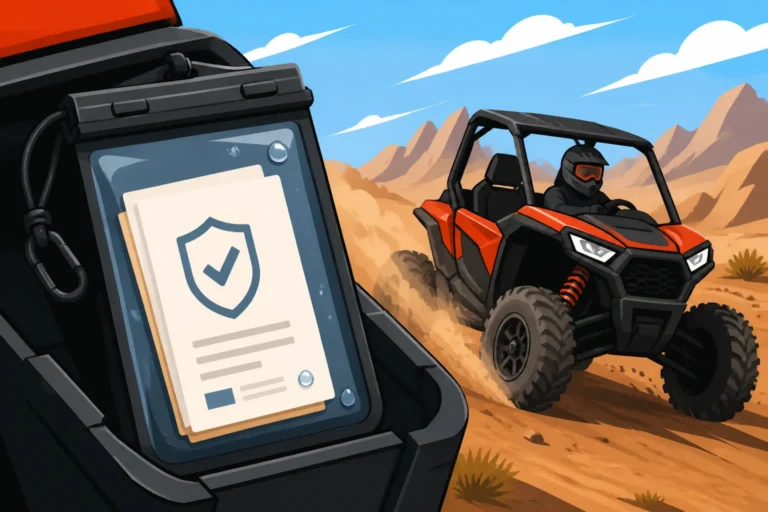
While the decal is the visual proof, your physical or digital registration card is the ultimate backup. Always keep a copy of your current registration card with you when you ride. Many riders prefer to laminate a copy or store it in a waterproof bag or container on their machine.
A great tip is to snap a clear photo of your registration card with your smartphone and keep it in a dedicated album. While some rangers might prefer a physical copy, a clear digital image can often serve as adequate proof in a pinch. This is especially useful for preventing your paperwork from getting soaked or damaged, helping with [Keeping Paperwork Dry in a Dusty Machine]. For more comprehensive record-keeping, you might also consider using resources like LawDepot to organize copies of your bill of sale, title, and registration documents digitally or in a secure physical binder.
Remember, the goal is to be able to quickly and easily prove that your machine is legally registered. This not only avoids issues with law enforcement but also demonstrates your commitment to responsible OHV recreation.
Timely Renewals and Address Changes
A lost or damaged decal is one thing, but an expired registration is a completely different (and more costly) problem. Always keep an eye on your decal's expiration date. Nevada often sends out renewal reminders, but it's ultimately your responsibility to renew on time.
If you move, notify the DMV of your new address promptly. This ensures that any official correspondence, including renewal notices for your OHV, reaches you. [Changing Your Address on a Nevada OHV Registration] is a simple process and prevents you from missing important updates, which could lead to an expired registration and potential late fees. Make it a habit to check your OHV registration status periodically, just like you would with your driver's license or car registration. Staying on top of renewals, as discussed in [Renewing a Nevada OHV Decal], is key to uninterrupted riding fun.
Disclaimer
This article is for general informational purposes only and does not constitute professional advice. Laws, prices and regulations vary by location and change over time. Consult a qualified professional for guidance on your specific situation.