Laughlin’s OHV Area in Winter
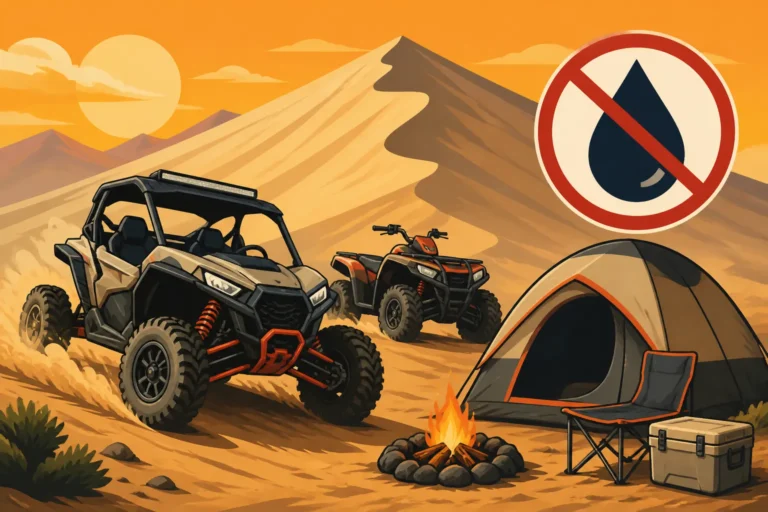
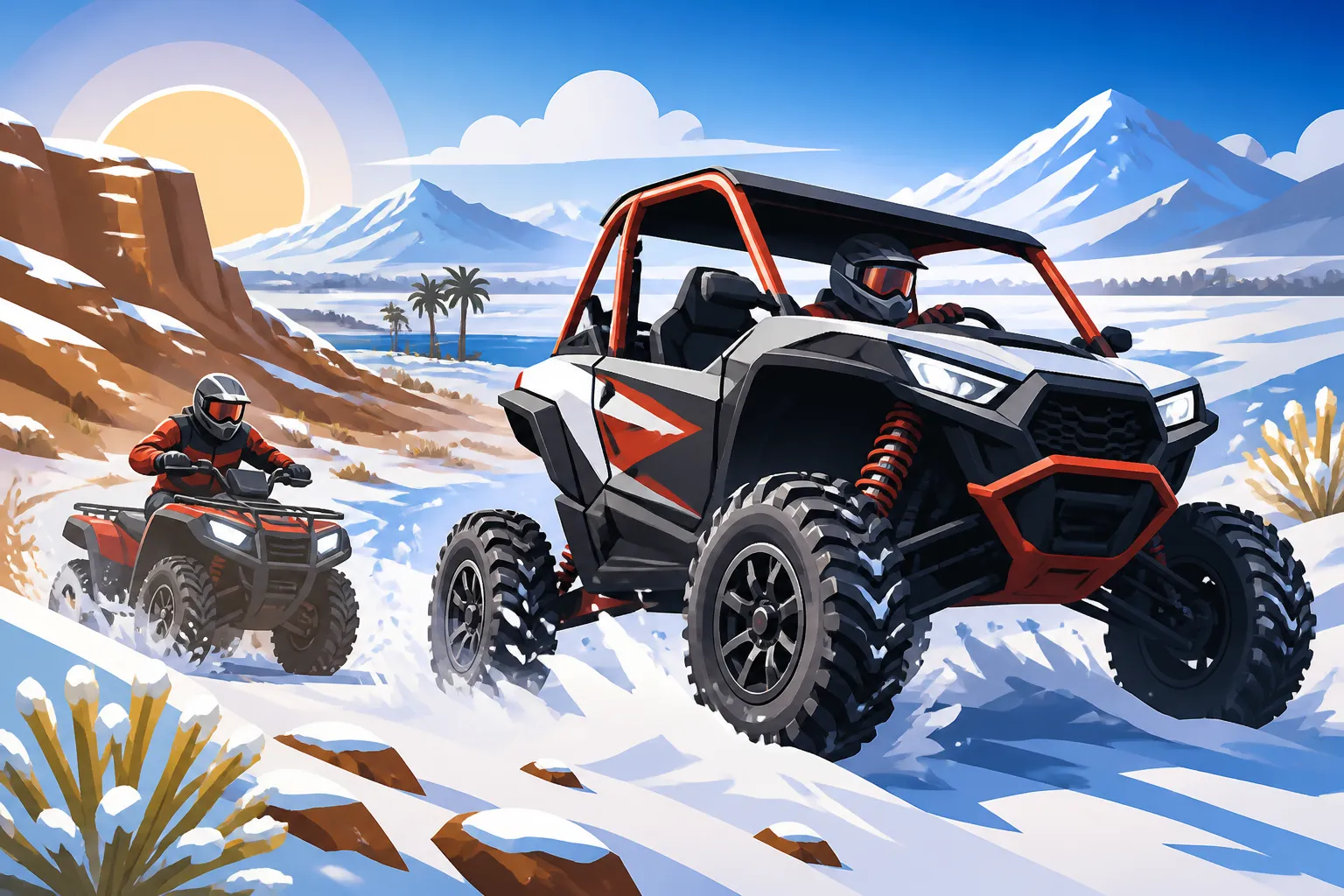
Winter is a comfortable time to ride near Laughlin, but mild desert afternoons can hide cold starts, strong winds, muddy washes, and long stretches without services. This guide explains how to plan a safer winter ride, choose suitable routes, prepare your machine, and check the details that can change your day before you leave town.
Why winter can be a good time to ride near Laughlin
The desert around Laughlin offers a different experience from the crowded casino corridor and Colorado River waterfront. Winter often makes a day outside more manageable than the hottest part of the year, but it is not a guarantee of easy conditions. Temperatures can shift quickly between morning and afternoon, and wind or recent rain can change how a route feels under your tires.
Expect changing temperatures, not steady warmth
A sunny forecast can make a winter ride sound simple, especially if you are visiting from somewhere colder. The reality is that a ride may begin with a chilly trailer hookup or a cold start, warm up under the midday sun, and cool off again when you stop moving. Wind can make exposed sections feel much colder than the air temperature suggests.
Dress in layers you can adjust without unloading the whole machine. A wind-resistant outer layer, gloves that still let you operate the controls, and a warm layer for breaks are more practical than relying on one heavy jacket. Bring extra clothing in a dry bag, particularly if your group includes children or anyone who tends to get cold during longer stops.
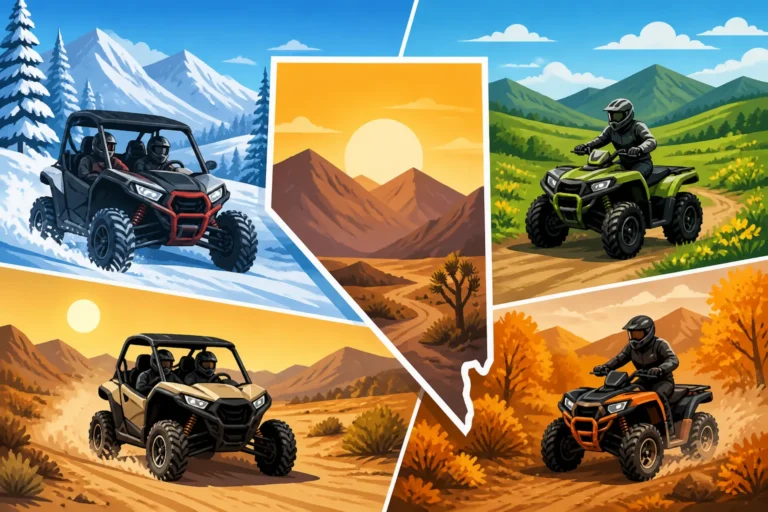
Plan your riding hours around daylight and comfort. Starting too early can mean a cold, uncomfortable first stretch; starting late can leave little margin if you need to turn around, make repairs, or take a longer-than-expected route. For seasonal planning ideas, see Nevada Riding in Winter — but remember that conditions around Laughlin can differ from those in higher-elevation parts of the state.
Rain and wind can change the route
A dry desert route may become slick, rutted, or difficult to read after rain. Low areas and washes deserve extra caution because water can collect or move through them, even when the sky above your starting point looks clear. Never assume a dry-looking crossing is safe simply because the surrounding ground appears firm.
Wind brings its own challenges. Dust can reduce visibility, make goggles uncomfortable, and obscure other riders. On exposed ground, strong gusts can also make a stop awkward, particularly for a trailer or an open-sided machine. Check the forecast for the area you intend to ride, not just the conditions in central Laughlin, and reconsider the plan if the weather is changing rapidly.
A useful rule is to have a conservative alternative ready before you unload. If the route is muddy, dusty, or exposed to uncomfortable wind, choose a shorter ride or postpone it rather than pushing on because your group has already made the drive. More seasonal advice is available in Riding Seasons in the Nevada Desert.
Plan a route before unloading
It is tempting to arrive, see open desert, and start riding in whichever direction looks appealing. That approach can lead to confusion about where routes go, whether a track is open to motorized travel, and how far you are from your parking area. A little planning makes the day easier, especially if you are unfamiliar with the area.
Confirm open routes and boundaries
Do not treat every visible track as an approved OHV route. A road or trail may cross private land, an area with special restrictions, or a route that is closed to motorized use. Follow posted signs and stay on routes that are open to your type of vehicle. If a route’s status is unclear, use a conservative alternative and check with the relevant land manager before riding.
Look at the route as a whole rather than focusing only on the first few miles. Identify where you will park, which direction you plan to travel, where a reasonable turnaround point might be, and what features could complicate navigation. If the group has different skill levels, build in the option to shorten the ride rather than committing everyone to a long loop.
A mapping app such as onX Offroad can help you review a planned route and keep track of your position, but it should not replace signs or current official information. Download the maps you may need before leaving reliable service, then compare them with land-management maps and posted closures. Nevada Trail Closures to Check Before You Go is a useful reminder that access can change.
Make a simple ride plan and share it
Before you leave, tell someone who is not riding with you where you expect to go and when you plan to return. Share the parking location, the general route, the vehicles in your group, and a contact plan. If your plans change significantly, let that person know when you regain service.
A simple group plan also helps prevent common mix-ups on the trail. Agree on a lead rider and a sweep rider, decide how the group will handle a missed turn, and choose a safe place to stop if someone needs help. Keep the group together at junctions instead of letting faster riders disappear ahead while newer riders try to guess which way they went.
Use onX Offroad or another mapping tool to mark your intended route and a sensible turnaround point. Save the map offline if that option is available in the tool you use, but do not assume a phone will remain usable all day. Cold can drain batteries, dust and vibration can damage equipment, and cell service may be unreliable away from town. Carry a charged backup battery and a paper or downloaded reference map if navigation matters to your plan. See Nevada Trail Maps Worth Downloading for more route-planning context.
Prepare your ATV or UTV for a winter desert ride
A winter outing still puts real demands on a machine. Cold starts, dust, rough ground, and long stretches away from help make a basic pre-ride inspection worthwhile. A few minutes in the parking area can catch an obvious problem before it becomes a long walk back.
Check the machine and carry practical supplies
Start with the basics: tires, brakes, steering, lights, fuel, and visible leaks. Check that your tires look appropriate for the terrain and are inflated according to the machine manufacturer’s guidance. If your machine has a battery, winch, or other accessories, confirm they are working before you leave the staging area.
Bring more than the minimum needed for the ride you expect. Water, a first-aid kit, a tire repair option that matches your tires, basic tools, a flashlight, and a charged phone are sensible starting points. Pack food and an extra warm layer in case a breakdown, navigation mistake, or weather change stretches the outing. Secure loose items so they do not shift, fall out, or interfere with controls.
For a UTV, check seat belts and make sure passengers know how to use them. For an ATV, confirm the rider can reach and operate the controls comfortably while wearing gloves. Do not overload the machine with passengers or gear beyond what the manufacturer allows. If you are renting, ask what the rental agreement permits, what safety gear is included, and what to do if the machine develops a problem.
Carry the right paperwork and ride within your experience
Before traveling, check the registration or decal requirements that apply to your machine and where it is registered. Keep required documents accessible and protected from dust and moisture. A phone photo can be a useful backup, but it is not a substitute for documents or proof that local rules require you to carry. Nevada OHV Registration and Proof of Ownership explains why it is worth sorting this out before a trip.
Out-of-state riders should confirm whether their home-state registration or decal is recognized for the planned ride. Rules can depend on the machine’s registration and the visitor’s circumstances, so do not assume that a sticker from another state automatically covers every situation. Check Nevada OHV Reciprocity With Other States before loading up.
Choose terrain that fits the least experienced rider in your group. A technically capable driver may be comfortable with a steep or rocky section that is intimidating to a beginner. Give riders space, avoid pressuring anyone to attempt a feature, and stop before fatigue or discomfort turns into poor decisions. If you are riding after sunset, review the applicable rules and make sure the machine’s lighting and your plan are suitable; Nevada Rules for Riding After Dark covers that topic in more detail.
A practical winter ride-day checklist
A checklist does not need to turn a relaxed outing into a military exercise. It simply helps catch the small details that are easy to forget when everyone is eager to get moving. Use the table as a starting point and adapt it to your vehicle, route, and group.
| Before you leave | At the staging area | During the ride |
|---|---|---|
| Check the local forecast and any route notices | Inspect tires, brakes, lights, and visible leaks | Keep the group together at junctions |
| Confirm where riding is allowed | Secure cargo and adjust clothing | Stop if wind, dust, or rain makes conditions unsafe |
| Tell someone your plan and return time | Review the route and turnaround point | Check fuel, water, and group comfort |
| Download maps and charge devices | Confirm everyone has suitable gear | Turn around before daylight or supplies become a concern |
| Check registration and required paperwork | Agree on lead and sweep riders | Report major changes to your contact when possible |
Decide when to shorten or cancel
A good ride plan includes a clear point at which you are willing to change course. If the forecast worsens, visibility drops, a wash is flowing, or a rider is cold and tired, shortening the ride is a sensible choice—not a failure. You can still have a worthwhile outing without completing every planned mile.
Use a turnaround time as well as a destination. If reaching a particular landmark would leave the group rushing back in fading light, turn around earlier. Keep an eye on fuel, water, and the condition of the least experienced rider rather than judging the day only by how the machine is performing.
If the group gets separated, avoid having everyone race around looking for each other. Stop at a safe location, follow the plan you agreed on, and use your saved map or another communication method to re-establish contact. A simple plan made before the ride is much more useful than trying to invent one under pressure.
Respect the area and the people sharing it
Ride only where motorized travel is allowed, follow posted instructions, and avoid creating new tracks across vegetation or sensitive ground. Give other riders space and slow down when visibility is limited. Dust can hide people and vehicles ahead, so leave enough distance to react rather than following closely.
Pack out everything you bring in, including food wrappers, broken straps, and damaged parts. Keep noise and speed under control near parking areas and other users. If a route is closed or a sign indicates a restriction, do not ride around it simply because the ground looks passable. Nevada Rules for Riding Federal Land offers more context on respecting public-land restrictions.
If you use onX Offroad to navigate, treat it as one part of a responsible ride plan: check the route against official information, follow signs on the ground, and turn around when conditions or access are uncertain. That approach is especially helpful in winter, when rain, wind, and changing daylight can make a familiar-looking desert route feel very different.
A well-planned winter ride near Laughlin is less about covering the most ground and more about matching the route to the weather, machine, and people in your group. Check access before you go, prepare for cold mornings and changing conditions, and leave enough time to return without rushing. Those choices make it easier to enjoy the desert and come back ready for another ride.
Disclaimer
This article is for general informational purposes only and does not constitute professional advice. Laws, prices and regulations vary by location and change over time. Consult a qualified professional for guidance on your specific situation.