Sand Mountain for a First Dune Trip
Sand Mountain can look inviting from the parking area, but soft sand, steep slopes, changing conditions, and busy weekends can make a first dune ride feel intimidating. This guide helps you plan a manageable first trip near Fallon, choose a sensible route, prepare your machine and group, and know when to turn around instead of pushing beyond your comfort zone.
Plan a first trip to Sand Mountain
Know what the riding area is like
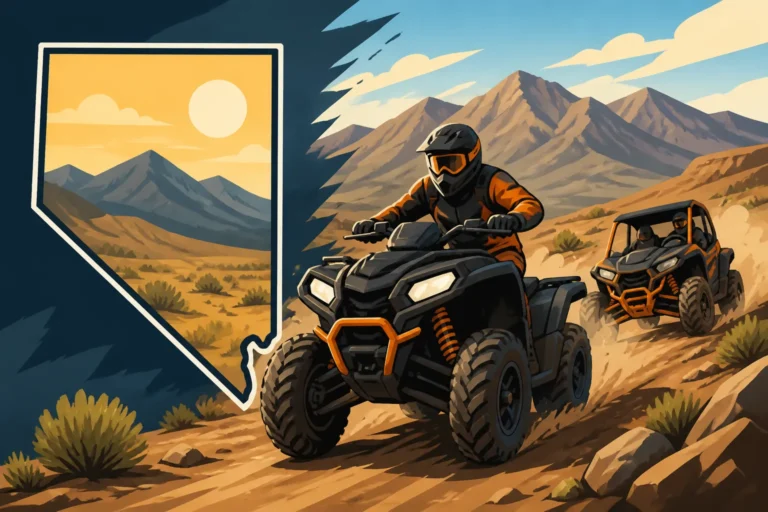
Sand Mountain Recreation Area sits near Fallon in western Nevada, along US 50. Its signature dune rises roughly 600 feet, and the surrounding area offers a mix of open sand and marked routes. That variety can be exciting, but it also means the terrain may feel very different from a hard-packed trail. Sand can shift under your tires, hide ruts, and make a slope look easier to climb than it is.
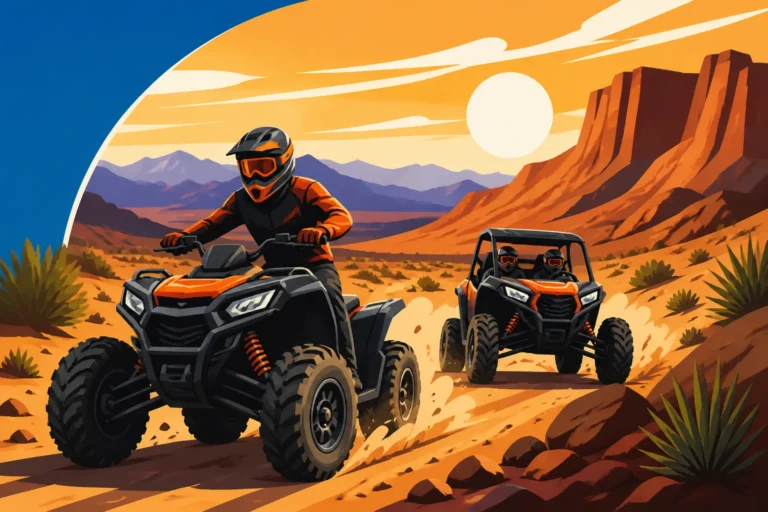
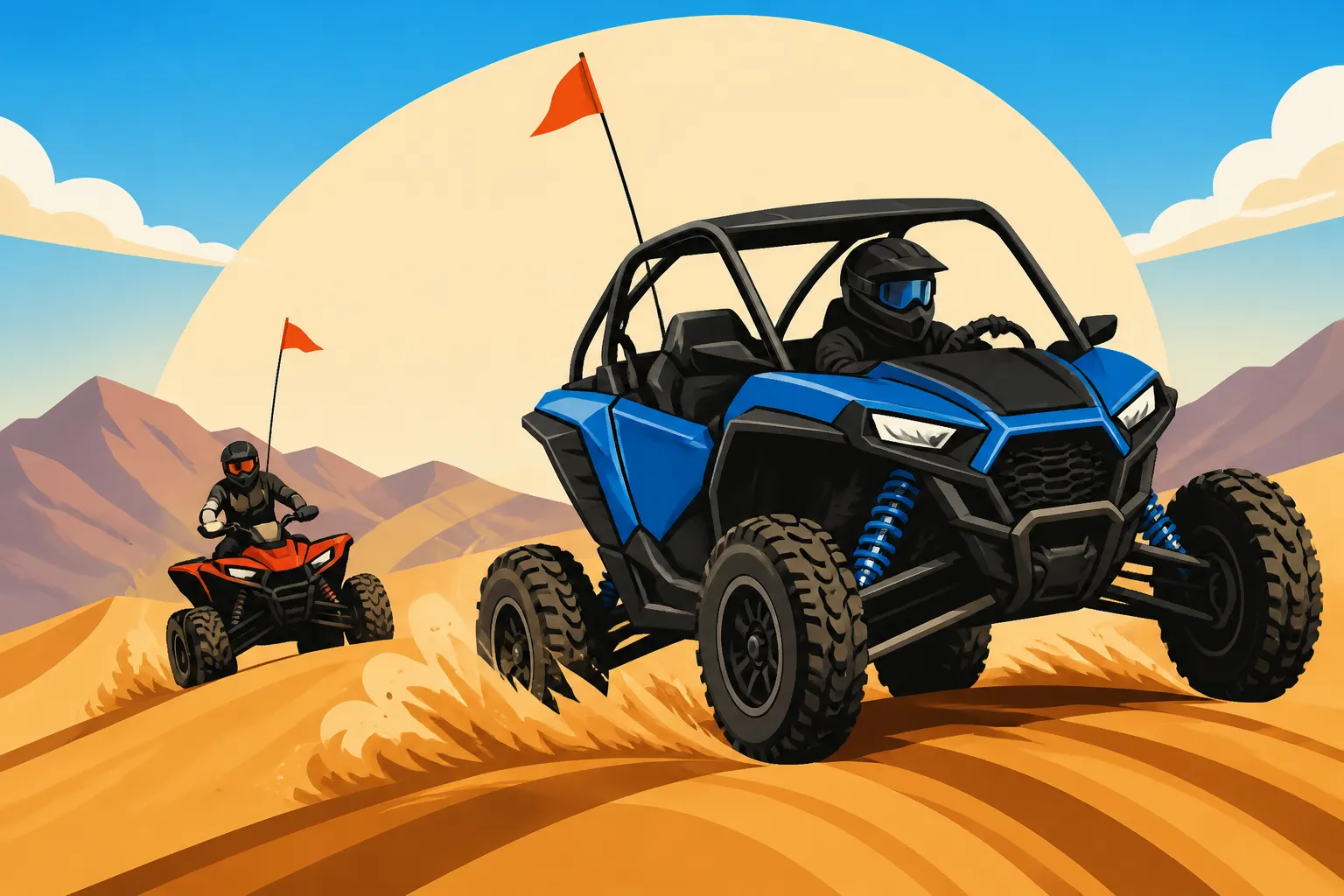
For a first visit, treat the main dune as a landmark—not a requirement. You can enjoy the area without climbing the tallest face or attempting a steep descent. Start on gentler terrain where you can get used to how your ATV or UTV accelerates, turns, and brakes in sand. If the machine starts bogging down or your steering feels unpredictable, ease off and reassess rather than forcing it.
Sand Mountain is popular, and traffic can include riders on different types of machines moving at different speeds. Keep your head up, leave room around other vehicles, and avoid stopping where another rider might crest a rise without seeing you. Before setting out, review [Sand Mountain's 4,795 Acres] and [Sand Mountain's 23 Miles of Marked Trail] to understand the scale of the area and the role of its marked routes.
Choose a low-pressure first-day plan
A first dune trip goes better when the goal is to learn, not to cover as much ground as possible. Pick a small area near your starting point, ride slowly, and let each person in the group get comfortable with the sand. A short practice loop is more useful than following experienced riders straight toward a steep climb.
Agree on simple group rules before anyone starts the engine. Decide who leads, where the group will stop, and what everyone should do if they lose sight of one another. Riders who are new to dunes should stay within sight of a capable companion, but not so close that a sudden stop leaves no room to react. If someone is nervous, make a turnaround or rest stop feel like a normal part of the plan—not a failure.
A practical first outing might look like this:
- Check the area’s access, route, and closure information before leaving home.
- Arrive with enough daylight to unload, inspect the machines, and get oriented.
- Begin with a slow ride on forgiving terrain.
- Stop to check on everyone, including the least experienced rider.
- Decide together whether to continue, take a longer break, or head back.
If you are planning around a holiday or busy weekend, build in extra time and expect more activity around the riding area. [Sand Mountain on a Holiday Weekend] can help you think through how crowding may affect your trip. Conditions can also change with wind, weather, and recent use, so do not assume that a familiar-looking slope will ride the same way every time.
Prepare your ATV or UTV for soft sand
Check the machine before unloading
Sand puts a different kind of demand on a machine than a firm dirt trail. A vehicle that feels predictable on hard ground may struggle if it is underpowered for the terrain, carrying too much weight, or running with a problem that has gone unnoticed. Before the trip, check your owner’s manual for the manufacturer’s guidance on tire pressure and operation in sand. Avoid copying a pressure setting from another rider without confirming that it suits your tires, machine, load, and conditions.
Do a basic pre-ride inspection at home and again at the staging area. Look over tires, wheels, brakes, steering, throttle response, lights, and visible fluid levels. For a UTV, check seat belts and make sure every passenger knows how to use them. Secure loose gear so it cannot shift during a turn or fall onto the sand. A small problem is much easier to address before the group is far from the parking area.
Be realistic about the limits of your machine. A two-wheel-drive ATV, a heavy side-by-side, and a sport machine will not necessarily behave the same way in soft terrain. Do not let a friend’s successful climb convince you that your own vehicle should make the same attempt. If a slope looks too steep or the sand is too loose, choose another route.
Bring recovery and comfort essentials
A first dune day can be tiring even when you stay close to the staging area. Pack drinking water, sun protection, eye protection, gloves, and clothing that can handle wind and blowing sand. Bring the tools and basic supplies you are comfortable using, along with a way to contact your group or summon help if you get separated. Cell service should not be treated as guaranteed across a riding area.
Think through recovery before you need it. A shovel, suitable recovery equipment, and a clear plan can help with a stuck machine, but recovery is not automatically safe just because gear is available. Keep people clear of tensioned straps and moving vehicles, and do not stand directly in line with a loaded recovery setup. If no one in the group knows how to perform a recovery safely, avoid routes where getting stuck could leave you exposed or block other riders.
For navigation, download useful maps before you leave coverage. onX Offroad can help you review routes and keep an offline map available, but do not treat any app as a replacement for posted restrictions, official area information, or good judgment on the ground. Check map layers and saved data before your trip, and agree on a recognizable meeting point in case phones or devices do not work as expected.
| Before you leave | What to check | Why it matters |
|---|---|---|
| Access and conditions | Current closures, permitted routes, and area notices | A route shown on an older map may not reflect a closure |
| Machine | Tires, controls, brakes, fluids, and safety equipment | Small problems become harder to manage away from the staging area |
| Navigation | Offline map, saved route, and group meeting point | Coverage and device batteries can be unreliable |
| People | Experience, hydration, protective gear, and riding plan | The group should travel at a pace everyone can handle |
| Recovery | Basic equipment and a shared safety plan | A stuck vehicle can create risks for riders and bystanders |
Ride the dunes with a safety-first approach
Learn how sand changes the way you ride
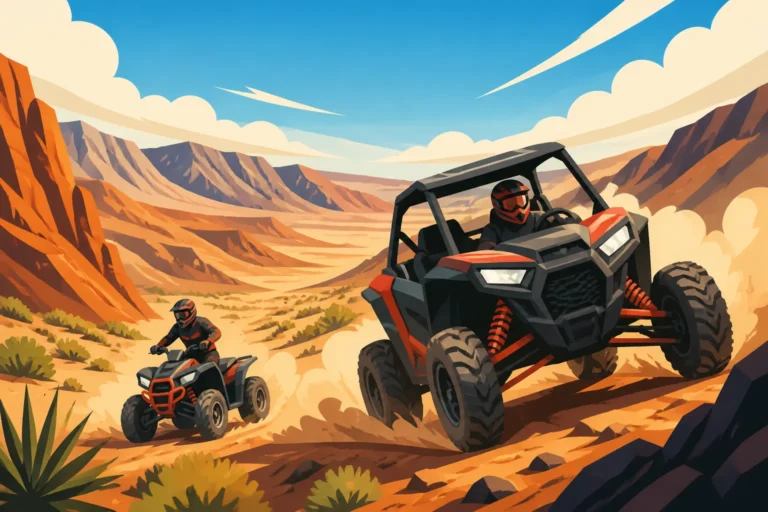
Soft sand can reduce traction and make steering feel less precise. Sudden, sharp inputs may unsettle the machine, while stopping on an incline can make it harder to get moving again. Keep your speed controlled, look where you want to go, and leave a generous gap between vehicles. The right pace is not the fastest one; it is the pace that lets you respond to changing terrain and other riders.
Avoid following directly behind another machine up a slope. It may lose momentum, kick sand back, or turn unexpectedly. Do not stop just below a crest or on a blind rise, where an approaching rider may not see you in time. When you reach a place where you can safely pause, move well clear of active travel lines and make sure the whole group knows where you are.
For your first trip, it is usually wiser to ride around a steep face than to test it. A climb can become dangerous if you lose momentum or encounter another vehicle. Descents also deserve caution: a slope that looks smooth from above can hide uneven sand or cross traffic below. If you are unsure whether a line is safe, watch from a clear position or choose a gentler route.
The dunes and nearby habitat can also be affected by where riders travel. Stay on permitted routes and respect closures and signs. Sand Mountain’s sensitive habitat is one reason to pay attention to boundaries rather than assuming every open-looking patch is available for riding. Review [How the Sand Mountain Blue Butterfly Closes Dune Areas] and [Riding Around Protected Dune Habitat] before planning a route.
Use simple group and emergency habits
Keep the group small enough that the lead rider can account for everyone. Set a pace that works for the least experienced person, and choose stopping points where vehicles can pull well away from active routes. If riders are spread out, pause at safe decision points instead of assuming the faster vehicles will circle back immediately.
Talk through what to do if someone gets stuck, separated, or uncomfortable. A rider who needs a break should be able to say so without being pressured to keep up. If a machine has a mechanical problem, move it out of traffic if that can be done safely, and keep the group together while deciding what comes next. Do not send an inexperienced rider alone to find help.
Wind can change the feel of a dune day quickly by blowing sand across routes and making it harder to see. If visibility drops, slow down and stop somewhere safe rather than continuing into blowing sand. Keep protective eyewear on, and check that children and passengers are comfortable. [Sand Mountain When the Wind Picks Up] offers more context for thinking through wind on the dunes.
Make the trip comfortable from start to finish
Plan for heat, water, and camping
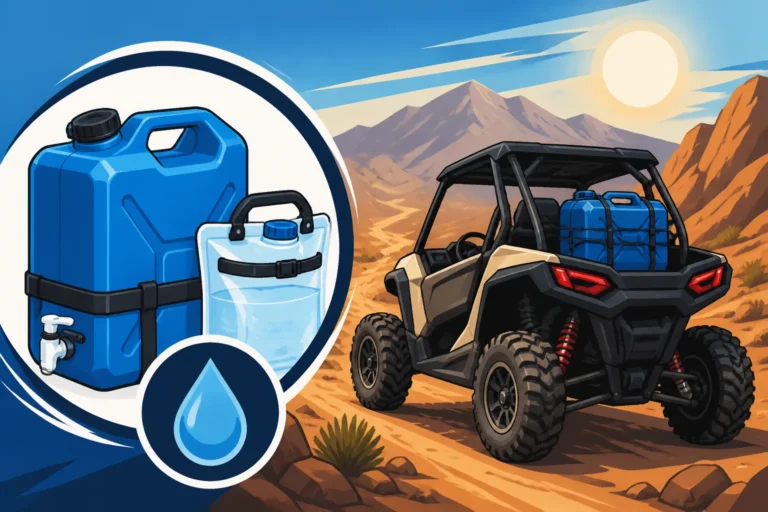
The Nevada desert can be demanding, especially when riders are focused on the excitement of the terrain and forget to drink or rest. Carry more water than you expect to need, and make hydration breaks part of the plan instead of waiting until someone feels unwell. Wear sun protection and take breaks in shade when available. If the temperature or conditions feel too harsh for your group, shorten the ride or postpone it.
Do not count on finding drinking water at the riding area. Plan fuel and supplies before you leave town, and make sure your vehicle has enough range for the route you intend to ride. A conservative route is especially helpful on a first visit: it leaves more margin if you need to turn around, help another rider, or spend longer than expected getting back.
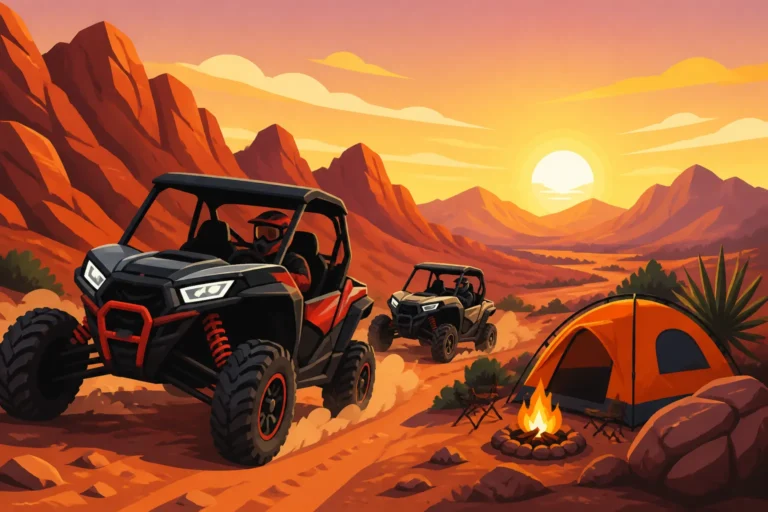
If you plan to camp, check the area’s current camping rules and facilities in advance. Bring what your group needs rather than assuming amenities will be available. For a first dune weekend, a simple day trip can be easier to manage than combining unfamiliar riding with an overnight setup. If you do camp, keep food, trash, and equipment organized so the riding area stays clean and your departure is straightforward.
Leave room for changing plans
The best first trip is not necessarily the one where you reach the highest point. It is the one where everyone returns safely, learns how the machine responds, and leaves with a clear idea of what they would do differently next time. A shorter ride, a skipped climb, or an early turnaround can be the right call when the group is tired or conditions change.
Before heading out, review [Sand Mountain Day Use Hours] and [Vault Toilets and No Water at Sand Mountain] for practical planning details. For directions and arrival logistics, [Getting to Sand Mountain on Nevada's US 50] is a useful next read. Keep your route flexible, follow posted instructions, and treat unfamiliar terrain with patience. That approach makes Sand Mountain far more enjoyable for beginners—and gives you a better foundation for the next trip.
Disclaimer
This article is for general informational purposes only and does not constitute professional advice. Laws, prices and regulations vary by location and change over time. Consult a qualified professional for guidance on your specific situation.