Nevada Riding in Winter
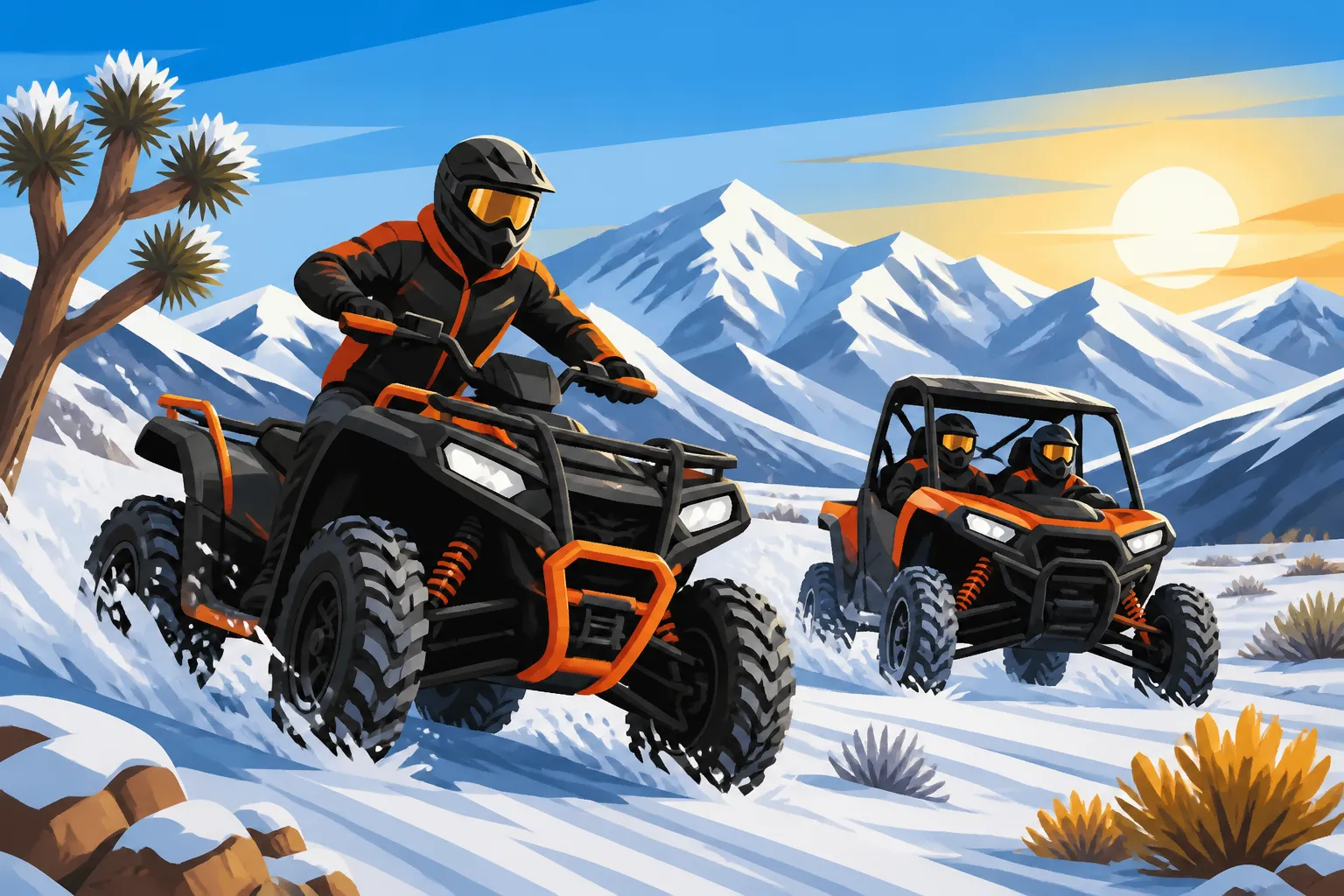
Nevada winter riding can mean frozen roads around Ely, muddy washes near Pahrump, or a sunny afternoon on open desert trails near Las Vegas. That variety makes planning tricky: a route that looks rideable on a map may be icy, closed, or unsafe after a storm. This guide covers how to choose a winter riding area, prepare your machine, and check conditions before you leave.
What Nevada winter riding is really like
Elevation changes the ride
Nevada does not have one uniform winter riding season. Southern desert areas such as Nellis Dunes and Logandale can have rideable days while higher terrain near Ely, Pioche, or the Sierra Nevada is snow-covered or frozen. Even within one region, a sunny trailhead can lead to shaded sections that stay slick long after the air warms.
Elevation affects more than temperature. Snowfall, overnight freezing, wind exposure, and the time it takes for the ground to thaw can all change trail conditions. A route that was dry on your last visit may be muddy after a storm or icy in the morning. Check the forecast for the riding area itself, not just the nearest major town, and pay attention to overnight lows as well as daytime temperatures. [Nevada Riding Season by Elevation]
Winter also brings shorter daylight hours. A ride that feels comfortably manageable in summer can run late if cold hands, soft ground, or an unexpected detour slows the group down. Plan a route that leaves a generous margin for getting back before dark, and let someone at home know where you expect to ride and when you plan to return.
Desert sunshine does not guarantee safe ground
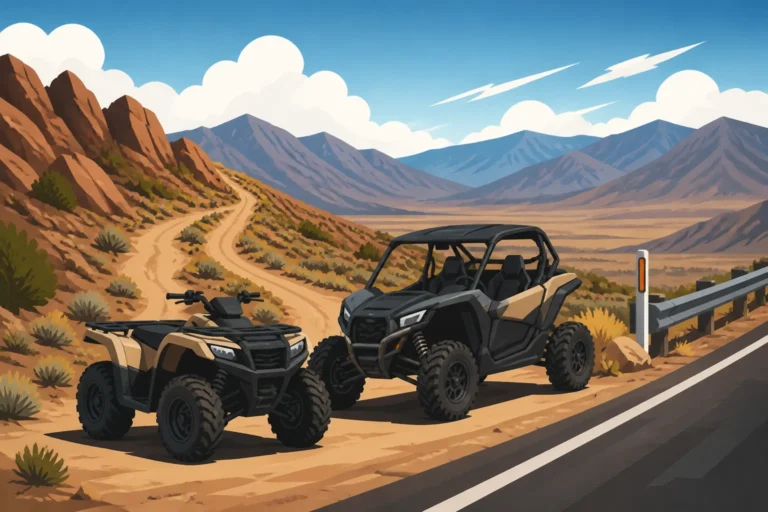
A clear sky can be misleading. Desert soil may stay wet beneath a dry-looking surface, especially in shaded cuts, washes, and low spots. Tires can sink or slide, and repeated passes through soft ground can create ruts that remain after the weather changes. Riding around a muddy patch may widen the damaged area, so turn back or choose another route rather than making a new track.
Winter storms can also produce runoff in places that looked dry when you arrived. Avoid entering a wash if rain is falling nearby or upstream, and do not assume a shallow trickle will remain shallow. If water is moving across the route, stop and assess from a safe location. A UTV’s size and weight do not make a flooded crossing predictable.
After a storm, give the area time to dry and check for closures before heading out. Conditions and access can vary between public-land routes, recreation areas, and local trail systems. [Nevada Riding After a Winter Storm] [Nevada Trail Closures to Check Before You Go]
Choose the riding area for the day you have
For a winter outing, match the destination to the forecast, your group’s experience, and the condition of your machine. Lower-elevation desert areas may be appealing when higher routes are snowed in, but they still require a local conditions check. Sand Mountain near Fallon, for example, offers a very different ride from the rocky and varied terrain around Logandale. [Sand Mountain for a First Dune Trip]
| Winter condition | What it can mean for your ride | Practical response |
|---|---|---|
| Cold, clear morning | Frozen ground, icy shade, cold hands | Start cautiously and bring warm layers |
| Recent rain or snow | Mud, ruts, wash runoff, or route closures | Check access information and delay if ground is soft |
| Windy conditions | Reduced comfort and visibility from blowing sand or dust | Shorten the ride and protect eyes and face |
| Snow at higher elevations | Slippery climbs and uncertain route access | Choose a lower route only after checking its conditions |
| Early sunset | Less time to recover from delays | Set a turnaround time and carry lights for emergencies |
Logandale Trails can suit riders looking for a large desert riding area, while Nellis Dunes may be more convenient for a shorter outing near Las Vegas. Neither location should be treated as automatically suitable just because it is lower than a mountain route. Confirm access, weather, and any restrictions before you load the trailer. [Logandale Trails for a Day Trip] [Nellis Dunes for a Quick Evening Ride]
How to plan a safer winter ride
Check access, weather, and maps before you go
Start with the basics: confirm the riding area is open, check the forecast close to the route, and review the land-management information that applies. Public-land routes can have restrictions, seasonal closures, or boundaries that are easy to miss when you are unfamiliar with the area. A line on a recreational map is not, by itself, proof that a route is open to motorized travel.
Use reliable maps to plan your route, then save information for offline use if your phone or navigation device supports it. onX Offroad can be useful for viewing route options and keeping map information available when cell service is limited. Still, treat any consumer mapping app as a planning aid rather than the final authority on access. Check the relevant official travel map or land manager information, especially where a route approaches a wilderness boundary or private land. [Reading a BLM Travel Management Map]
Before leaving, identify a shorter alternative and a clear turnaround point. That way, if the trail is icy, muddy, or slower than expected, the group can adjust without trying to improvise in fading light. If you are riding with people who have different experience levels, choose a route the least experienced rider can manage in winter conditions, not just one that the most confident driver can handle.
Prepare the ATV or UTV for cold conditions
Cold weather can make a familiar machine feel less dependable. Check the battery, tire condition, lights, brakes, steering, and fluid levels before loading up. Follow the manufacturer’s instructions for cold-weather operation and allow the machine to warm as recommended. A weak battery that starts the ATV at home may struggle after the vehicle has sat in the cold at a remote trailhead.
Inspect tires for damage and confirm they are suitable for the terrain you expect. Cold can make rubber less forgiving, while wet rock, packed snow, or slick clay can reduce grip. Do not assume aggressive tires make a steep icy slope safe. If you cannot confidently travel in both directions on a section, avoid entering it.
For a UTV, check the heater or cab equipment if your machine has it, but do not let comfort features substitute for proper clothing. Carry basic recovery equipment suited to your vehicle and group, and make sure everyone knows how to use it. A winch, tow strap, or recovery boards only help if they are in good condition and used safely. Keep tools and spare gear secured so they do not become hazards during a sudden stop.
Dress and pack for a long day, not a perfect one
The ride may be warm in direct sun and bitterly cold once the group stops. Use layers that can be adjusted, including a wind-resistant outer layer, warm gloves, and eye protection that works in changing light. Bring a spare pair of gloves if you have room; wet or dusty gloves can become miserable quickly, and cold fingers make it harder to operate controls safely.
Carry water even when temperatures are low. Riders often drink less in winter because they do not feel as hot, but a long day outdoors still requires hydration. Pack food, a first-aid kit, a charged phone, and a power bank. If you ride beyond reliable cell coverage, consider carrying a suitable emergency communication device and make sure someone knows your route and return time. [Carrying Water for a Desert Ride]
Keep a paper or offline copy of essential route information. onX Offroad may help with offline navigation planning, but your group should also know the general route and have a backup way to orient itself if a device battery dies or the screen becomes difficult to use in cold weather. Store documents and electronics in a protected bag, and keep the items you may need during the ride easy to reach.
Adjust your riding habits to winter conditions
Ride more gently on cold or unfamiliar terrain
Begin slowly, especially in the morning. Shaded corners, bridges, rocky slopes, and compacted dirt can remain slippery even when the open trail looks dry. Leave more room between machines so the rider behind has time to react to a slide, sudden stop, or obstacle. Avoid abrupt steering and hard braking on uncertain surfaces.
In a group, agree on hand signals or another way to communicate before you start. Set a pace that allows everyone to keep sight of the next rider without feeling pressured. If one person is uncomfortable with a climb or crossing, stop somewhere safe and discuss alternatives rather than urging them through it. The best winter route is one the group can complete without relying on luck.
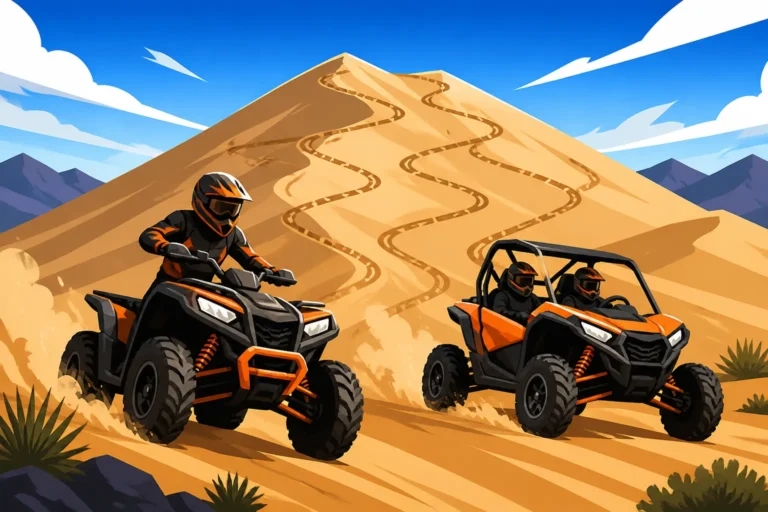
On sand, cold weather can change comfort and traction without changing the basic need for careful spacing and good visibility. Watch for other riders approaching dunes, intersections, or blind rises. Stay on established routes and avoid cutting across protected or closed areas. [Nevada Trail Etiquette on Shared Dunes]
Make a turnaround decision early
Turning back is a sensible riding decision, not a failed trip. If the trail becomes muddy enough to leave deep ruts, if water is moving through a wash, or if ice makes a slope unpredictable, choose the safer option. The same applies when the group is moving too slowly to finish before dark or when someone is becoming cold, tired, or uncomfortable.
Agree on decision points before the ride. For example, the group might decide that it will turn around if a route is blocked, if visibility drops, or if the planned pace falls behind schedule. Having those boundaries in place prevents a common problem: continuing simply because everyone has already driven a long way to reach the trailhead.
Keep your navigation plan flexible. onX Offroad can help you compare route choices, but check that any proposed detour is actually open and suitable for motorized use before following it. If you are unsure about access, do not ride past a closure or create a new route around it. Use the map to help you return by a known route, or head back the way you came.
Finish the day with a post-ride check
After the ride, look over the ATV or UTV before putting it away. Remove packed mud and debris, inspect the tires and undercarriage, and note any new vibration, damage, or warning lights. Mud left around moving parts can hide problems, while wet equipment stored without drying can become unpleasant or unreliable before the next outing.
Make a note of the conditions you encountered. Record where you found ice, soft ground, standing water, or a closure sign, and share useful observations with the rest of your group. A brief note can prevent a repeat mistake when you plan another winter trip. If your route crossed areas with changing access conditions, verify them again before returning rather than assuming the same information will still apply.
Winter riding in Nevada can be rewarding precisely because the landscape changes so much from one region to another. Give weather and ground conditions more weight than a calendar date, choose a route that fits the group, and be ready to turn around when the terrain says it is time.
Disclaimer
This article is for general informational purposes only and does not constitute professional advice. Laws, prices and regulations vary by location and change over time. Consult a qualified professional for guidance on your specific situation.