Nevada’s 500-Foot Amargosa Big Dune
Amargosa Big Dune is a striking desert landmark, but its steep sand, exposed terrain, and remote setting can catch first-time visitors off guard. This guide explains how to plan a ride, choose suitable conditions, navigate responsibly, and prepare for common problems so you can enjoy the dune without treating it like an ordinary trail.
What to Expect at Amargosa Big Dune
The dune and its riding environment
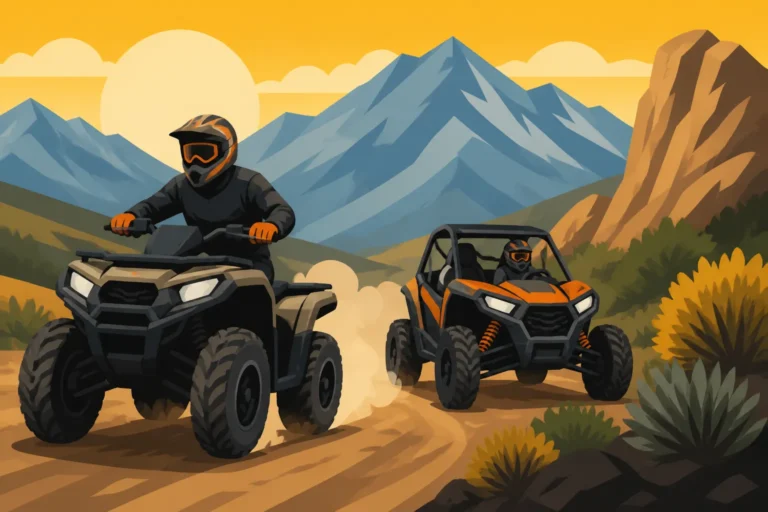
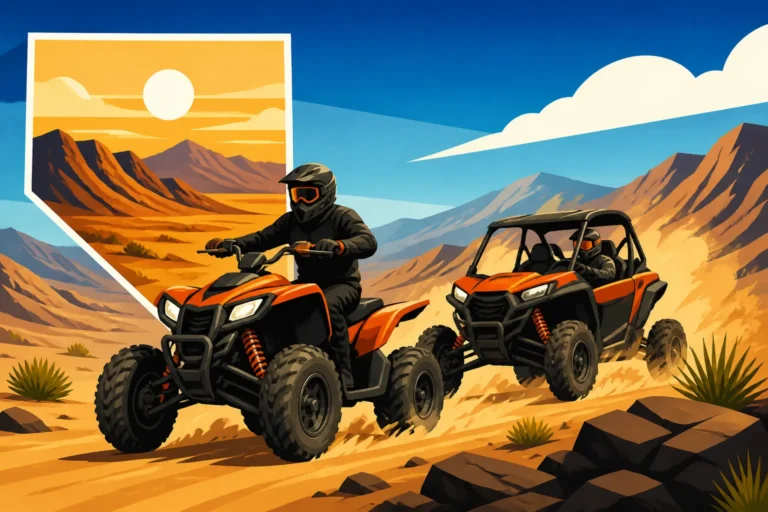
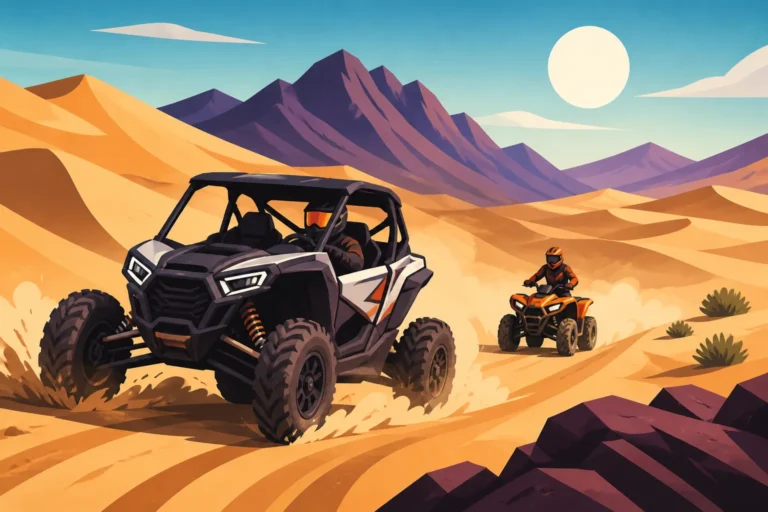
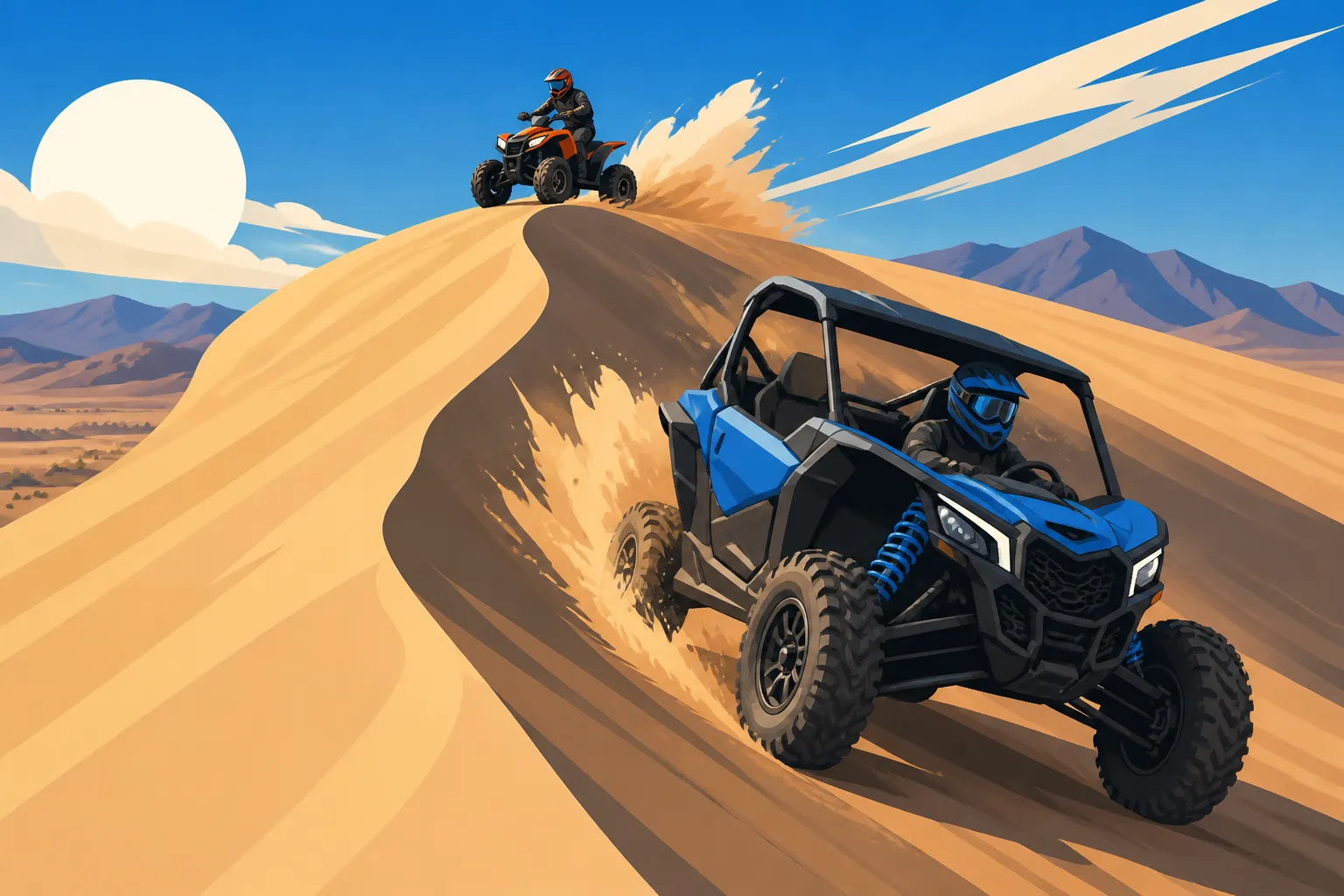
Amargosa Big Dune is a large sand-dune riding area in the Amargosa Valley region of southern Nevada. Its most recognizable feature is a prominent dune commonly described as roughly 500 feet high. That dramatic face is only part of the experience: the surrounding landscape includes softer sand, changing slopes, and open desert terrain where conditions can look different from one visit to the next.
A dune is not a groomed trail. Wind reshapes the sand, hides tracks, and changes the firmness of a slope. A line that seemed manageable on a previous trip may be softer, steeper, or rutted after weather and traffic. If you are used to riding on packed dirt, expect your machine to respond differently here. Sand can make steering feel heavy, reduce momentum quickly, and turn a modest-looking rise into a demanding climb.
The size of the main dune can also create a misleading sense of scale. From a distance, it may look easy to judge a route, but the view from the base can be very different from the view near the crest. Avoid assuming that a path is safe just because other riders have used it. Before committing to an ascent or descent, look for traffic, check what lies beyond the crest, and leave yourself room to turn around.
For a broader look at the area’s setting and terrain, see [Nevada's 500-Foot Amargosa Big Dune]. If the height is what draws you, remember that the dune’s steepest-looking face is not automatically the best place to start. [Big Dune's Steep North Face] can help frame the kind of terrain riders should assess carefully rather than tackle on impulse.
A destination with a remote feel
The dune’s open desert setting is part of its appeal, but it also means you should plan as though help may not be close at hand. Do not count on reliable cell coverage throughout the riding area, and do not assume that a nearby highway means every part of the dune is quick or easy to reach. A stuck vehicle, mechanical problem, injury, or sudden weather change can turn a short outing into a long day.
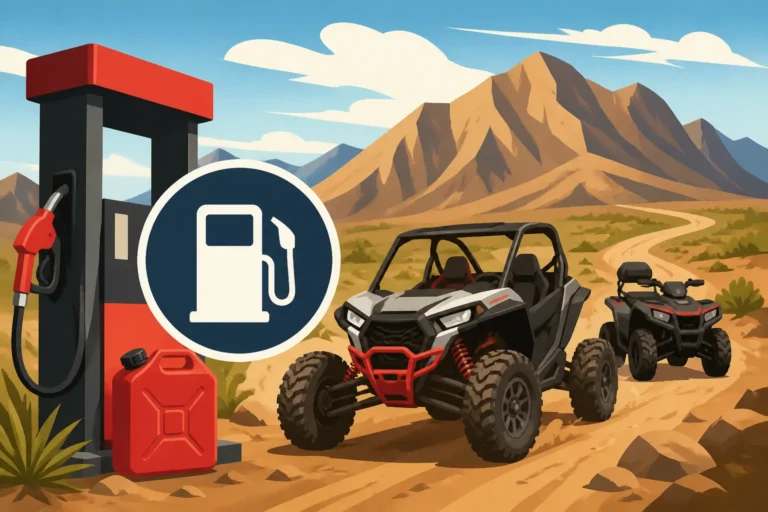
Facilities and services may be limited compared with developed recreation sites. Arrive with the fuel, drinking water, food, recovery gear, and basic repair supplies you need for your group. Carry more water than you expect to use, especially if you will be riding during warm conditions or walking in soft sand. A comfortable parking-area temperature can be deceiving: the sand and sun may make physical effort much harder once you are away from your vehicle.
Before leaving, tell someone who is not on the ride where you are going and when you expect to return. Agree on what that person should do if you miss your check-in. Within the group, decide on a turnaround time and a meeting location in case riders become separated. These steps may feel overly careful for a day trip, but they are easy to take before you leave and much harder to improvise after a breakdown.
Planning Your Trip and Choosing the Right Conditions
Getting there and preparing for the drive
Amargosa Big Dune is often approached from the Beatty area, but your route and access point should be confirmed before setting out. Road conditions, work, weather, and land-management restrictions can affect the best approach. Review [Getting to Big Dune From Beatty] as part of your trip planning, then check the route with a current map and any relevant land manager information before you tow into the desert.
Think through the final stretch as well as the highway drive. A loaded trailer behaves differently on rough or soft ground than it does on pavement, and a large truck may have fewer options for turning around. If you are towing, check that your vehicle, trailer, and tires are appropriate for the route you intend to use. Do not follow another vehicle onto an unverified track simply because it appears to lead toward the dunes.
A navigation app such as onX Offroad can help you review routes and orient yourself, particularly if you prepare before losing service. Use it alongside—not instead of—official land-management information, posted signs, and your judgment on the ground. Download maps or save the information you need in advance if your setup supports offline access. Confirm that you can identify your parking location and planned route without depending on a live connection.
Choosing a season, time, and ride duration
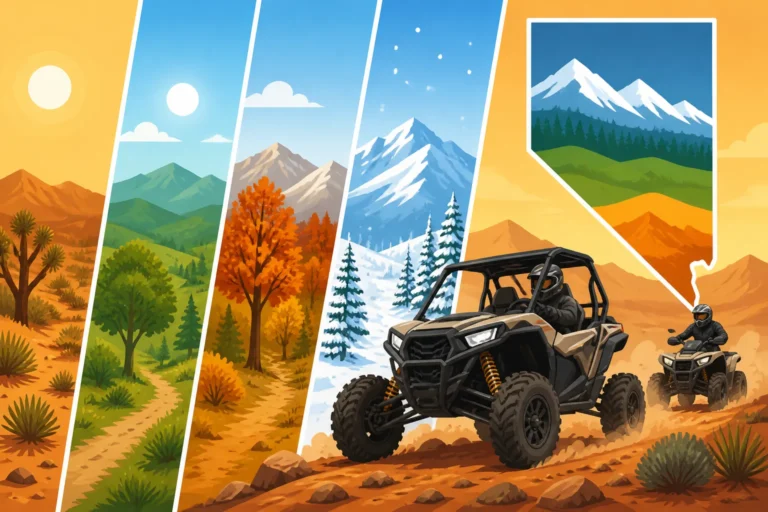
Spring is often an appealing time to consider a desert outing because the heat may be less punishing than during midsummer. Still, conditions can shift quickly, and a pleasant forecast does not remove the need to carry adequate water and protective clothing. [Amargosa Big Dune in Spring] is a useful companion topic when you are weighing a spring visit, but check the forecast for the actual day and pay attention to wind as well as temperature.
| Conditions | What they can mean at the dune | Planning response |
|---|---|---|
| Hot, sunny weather | Heat and exertion can build quickly, especially in soft sand | Ride early, shorten the outing, and carry ample water |
| Strong wind | Blowing sand can reduce visibility and make riding unpleasant | Reconsider exposed riding and protect eyes and face |
| Recent rain | Access roads or low areas may be muddy or soft | Check conditions before towing in and avoid questionable routes |
| Busy periods | More cross-traffic and less predictable lines | Slow down, watch crests, and agree on meeting points |
| Cooler weather | Comfortable riding may still include cold starts or wind | Bring layers and plan for changing conditions |
Try not to plan your first trip around a full day of riding from the moment you arrive. Build in time to unload, inspect equipment, learn how the sand is behaving, and take breaks. A shorter first session gives you a chance to understand how your vehicle handles without draining the group’s energy. If everyone is comfortable and conditions are good, you can decide whether to extend the ride.
Riding the Dune More Safely
Assessing slopes, crests, and traffic
Sand riding rewards smooth, deliberate inputs. Sudden steering, abrupt braking, and sharp throttle changes can make it harder to hold a line, especially on a slope. Begin on terrain that matches the least experienced rider and the least capable machine in your group. Work up gradually rather than treating the tallest or steepest face as the natural first challenge.
Crests deserve particular caution. A rider approaching from the other side may be hidden until the last moment, and the slope beyond a crest may be steeper than it appeared from below. Do not stop where another rider is likely to crest, and avoid charging over a ridge without knowing what lies beyond it. If visibility is limited, choose a route with a clear view or have a spotter positioned where they can see approaching traffic without standing in the riding line.
Spacing matters. Leave enough room between machines to avoid following someone into a sudden turn or a cloud of sand. If a rider stops, do not crowd them from behind. Choose a visible regrouping area away from active lines, and make sure everyone knows how to get there. These habits are especially helpful when the group includes different experience levels or riders who are unfamiliar with the area.
Matching the machine and rider to the sand
A machine that feels easy to control on a dirt road may behave differently in deep sand. Tires, suspension, power delivery, weight, and driver experience all affect how it handles. Before attempting a climb, learn how your vehicle responds on gentler terrain. If steering becomes heavy or the machine repeatedly loses momentum, treat that as information rather than a reason to push harder.
For UTV drivers, keep passengers informed about what the machine is doing and what they should do if it stops or tips. Everyone should use the appropriate restraints and protective equipment for the vehicle, and riders should follow the manufacturer’s instructions. For ATV riders, fatigue can make balance and throttle control less consistent. Take breaks before you feel depleted, and be willing to end a ride when attention starts slipping.
Avoid carrying unnecessary gear on the machine, and secure anything you do bring so it cannot interfere with steering, visibility, or rider movement. Bring basic recovery and repair items that match your vehicle and your skill level, but do not attempt a recovery beyond what your equipment and training can safely handle. If a machine is stuck on a steep slope, make space, keep bystanders clear, and avoid standing directly above or below it.
Responsible Access, Navigation, and Local Etiquette
Stay oriented and respect land boundaries
Open-looking desert can make it tempting to ride in any direction, but not every visible track is an authorized route. Routes may cross different land jurisdictions, and a line on a screen does not necessarily establish that riding is permitted there. Check official maps and posted signs, stay within areas open to motorized use, and turn around if boundaries or access conditions are unclear.
Use a reliable navigation plan before leaving the parking area. Mark your starting point, identify a return route, and agree on how the group will regroup if riders become separated. onX Offroad can be useful for reviewing your planned route and checking your position when the map data and device setup are ready before the trip. Keep a backup plan, such as a downloaded map or a separate navigation device, rather than relying on one phone with a low battery.
Land conditions and closures can change. Before the trip, look for current notices from the relevant land manager and check for temporary restrictions, fire-related closures, or other access changes. At the site, follow signs even if they differ from a route you saw online. If you cannot confirm that an area is open to riding, choose a route you can verify instead of guessing.
Share the area courteously
Dune areas bring together riders with different machines, speeds, and skill levels. Give others room, maintain a controlled speed around parked vehicles and gathering spots, and be especially cautious where sightlines are blocked. Do not assume a rider can hear your approach over an engine or wind. Reduce speed when visibility is poor and avoid creating unnecessary dust near people who are stopped.
Pack out everything you bring in, including food packaging, broken parts, and items that blow away easily. Keep noise and dust in mind around other visitors, and avoid damaging vegetation or driving around barriers. A track made to bypass an obstacle can widen into a scarred patch of ground, especially when other riders copy it. Staying on appropriate routes helps protect the area and keeps access more predictable.
For more on sharing riding areas respectfully, see [Nevada Trail Etiquette on Shared Dunes]. If you are planning a trip elsewhere in the state, [Riding BLM Land in Nevada] offers useful context for understanding why open desert does not always mean unrestricted travel.
A Practical Checklist Before You Ride
Paperwork, equipment, and group readiness
Confirm that your machine is properly registered or otherwise compliant for your circumstances before you leave home. Nevada OHV requirements can depend on the vehicle, ownership, and whether you are a resident or visitor, so check the rules that apply to your ride. [Nevada's Registration Decal as Your Permit] and [Nonresident Riders in Nevada] are helpful starting points for understanding the registration and visitor questions that may come up.
Keep required documents accessible and protected from dust and moisture. A phone photo may be convenient as a backup, but do not assume it replaces paperwork that must be carried or shown. Tell each rider what documents and safety equipment they are responsible for, and check that children and newer riders have appropriate supervision and instruction for the planned terrain.
Before unloading, look over the machine for loose fasteners, tire damage, leaks, and obvious problems. Check fuel and battery levels, confirm that helmets and eye protection fit, and make sure everyone knows how to stop, signal, and regroup. For a UTV, review seat belts and passenger seating. For an ATV, make sure the rider can comfortably control the machine and understands how to respond if it bogs down or begins to slide.
A step-by-step arrival routine
A calm arrival routine helps prevent the familiar scramble of unloading, searching for gear, and trying to decide where to go while everyone is already eager to ride. Use a simple sequence:
- Park in an appropriate, stable area and keep the tow vehicle clear of active riding lines.
- Check signs and local notices before unloading.
- Confirm the group’s route, turnaround time, and meeting point.
- Inspect each machine and secure loose cargo.
- Make sure riders have water, protective equipment, and a way to communicate.
- Start with an easy section and reassess the sand, wind, and traffic before attempting steeper terrain.
If the group cannot agree that conditions are comfortable, scale back the ride. One rider’s confidence should not set the pace for everyone else. A good day is not measured by how high someone climbs or how long the group stays out. It is measured by whether everyone returns safely, the machines are accounted for, and the area is left in good condition.
When to change plans or turn back
Turn around if weather makes visibility poor, a rider is fatigued, a machine is behaving unpredictably, or the group has lost its bearings. Do the same if you encounter a closure, an unclear boundary, a damaged access road, or a route that is beyond your vehicle or recovery capability. A short ride back to the parking area is frustrating; continuing into a problem because you have already invested time can be much worse.
If a breakdown occurs, move people away from active traffic and choose a visible, safe place to assess the issue. Keep the group together where practical, conserve water, and avoid walking long distances in heat without a clear plan. If someone is injured or conditions become unsafe, prioritize getting help over protecting the schedule. When you return, check that all riders and gear are accounted for before leaving the area.
Disclaimer
This article is for general informational purposes only and does not constitute professional advice. Laws, prices and regulations vary by location and change over time. Consult a qualified professional for guidance on your specific situation.