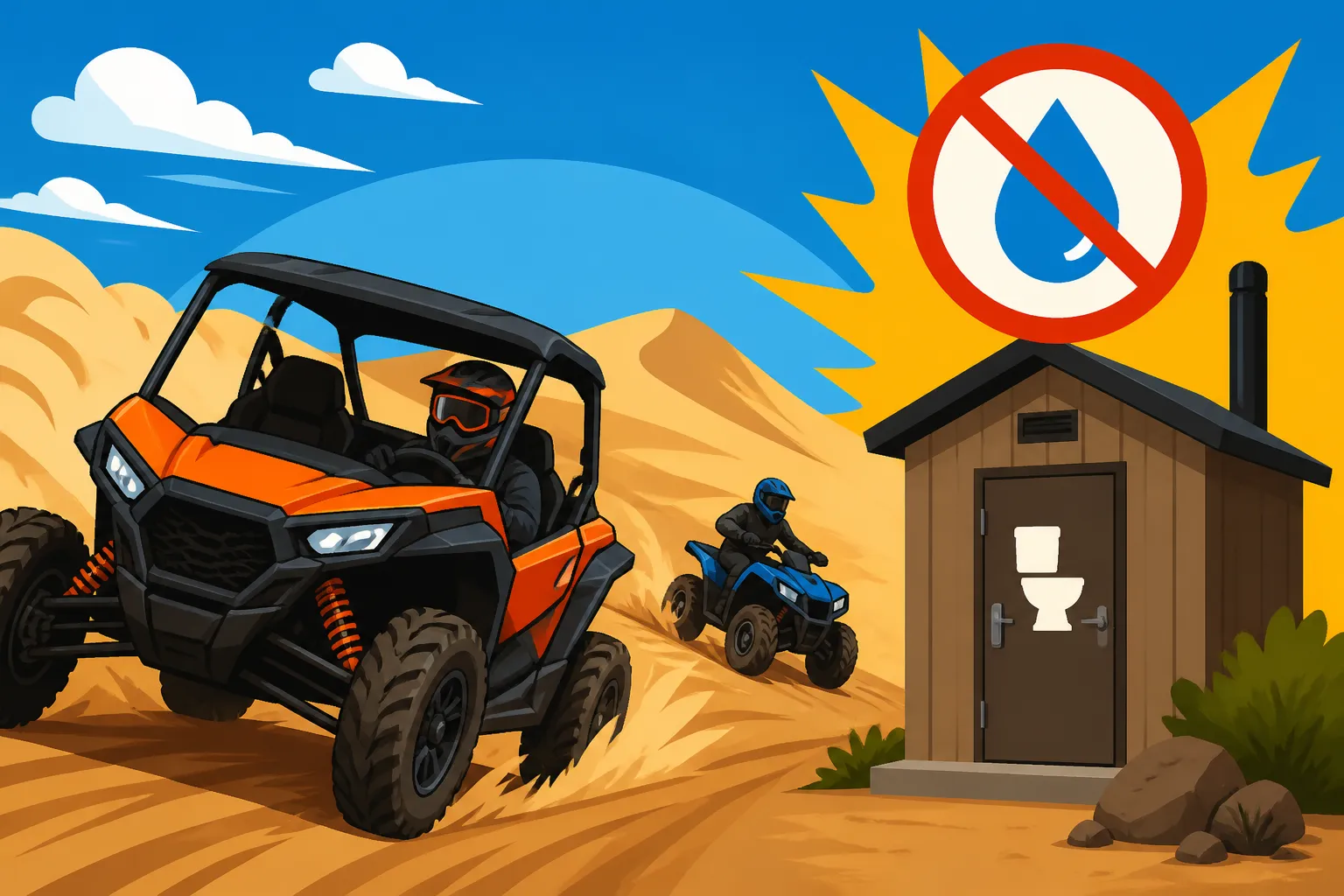
Vault Toilets and No Water at Sand Mountain
Sand Mountain’s toilets can make a dune weekend more comfortable, but they do not solve the most important planning problem: there is no dependable running water at the recreation area. That affects drinking, handwashing, cooking and cleanup. This guide explains what vault toilets are like, what to bring, and how to plan a safer visit without relying on services that may not be there.
What to expect from toilets at Sand Mountain
Vault toilets are not flush toilets
Sand Mountain Recreation Area, near Fallon, is a remote riding destination where facilities are more basic than many visitors expect. Vault toilets are typically stand-alone restrooms built over sealed waste-holding tanks. They do not flush, and they do not provide the familiar sink-and-tap setup you might find at a campground with plumbing.
That distinction matters for comfort and preparation. A vault toilet may offer shelter and privacy, but you should not count on running water for washing your hands, rinsing a child’s face, cleaning a spill or refilling a bottle. Bring hand sanitizer and any personal hygiene supplies you need rather than assuming the restroom will have them.
The facilities are useful, but they are not a substitute for a full-service campground. The article [Sand Mountain's Six Vault Toilets] offers a closer look at the restroom facilities, while [Sand Mountain Day Use Hours] is a useful companion topic when you are planning how long to stay. Before leaving home, check available local recreation information for facility notices or closures, and be ready to manage without a restroom if one is temporarily unavailable.
No water means bringing your own
“No water” should be taken literally when you are packing. Do not plan on filling drinking bottles, washing dishes, rinsing sand from goggles or washing your hands at the site. If your group arrives with only the water in its riding packs, a long day in the sun can use that supply faster than expected.
Think about water for the whole outing, not just the time spent riding. You may need it for the drive, camp setup, meals, hand hygiene and the trip back to Fallon or another service point. Children, passengers, people who are not used to desert heat and anyone doing strenuous riding may need extra attention and more frequent breaks.
Water planning also depends on your itinerary. A short visit with an early return is different from an overnight stay or a full day of dune riding. Estimate what each person will need, add a reserve for delays or a vehicle problem, and keep some drinking water accessible rather than buried under camping gear. For more detail, see [Camping at Sand Mountain Without Water] and [Carrying Water for a Desert Ride].
How to plan water and hygiene
Build a water plan around the whole group
Start by making a list of everyone who will be at Sand Mountain, including passengers who may not be riding. Then consider the length of the visit, the season, the amount of physical activity and whether anyone in the group has special hydration needs. A rider climbing dunes in warm weather may use water differently from someone relaxing at camp, but both need a plan.
Do not rely on one shared jug as the only source. A practical setup separates water into accessible drinking containers and a larger reserve kept in the tow vehicle or camp area. That way, each rider can carry water while riding, while the group still has a back-up supply if a bottle is lost, damaged or emptied early.
Keep drinking water out of direct sun when you can, and make sure everyone knows where the reserve is. It is easy for one person to assume another person packed the extra water, especially when several vehicles are meeting at the trailhead. Agree on who is carrying what before you leave, and check supplies again after arrival.
Pack for handwashing without a sink
A simple hand-hygiene kit can make a big difference around vault toilets and dusty campsites. Include hand sanitizer, tissues or toilet paper, sealable bags for waste, and a small amount of water reserved for cleaning needs. If you use wipes, pack them out rather than leaving them in a restroom or on the ground; wipes do not belong in a vault toilet unless posted instructions explicitly say otherwise.
Hand sanitizer is useful, but it is not a replacement for washing hands when hands are visibly dirty or greasy. You might get sand, food residue or mechanical grime on your hands during a ride. A small handwashing setup with a controlled amount of water and soap can help, as long as you follow site rules and dispose of wastewater responsibly. Keep it separate from the water you intend to drink.
For meals, reduce the amount of cleanup you will need to do. Pre-portion snacks, use containers that close securely and avoid bringing dishes that require a full wash-up if you do not have enough water for it. A little planning before departure can spare you the frustrating end-of-day routine of trying to clean dusty cookware with your last few ounces of water.
| Need | What to plan for | Why it matters |
|---|---|---|
| Drinking | Water for every person, plus a reserve | Heat, riding and unexpected delays can increase demand |
| Riding | Bottles or hydration packs that travel with each rider | The group’s main supply may be back at camp or in a vehicle |
| Hand hygiene | Sanitizer, and water and soap for hands that are visibly dirty | Vault toilets do not provide a sink |
| Meals | Low-cleanup food and reusable or sealable containers | No running water is available for routine dishwashing |
| Toilet supplies | Personal paper products and bags for anything that must be packed out | Supplies at basic facilities can vary |
| Contingency | Extra water stored separately from the day’s working supply | A leak, lost bottle or longer-than-planned stay can change the day |
Choosing a site and timing your visit
Day trips and overnight stays need different preparation
A day trip can be straightforward if you arrive with enough water, food and restroom supplies, and have a realistic departure time. The challenge is that “just a few hours” often becomes a longer visit. Riders may want one more run, a vehicle may need attention, or the group may wait for someone to return from a ride. Pack for a longer day than you expect, particularly if you are traveling with children or a mixed-experience group.
An overnight stay calls for a more complete plan. You will need enough water for drinking and basic hygiene through the night and the following morning, as well as a way to store it securely. Consider how you will handle cooking, tooth brushing and cleanup without a tap. If your supplies run low, there is no convenient refill at the recreation area, so your backup plan should be to leave for a known service location rather than hope a nearby facility can help.
Sand Mountain is a large riding area, and it helps to know where your camp or meeting point is relative to the routes your group plans to use. A downloaded map can help you keep the plan clear when cell service is limited or people spread out. Some riders use onX Offroad to review route information before they go; whichever mapping tool you choose, save the information in advance and do not treat a map as a substitute for water, navigation judgment or local access rules.
Choose a schedule that accounts for heat and facilities
Time of day can shape how comfortable your visit feels. In warmer conditions, an early start can reduce exposure during the hottest part of the day, while a late return may leave the group traveling after a long stretch of activity. Build breaks into the schedule and keep water easy to reach. Heat planning is especially important for children, newer riders and anyone who is not accustomed to desert conditions. [Nevada Desert Riding in Summer Heat] has additional guidance for preparing for hot-weather outings.
Think through restroom needs before the group is scattered across the riding area. Children may need more frequent stops, and people with medical or personal needs may want a clear plan for returning to the developed area. Agree on a meeting location and a way to communicate if riders separate. With no running water on site, a restroom break should also prompt a quick check that everyone has drinking water and the supplies they need.
If you are traveling during a busy weekend, arriving later than planned can make the day feel more rushed. Parking, setting up camp and organizing several vehicles all take time. Plan your departure from Fallon or your other starting point with a buffer, and keep essentials such as water and toilet supplies reachable during the drive. [Sand Mountain on a Holiday Weekend] covers the added considerations that come with a popular travel period.
Riding, camping and keeping the area clean
Keep water and supplies protected from dust
Sand and dust have a way of getting into everything. Use closed containers for drinking water, food and hygiene items, and avoid leaving bottles open on a tailgate while vehicles are moving around. A clean bottle opening is more pleasant to drink from, and a secure lid helps prevent dust and spills from contaminating the supply.
Separate clean items from used ones. Keep fresh toilet paper, wipes, soap and towels in a dry bag or lidded container, and place used items in a separate sealable bag for packing out. This is particularly helpful for families: one person can manage the clean kit while another handles the used supplies, instead of rummaging through the same dusty tote each time.
A navigation app can support the route plan, but it should be one part of preparation. If you use onX Offroad, review the intended route before leaving and save map details for offline use where available. Marking a meeting point can help if riders need to return separately. Always follow posted restrictions and route signs, and avoid assuming a track on a digital map guarantees that an area is open to riding.
Treat vault toilets and the surrounding area with care
Use the restroom facilities as intended and follow signs posted at the site. Do not leave trash, wipes, hygiene products or food packaging behind, and do not put anything into a vault toilet that the posted instructions prohibit. Even when a facility looks rugged, it still requires upkeep; careless use can create problems for other visitors and for the people responsible for maintaining it.
Bring enough supplies to avoid borrowing from other groups. A nearby rider may be able to help in a pinch, but a remote recreation area is not a place to assume that someone else has spare water, paper products or a working vehicle. Good preparation is considerate to your own party and to everyone sharing the site.
Pack out what you bring in, including small items that are easy to overlook: bottle caps, snack wrappers, wipes and broken gear. Keep your camp area tidy and secure loose objects before riding. Leaving the site clean is not just about appearance; it also helps prevent litter from blowing across the recreation area and keeps the next visitor from dealing with your leftovers.
Getting ready before you leave
Make a checklist that fits your trip
A useful Sand Mountain checklist starts with the basics: drinking water, a separate reserve, food, sun protection, riding gear, first-aid supplies and a way to navigate. Add toilet paper, hand sanitizer, sealable waste bags and any personal supplies your group needs. If you are camping, include the water and cleanup plan for meals, not only the riding portion of the trip.
Next, check the vehicle and trailer. Make sure water containers are secured so they will not tip or leak on rough roads. Confirm you have enough fuel for the drive and your planned riding, and keep key supplies accessible instead of packing them under everything else. [Where to Fuel Before Sand Mountain] can help you think through fuel stops before heading to a remote riding area.
Finally, agree on the basics with everyone in the group: where you will meet, when you plan to check in, who has the first-aid kit and what you will do if someone needs to return early. If the group is unfamiliar with the area, [Sand Mountain for a First Dune Trip] can help set expectations for a first visit. For route context, you can also review [Sand Mountain's 23 Miles of Marked Trail] and [Driving From Fallon to Sand Mountain Recreation Area].
Have a backup plan for a longer stay
A good backup plan starts with extra supplies, but it also includes a decision point. Decide in advance what you will do if the visit runs longer than planned, someone becomes unwell, a vehicle is disabled or water is lost. The answer may be to shorten the ride, return to camp, contact the group by radio or phone, or leave for services. Making that decision before you are tired and dusty is much easier than trying to invent a plan under pressure.
Use onX Offroad or another mapping resource to understand the general area and save the route information you need before setting out. Do not depend on a phone connection for every navigation or communication task. Tell someone outside the riding group where you are going and when you expect to return, especially if you are camping or traveling with only one vehicle.
Before departure, take one last inventory of the essentials: water, fuel, first aid, restroom supplies, food and a way to navigate. If something important is missing, adjust the plan rather than hoping the recreation area will provide it. Sand Mountain rewards preparation; knowing that the toilets are vault-style and that no running water is available lets you focus on the ride instead of scrambling for basics once you arrive.
Disclaimer
This article is for general informational purposes only and does not constitute professional advice. Laws, prices and regulations vary by location and change over time. Consult a qualified professional for guidance on your specific situation.