Riding Seasons in the Nevada Desert
Nevada riding plans can go sideways fast when a cool morning turns into desert heat, a high-elevation trail is still snowed in, or a summer storm washes out a route. This guide explains how the seasons affect ATV and UTV riding across Nevada, how to choose a safer riding window, and what to check before leaving the pavement.
How Nevada’s Seasons Shape Desert Riding
Why one Nevada riding season does not fit the whole state
Nevada is not one uniform desert. A ride near Las Vegas or Laughlin can feel very different from one near Ely, Elko, or the higher country around the Great Basin. Elevation, exposure, shade, wind, and recent weather can change the conditions within a single trip, so the calendar alone is a poor guide to trail readiness.
In lower desert areas, heat is often the main seasonal constraint. In higher country, snow, frozen ground, and muddy roads can linger after the valleys have warmed up. A route may look inviting on a sunny afternoon yet still have icy patches in shaded cuts or soft, saturated ground where snowmelt is draining.
That is why it helps to think in terms of local conditions rather than asking whether Nevada is “in riding season.” A better question is whether the specific area, route, and time of day fit your group’s experience and equipment. For a closer look at how elevation changes the riding calendar, see [Nevada Riding Season by Elevation].
A practical seasonal overview
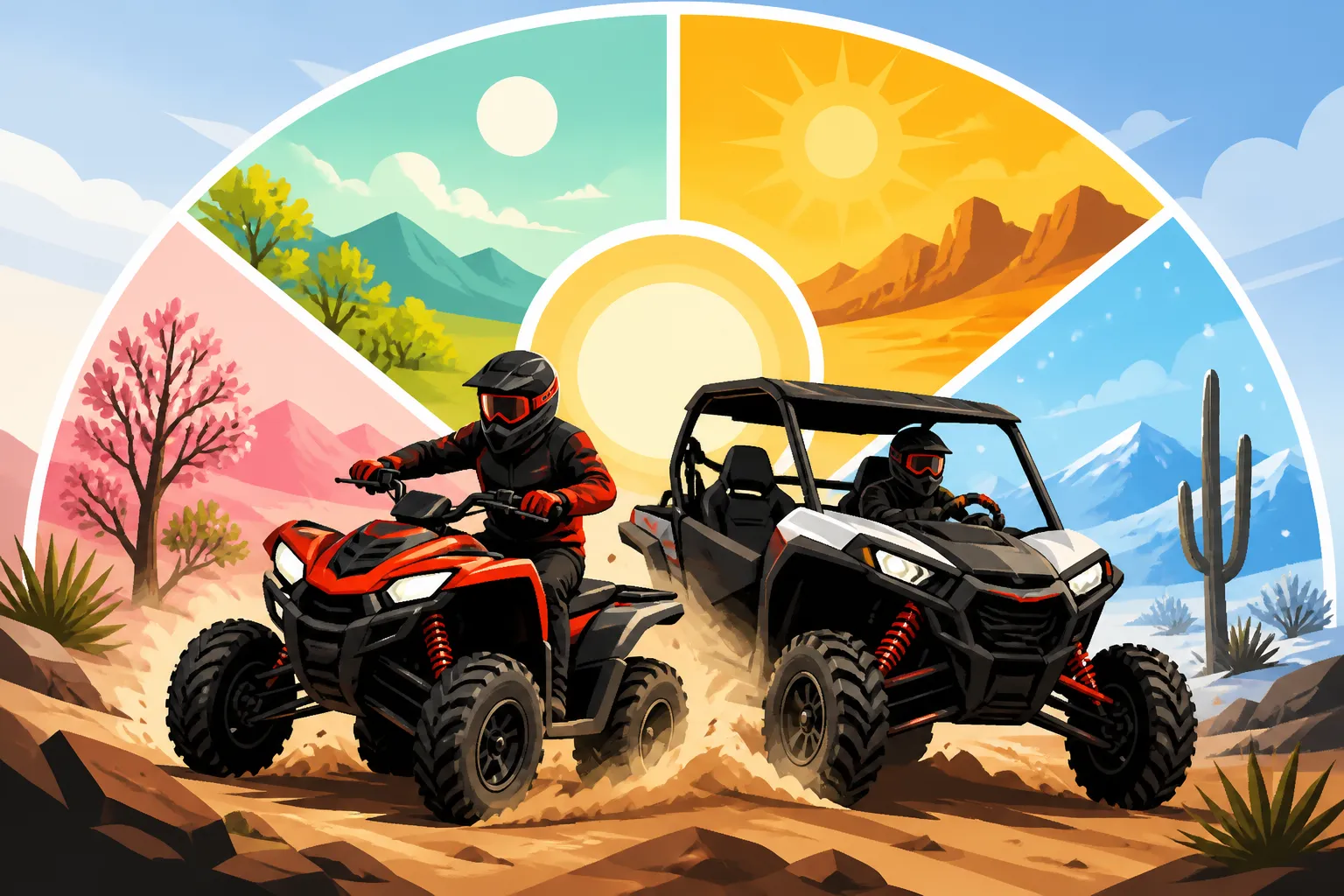
The table below is a planning aid, not a promise about what you will find at a particular trailhead. Conditions can vary from one week to the next, and some areas have restrictions or closures that are separate from weather.
| Season | Typical opportunity | Common challenge | Planning approach |
|---|---|---|---|
| Spring | Comfortable temperatures in many lower desert areas | Mud, runoff, wind, and lingering snow at elevation | Check the route and access roads close to departure |
| Summer | Early starts can work in some areas, especially at higher elevations | Dangerous heat, dehydration, and afternoon storms | Ride early, shorten the plan, and set a firm turnaround time |
| Fall | Often a useful balance of cooler temperatures and rideable conditions | Shorter daylight, changing weather, and colder nights | Pack layers and plan to finish before dark |
| Winter | Mild days may be possible in some southern areas | Cold, snow, ice, frozen ground, and limited services | Choose routes carefully and carry extra cold-weather gear |
In spring and fall, conditions can be appealing without being predictable. A warm forecast in town does not tell you whether a shaded trail has thawed, whether a wash is passable, or whether strong wind will make a sandy area unpleasant. Treat the forecast as one planning input, not a final verdict.
Summer and winter ask for different kinds of restraint. In summer, riders may need to shorten their route before anyone feels exhausted. In winter, the challenge may be deciding not to push through a snowy, icy, or muddy section simply because the group drove a long way to get there.
Spring Riding in Nevada
Check for mud, runoff, and lingering snow
Spring can bring some of the most comfortable riding days in lower-elevation Nevada, but a pleasant temperature does not mean the ground is ready for tires. Snowmelt and seasonal rain can leave roads and trails soft, especially in shaded areas, along drainage bottoms, and on routes that climb into higher terrain. A dry-looking surface near the highway can hide sticky mud farther up the route.
Riding wet or muddy ground can create problems beyond getting stuck. Tires can cut deep ruts that remain long after the surface dries, and repeated traffic can damage a route that would otherwise recover naturally. If you encounter standing water, deep mud, or a road that is breaking apart beneath the tires, turn around rather than testing how far the machine can go.
A UTV’s weight and momentum can make a soft section more damaging than it first appears. Before committing to a narrow track, look at the surface, the slope, and the space available to turn around. If the route is already rutted or water is flowing across it, waiting for drier conditions is usually the kinder choice for the trail and the easier choice for your recovery gear.
Make a flexible plan for changing weather
Spring weather can shift quickly, especially when a route crosses exposed desert, foothills, and higher ground. Wind may pick up, clouds may build, or temperatures may fall as the day goes on. Check the forecast for the riding area rather than relying only on the conditions in your departure city, and consider how the weather may change along the whole route.
A flexible plan means having a shorter option, a clear turnaround point, and a route back that does not depend on crossing a questionable wash or climbing a snow-covered slope. If your group has mixed experience, agree in advance that anyone can call for a turnaround without needing to argue the case at the trail junction. That simple agreement helps prevent “we’ve come this far” from becoming the reason a manageable ride turns into a difficult one.
After a storm, do not assume that a route is ready because the sky has cleared. Water can continue moving through washes, and access roads can remain muddy or damaged after nearby weather has passed. Check for current restrictions and local conditions before you leave, and use [Riding Nevada After a Winter Storm] as a reminder to consider storm impacts that may not be visible from the trailhead.
Summer Riding and Desert Heat
Start early and be realistic about heat
Summer heat is not just uncomfortable; it can affect judgment, coordination, and the ability to recognize when someone is becoming unwell. A rider who feels fine at the staging area may feel very different several hours later after vibration, sun exposure, dust, and physical effort. The safest schedule is often built around the cooler part of the day rather than around the number of miles you hope to cover.
Starting early can help, but it is not a guarantee that the full route will remain comfortable. Set a turnaround time and make it earlier than the point at which the group expects to feel tired. If one rider is slowing down, becoming unusually quiet, or struggling with routine tasks, treat that as a reason to pause, cool down, and reconsider the plan—not as a cue to push harder to reach the next landmark.
Plan shade and breaks where they actually exist. Open desert routes may offer long stretches without meaningful cover, and a parked machine does not automatically create a cool rest area. Be cautious about assuming that a remote destination will have water, facilities, or cell service. For more specific preparation, see [Nevada Desert Riding in Summer Heat] and [Riding Nevada Before the Heat of the Day].
Carry water, fuel, and a way to change the plan
Water planning should match the people, the weather, and the length of the trip. Carry more than the group expects to drink on a routine day, and divide it so that one spill, leak, or damaged bag does not wipe out the entire supply. Keep water accessible during the ride rather than packed under equipment where nobody wants to stop and retrieve it.
Fuel planning deserves the same conservative approach. A route that appears short on a map may involve slow sand, climbs, detours, or extra distance when a trail is closed. Do not plan around the machine’s best-case fuel economy, and avoid making the final part of the trip depend on a single exact estimate. A little reserve is valuable when wind, heat, or a route problem changes the day’s plan.
A practical summer checklist includes a working way to contact help, basic first-aid supplies, sun protection, and a clear method for regrouping if the party gets separated. Before departure, identify the closest reliable access points and make sure everyone understands the turnaround plan. [Water and Fuel Planning in Nevada] covers the kind of preparation that matters when distances are long and services are limited.
Fall Riding Across Desert and High Country
Use the cooler weather without underestimating the cold
Fall often brings more comfortable daytime temperatures in the desert, but the difference between midday and early morning can be substantial. A thin layer that seems unnecessary at the staging area may become welcome once the group stops moving or the wind rises. Pack clothing that can be added or removed, and keep a warm layer protected from dust and moisture.
The season also changes how much daylight you have to work with. A route that felt straightforward in midsummer may become a poor choice if the group is still navigating unfamiliar terrain near dusk. Set a return time that leaves a margin for slow riding, a minor repair, or a wrong turn. Headlamps or other lighting are useful backup tools, but they are not a substitute for planning to finish before dark.
Fall conditions can also be dry and windy. Dust may hang over a busy route, visibility can drop behind other machines, and exposed areas may feel colder than the thermometer suggests. Use appropriate eye protection, give other riders space, and stop somewhere safe if dust or wind makes it difficult to see the route ahead.
Treat shorter days as a route-planning constraint
When daylight shrinks, the group may need to choose a shorter loop rather than simply riding at the same pace until the planned distance is finished. Choose a route with clear exit options and identify junctions where you can cut the ride short. That makes it easier to adapt if someone is tired, a machine develops a problem, or the trail takes longer than expected.
For an unfamiliar area, do not assume that a downloaded route or a line on a screen will match the trail on the ground. A track can be rerouted, closed, washed out, or difficult to follow in poor light. Carry an offline map and know how to use it before you lose signal. Tools such as onX Offroad can help riders keep map information available when cell coverage is weak, but it is still wise to confirm route access and carry a backup navigation option.
Tell someone who is not on the ride where you plan to go and when you expect to return. Include the general area, the route or trailhead, and a time to start checking in if you have not made contact. This is especially useful in fall, when a small delay can turn into a cold, dark wait if the group has planned to return at the edge of daylight.
Winter Riding in Nevada
Choose lower-risk routes and expect cold ground
Winter riding can be possible in parts of Nevada, but the conditions vary sharply by location. Some southern desert areas may have rideable days while higher-elevation routes are snowy, icy, or deeply muddy. Even where the air feels mild, shaded terrain can stay frozen, and a sunny stretch does not tell you what lies beyond the next ridge.
Ice can be difficult to spot on compacted dirt, in shaded cuts, near water, and on roads that climb or descend. A machine that handles loose gravel confidently may behave very differently on a slick surface. Reduce speed when conditions are uncertain, leave more room to stop, and avoid steep slopes or narrow routes where there is little space to recover from a slide.
Cold also affects people. Riders may become less nimble when wearing bulky clothing, and numb hands can make controls harder to operate. Dress in layers that allow movement, protect exposed skin from wind, and bring spare gloves and dry clothing. [Nevada Riding in Winter] offers a useful seasonal lens for planning around cold, snow, and shorter days.
Watch for conditions that change during the day
A winter route can be firm in the morning and soft or muddy later as the surface thaws. Conversely, wet ground can refreeze as temperatures fall, making the return trip more difficult than the outbound ride. Consider both directions of the route when deciding whether to go, and do not assume that an easy ride out will be equally easy on the way back.
Snow can cover ruts, rocks, drainage channels, and route markers. If you cannot tell where the trail runs or whether the surface underneath is safe, do not treat a GPS line as proof that the route is passable. A map helps with orientation, but it cannot show every hidden hazard beneath snow or tell you how much traction the tires will have.
Before setting out, check the forecast for the route’s elevation and the time you expect to be returning. Pack for a longer delay than planned, especially if the route is remote. If snow or ice is forecast, or if access conditions are uncertain, choose a lower-risk alternative or postpone the ride. [Nevada Trail Closures to Check Before You Go] is also relevant because seasonal restrictions and weather-related closures can affect access independently of your own assessment of the trail.
Match the Riding Area to the Season
Compare elevation, exposure, and terrain
Elevation is one of the most useful clues when deciding where to ride, but it is not the only one. Exposed ridges can be windy, low washes can collect water, and shaded slopes can hold snow or ice after nearby open ground has dried. Think about the full route, including the trailhead, access road, and return route, rather than choosing based on the destination alone.
Terrain changes how weather feels from the seat. Sand can become tiring when the machine is working hard and riders are exposed to heat. Rocky routes may require slower, more deliberate riding, while open roads can make wind and dust more noticeable. On a mixed route, different sections can call for different speeds and equipment, so avoid using one easy stretch as evidence that the whole route is equally manageable.
Use maps to compare route options before the trip. onX Offroad can be one way to review mapped routes and prepare offline navigation, especially when cell service is unreliable. Check the map before leaving coverage, save the information you need, and confirm that the route is open and appropriate for your machine. A digital line is a planning aid, not permission to travel across closed, private, or restricted land.
Plan around trail access and local features
Some riding areas have seasonal concerns that are specific to their terrain. At Sand Mountain, wind can affect visibility and the feel of riding on open dunes, while protected habitat can restrict where riders may travel. Before visiting, check the area’s current access information and follow marked routes and closures. [Sand Mountain When the Wind Picks Up] and [Riding Around Protected Dune Habitat] are useful topics to review when dune conditions and habitat protection matter to your trip.
Other locations may have different challenges: long distances between services, limited shade, rough access roads, or nearby routes that cross into areas with separate land-management rules. A destination name alone does not tell you whether a particular track is open. Review the route you intend to use, not just the general recreation area, and be prepared to turn around if signs or barriers show that access has changed.
If you are choosing between locations, compare the whole day rather than only the riding itself. Consider the drive, the time needed to unload, the weather at the trailhead, the return drive, and whether the group has enough experience for the terrain. A closer or shorter ride may be a better choice than a more ambitious destination if the forecast is unsettled or the group includes newer riders.
Build a Safer Seasonal Ride Plan
Prepare navigation, communication, and a backup route
Before the trip, share the intended route with everyone in the group and make sure each driver knows the basic plan. Agree on a lead rider, a sweep rider, and a way to regroup at junctions. A simple rule such as “stop at every major turn until the group is together” can prevent riders from following different tracks into unfamiliar terrain.
Download maps or other navigation information before leaving reliable service. onX Offroad may help with offline map access, but do not make one phone or one app the group’s only navigation plan. Phones can run out of battery, overheat, or become hard to use in bright sun and dust. Carry a backup power source and know how to interpret your route without relying on a live connection.
Choose an alternate route that is genuinely usable, not just a line you noticed on a map. Check for access limits, closures, and whether your machine and group can handle the terrain. If a storm, closure, or trail problem blocks the planned route, a sensible backup prevents the group from improvising under pressure.
Use a pre-ride and turnaround checklist
A pre-ride check does not need to be complicated, but it should be consistent. Check tires, brakes, lights, fuel, and basic machine condition. Secure cargo so it cannot shift on rough terrain, and make sure helmets, eye protection, and other protective gear are ready before the group leaves the staging area.
Use a turnaround checklist that reflects the season. In summer, consider the temperature, water remaining, shade, and how everyone is responding to the heat. In winter, consider daylight, cold, traction, and whether conditions on the return route may worsen. In spring, look for mud, flowing water, and damage to the road. In fall, keep the time and changing light in view.
Be willing to call the ride early. Turning around is not a failure, and it is often the decision that keeps a fun trip from becoming a recovery operation. If anyone is unwell, the surface is deteriorating, visibility is poor, or the group is running behind schedule, stop and reassess while there is still room to choose a safer option.
Respect changing conditions and other trail users
Weather, trail conditions, and access can change after a plan is made. Recheck relevant information close to departure and again at the trailhead when signs, barriers, or local notices are present. If a route is closed, do not ride around the barrier or assume the closure is merely advisory. Closures may protect riders, land, wildlife, or ongoing maintenance work.
Keep dust and noise in mind, particularly on busy routes and around shared-use areas. Slow down when passing, give other users room, and avoid surprising people or animals around blind corners. Stay on routes that are open to your machine, and do not widen a trail to get around mud, rocks, or another obstacle.
Seasonal awareness is ultimately about adjusting expectations. A ride that is perfect in October may be a poor choice in July, and a route that looks dry from the highway may still be unsafe after a storm. Match the day’s plan to the conditions you actually find, carry enough supplies to handle a delay, and leave room for the group to change course without pressure.
Disclaimer
This article is for general informational purposes only and does not constitute professional advice. Laws, prices and regulations vary by location and change over time. Consult a qualified professional for guidance on your specific situation.