Nevada Rules for OHVs in a State Park
It’s a beautiful thing to cruise Nevada’s incredible landscapes on your ATV or UTV, but sometimes the lines between public land and protected areas can feel a little blurry. Many riders wonder if they can just roll their side-by-side right into one of our stunning state parks to explore. This guide is here to clarify those rules, explain why they exist, and help you understand how you can respectfully enjoy Nevada's natural beauty without landing yourself in trouble, ensuring your adventure is always on the right side of the law.
Understanding Nevada State Park Regulations for OHVs
Nevada's State Parks are treasured gems, places like Valley of Fire, Spring Mountain Ranch, and Big Bend of the Colorado. They are managed to preserve natural, cultural, and recreational resources for everyone to enjoy, often with an emphasis on conservation and the visitor experience. This is why their rules for Off-Highway Vehicles (OHVs) tend to be much stricter than, say, riding across open Bureau of Land Management (BLM) acreage. It’s not about keeping you out, but about protecting the very things that make these parks special.
The General Rule: No Off-Road Riding Inside Park Boundaries
Let's cut right to it: generally speaking, you cannot take your ATV or UTV off designated paved or graveled roads within the boundaries of a Nevada State Park. This means no exploring scenic washes, no creating new trails through the sagebrush, and definitely no climbing the picturesque red rock formations that many of our parks are famous for. The rationale behind this restriction is multi-faceted and crucial for the long-term health of these ecosystems.
First, there's the environmental impact. OHVs can disturb fragile soils, crush sensitive vegetation, and disrupt wildlife habitats. Imagine the delicate desert cryptobiotic crust, a living soil layer that takes decades to form, being churned up by tires. State parks prioritize preserving these natural elements. Second, safety is a major concern. Uncontrolled off-road riding can create hazards for hikers, campers, and other park visitors who expect a certain level of peace and predictability. Lastly, there's the maintenance burden. Creating and maintaining new, unsanctioned trails diverts resources from other essential park services. So, while your side-by-side might be equipped with robust SuperATV skid plates and aftermarket suspension ready for anything, those capabilities need to be reserved for appropriate riding areas outside park limits.
Designated Routes and Paved Access
While off-road adventures are generally a no-go, some Nevada State Parks do allow OHVs to traverse paved or graveled public roads within their boundaries, but with a significant caveat: your machine must be "street legal" according to Nevada law. This isn't about giving you free rein to explore every nook and cranny; it's about providing access for machines that meet specific criteria.
What does "street legal" mean in this context? Nevada has a classification known as a "large ATV," which applies to certain UTVs or side-by-sides that meet specific dimensions and equipment requirements, often having four seats or a truck bed. If your machine qualifies and has the proper "large ATV" decal, you might be able to use it on the park's paved roads just like any other vehicle. However, this is for transit, not for recreational off-roading within the park. Think of it as driving your truck through the park to get to a picnic area or trailhead – you’re on the road, following traffic laws. Before you even consider this, you'll need to understand the nuances of [Nevada Street Legal UTV Requirements] and [What Qualifies as a Large ATV in Nevada]. Even with a street-legal setup, you are absolutely restricted to established roadways and must respect all posted speed limits and traffic signs. Your OHV is treated like any other car on those paved surfaces, which means no pulling off the pavement onto dirt.
Parking and Staging Outside Park Limits
Given the restrictions, the smartest approach for many riders is to treat state parks as destinations you drive to, rather than ride through off-road. This often means finding a legal staging area outside the park boundaries. Many state parks are surrounded by extensive BLM lands or other public access points where OHV riding is permitted.
For instance, if you're planning a trip to a park like Valley of Fire State Park, you might find a legal staging spot on adjacent BLM land, unload your OHV, and then ride to the park entrance on a public road, if your machine is street legal and you intend to stay on paved surfaces within the park. Otherwise, you’d trailer your machine right into the designated parking areas within the park, just as you would with a car, and then enjoy the park by foot. This method ensures you respect park regulations while still getting to experience the surrounding OHV opportunities. Always check the specific park’s website for guidance on nearby staging and access. It’s often the best way to enjoy both the protected beauty of the park and the thrill of off-road riding on appropriate adjacent lands.
What Happens If You Ride Illegally in a State Park?
It’s easy to think, "What's the harm in just a little detour?" when you see an enticing dirt track leading off a paved road in a state park. But the truth is, the consequences for illegal OHV riding in these protected areas are real and can be pretty severe. Park rangers and law enforcement officers take their role in protecting these lands seriously, and they are well-versed in the laws governing OHV use. Ignorance of the rules is almost never a valid excuse when you're caught.
Potential Fines and Citations
If you're caught riding your OHV off-trail or in a restricted area within a Nevada State Park, prepare for a citation. These aren't just polite warnings; they come with monetary fines that can quickly add up. The exact amount can vary depending on the specific violation and the park's regulations, but they are designed to be a significant deterrent. Beyond the immediate financial hit, repeated offenses or particularly egregious violations could lead to even harsher penalties.
Imagine you're out near the [Logandale Trails Outside Las Vegas], which is an approved OHV area, but you stray into an adjacent state park unknowingly. A ranger could pull you over, issue a citation, and in some cases, your machine might even be impounded. This means not only paying the fine but also dealing with the hassle and additional costs of retrieving your vehicle. Such an incident can quickly turn a fun day of riding into a very expensive and frustrating ordeal. It's definitely not the kind of story you want to be telling back at camp! Getting pulled over for illegal riding is akin to getting hit with [Nevada Fines for No Large ATV Decal] if you tried to ride your non-compliant UTV on a paved county road—it's a clear violation with clear consequences.
Environmental Impact and Park Damage
Beyond the personal legal and financial repercussions, there's a broader, more significant impact of illegal OHV riding in state parks: the damage to the environment and the park's delicate ecosystems. As mentioned earlier, even a single pass with an OHV can have lasting effects. When riders ignore designated routes, they can:
- Erode Soil and Damage Vegetation: Tires tear up the soil, leading to erosion, especially in sensitive desert environments. This prevents native plants from growing back, and can even destroy the habitat of small animals and insects.
- Disrupt Wildlife: Noise and disturbance from OHVs can scare away wildlife, forcing them from critical feeding or breeding grounds. This is particularly harmful during sensitive seasons or for threatened and endangered species.
- Contribute to Trail Proliferation: One unauthorized track quickly encourages others to follow, leading to a spiderweb of unplanned trails that fragment habitats and further degrade the landscape.
When park staff and the [The Nevada Commission on Off-Highway Vehicles] work tirelessly to maintain approved trails and sensitive areas, illegal riding undermines all that effort. Such damage can lead to stricter rules for all OHV enthusiasts, potentially limiting access in other areas or increasing enforcement, which ultimately impacts everyone who loves to ride. So, by respecting park boundaries, you're not just avoiding a fine; you're actively contributing to the preservation of Nevada's natural heritage for future generations.
Planning Your Trip: State Park Access and Nearby OHV Trails
Navigating where and how you can ride your OHV in Nevada is all about smart planning. While state parks might have strict limitations on off-road vehicle use, that doesn't mean you can't enjoy their beauty or find incredible riding opportunities nearby. The key is to do your homework before you ever load your machine onto the trailer.
Researching Specific Park Rules
It cannot be stressed enough: always check the specific rules for the Nevada State Park you plan to visit. While there's a general understanding that off-road riding is prohibited, individual parks might have unique access points, designated paved roads, or specific parking instructions for vehicles towing OHVs. For example, some parks might have more robust paved networks suitable for street-legal machines, while others might be more remote with only limited access.
The best way to get accurate, up-to-date information is to visit the official Nevada State Parks website, look up the specific park, and review their OHV or vehicle access policies. If the information isn't clear, a quick phone call to the park ranger station can clarify any ambiguities. They are there to help you understand the rules, not just enforce them. This proactive research ensures you won't encounter any surprises, like finding out your [Nevada's Annual OHV Registration] decal isn't enough to let you ride where you thought you could.
Exploring Adjacent BLM and Forest Service Lands
For the vast majority of off-road enthusiasts, the real fun near state parks often lies on the surrounding federal lands managed by the Bureau of Land Management (BLM) or the U.S. Forest Service. These lands are frequently where you'll find expansive networks of designated trails, open riding areas, and breathtaking landscapes perfect for your ATV or UTV. Many state parks are literally bordered by these federal lands, making it easy to enjoy both types of experiences.
For example, while you can't off-road within Valley of Fire State Park, the surrounding BLM land near Logandale and Overton offers an incredible array of trails, including the popular [Logandale Trails Outside Las Vegas]. Similarly, near [Sand Mountain: Nevada's Great Basin Dune], you’ll find the dune itself is managed by the BLM, providing an epic riding experience that’s a designated OHV recreation area, a stark contrast to a state park's general rules. To find these areas, resources like the [Using the Nevada Trail Finder] website are invaluable. This tool can help you identify legal trails, staging areas, and connect you with maps and local regulations for [Riding BLM Land in Nevada]. Companies like SuperATV, known for their durable aftermarket parts, produce accessories that can enhance your adventures on these more rugged and permissible terrains, ensuring your machine is ready for the real off-road challenges.
Street-Legal Considerations for Access
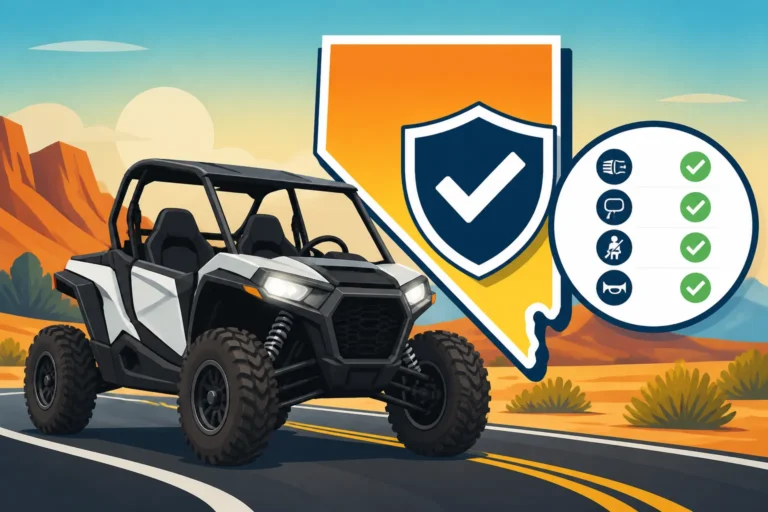
If your goal is to drive your OHV into a state park on paved roads—perhaps to reach a trailhead for hiking, or simply to take a scenic drive—then making sure your machine is street legal is paramount. Nevada has specific requirements for what qualifies as a "large ATV" for road use, which primarily applies to UTVs. These requirements often include:
- Size and Seating: Typically, it needs to be wide enough and often have four seats or a cargo bed. A two-seat sport quad generally won't qualify.
- Safety Equipment: This usually means headlights, taillights, brake lights, turn signals, mirrors, a horn, and a windshield. Many of these items are readily available as aftermarket additions from companies like SuperATV.
- Registration and Decal: Even if street legal, your machine still needs a current [Nevada's Annual OHV Registration] decal, and you'll need to obtain the specific "large ATV" decal from the DMV.
- Insurance and Driver's License: You’ll need valid liability insurance and a proper driver's license.
Without meeting these strict criteria, you risk citations not only for illegal off-road use but also for operating an unregistered or improperly equipped vehicle on public roads. Remember, street legality applies only to designated paved or graveled public roads, not to off-road trails within the park. Understanding distinctions like [Nevada Rules for Crossing a State Route] and adhering to local ordinances is key for safe and legal travel on these public access routes.
| Feature | Nevada State Park OHV Rules (General) | BLM/Forest Service OHV Rules (General) |
|---|---|---|
| Off-Road Riding | Prohibited, strictly enforced. Stay on paved/designated gravel roads. | Generally permitted on designated trails/routes; some open riding areas. |
| Street Legal OHVs | Allowed only on paved public roads for transit, if compliant. | Allowed on designated routes, but also on paved roads if street legal. |
| Primary Goal | Conservation, passive recreation (hiking, camping). | Multi-use: recreation (OHV, hiking, hunting), resource management. |
| Enforcement | State Park Rangers, local law enforcement. | BLM Rangers, Forest Service Rangers, local/state law enforcement. |
| Decal/Permit | [What a Nevada OHV Decal Actually Proves] is needed if riding any public road. | [What a Nevada OHV Decal Actually Proves] is needed for all public land. |
| Camping with OHV | In designated campgrounds, OHV transported to site. | Dispersed camping allowed in many areas; OHV riding from camp often permitted on trails. |
Essential Gear and Respectful Riding Practices
No matter where you choose to ride your ATV or UTV in Nevada, whether it’s on a vast stretch of BLM land or simply driving a street-legal machine on a paved road through a state park, a few core principles should always guide your preparation and behavior. These aren't just about avoiding tickets; they're about ensuring your safety, preserving the environment, and maintaining the positive reputation of the OHV community.
Safety Gear and Machine Readiness
Your personal safety should always be your top priority. This means wearing appropriate safety gear, which universally includes a helmet—and remember, [Nevada Helmet Law for Road Riding] even applies to street-legal OHVs on public roads. Beyond the helmet, consider goggles, gloves, long pants, and sturdy boots. The desert environment can be unforgiving, with sharp rocks, thorny plants, and intense sun, so protecting your body is crucial.
Equally important is ensuring your machine is in top condition. Perform pre-ride checks on tires, brakes, fluid levels, and lighting. If you're going to be transitioning between paved roads and off-road trails, make sure your tires are appropriate for both – [Street Tires and Desert Rock] present different challenges. Equip your machine with essential accessories like a first-aid kit, a tool kit, and extra water. If you've upgraded your machine with components from SuperATV, like a heavy-duty winch or enhanced suspension, ensure they are properly installed and maintained. A reliable, well-equipped machine greatly reduces the risk of breakdowns, especially when you're far from assistance.
Tread Lightly Principles
The "Tread Lightly!" philosophy is a cornerstone of responsible outdoor recreation, and it's especially pertinent for OHV riders. It’s a set of ethical guidelines that encourages minimizing your impact on the environment and showing respect for others. When you apply Tread Lightly principles, you:
- Travel and recreate with minimum impact: Stick to designated roads and trails. Never create new routes, especially in sensitive areas like state parks.
- Respect the environment and the rights of others: Be mindful of noise levels, especially near populated areas or quiet zones in parks. Yield to hikers, mountain bikers, and equestrians.
- Educate yourself: Understand land management rules and regulations before you go. This guide is a step in that direction!
- Avoid sensitive areas: Stay away from wetlands, archaeological sites, and critical wildlife habitats.
- Do your part: Pack out everything you pack in. Consider joining volunteer efforts to maintain trails.
By embracing these principles, you not only protect the natural beauty you're there to enjoy but also foster a positive image of OHV recreation. It shows that riders are responsible stewards of the land, not just thrill-seekers.
The Importance of a Current Decal
Finally, never underestimate the importance of having a current and properly displayed Nevada OHV decal. This isn't just a piece of paper; it's your official proof that your machine is registered and legal to operate on public lands and designated trails in Nevada. Even if you're just using your street-legal OHV to drive on a paved road through a state park, that road is still a public thoroughfare, and your registration must be current.
The money from your decal, collected by the Nevada DMV, goes towards vital programs, including trail maintenance, signage, and education, often managed through organizations supported by [The Nevada Commission on Off-Highway Vehicles]. So, your decal is not just a regulatory requirement; it’s an investment in the future of OHV riding in Nevada. Rangers and deputies at popular spots like [Riding Nellis Dunes on an Expired Decal] will be checking for this, and it applies equally to any public access point, including state park roads. Make sure your decal is current, visible, and that you have your registration card with you. It simplifies any interactions with law enforcement and helps ensure you’re doing your part to keep Nevada’s incredible riding opportunities available for everyone.
Disclaimer
This article is for general informational purposes only and does not constitute professional advice. Laws, prices and regulations vary by location and change over time. Consult a qualified professional for guidance on your specific situation.