Nevada Helmet Law for Road Riding
It can be incredibly confusing to navigate the rules around riding your ATV or UTV on Nevada's roads, and one of the most common head-scratchers is whether you need to wear a helmet. It feels like every state has different regulations, and Nevada is no exception, with specific nuances that depend on your machine and even your age. This guide is here to untangle Nevada's helmet laws for road riding, helping you understand when a helmet is mandatory, when it might not be, and why safety should always be your top priority.
The Core Rule: When Helmets Are Required on Nevada Roads
Riding your off-highway vehicle (OHV) on designated Nevada county roads offers a fantastic way to link up trails or access scenic areas, but it's not the same as tearing across open desert. The rules shift significantly, especially when it comes to personal safety equipment like helmets. Nevada's laws are designed to mitigate risk, and that often means adding a helmet to your gear list, particularly for certain riders and types of machines.
Understanding Nevada's Definition of a "Large ATV"
Before we can even talk about helmet laws, we absolutely have to clarify what kind of machine Nevada is talking about when it discusses road riding. This isn't just about whether you have two seats or four; it's a specific legal definition that dictates whether your machine even qualifies to be on certain roads in the first place, and subsequently, what safety gear you need. Nevada law distinguishes between a general off-highway vehicle (OHV) and what it calls a "large all-terrain vehicle."
A "large ATV" in Nevada is defined as a side-by-side or UTV that is designed to travel on four or more wheels, is 80 inches or less in width, has an unladen weight of 3,500 pounds or less, and is equipped with a non-straddle seat and a steering wheel. Crucially, to be considered a "large ATV" for road-legal purposes, it must also meet one of two additional criteria: either it has four or more seats, or it has a truck bed. This means your typical two-seat sport quad, while an ATV, does not meet this "large ATV" definition for road use because it has a straddle seat and typically lacks a truck bed or four seats. That distinction is paramount. If your machine doesn't fit the "large ATV" criteria, it generally won't be allowed on these specific county roads, helmet or no helmet. [What Qualifies as a Large ATV in Nevada] goes into more detail about this crucial definition.
So, when we talk about helmet laws for road riding, we are almost exclusively talking about these "large ATVs" – your UTVs, your side-by-sides, the machines that, with the right equipment, can become conditionally "street legal" on certain county roads. The reason this distinction is so important is that Nevada's helmet laws for road use are tied directly to this classification, and they treat these machines more like traditional motor vehicles in some respects, while still acknowledging their off-highway roots.
Mandatory Helmet Use for Specific Age Groups and Machine Types
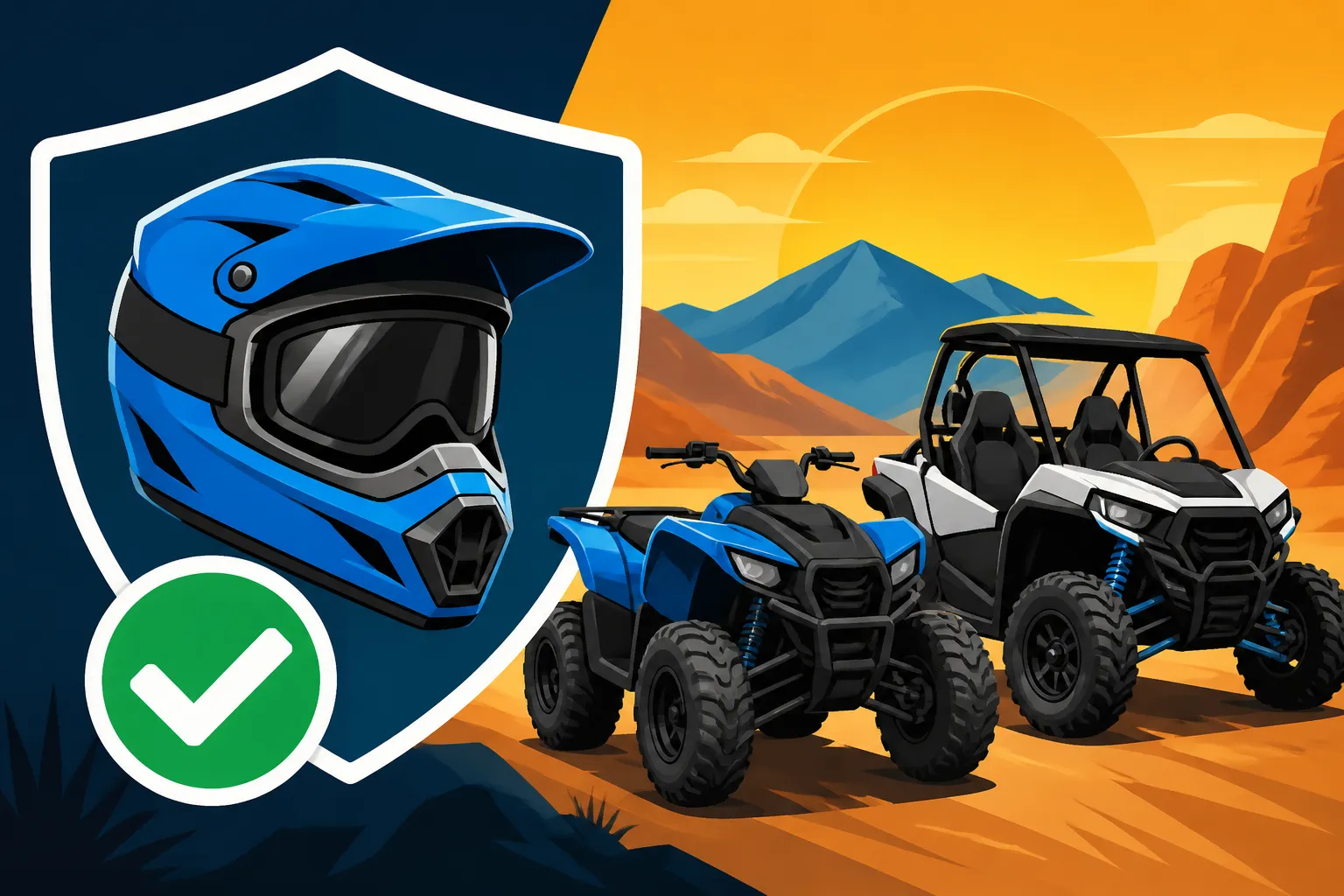
Here's where the rubber meets the road, literally, for helmet requirements. Nevada Revised Statutes (NRS) are pretty clear: if you're under the age of 18, you must wear an approved safety helmet when operating or riding as a passenger on an OHV on public lands, and this extends to the county roads where large ATVs are permitted. There's no wiggle room here for minors. Whether they're driving their own machine or riding shotgun in a UTV, if they're under 18, a helmet is non-negotiable.
This means if you're out with your family, and your teenager is behind the wheel of your side-by-side on a county road, they absolutely need to have that helmet securely fastened. The same goes for any younger passengers in the back seats. This rule reflects a universal understanding of the increased vulnerability of younger riders and the importance of head protection. Even if you, as an adult, might meet an exemption (which we'll cover next), your younger companions do not. It's a critical safety measure and a legal requirement that deputies and park rangers will enforce. Always remember that the rules for passengers are just as strict; you can find more specific information on this in [Nevada Helmet Rules for Passengers].
Diving Deeper into Nevada's Helmet Requirements
The blanket rule for minors is straightforward, but for adults, the situation can get a little more nuanced, bringing in factors like the design of your "large ATV" and what additional safety features it boasts. This is where understanding the letter of the law, and not just the spirit, becomes crucial.
Approved Helmets and Safety Standards
When a helmet is required in Nevada, it's not just any old hat. The law specifies that it must be an "approved safety helmet." What does "approved" mean? Generally, this refers to helmets that meet the safety standards set by the U.S. Department of Transportation (DOT). You'll typically find a DOT certification sticker on the back of any compliant helmet. This certification means the helmet has passed rigorous testing for impact protection, penetration resistance, and retention system effectiveness.
Choosing a DOT-compliant helmet is vital not only for legal compliance but, more importantly, for your actual safety. A properly fitting helmet that meets these standards can make a monumental difference in the event of an accident. It should fit snugly, not wobble, and the chin strap should be securely fastened. Many riders opt for full-face helmets for the added protection of the face and jaw, especially when riding on roads where interaction with other vehicles or unexpected debris is a greater possibility. Don't cheap out on head protection; it's literally an investment in your brain.
The Exception: When You Might Not Need a Helmet on the Road
Here's the part that can cause some confusion for adult riders of "large ATVs" on Nevada's county roads. While the general rule for off-road riding in many areas often leans towards "helmet always," for these specific road-legal scenarios, Nevada provides an exception for adults (18 and older). If your large ATV is equipped with an enclosed cab, has a windshield, and comes with seatbelts, an adult operator or passenger who is 18 years of age or older may not be required to wear a helmet.
Think of it this way: if your side-by-side has evolved to a point where it essentially offers the same level of occupant protection as a very basic car – with a roof, a full windshield, and a restraint system – the state recognizes that the need for a helmet for an adult diminishes. This is where companies like SuperATV come into play for many owners. They offer a huge range of aftermarket accessories like full cab enclosures, DOT-approved glass windshields, and upgraded harnesses. While these products themselves don't create the exemption, they are often exactly what riders install to meet the criteria for the exemption. It’s all about creating that enclosed, protected environment. However, it's critical to note that simply having a roof and a half-windshield probably won't cut it; the law implies a substantial level of enclosure and protection to truly waive the helmet requirement for adults. Always verify your specific setup meets the exact legal language for this exemption. More details on general road requirements for UTVs can be found in [Nevada Street Legal UTV Requirements].
Penalties for Non-Compliance
Ignoring Nevada's helmet law, especially for minors, can lead to more than just a stern talking-to. Deputies and park rangers are well-versed in OHV regulations, and they won't hesitate to issue citations. The exact fines can vary, but expect a monetary penalty, and potentially court costs. Beyond the immediate financial sting, repeated offenses or severe violations could lead to more serious consequences, though typically, a first offense for not wearing a helmet is a misdemeanor citation.
It’s important to remember that law enforcement officers, whether it's a Nevada State Trooper or a local sheriff's deputy, are not just looking for a "large ATV decal" on the machine; they're also checking for compliance with all safety regulations, including helmet use. An expired decal or lack of proper safety equipment are common reasons for roadside stops. [Nevada Fines for No Large ATV Decal] gives a good overview of the types of penalties you might face for general non-compliance with road-legal requirements. Ultimately, the biggest penalty isn't what the law hands down, but the potential for a severe head injury if you crash without proper protection.
Beyond the Law: Prioritizing Your Safety
While understanding the legal minimums is essential, true wisdom on the trail and road means always pushing for maximum safety. The law sets a baseline, but personal responsibility and a proactive approach to safety will always serve you best.
The Critical Role of Helmets in Preventing Injuries
Let's be brutally honest: nobody ever plans to crash. But accidents happen, even to the most experienced riders, and especially on roads where you're sharing space with heavier, faster vehicles. Helmets are incredibly effective at preventing traumatic brain injuries, which can have life-altering consequences. A good helmet absorbs impact, distributes force, and protects your skull from direct blows or penetration. Without one, your head is dangerously vulnerable.
Think about it: a seemingly minor tumble off a quad on a dirt trail can result in a concussion if your head hits the ground. On a paved county road, where speeds are often higher and surfaces are harder, the stakes are exponentially raised. Even in a side-by-side with seatbelts, a rollover or collision can violently shake occupants, leading to head impacts within the vehicle itself or with the ground if ejected. Don't rely solely on luck. Data consistently shows that helmets save lives and prevent severe injuries. It's a piece of gear that you hope you never truly need, but you'll be eternally grateful for if you do.
Additional Safety Gear for Road Riding
While the helmet is paramount, it's not the only piece of safety gear you should consider, especially when you venture onto county roads. Riding on pavement introduces new hazards, and being prepared means gearing up appropriately.
- Eye Protection: Whether it's goggles or a full-face helmet visor, protecting your eyes from dust, debris, insects, or even small rocks kicked up by other vehicles is critical for maintaining visibility and preventing injury.
- Gloves: They protect your hands in a tumble and provide a better grip on the steering wheel, reducing fatigue.
- Sturdy Footwear: Over-the-ankle boots protect your feet and ankles from impacts and help keep them on the pedals.
- Appropriate Clothing: Long pants and long-sleeved shirts, even in the heat, offer protection from scrapes, road rash, and sun exposure. Some riders opt for padded riding jackets and pants, especially for higher speeds or more technical routes.
Beyond personal gear, think about your machine itself. Is it equipped for road use with proper [Nevada Headlight Requirements for Road Use], taillights, and mirrors? Are your tires appropriate for varied terrain, including pavement? Are your seatbelts in good condition? While SuperATV might not sell helmets, they offer numerous components like sturdy doors, upgraded mirrors, and even full cab enclosures that can drastically improve the overall safety and comfort of your UTV when navigating county roads. Equipping your machine with these enhancements makes a significant difference, turning a raw off-roader into a more confident road-capable vehicle. Remember, the goal is always to get home safely, and that means layering on the protection.
Supervising Young Riders on Nevada Roads
We've touched on this, but it bears repeating with emphasis: if you're riding with children or teenagers, their safety and compliance with the law are your responsibility. Nevada's law is clear: riders and passengers under 18 must wear a helmet. There are no exceptions for them, regardless of how tricked-out your UTV might be with an enclosed cab.
Supervising young riders also goes beyond just making sure they wear a helmet. It means ensuring they understand the rules of the road, the specific hazards of riding on paved surfaces, and the importance of defensive driving. If your child is driving, they also need to meet the [Nevada Driver's License Rules for UTV Road Use] and have proper adult supervision. You can find more comprehensive guidance on this topic in [Supervising a Teenager on a County Road] and [Nevada Rules for Riders Under 16 on Roads]. Setting a good example by wearing your own helmet, even if not strictly required by law for you, teaches them invaluable lessons about prioritizing safety over convenience.
Here's a quick reference table to help clarify helmet requirements for common scenarios on Nevada county roads:
| Rider/Machine Type | Age Requirement | Helmet Required? | Notes |
|---|---|---|---|
| Operator/Passenger (OHV) | Under 18 | Yes | Applies to any OHV on public land, including county roads |
| Operator/Passenger (Large ATV with enclosed cab, windshield, seatbelts) | 18 and Over | No | Exemption for adults if all three conditions met |
| Operator/Passenger (Large ATV without full enclosure) | 18 and Over | Yes | Standard requirement for adults if conditions for exemption not met |
| Operator/Passenger (Two-Seat Sport Quad) | Any Age | Yes | Not typically a "large ATV" for road use, but general OHV rules apply, and these typically require helmets for all riders off-road and when making legal road crossings. |
Always double-check the specific conditions of your machine and consult the most current Nevada Revised Statutes for definitive legal advice. Safe riding means informed riding! Many county roads in Nevada are open to these machines, but it's important to understand the full context of [Riding County Roads Legally in Nevada] before you head out.
Disclaimer
This article is for general informational purposes only and does not constitute professional advice. Laws, prices and regulations vary by location and change over time. Consult a qualified professional for guidance on your specific situation.