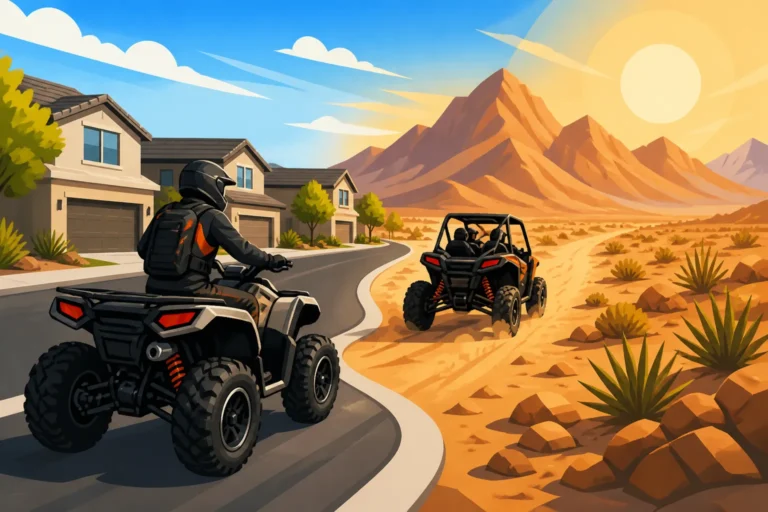
2 Miles of Nevada Pavement and No More
It’s a common frustration for off-road enthusiasts in Nevada: you're itching to hit the dirt, but the trailhead is just a short, inconvenient stretch of pavement away. Many riders wonder if they can simply hop on their ATV or UTV and cruise those few miles without fear of a ticket. This guide will meticulously break down the often-misunderstood "2 Miles of Nevada Pavement and No More" rule, helping you understand precisely when and where your off-highway vehicle (OHV) can legally touch asphalt in the Silver State.
Understanding Nevada's Strict OHV Road Rules
Nevada's approach to OHVs on public roads is, frankly, pretty restrictive compared to some other states. The state prioritizes safety and keeping high-speed, often less-protected off-road vehicles separated from typical road traffic. This isn't about making your life difficult; it's about minimizing the risk of accidents involving machines that weren't designed for sustained road use.
The "Large All-Terrain Vehicle" Distinction
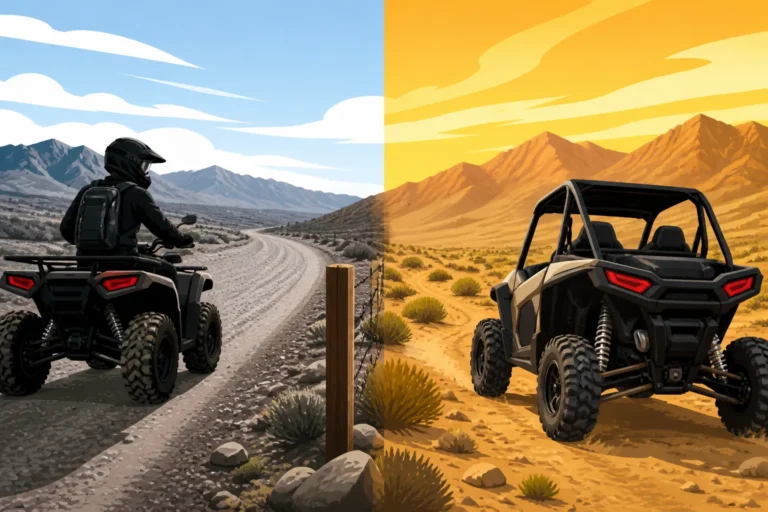
Before we even dive into the "2-mile rule," it's absolutely crucial to understand that Nevada distinguishes between different types of OHVs when it comes to road use. The state has a specific category called a "Large All-Terrain Vehicle" (Large ATV), which is generally what most people refer to as a side-by-side or UTV. Your typical sport quad or utility ATV, while still an OHV, usually won't fit this "Large ATV" definition for road purposes. This is often a major source of confusion for riders.
To qualify as a "Large ATV" under Nevada Revised Statutes (NRS 490.043), a machine generally needs to have a dry weight of 3,500 pounds or less, be less than 80 inches in width, and crucially, either have four or more wheels and a non-straddle seat and a steering wheel, OR it must have a truck bed. This means most two-seat sport quads, despite being four-wheeled, are immediately out of the running because they have straddle seats and handlebars. The law is really looking at those larger, often multi-passenger UTVs when it talks about limited road use. Understanding [What Nevada's NRS 490.043 Counts as a Large ATV] is the first step in knowing if your machine even has a chance.
So, if you’re hoping to run your standard quad down the street, even for a short distance, Nevada law is generally not going to allow it. This reality often catches riders off guard, especially those who come from states with more lenient street-legal rules. It's not just about the distance; it's about the type of machine.
The Infamous 2-Mile Limit Explained
Okay, so you have a "Large ATV" that theoretically could get a special decal for limited road use. Now, let's talk about the "2 Miles of Nevada Pavement and No More" rule. This isn't a blanket permission slip to ride two miles into town for groceries. Instead, it's very specific about why you're on the pavement and where you can be.
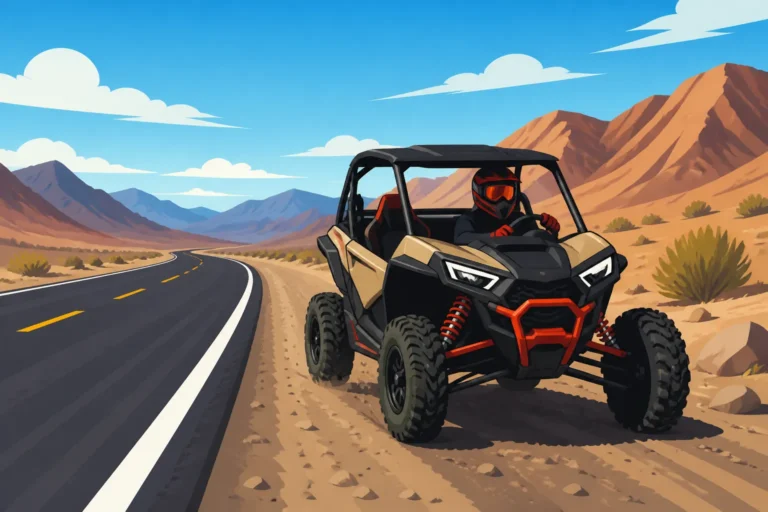
The core intent of this rule is to allow riders to legally traverse short stretches of pavement to access OHV trails or areas. Imagine your favorite trail system begins a mile down a paved county road from your campsite, or you need to cross a state route to get from one section of BLM land to another. This is precisely the kind of scenario the 2-mile rule is designed to address. It offers a practical bridge rather than a recreational opportunity. You might be eligible to get a "Large ATV decal" that permits this limited access, but it's far from making your UTV "street legal" in the traditional sense. It's about connectivity to the trail system, not general road travel. [How Far You Can Ride Pavement in Nevada] is often misunderstood, so let's clarify that intent.
The rule allows a Large ATV to operate on a highway (which includes county roads and state routes, but not interstate highways) for a maximum distance of two miles. This two-mile limit applies when you are:
- Crossing a highway: This means going from one side to the other, perhaps to reach an OHV area.
- Accessing an OHV trail or area: This is for those short hops on pavement to get to the dirt you actually want to ride.
- Connecting designated OHV routes: In areas where specific routes are mapped out, this allows for short paved connections.
It’s not for riding to the store, commuting to work, or taking scenic drives on paved roads. If you’re riding on pavement and a deputy pulls you over, the first question will likely be, "Where are you going, and how does this paved road connect to an OHV area?" If you don't have a clear, trail-related answer, you could be facing a citation.
Equipping Your Large ATV for Limited Road Use
Even if your machine qualifies as a "Large ATV" and you adhere to the 2-mile rule, you still need to meet specific equipment requirements to make it legal for those limited paved excursions. This isn't just a suggestion; it's mandated by Nevada law for your safety and the safety of others on the road. Many stock UTVs won't come with all of these features, meaning some aftermarket upgrades are usually necessary.
Essential Safety Equipment for Nevada Roads
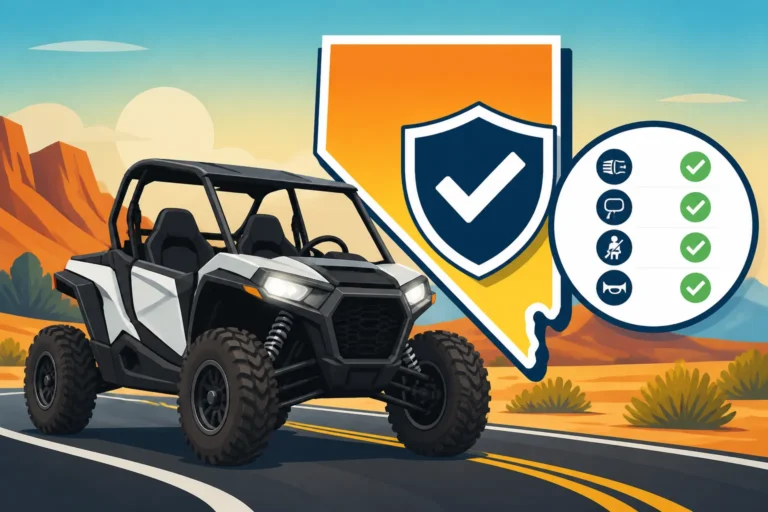
The equipment requirements are designed to make your Large ATV more visible and controllable in a road environment, even for short distances. Without these, even a quick trip across a paved road could lead to a ticket. Here's a rundown of what you'll need:
- Headlights and Taillights: These must be operational and visible from at least 500 feet away. Your factory headlights and taillights usually meet this, but ensure they are clean and in good working order. [Nevada Headlight Requirements for Road Use] and [Nevada Taillight and Reflector Rules] are specific for a reason—visibility is paramount.
- Stop Lamp (Brake Light): A working brake light is non-negotiable. It needs to clearly indicate when you are slowing or stopping. Many UTVs have these integrated into their taillights, but it’s worth a check to ensure it functions correctly.
- Reflectors: At least one red reflector on the rear of the machine is required. Many machines come with these, but if not, they are an inexpensive and easy addition. A functioning taillight can sometimes substitute, but having a dedicated reflector is safer.
- Muffler and Spark Arrester: While important for off-road use to prevent wildfires, a muffler is also required to reduce noise for road operation. It must be in good working order and not excessively loud. A spark arrester is also required, ensuring that hot carbon particles don't escape and cause a fire. [Nevada Muffler Rules for Road Riding] and [Nevada Spark Arrester Requirement] apply to all OHVs, even more so when on pavement.
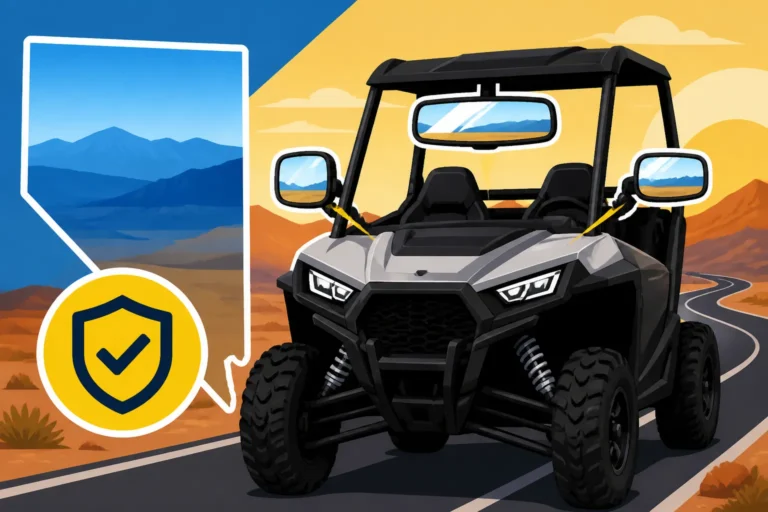
- Mirrors: You need at least one rearview mirror. This is a common upgrade for UTVs, as many stock machines don't come with them, or they're not robust enough for street use. Brands like SuperATV offer excellent aftermarket mirror kits that provide a wide field of vision, crucial for seeing traffic behind you.
- Horn: A working horn is a must for alerting other drivers to your presence. This is another item often missing from stock UTVs but easily added with aftermarket kits. SuperATV has various horn options, from simple push-button units to more robust systems.
- Seat Belts: If your Large ATV has seats designed for occupants, then seat belts (or safety harnesses) are required for all passengers, just like in a car. This is especially true for UTVs with multiple seating positions. [Nevada Seat Belt Rules in a Side-by-Side] protect everyone in the machine.
- Driver's License and Insurance: You must have a valid driver's license (not just an OHV safety certificate) to operate a Large ATV on any paved road in Nevada. Additionally, liability insurance is required, just as it would be for a regular vehicle. [Nevada Driver's License Rules for UTV Road Use] and [Insurance Nevada Requires for Road Use] are non-negotiable for road travel.
Why Aftermarket Upgrades Are Often Necessary
Many stock off-road machines are built for the trail, not for limited road transitions. For instance, a basic sport UTV might have good headlights, but it might lack a horn, proper mirrors, or even turn signals (though turn signals aren't explicitly listed as a state requirement for the 2-mile rule, they are always a good idea for safety and often required for full "street legal" conversions in other states, which Nevada does not allow for OHVs).
This is where companies like SuperATV come in handy. They offer a wide range of accessories specifically designed to meet or exceed these requirements. From universal horn kits that easily wire into your electrical system to durable side mirrors that can withstand off-road abuse while providing clear visibility on pavement, they help bridge that gap. Investing in quality aftermarket parts ensures you're not just compliant, but also safer when briefly mixing with road traffic. Remember, these upgrades are not just about avoiding a ticket; they’re about your safety and the safety of others sharing the road.
| Required Equipment | Typical Stock OHV Configuration | Aftermarket Need (Example: SuperATV) |
|---|---|---|
| Headlights | Usually present | Ensure brightness/aim, add DRLs |
| Taillights/Brake Light | Usually present | Ensure visibility/functionality |
| Rear Reflectors | Often present | Add if missing |
| Muffler/Spark Arrester | Always present | Ensure good condition, not modified |
| Rearview Mirror | Often missing or inadequate | Essential addition (e.g., center/side mirrors) |
| Horn | Often missing | Essential addition (e.g., universal horn kit) |
| Seat Belts/Harnesses | Usually present | Ensure good condition |
| Valid Driver's License | Required | N/A |
| Liability Insurance | Required | N/A |
Where You Can and Cannot Ride Your Large ATV on Pavement
The 2-mile rule, even for a properly equipped Large ATV, has geographical and contextual limits. Knowing these boundaries is critical to avoiding fines and ensuring you don't inadvertently put yourself or others in danger. It’s not a free-for-all; it’s a very specific allowance.
Permitted Roadways and Scenarios
The key here is "county roads" and "state routes" – and only for specific purposes. You can generally use the 2-mile rule on:
- Minor County Roads: These are often the dirt or gravel roads that lead out to trailheads, but sometimes they have short paved sections. The intent is to connect you to the broader OHV trail network. [Which Nevada County Roads Qualify for ORVs] will often be posted or known locally. Riders around Pioche or Caliente, for example, might use short stretches of county road to connect to remote trail systems.
- Crossing State Routes: If an OHV trail or area is on one side of a state route (like SR 169 near Valley of Fire) and you need to access it from the other side, you can legally cross the highway. This is about point-to-point transit, not traveling along the highway for an extended period.
- Designated Access Routes: Some communities or BLM areas might have specifically designated paved routes that connect an OHV staging area to a trail system. These are clearly marked and are intended to be used by OHVs for direct access.
- Getting to the Trailhead, Not the Store: This cannot be stressed enough. The spirit of the law is about riding to the trailhead, not for general transportation. If you're pulled over and explaining you're "just going to grab a soda from the convenience store," you're likely going to get a ticket for illegal road use. This rule is about facilitating off-road recreation, not replacing street vehicles. [Riding to the Trailhead, Not to the Store] is a crucial distinction.
Consider a scenario where you're camping at Logandale and need to get from your campsite to a specific trail entrance that requires a quick paved hop. That's exactly what this rule is for. Similarly, if you're exploring the trails around Amargosa Valley, you might need to cross a short section of paved road to reach [Amargosa Big Dune]. These are functional, purpose-driven uses.
Prohibited Roadways and Activities
Just as important as knowing where you can ride is knowing where you absolutely cannot. Ignoring these prohibitions can result in significant fines, impoundment of your machine, and even more serious legal consequences.
- Interstate Highways: This is a firm no. You cannot operate a Large ATV on any interstate highway in Nevada, period. [Nevada's Ban on Interstate Riding] is clear and absolute.
- Major State Routes (for extended travel): While you can cross a state route, you cannot travel along it for more than the 2-mile limit, and even then, only for the purpose of accessing a trail. Riding US 93, for example, for any significant distance is strictly prohibited. [US 93 and the Roads You Cannot Ride Along] is a prime example of where OHVs should not be.
- City Streets (unless designated): Most incorporated cities and towns in Nevada have ordinances that prohibit OHV use on city streets. While some cities, like Mesquite, have a reputation for being more OHV-friendly, even there, you're usually limited to specific designated routes or short access to the trailhead, not general street cruising. [Nevada Cities That Require Designated OHV Routes] explains how urban areas manage OHV traffic. Don't assume that because one part of a county is open, the entire county or every city within it is. Washoe County, for instance, has its own rules like [Washoe County Ordinance 1507] that restrict OHVs on certain roads.
- Sidewalks and Bike Paths: These are absolutely off-limits for OHVs. [Can You Ride a Quad on a Nevada Sidewalk?] The answer is a resounding no. These are for pedestrians and bicycles, not powerful off-road machines.
- Shoulders and Ditches (for extended travel): While you might think riding the shoulder is safer, the 2-mile rule applies to the actual roadway, not necessarily the shoulder as a substitute for general travel. You may briefly use the shoulder to stage or pull over, but it’s not for sustained travel parallel to traffic. [Riding a Paved Shoulder to Reach Dirt] clarifies this.
- Recreational Riding on Pavement: If your sole purpose is to "joyride" on the paved road, you're breaking the law. The intent must always be to connect to an OHV trail or area. This isn't just a technicality; it's how law enforcement views these situations.
Even in towns like Mesquite, which has a reputation for being more open to OHVs, riders need to be diligent about understanding and following local ordinances. Often, the allowance is for designated routes that connect lodging to trail systems, not a free pass to ride anywhere. [Riding the Street in Mesquite] is usually restricted to specific corridors.
The Consequences of Ignoring Nevada's Road Rules
Disregarding Nevada's OHV road rules can lead to a number of unpleasant and costly outcomes. It’s not just about a slap on the wrist; the state takes these regulations seriously, and enforcement is common in popular riding areas.
Citations and Fines
The most immediate consequence is a citation, often referred to as a ticket. The fines for operating an OHV illegally on a paved road can vary, but they are generally not trivial. [Nevada Fines for No Large ATV Decal] or for operating an unregistered (or improperly equipped) machine on the road can quickly add up. These fines are designed to be a deterrent, making it far more costly to break the rules than to follow them.
Beyond just the basic fine for illegal road use, you could face additional citations depending on the specific violations. For example, if you don't have a valid driver's license, proof of insurance, or your machine lacks required safety equipment (like a horn or mirror), each of those could be a separate offense with its own fine. Deputies, especially in counties with heavy OHV traffic like Clark or Nye, are well-versed in these laws and will be looking for full compliance. [What a Nevada Trooper Looks For on a County Road] includes proper decals and equipment.
Impoundment of Your Machine
In more severe or repeat instances, law enforcement has the authority to impound your OHV. This is a significantly more costly and inconvenient consequence than just a fine. If your machine is impounded, you'll be responsible for towing fees, storage fees (which can accumulate daily), and potentially administrative fees from the impounding agency. Recovering your machine can be a lengthy and frustrating process, often requiring proof of ownership and the resolution of all outstanding citations.
Imagine your UTV getting impounded while you're visiting [Sand Mountain] or [Logandale Trails]. Not only is your ride day over, but you now have a major logistical and financial headache to deal with. It's a stark reminder that these rules are enforced with real consequences.
Legal and Insurance Implications
Operating an OHV illegally on a paved road can also have broader legal and insurance ramifications. If you're involved in an accident while illegally operating your OHV on a road, your insurance company may deny coverage, leaving you personally liable for damages, injuries, and legal fees. [Insurance and Nevada OHV Registration] only covers you if you're operating within the legal framework.
Furthermore, repeated violations, especially those involving reckless behavior or endangering others, could potentially lead to more serious legal charges beyond simple traffic infractions. It can affect your driving record and, in some cases, your ability to obtain or renew vehicle registrations. It's simply not worth the risk. Always make sure you're operating within the confines of the law to protect yourself, your passengers, and your investment.
Securing Your Large ATV Decal for Limited Road Use
If you've determined your machine qualifies as a "Large ATV" and you intend to utilize the 2-mile rule for accessing trails, the next step is to obtain the proper decal from the Nevada Department of Motor Vehicles (DMV). This decal signifies that your machine is recognized as a Large ATV and is authorized for limited highway use, assuming all other equipment and operational requirements are met.
The Application Process
The process for applying for a [Nevada Large ATV Decal] isn't overly complicated, but it does require careful attention to detail and specific documentation. You'll need to submit an application to the DMV, along with proof of ownership (like your title or MCO), proof of insurance, and verification that your machine meets the "Large ATV" definition.
One of the critical steps is the VIN inspection. While the DMV typically handles VIN inspections for cars and trucks, [The VIN Inspection Nevada DMV Will Not Do] for OHVs. Instead, you'll need to have a licensed OHV dealer or a sworn peace officer complete the VIN verification. This ensures your machine's identity is correctly recorded and that it aligns with the application. Many dealers in Nevada, particularly those selling UTVs, are familiar with this process and can assist. [Finding a Licensed OHV Dealer for an Inspection] can save you a trip to the DMV only to be turned away.
Ensure all your paperwork is in order before heading to the DMV or submitting your application. This includes proof of identity, ownership documents, and the completed VIN inspection form. Any missing or incorrect information can delay the process significantly.
Fees and Renewal
There is a fee associated with obtaining the Large ATV decal, just as there is for standard OHV registration. This fee helps fund various OHV programs and trail maintenance throughout the state. It's important to remember that this decal is usually separate from your standard OHV registration decal, even though it's issued by the same department.
Like your regular OHV registration, the Large ATV decal will have an expiration date. You'll need to renew it periodically to maintain legal compliance. The DMV typically sends renewal reminders, but it's ultimately your responsibility to track the expiration date and renew on time. [Renewing a Nevada OHV Decal] ensures your trail access remains legal. Keeping your registration current, whether it's the standard OHV decal or the special Large ATV decal, is crucial for hassle-free riding.
The cost for the Large ATV decal is typically an additional fee on top of your standard OHV registration, recognizing the extended privileges it grants. While this might seem like an extra step or cost, it's a necessary one to legally bridge those paved gaps to your favorite trails. Don't cut corners here; getting the proper decal is a foundational element of responsible and legal OHV operation on Nevada roads.
Disclaimer
This article is for general informational purposes only and does not constitute professional advice. Laws, prices and regulations vary by location and change over time. Consult a qualified professional for guidance on your specific situation.