Liability Insurance Nevada Requires Under NRS 485.185
It's an absolute thrill to imagine taking your side-by-side or ATV from the dusty trail right onto a paved Nevada road, heading to a different trailhead, a gas station, or even just cruising a scenic backroad. However, that sense of freedom can quickly turn into a headache if you don't understand the legal requirements, especially when it comes to insurance. Many riders mistakenly believe their off-road machine is automatically covered, only to find out the hard way that Nevada has specific mandates for OHVs on public roads. This guide is here to clear up that confusion, diving deep into Nevada Revised Statute (NRS) 485.185 and explaining exactly what liability insurance you need to keep your adventures legal and worry-free.
The Basics of Nevada's Road Legal OHV Requirements
Before we even get to insurance, it’s crucial to understand when your off-highway vehicle (OHV) needs to be insured for road use in Nevada. This isn't about riding on designated OHV trails or private property; it's specifically about those moments your tires touch public roadways. Nevada has a pretty clear, albeit sometimes confusing, distinction between off-road-only use and limited on-road use.
When Your OHV Steps Onto Pavement
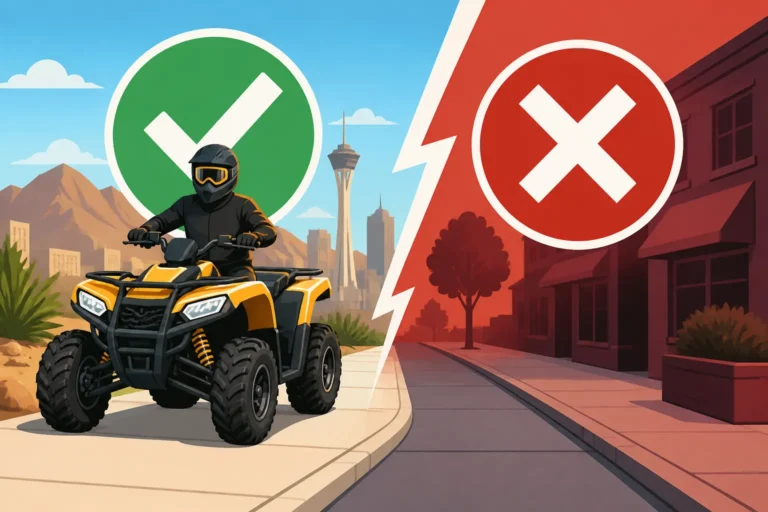
Picture this: you're out near Logandale Trails, having an amazing day, but you're running low on fuel. The closest gas station is just a couple of miles down a county road. Can you just hop on the pavement and go? Well, yes, but with some significant caveats. Nevada law allows limited road use for certain OHVs, primarily to access trails, cross highways, or connect segments of your ride on minor county roads. This isn't a carte blanche to cruise through downtown Las Vegas, though. There are strict rules about how far you can travel on paved roads, which types of roads are permissible, and what equipment your machine needs.
When you transition from dirt to asphalt, your machine instantly moves into a different legal category. It’s no longer just an "off-highway vehicle" in the eyes of the law; it's an OHV operating in a vehicle-like capacity on public roads. This shift means you're now subject to regulations that mimic those for traditional motor vehicles, including specific equipment requirements like headlights, taillights, mirrors, and, you guessed it, liability insurance. Ignoring these rules, even for a short trip, can lead to costly citations and potential legal troubles if an accident occurs. It's a different world out there when you're on the blacktop. [Are ATVs Street Legal in Nevada?] is a great resource to understand the broader context of what you can and cannot do on Nevada's roads.
The "Large All-Terrain Vehicle" Definition
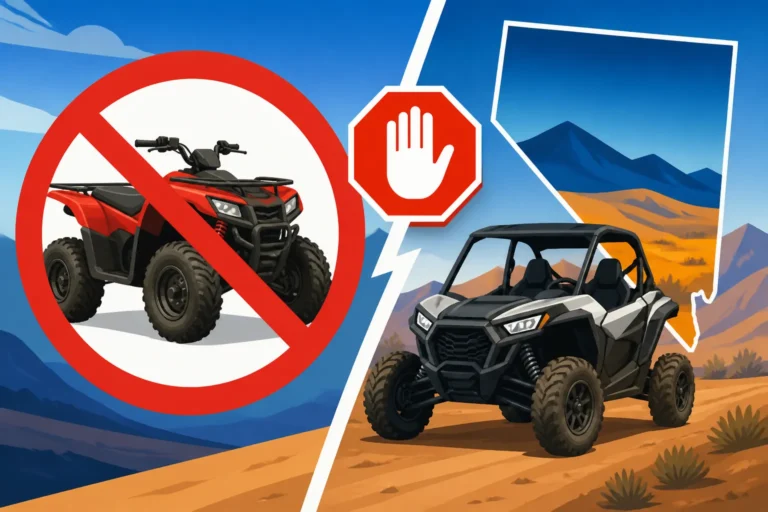
Nevada doesn't just call everything an "OHV" when it comes to road use. There's a specific designation that triggers many of these road-legal requirements: the "Large All-Terrain Vehicle" (LATV). This definition is key because it determines whether your side-by-side or ATV can even qualify for limited road access and, consequently, if it needs the specific insurance we're talking about. Generally, an LATV is defined by having four or more wheels, a weight of 3,500 pounds or less, and a width of 70 inches or less, and either a seating capacity of at least two side-by-side passengers or a truck bed with a load capacity of at least 200 pounds.
This definition often includes many popular side-by-sides, like the Polaris RZR four-seaters or Can-Am Defenders. What it doesn't typically include are standard two-seat sport quads, as they don't meet the "side-by-side seating" or "truck bed" criteria. So, if your machine fits the LATV bill, you're already on the path to needing road-legal registration and insurance. If it's a typical sport quad, while you might still be able to cross a highway, full road-legal status is likely out of reach under current Nevada law. It's a critical distinction that many riders overlook, leading to confusion when they try to get their machine set up for even limited street use. Understanding [Nevada Street Legal UTV Requirements] will further clarify this distinction.
Diving Deep into NRS 485.185: The Insurance Mandate
Now we get to the heart of the matter: Nevada Revised Statute 485.185. This isn't some obscure, rarely enforced rule; it's a fundamental pillar of responsible vehicle operation on public roads, and it applies directly to your road-legal OHV. The statute essentially states that no owner of a motor vehicle (which includes your LATV when used on a public road) may operate or permit the operation of that vehicle on a highway or public road in Nevada unless it is covered by an automobile liability insurance policy.
This means that if your side-by-side qualifies as a "Large All-Terrain Vehicle" and you intend to drive it on any public road, even for those permitted short distances or on minor county roads, you absolutely must carry valid liability insurance. This isn't just a suggestion; it’s a legal obligation designed to protect everyone on the road. The frustration of dealing with insurance companies is real, but understanding this law is step one to keeping your adventures within legal bounds.
What Liability Insurance Truly Covers
When we talk about "liability insurance" under NRS 485.185, we're specifically referring to coverage that protects other people and their property in the event you are at fault in an accident. It's not about fixing your own banged-up UTV or covering your medical bills if you crash. That's a common misconception that can leave riders in a devastating financial bind.
Imagine you're driving your LATV on a county road, and through no fault of your own (or maybe a momentary lapse in judgment), you collide with another vehicle. If you are deemed at fault, your liability insurance would step in to pay for the damages to the other vehicle and the medical expenses of the occupants, up to your policy limits. Without it, you would be personally responsible for those costs, which could quickly escalate into tens or even hundreds of thousands of dollars. It's designed to ensure that victims of accidents aren't left holding the bag because the at-fault party couldn't pay. This aspect of the law is truly about community protection and financial responsibility.
Minimum Coverage Requirements in Nevada
Nevada, like most states, specifies minimum liability coverage amounts that you must carry. These minimums are often expressed as a series of three numbers, for example, 25/50/20. These numbers break down as follows:
- $25,000 for bodily injury liability per person: This is the maximum your insurance will pay for medical expenses and lost wages for any single person injured in an accident where you are at fault.
- $50,000 for bodily injury liability per accident: This is the total maximum your insurance will pay for all injuries in a single accident where you are at fault, regardless of how many people are hurt.
- $20,000 for property damage liability per accident: This is the maximum your insurance will pay for damage to other people's property (like their vehicle, a fence, or a mailbox) in an accident where you are at fault.
These are just the minimums. While meeting them keeps you legal, many financial advisors and experienced riders will tell you that higher coverage limits are almost always a good idea. In today's world of escalating medical costs and vehicle repair bills, minimum coverage can be quickly exhausted, leaving you on the hook for the rest. It's a tough pill to swallow to pay more for insurance, but a moment of foresight can prevent a lifetime of financial struggle. When a Nevada Trooper pulls you over on a county road, [What a Nevada Trooper Looks For on a County Road] confirms that proof of this insurance is definitely on their checklist.
Why This Insurance Matters Beyond the Law
It's easy to look at insurance as just another hoop to jump through, another fee to pay. And let's be honest, nobody enjoys spending money on something they hope to never use. But when it comes to riding your OHV on Nevada’s public roads, having the right liability insurance isn’t just about avoiding a ticket; it's about genuine protection for your financial future and your peace of mind. The desert is full of unexpected twists, both on and off the trail, and life is no different.
Protecting Your Finances from the Unexpected
Imagine the worst-case scenario: an accident on a county road. Even a low-speed fender bender with another vehicle can result in thousands of dollars in damages and potential medical bills. Without liability insurance, every single one of those costs—from the repair shop bill for the other driver's car to their chiropractor appointments—falls squarely on your shoulders. This isn't just theoretical; I've heard too many stories of riders losing their savings, being sued, or even having wages garnished because they lacked adequate insurance.
If you don't have the cash on hand to cover these expenses, your assets could be at risk. Your house, your savings, even your future income could be targeted in a lawsuit. It's a terrifying thought, especially for something that started as a fun day out. Having that liability policy is like a financial safety net. It means that while an accident is still a stressful event, you won't also have the added burden of bankruptcy looming over your head. It’s an essential part of responsible ownership, particularly for a machine that can cause significant damage due to its size and weight, even when riding safely. Many riders upgrade their machines with robust parts from companies like SuperATV for durability, and that same forward-thinking approach should apply to protecting themselves financially.
Peace of Mind on Public Roads
Beyond the cold, hard financial facts, there's the invaluable benefit of peace of mind. Knowing that you're legally compliant and financially protected can make a huge difference in your enjoyment of riding. When you're making that short hop across a paved road to get to another section of trail or to fuel up before a long ride, you want to be focused on the road, not on the nagging worry of "what if?"
That freedom from anxiety allows you to truly embrace the adventure. You can focus on the incredible Nevada scenery, the joy of piloting your machine, and the camaraderie of your riding group, rather than constantly looking over your shoulder. It’s the difference between a relaxing journey and a white-knuckle drive filled with unspoken fears. This peace of mind extends to your family as well, knowing that if something unfortunate were to happen, their financial stability isn't immediately jeopardized. It's a small premium to pay for such a significant psychological benefit. When you're planning your ride and doing your [Nevada OHV Registration Paperwork Checklist], don't forget this crucial element for your peace of mind.
Securing Your OHV Road Insurance
Getting the right insurance for your road-legal OHV doesn't have to be a bewildering experience, although it can certainly feel that way sometimes. It's important to approach it with a clear understanding of your needs and options. Most major insurance carriers offer specialized policies for ATVs and UTVs, and they understand the unique risks associated with these machines.
Understanding Your Policy Options
When you're shopping for OHV insurance that covers road use, you'll typically encounter a few key types of coverage:
- Liability Coverage: As discussed, this is the legal minimum required by NRS 485.185. It covers damages and injuries you cause to others.
- Collision Coverage: This pays for damage to your own OHV if it collides with another vehicle or object, or rolls over. If you've invested heavily in your machine, perhaps with aftermarket parts or accessories from SuperATV, this coverage is often essential.
- Comprehensive Coverage: This covers non-collision damage to your OHV, such as theft, vandalism, fire, or damage from natural disasters. If you park your rig at a trailhead or keep it in an exposed location, this offers valuable protection.
- Uninsured/Underinsured Motorist Coverage: This protects you if you're involved in an accident with a driver who either doesn't have insurance or doesn't have enough to cover your damages. Given the number of uninsured drivers out there, this is a highly recommended addition.
- Medical Payments (MedPay) or Personal Injury Protection (PIP): These cover medical expenses for you and your passengers, regardless of fault. This is separate from liability and can be a lifesaver in an accident.
Many riders will start with liability to meet the legal requirement, but quickly realize the value of adding collision and comprehensive coverage to protect their investment. It's about finding the right balance between cost and protection for your specific riding habits and financial situation.
Factors Influencing Insurance Costs
The cost of your OHV insurance, like any vehicle insurance, isn't a one-size-fits-all number. Several factors come into play, and understanding them can help you get the best rates:
- Your Machine: The make, model, year, engine size, and value of your ATV or UTV are primary factors. More powerful, expensive, or easily stolen machines typically cost more to insure.
- Your Riding Habits: Do you ride frequently, or just a few times a year? Do you stick to trails, or do you regularly use county roads? While you're getting road coverage, a history of safe riding (or lack thereof) can impact rates.
- Your Location: Urban areas with higher traffic density and theft rates often see higher premiums than rural areas.
- Your Driving Record: A clean driving record with no accidents or violations (even in your regular car) generally translates to lower insurance costs.
- Your Age and Experience: Younger, less experienced riders often face higher premiums.
- Coverage Limits and Deductibles: Choosing higher liability limits or adding more types of coverage will increase your premium. Conversely, a higher deductible (the amount you pay out of pocket before insurance kicks in) can lower your premium.
- Discounts: Ask about potential discounts for bundling policies (home/auto/OHV), completing a safety course, or having anti-theft devices.
It's always wise to get quotes from several different insurance providers to compare rates and find the policy that best fits your budget and coverage needs. Don't be afraid to ask questions about how the coverage applies when riding [Nevada County Roads Open to UTVs] versus designated trails.
Common Pitfalls and Misconceptions
Despite the clear mandates of NRS 485.185, many OHV riders fall into common traps or operate under incorrect assumptions about their insurance coverage. These pitfalls can lead to severe legal and financial repercussions, turning a fun day out into a nightmare. It's better to be informed and prepared than to learn a hard lesson on the side of a Nevada road.
Assuming Your Car Insurance Covers It
This is perhaps the most prevalent and dangerous misconception. Many OHV owners assume that their existing automobile insurance policy will automatically extend coverage to their ATV or UTV, especially when it's being driven on a public road. They think, "It's a vehicle, I have car insurance, so I'm covered, right?" Absolutely not. In almost all cases, a standard car insurance policy explicitly excludes off-highway vehicles, even if you’re using them for limited road travel.
Your car insurance is designed for cars, trucks, and SUVs – vehicles manufactured and registered for primary on-road use. OHVs, by their very nature, are different, with different risk profiles. Unless you have specifically discussed your OHV with your auto insurer and they've added an endorsement or a separate policy that explicitly covers it for road use, you are almost certainly uninsured. This is a critical distinction to make. Do not rely on assumptions; always verify with your insurance provider. You need separate, dedicated OHV insurance that satisfies the requirements of NRS 485.185. [Does Nevada Require ATV Insurance on Roads?] provides more direct answers on this point.
The Consequences of Riding Uninsured
Riding your road-legal OHV on Nevada’s public roads without the required liability insurance is not just risky; it's illegal, and the consequences can be severe. Nevada takes its uninsured motorist laws very seriously, and for good reason—to protect its citizens.
Legal Penalties: If you're caught riding uninsured, a law enforcement officer, such as a Washoe County Deputy, can issue you a citation. This isn't just a slap on the wrist. Fines for operating an uninsured vehicle in Nevada can be substantial, often in the hundreds of dollars, and can increase with subsequent offenses. You could also face administrative penalties from the DMV, including the suspension of your driver's license and vehicle registration (even your regular car registration). The court may also require you to obtain an SR-22 certificate, which proves you have insurance, for a period of time, significantly increasing your insurance premiums.
Financial Devastation: Beyond the fines and legal hassle, the financial impact of riding uninsured and being involved in an at-fault accident can be catastrophic. Without liability insurance, you are personally responsible for all damages and medical expenses you cause to others. This could mean paying out-of-pocket for vehicle repairs, hospital bills, lost wages, and even long-term care for injured parties. These costs can easily climb into hundreds of thousands, if not millions, of dollars. Creditors could pursue your personal assets, including your home, savings, and future earnings. It could lead to bankruptcy and a ruined financial future, all because of an oversight or a gamble that didn't pay off. It truly underscores why [Liability Insurance Nevada Requires Under NRS 485.185] is so vital.
| Aspect of Road Use | Required for LATVs on Nevada Roads | Why It's Important |
|---|---|---|
| OHV Registration Decal | Yes | Legal identification, funds trail maintenance. |
| Driver's License | Yes | Proof of driving competency and legal age. [Nevada Driver's License Rules for UTV Road Use] |
| Liability Insurance | Yes (NRS 485.185) | Protects against financial ruin if you cause an accident. |
| Helmet (Under 18) | Yes (always recommended) | Essential safety gear, legally mandated for minors. [Nevada Helmet Rules for Road Riding] |
| Headlights/Taillights | Yes (visible 500 ft) | Visibility for safety, especially at night. [Nevada Headlight Requirements for Road Use] |
| Stop Lamp | Yes | Signals braking intentions to other drivers. [Nevada Stop Lamp Requirement for UTVs] |
| Mirrors | Yes (rearview) | Awareness of surroundings, blind spot reduction. [Nevada Mirror Requirements for a Road UTV] |
| Horn | Yes | Audible warning for safety. [Nevada Horn Requirement on a Road Machine] |
| Spark Arrester | Yes | Prevents wildfires, critical in arid Nevada. [Nevada Spark Arrester Requirement] |
The bottom line is this: if you plan to use your Large All-Terrain Vehicle on any public road in Nevada, even for short distances like riding to the trailhead instead of trailering, ensuring you have the correct and adequate liability insurance is non-negotiable. It's an investment in your safety, your financial well-being, and your continued enjoyment of the incredible off-road opportunities Nevada offers. Don't let a moment of oversight lead to a lifetime of regret.
Disclaimer
This article is for general informational purposes only and does not constitute professional advice. Laws, prices and regulations vary by location and change over time. Consult a qualified professional for guidance on your specific situation.