Reno Dealers and OHV Registration Paperwork
Buying an off-highway vehicle (OHV) in Reno, whether it's a zippy ATV or a robust UTV, should be an exciting experience. However, the process of navigating the registration paperwork afterward can quickly turn that excitement into a headache, leaving many riders scratching their heads about what forms they need and what the dealer actually handles. This guide aims to clear up all that confusion, walking you through the essential steps and documents involved when you purchase an OHV from a Reno dealer.
The Reno Dealer's Role in OHV Registration
When you buy an OHV from a licensed dealer in Reno, you're not just getting a new machine; you're also benefiting from their expertise (and legal obligation) to help you through the initial registration and titling process. This is a huge relief for many first-time buyers or those new to Nevada's specific OHV laws, as it takes a significant portion of the burden off your shoulders. Unlike a private sale where you're responsible for everything, a dealer acts as a crucial intermediary between you and the Nevada Department of Motor Vehicles (DMV).
Think of your dealer as your first point of contact for getting your machine officially recognized by the state. They're typically equipped to process the initial application for both your title and your OHV registration decal. This means they'll often collect the necessary fees, ensure the paperwork is correctly filled out, and submit it on your behalf. This service is incredibly valuable because it reduces the chances of errors that could delay your ability to hit the trails. Many riders appreciate this streamlined approach, especially if they're eager to get out to Sand Mountain or Logandale Trails as soon as possible.
What Dealers Handle for You
A reputable Reno OHV dealer will usually take care of several key pieces of paperwork right at the point of sale. First and foremost, they'll handle the sales tax collection and remittance, which is a big one. You won't have to worry about calculating or sending that in separately. Beyond that, they're responsible for initiating the transfer of ownership. This typically involves submitting your application for a new title in your name. They'll also often submit the application for your OHV registration decal, which is that little sticker that proves your machine is legal to ride on designated public lands.
They'll also ensure that the vehicle identification number (VIN) has been properly verified. While the [The VIN Inspection Nevada DMV Will Not Do] themselves, licensed dealers are authorized to perform this crucial step as part of the sale. This saves you the trouble of finding another authorized party to do it. The dealer collects the title and registration fees from you and forwards them to the state. They even add a small administrative fee, sometimes referred to as the [What Nevada's $2 Dealer Submission Fee Pays For], which covers their cost for handling all this paperwork on your behalf. It’s a convenience fee that's well worth it for many.
What You're Still Responsible For
While dealers do a lot, it's not entirely hands-off for you. Your primary responsibility is to provide accurate personal information and all required documentation that proves who you are and where you live. This includes your valid Nevada driver's license or identification card, proof of your physical address (if it's different from your ID), and any other supporting documents the dealer might request. You'll also need to sign all the necessary forms, so make sure you read them carefully before putting your signature down. Never feel rushed during this process; ask questions if anything is unclear.
It's also essential to understand that while the dealer submits the paperwork, the actual processing time for your title and decal can vary. The DMV is a busy place, and it takes time for them to mail out your official documents. This means you might not receive your physical title and decal immediately after purchase. However, the dealer will often provide you with a temporary operating permit or a copy of the submitted application, which usually allows you to ride legally for a short period while you await the permanent documents. This temporary solution can be a lifesaver when you're itching to get your new machine dirty.
Essential Paperwork for a Smooth Reno Dealer Transaction
Getting your OHV registered and titled through a Reno dealer relies heavily on having all your ducks in a row when it comes to paperwork. Showing up prepared not only makes the process smoother for you but also helps the dealer get you out the door and on the trails faster. Missing even one piece of identification or a crucial signature can lead to delays, which is the last thing anyone wants when they've just bought a brand-new toy.
The forms involved are generally pretty standard across all Nevada dealerships, but it's always a good idea to confirm with your specific dealer before you arrive. Most of what you'll encounter will be state-mandated forms that the dealer has on hand, pre-filled with the vehicle's information. Your part is to review, verify, and sign.
Documents You'll Need to Bring
Before you even step foot into a Reno OHV dealership to pick up your new machine, make sure you have these items ready:
- Valid Nevada Driver's License or ID: This is paramount for proving your identity and residency. The name on your ID must match the name you want on the title and registration.
- Proof of Residency: Sometimes your driver's license is enough, but occasionally, especially if your ID address is outdated, you might need an additional document like a utility bill, bank statement, or rental agreement showing your current Nevada address. This helps confirm you're a Nevada resident, which can impact fees and processing.
- Method of Payment: Be prepared to pay for the OHV itself, plus all the associated fees: sales tax, title fees, registration fees, and any dealer administrative fees. The [Cost to Title an ATV in Nevada] and [Nevada OHV Registration Fee for Three Years] can add up, so have your financing or payment method squared away.
- Insurance Information (if applicable): While not always required for off-road use, if you plan to use your OHV on certain paved roads or if the dealer requires it, you'll need proof of insurance. For road use, [Insurance and Nevada OHV Registration] becomes a much bigger topic.
- Trade-in Title (if applicable): If you're trading in an old machine, bring its clear title. Make sure there are no liens on it or that you have the proper lien release documentation.
Having all these documents organized in a folder or envelope will make you look like a seasoned pro and significantly speed up the transaction.
Forms the Dealer Will Prepare
Your Reno dealer will be responsible for preparing a stack of forms for you to review and sign. These generally include:
- Vehicle Purchase Agreement/Bill of Sale: This is the core document detailing the terms of the sale, including the purchase price, trade-in value (if any), and all associated fees. It's essentially the legal record of your transaction. You can use resources like LawDepot if you ever need to create a simple bill of sale for a private transaction later on, but for a dealer, they'll have their own professional forms.
- Nevada Application for Vehicle Registration (OHV-001 or similar): This form is what officially gets your machine into the Nevada DMV system. The dealer will fill in all the vehicle specifics, your personal details, and the type of registration (e.g., [One Year or Three Years in Nevada]).
- Nevada Off-Highway Vehicle (OHV) Title Application: This form is for establishing legal ownership. It gathers information about the vehicle and the new owner (you!). The dealer ensures all necessary fields are completed, including the VIN.
- Odometer Disclosure Statement: For most motorized vehicles, this form records the vehicle's odometer reading at the time of sale. This is crucial for transparency and helps prevent fraud.
- Lien Holder Information: If you're financing your OHV, the dealer will include details about the lien holder (the bank or lender) on the title application. The lien holder will typically hold the physical title until the loan is paid off.
It's absolutely critical that you review every single one of these documents before signing. Check all names, addresses, VINs, and financial figures for accuracy. Mistakes here can cause big headaches down the road.
| Document Type | Who Provides/Prepares | Your Role | Purpose |
|---|---|---|---|
| Personal ID | You | Present valid driver's license/ID | Prove identity and residency |
| Proof of Residency | You | Provide utility bill, rental agreement (if needed) | Verify current Nevada address |
| Payment Method | You | Have funds/financing ready | Cover purchase price, fees, taxes |
| Trade-in Title | You (if applicable) | Submit clear title for trade-in | Transfer ownership of old machine |
| Purchase Agreement | Dealer | Review and Sign | Legal record of sale, terms, and cost |
| OHV-001 Application | Dealer | Review and Sign | Apply for OHV registration decal |
| OHV Title Application | Dealer | Review and Sign | Apply for legal ownership (title) |
| Odometer Disclosure | Dealer | Review and Sign | Record mileage at sale |
| Lien Holder Info | Dealer | Review and Verify (if financing) | Record financing details on title |
What Happens After You Leave the Reno Dealership
Okay, so you've signed all the paperwork, handed over your payment, and waved goodbye to the dealership with your brand-new (or new-to-you) OHV in tow. The immediate thrill of getting your machine home is undeniable, but the process isn't quite finished yet. What happens next, particularly regarding your official title and registration decal, is often a source of anxiety for new owners. Rest assured, the wheels of government are turning, albeit sometimes slowly.
The dealer has done their part by submitting your application and fees to the Nevada DMV. Now, it's a waiting game for the state to process everything and mail out your official documents. This waiting period can vary, so it's important to manage your expectations and understand what you should receive and when. Many riders wonder, "Can I ride my ATV now?" The answer is usually yes, within reason, if the dealer provided you with some form of temporary authorization.
Receiving Your Official Documents
Once the DMV processes your application, you will eventually receive two very important items in the mail: your official OHV title and your registration decal.
- The Title: This is the legal document proving you own the OHV. If you financed the purchase, the title might be sent directly to your lien holder (the bank or credit union) until your loan is paid off. Once the loan is satisfied, the lien holder will release the title to you. Make sure you keep this document in a safe place, as you'll need it if you ever decide to sell the machine. If you bought the OHV outright, the title will come directly to you. It's often printed on special security paper, so don't mistake it for junk mail!
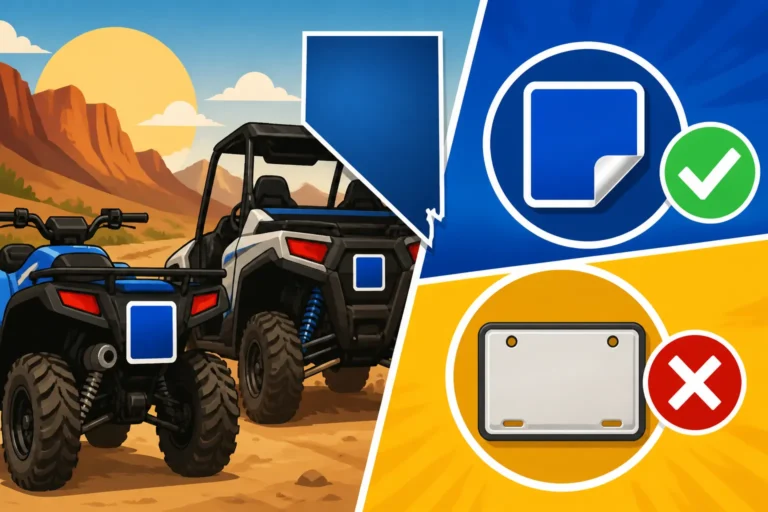
- The Registration Decal: This is the sticker you affix to your OHV to show it's legally registered. [Left Side or Rear: Where the Decal Goes] depends on the type of OHV, but it's typically visible on the rear or left side of the machine. Along with the decal, you'll usually receive a small registration card. This card contains important information about your OHV and its registration status. You should always carry this card with you when you ride, as it's what enforcement officers will ask for during a stop. [What the Registration Card Must Show] includes the decal number, your name, and the OHV's VIN.
The [Nevada OHV Registration Processing Times] can fluctuate based on the volume of applications the DMV is handling. It's not uncommon for it to take a few weeks. If you haven't received anything after a reasonable amount of time, you can reach out to the Nevada DMV OHV Section for an update.
Temporary Riding Authorization
Most Reno dealers understand that you want to ride your new OHV right away. To facilitate this, they will often provide you with a temporary operating permit or a copy of the submitted registration application. This temporary document typically grants you permission to ride your OHV legally for a set period, usually 30-90 days, while you wait for your permanent decal and title to arrive.
This temporary authorization is crucial because it allows you to enjoy your new machine without fear of being cited for unregistered operation. However, it's vital to:
- Understand its expiration date: Mark it on your calendar and know when you need to have your permanent decal.
- Carry it with you: Just like you would your permanent registration card, keep the temporary permit on your person when riding.
- Know its limits: While it allows you to operate, it's not a permanent solution. Ensure you get your permanent decal and apply it promptly once received.
If your temporary permit is about to expire and you still haven't received your permanent decal, contact the DMV. They can often tell you the status of your application and advise on next steps. Don't risk riding with an expired temporary permit, as that's essentially riding unregistered.
Common Pitfalls and How to Avoid Them
Even with the help of a reputable Reno dealer, the OHV registration process isn't entirely foolproof. There are common hiccups that new owners sometimes encounter, leading to frustration and delays. Being aware of these potential pitfalls beforehand can save you a lot of grief and ensure your transition from buyer to rider is as smooth as possible.
Many of these issues stem from incomplete information, misunderstandings about timelines, or simply not checking documents thoroughly. It’s always best to be proactive and ask questions rather than assume something is being taken care of.
Incomplete or Incorrect Paperwork
This is perhaps the most common reason for delays. While the dealer is responsible for much of the preparation, mistakes can happen. It could be a misspelled name, an incorrect address, a missing signature, or an error in the OHV's VIN. Even a small discrepancy can cause the DMV to reject or delay your application.
How to avoid it:
- Review everything meticulously: Before you sign any document at the dealership, take your time to read through it. Check your name, address, driver's license number, and every detail related to the OHV (make, model, year, and especially the VIN). Compare the VIN on the paperwork to the actual VIN stamped on your machine.
- Ask for clarification: If you don't understand a section or a specific fee, ask the dealer for an explanation. A good dealer will be happy to walk you through it.
- Keep copies: Always ask for copies of all the paperwork you sign and that the dealer submits. These copies are your proof of purchase and application submission. They can be invaluable if you need to follow up with the DMV or resolve a dispute.
Misunderstanding Deadlines or Waiting Periods
New OHV owners are often eager to hit the trails, and the wait for the official decal and title can feel agonizing. Sometimes, people mistakenly believe that having the temporary permit means they're fully covered indefinitely, or they lose track of when that temporary permit expires. Nevada has specific deadlines, like [Nevada's Thirty-Day Registration Deadline] after purchase, and while the dealer initiates it, delays can happen.
How to avoid it:
- Know your temporary permit's expiration: As mentioned, mark this date clearly. Plan to receive your permanent decal before this date.
- Familiarize yourself with typical processing times: Understand that the DMV needs time. While exact figures are not provided, it's generally weeks, not days, for physical documents to arrive.
- Follow up if necessary: If your temporary permit is nearing expiration and you still haven't received your permanent decal, don't hesitate to contact the [The Nevada DMV OHV Section] directly. You can often check the status of your registration online or by phone.
Issues with Proof of Ownership (Title vs. Bill of Sale)
While buying from a dealer usually means you'll get a title, some situations can still cause confusion, especially if you're dealing with very old machines or unique circumstances. Sometimes, if a dealer took a trade-in with murky paperwork, it could inadvertently affect your purchase. A common concern for any OHV owner is [Buying a Quad With No Paperwork at All], though this is far less likely with a dealer. However, if you're ever in a situation where you need to create or verify a bill of sale outside of a dealer transaction (e.g., for a private sale in the future), resources like LawDepot can be useful for drafting legally sound documents.
How to avoid it:
- Ensure a clean title transfer: Confirm with your dealer that the machine you are buying has a clear title and that there are no outstanding liens or issues that could prevent a smooth transfer of ownership to you.
- Understand the role of the title: The title is the ultimate proof of ownership. Don't rely solely on a bill of sale from a dealer, as that's mainly for the purchase transaction itself. The title is what the state recognizes as proof of your legal ownership.
- If ever buying privately: If you stray from a dealer and consider a private sale, be extremely diligent. Always verify the VIN, ensure the seller has the title, and consider using a service like LawDepot to draft a comprehensive bill of sale that protects both parties.
Getting your OHV registered and titled through a Reno dealer should be a relatively straightforward process designed for your convenience. By understanding what the dealer handles, what you need to provide, and how to track the post-purchase process, you can ensure your ride is legally ready for all the adventures Nevada's vast and beautiful backcountry has to offer. Just remember, a little preparation goes a long way in avoiding future headaches!
Disclaimer
This article is for general informational purposes only and does not constitute professional advice. Laws, prices and regulations vary by location and change over time. Consult a qualified professional for guidance on your specific situation.