Keeping Paperwork Dry in a Dusty Machine
Riding an ATV or UTV through Nevada's incredible landscapes is an unforgettable experience, but anyone who's spent time on the trails knows the desert environment can be tough on gear—especially important documents. A sudden downpour, an unexpected splash through a stream, or even just weeks of fine dust infiltrating every nook and cranny can turn your official registration card, title, or insurance proof into a soggy, illegible mess. This guide will help you understand why protecting your crucial paperwork is non-negotiable and walk you through the most effective ways to keep it safe and sound, no matter how rugged your adventures get.
The Critical Importance of Protecting Your OHV Documents
It might seem like a minor detail when you're geared up and ready to hit the dirt, but neglecting the safety of your OHV paperwork can lead to significant headaches, from frustrating delays with law enforcement to major complications when it's time to sell your machine. Think of your documents as an extension of your machine's safety equipment – just as vital as your helmet and goggles.
Legal Ramifications of Damaged Paperwork
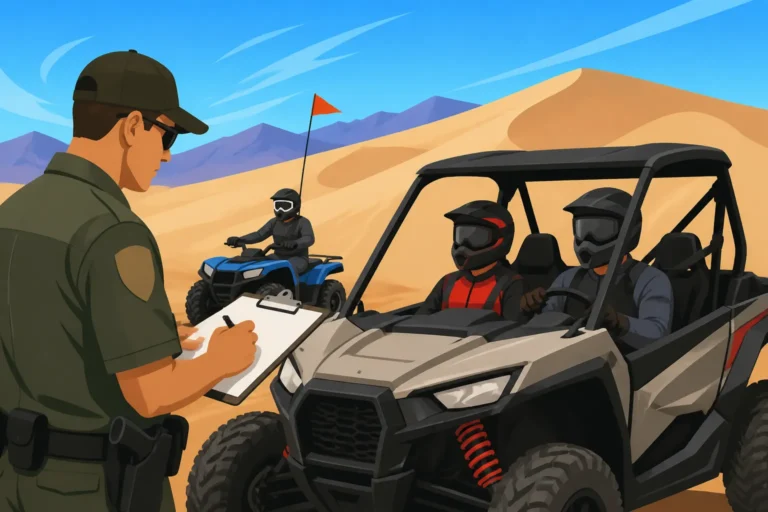
Imagine this scenario: you're enjoying a fantastic day out at Logandale Trails, carving through the red rock formations. A deputy from the local sheriff's office pulls up to do a routine check, asking to see your registration and driver's license. You confidently reach for your glove box, only to pull out a crumpled, mud-stained card where the numbers are barely discernible. What a nightmare!
Nevada law requires you to carry proof of registration whenever you operate your off-highway vehicle on public lands. This isn't just a suggestion; it's a legal obligation. If a law enforcement officer, park ranger, or BLM official cannot clearly read your registration decal number or the information on your registration card, they might treat it as if you don't have proper documentation at all. This can lead to delays, a warning, or even a citation. It's an inconvenience nobody wants, especially when you're far from home or cell service. Ensuring your documents are legible means a smooth interaction and getting back to your ride quickly. Remember, officers need to see [What the Registration Card Must Show], and if it's unreadable, it's essentially useless. Having a plan for [Proving Registration Without the Card] is a smart backup, but prevention is always best.
Practical Headaches of Lost or Damaged Titles
Beyond the immediate legal hassles on the trail, a damaged or lost OHV title can create long-term problems. The title is your ultimate proof of ownership. If you ever decide to sell your ATV or UTV, a clean, readable title is absolutely essential. A buyer will (and should!) demand to see it. Trying to sell a machine with a title that looks like it's been through a washing machine and a shredder will raise red flags and make potential buyers understandably wary.
Furthermore, if your title is severely damaged or gone, replacing it involves time, effort, and potentially a fee from the Nevada DMV. While it's certainly possible to replace a title—you can look into [Replacing a Lost Nevada OHV Title]—it's a process that can easily be avoided with a bit of foresight. Dealing with paperwork after the fact, especially when you're trying to make a quick sale or need it for an insurance claim, can be incredibly frustrating. Keeping your title in pristine condition from day one saves you future headaches, costs, and delays.
Tried-and-True Methods for Waterproofing Your Documents
When you're out in the elements, "water-resistant" often isn't enough. You need true waterproofing and dust protection to safeguard your critical OHV paperwork. Luckily, there are several reliable methods that experienced riders swear by.
Heavy-Duty Waterproof Pouches and Bags
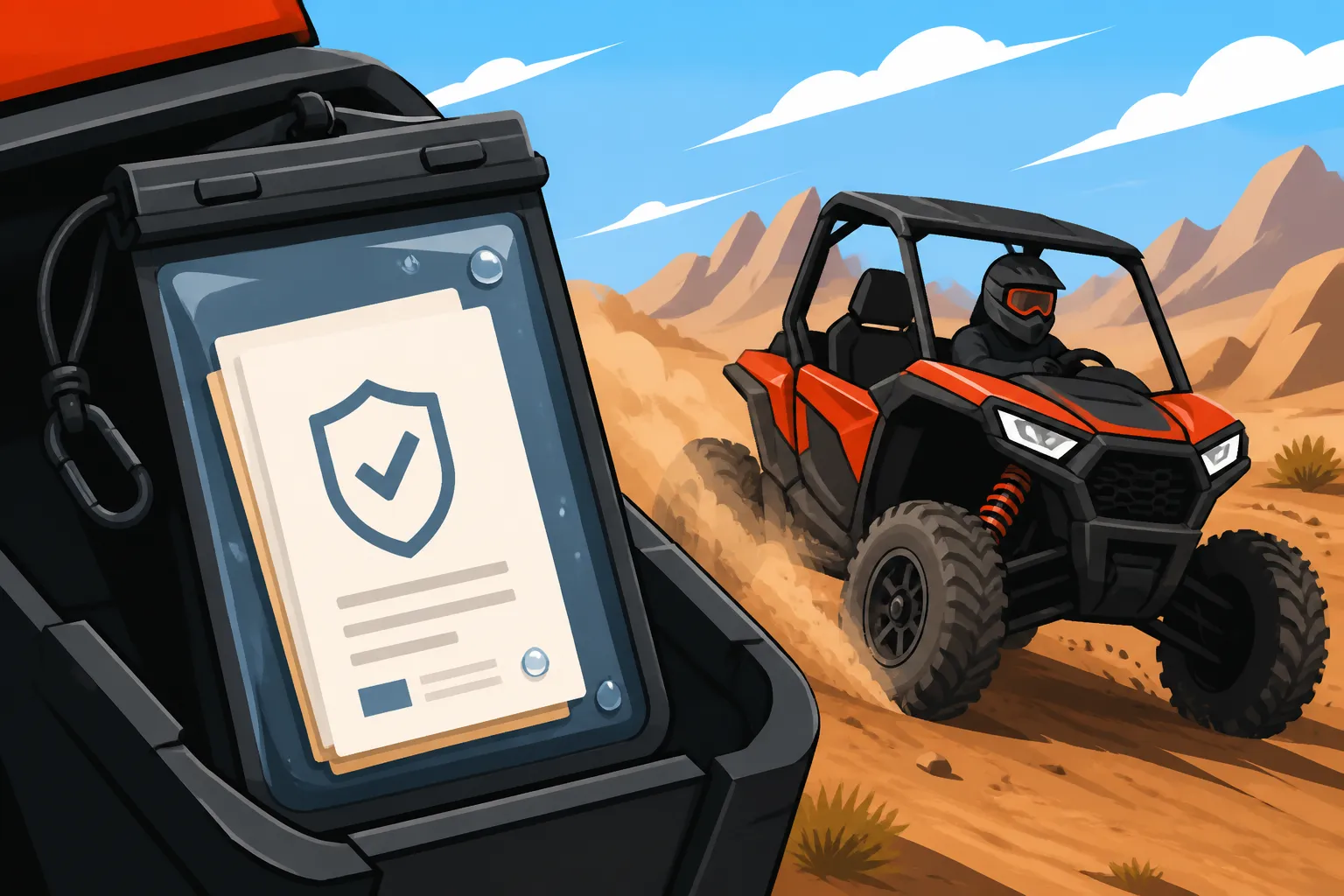
This is arguably the simplest and most effective solution. Invest in high-quality waterproof pouches or small dry bags specifically designed for document protection. These aren't just glorified Ziploc bags; they feature robust sealing mechanisms like roll-top closures, double-seal zippers, or even airtight clasps.
Look for pouches made from durable, tear-resistant materials like reinforced PVC or thermoplastic polyurethane (TPU). They come in various sizes, so you can pick one that perfectly fits your registration card, title copy, and insurance information without being excessively bulky. Many riders will double-bag their documents for extra security, placing the pouch inside a small dry bag that's then tucked into a larger compartment. This provides an almost impenetrable barrier against dust, mud, and water. When you're out on the trails around Sand Mountain or riding through a wash in the spring, that extra layer of protection can be the difference between readable documents and a trip to the DMV for replacements. Carrying important documents, especially your registration, safely in a dry bag is mentioned in [Carrying Documents in a Dry Bag], and it's a practice everyone should adopt.
Laminating Important Copies
For documents you don't need to sign or alter, like a copy of your registration, insurance card, or even a copy of your title (never laminate the original title!), lamination can offer excellent, long-lasting protection. A laminated document is rigid, completely waterproof, and immune to tearing or smudging. It can be wiped clean of mud and dust with ease.
The key here is copies. You should always keep your original title (if you have one) in a secure, dry place at home, like a fireproof safe, unless you are actively performing a transaction that requires it. What you carry on the machine are copies. Laminating these copies means they'll stand up to years of abuse on the trail. You could even laminate a small card with emergency contact information or the VIN for quick reference. Just make sure the lamination is done professionally or with a high-quality home laminator to prevent air bubbles or peeling edges that could compromise the seal.
Digital Backups: The Modern Safety Net
In today's digital age, relying solely on physical paper is often unnecessary and less secure. While Nevada law requires physical proof of registration, having digital backups is an incredibly smart secondary measure. Take clear photos of your registration card, title, insurance card, and any other pertinent documents. Store these photos securely on your smartphone, in a cloud storage service, or even email them to yourself.
This way, if your physical documents somehow get damaged or lost, you still have an accessible record. Imagine your physical registration is beyond repair; you might still be able to show a clear photo on your phone to a law enforcement officer, which could buy you time and understanding, even if it's not the primary acceptable proof. Services like LawDepot can be incredibly useful here, not just for creating legal forms, but also for securely organizing and storing digital copies of your essential documents, like a bill of sale or even a notarized power of attorney if someone else is helping with your machine's affairs. Having a robust digital archive makes [Photos of Paperwork on Your Phone] a viable and recommended backup.
Smart Storage Solutions on Your Machine
Once you've waterproofed your documents, the next step is to choose the best place to store them on your ATV or UTV. Different machines offer different options, and selecting the right spot can greatly enhance accessibility and protection.
Dedicated Storage Compartments
Many modern UTVs and some ATVs come equipped with built-in storage compartments. These can include glove boxes, under-seat storage, or small cargo boxes integrated into the design. These are often the most convenient places to stash your documents because they're typically easy to access and somewhat protected from the elements.
However, don't assume "built-in" means "waterproof" or "dustproof." Many factory compartments are only splash-resistant at best and will readily fill with fine desert dust. Always use a waterproof pouch inside these compartments. Test the compartment's seal. Does it have a rubber gasket? Does it latch securely? For instance, a Polaris RZR or Can-Am Maverick might have a glove box, but unless you've specifically upgraded it or sealed it, dust will find its way in. A sealed pouch inside the glove box offers the best of both worlds: easy access and superior protection.
Backpacks and Hydration Packs
For ATV riders who might not have extensive built-in storage, or for anyone who prefers to keep critical items on their person, a backpack or hydration pack is a common choice. The key here, again, is internal waterproofing. Simply tossing your document pouch into a regular backpack won't protect it from a heavy downpour or a tumble in a muddy puddle.
Instead, utilize the main compartment of your backpack as a secondary protective layer. Place your waterproof document pouch into a small dry bag, and then put that dry bag inside your backpack. Many good quality riding backpacks or hydration packs are made from water-resistant materials, but few are truly submersible. This layered approach ensures that even if your backpack gets soaked, your documents remain bone dry. It also keeps them close to your body, reducing the chance of them being lost if your machine takes an unexpected dip.
Mounting Hard Cases
For those with UTVs or larger ATVs that can accommodate external accessories, mounting a small, purpose-built hard case offers the ultimate in protection. Brands like Pelican or similar heavy-duty equipment cases are designed to be waterproof, dustproof, and crushproof. They come with secure latches and often a pressure equalization valve.
These cases can be mounted to your roll cage, cargo rack, or bed using quick-release clamps or bolts. This option is particularly popular for riders who carry other sensitive items like cameras, first-aid kits, or emergency electronics. While a hard case might be overkill for just a registration card, if you're carrying multiple documents, maps, and other essentials, it provides a robust, worry-free solution. Just make sure the mounting is secure to prevent it from rattling loose on rough Nevada trails.
Here's a quick comparison of document protection methods:
| Method | Pros | Cons | Best Use Case |
|---|---|---|---|
| Waterproof Pouch | Lightweight, flexible, inexpensive, effective | Can be punctured, not rigid | Everyday riding, quick access, backup copy |
| Laminated Copies | Fully waterproof, rigid, tear-proof, durable | Cannot alter/sign originals, permanent | Copies of registration/insurance, emergency info |
| Digital Backups | Always accessible (with phone), off-site storage | Not legal primary proof, relies on battery | Emergency backup, personal record, quick reference |
| Hard Case (Mounted) | Ultimate protection (water, dust, impact) | Bulky, heavier, higher cost, permanent mount | Extensive documents, sensitive items, long trips |
| Dry Bag (Internal) | Excellent water/dust protection, flexible | Can be bulky, slower access | Backpacks, secondary protection in compartments |
What to Do When the Worst Happens (Damaged Paperwork)
Even with the best precautions, accidents can happen. Your waterproof pouch might develop a tiny tear, or a sudden, unexpected event could lead to your documents getting soaked or damaged. Don't panic! There are steps you can take to mitigate the damage and get replacements.
Immediate Steps After Damage
If your documents get wet, the absolute worst thing you can do is leave them balled up or folded. As soon as it's safe to do so, carefully remove them from any moisture. Separate individual pages to prevent them from sticking together. Gently blot them with a clean, absorbent cloth or paper towel.
Then, lay them flat in a cool, dry place out of direct sunlight. Air circulation is key. If you're out on the trail and far from a safe spot, you might carefully place them between pages of a dry book or magazine (if you have one) to absorb moisture, but only if they won't stick. The goal is to dry them slowly and evenly to minimize warping and ink bleeding. Resist the urge to use direct heat, like a hairdryer, as this can cause paper to crinkle severely, become brittle, and make the ink run even worse. Your aim is to preserve as much legibility as possible for when [What Rangers Accept as Proof] becomes critical.
Replacing Key Documents
If your documents are damaged beyond recognition or completely lost, you'll need to apply for replacements. This usually means contacting the Nevada Department of Motor Vehicles (DMV) or, for OHV-specific documents, their OHV section.
- Registration Decal and Card: You'll typically need to fill out a specific form to request a duplicate registration card or decal. There's usually a small fee involved. You can find information on [Ordering a Replacement Decal From Carson City] through the Nevada DMV's OHV program.
- OHV Title: Replacing a lost or damaged title is a more involved process. You'll need to submit an application for a duplicate title, which often requires a notarized signature and proof of identity. The fees for this are generally higher than for a duplicate registration card. Check out the process for [Replacing a Lost Nevada OHV Title] and be aware of the [Duplicate Nevada OHV Title Cost]. The Nevada DMV website will have the most current forms and instructions for all these replacements.
Proving Ownership Without Pristine Originals
What if your original documents are trashed, and you're in a situation where you need to prove ownership or registration before you've had a chance to get replacements? This is where your digital backups and other forms of proof become invaluable.
If you have those clear photos or scans stored on your phone or in the cloud, they can serve as supporting evidence. While a photo isn't a legal substitute for the physical document in most cases, it can often satisfy an officer's immediate need to verify information and can certainly help in a private transaction if the buyer is understanding. If you used a service like LawDepot to create or store a digital bill of sale when you originally purchased the machine, this could also be presented as strong secondary proof of ownership. Keep any original bill of sale (even if it's a bit worn) in a safe place at home, as it's crucial for proving your acquisition of the machine, especially if the title is missing. Always carry a valid driver's license or identification card as well, as this helps authenticate you as the owner or operator.
Disclaimer
This article is for general informational purposes only and does not constitute professional advice. Laws, prices and regulations vary by location and change over time. Consult a qualified professional for guidance on your specific situation.