Proving an ATV Is Used Only for Husbandry
It can be incredibly frustrating to have an ATV or UTV that you only use for work on your ranch, only to find yourself tangled in what seems like unnecessary registration bureaucracy. You might think, "This isn't a recreational toy; it's a tool for my livelihood!" And you're right to feel that way. Fortunately, Nevada law recognizes the unique needs of agricultural operations, offering a specific "husbandry exemption" for off-highway vehicles used strictly for ranching, farming, or other agricultural pursuits. This guide will walk you through exactly what that exemption entails and, crucially, how you can prove your ATV or UTV qualifies, saving you time and money.
Understanding Nevada's Husbandry Exemption for OHVs
Let's cut right to it: Nevada's OHV registration laws generally require most ATVs and UTVs to be registered if they're going to be operated on public lands, trails, or even certain county roads. This applies whether you're ripping through the dunes at Sand Mountain or simply cruising a dirt path to your favorite fishing spot. However, the state makes a very specific carve-out for machines dedicated solely to agricultural work. This is the "husbandry exemption."
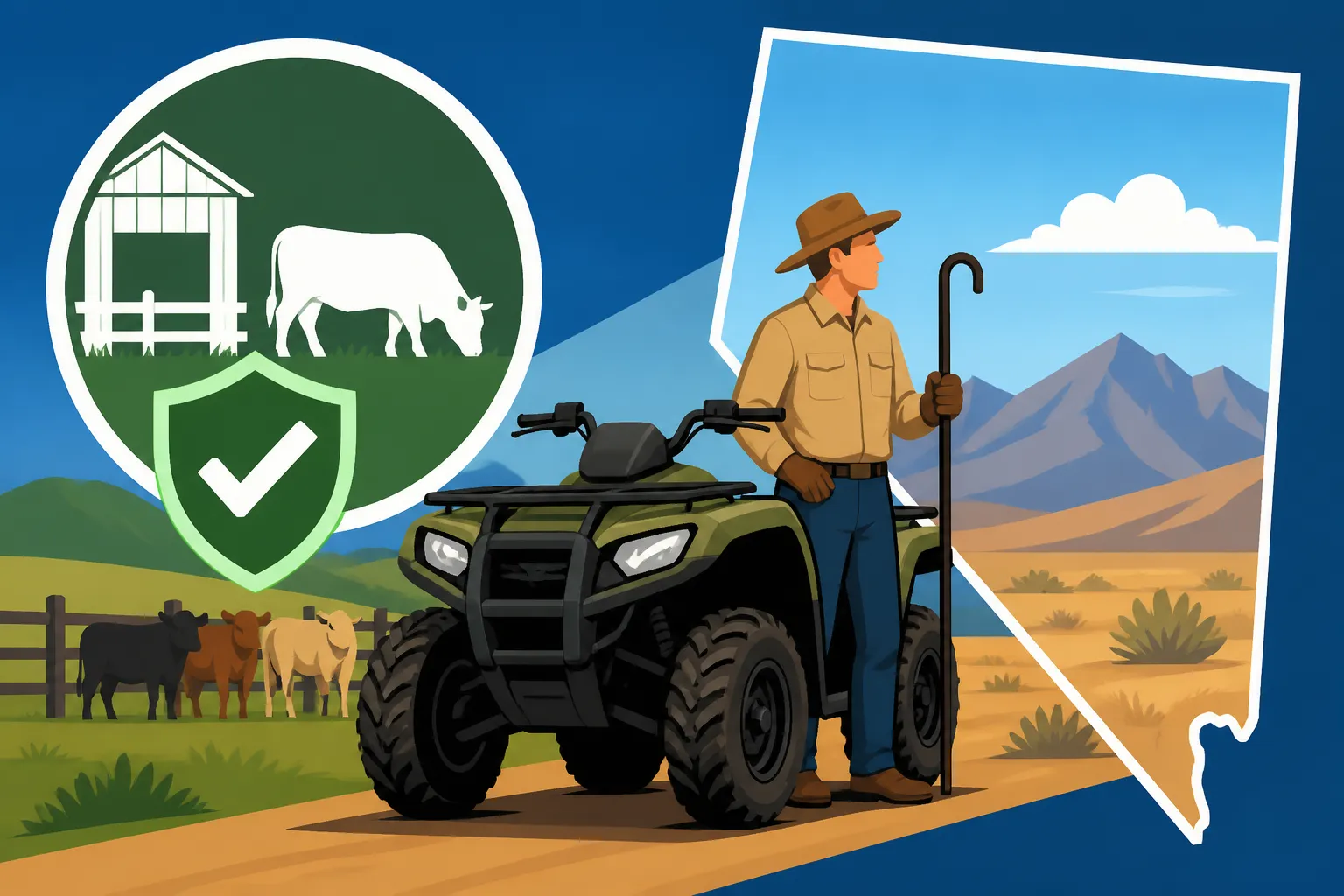
The core idea behind this exemption is that if your off-highway vehicle is genuinely an integral part of your farming, ranching, or other agricultural operations, it shouldn't be burdened with the same registration requirements as a recreational machine. Think about it: a rancher checking fence lines, moving livestock, or hauling feed across vast stretches of private land—or even crossing a minor county road briefly to access another parcel of their property—is using their machine for essential, non-recreational purposes. The state understands that these vehicles are, in essence, mobile tools necessary for the business of agriculture. This exemption isn't about avoiding fees for fun; it's about acknowledging the practical reality of rural life and work in Nevada. This also ties into how [Machines Nevada Exempts From Registration] are broadly defined.
It's vital to understand that this isn't a blanket exemption for anyone who lives in a rural area or owns a large property. The key is "husbandry," which specifically refers to the care, cultivation, and breeding of crops and animals. If you use your quad to ride around your 10-acre property in rural Nevada, but that property isn't actively engaged in agriculture, you likely won't qualify. The intent is to support legitimate agricultural enterprises, not just private land ownership. The exemption allows those involved in bonafide ranching and farming to focus on their work without added bureaucratic hurdles for their workhorses. You can learn more about this specific exemption in [The Husbandry Exemption for Nevada Ranches].
Who Qualifies for the Husbandry Exemption in Nevada?
So, who exactly can claim this exemption? It boils down to the nature of your activities and how your ATV or UTV fits into them. Generally, the exemption applies to individuals, families, or businesses actively engaged in agriculture. This could be a cattle rancher in Elko County, a hay farmer in Fallon, or a vineyard owner in Pahrump. The common thread is that the off-highway vehicle must be "used primarily for husbandry purposes."
What does "primarily" mean? It means the vehicle's main, overriding purpose is for work directly related to the care and management of the land, crops, or livestock. If you're using your UTV to check irrigation systems, haul tools to a remote part of your property, herd cattle, or inspect fence lines, those are all clear examples of husbandry purposes. Imagine a scenario where a rancher in Lincoln County uses their side-by-side every day to cover miles of rough terrain, moving mineral blocks for cattle or repairing water troughs. This is precisely the kind of use the exemption is designed for.
However, the line gets blurry when recreational use creeps in. If that same rancher occasionally takes their grandkids for a joyride on that same UTV on a Sunday afternoon, or uses it to head into town for groceries, the "primarily for husbandry purposes" argument becomes much weaker. The exemption isn't a loophole to avoid registration for a machine that sees mixed use. It's truly for those machines that are tools of the trade, first and foremost. This is also why [Registering a Quad That Never Leaves a Nevada Ranch] is a common scenario for this exemption.
Let's consider a few examples to clarify:
- A small family farm: Uses an ATV to spray crops, move small equipment, and check on livestock. This would likely qualify.
- A large cattle ranch: Employs multiple UTVs for daily range checks, fence repair, and herding. Definitely qualifies.
- A hobby farmer with a few acres: Uses a quad to pull a small trailer for gardening, but also rides it recreationally on weekends. This might not qualify, as the recreational aspect could undermine the "primarily for husbandry" claim.
- A rural resident who owns horses: Uses a side-by-side to feed horses and clean stalls on their private property. If this is all the machine does and it's part of a larger agricultural operation (e.g., breeding or boarding horses for income), it might qualify. If it's purely for personal hobby horses, it's less likely.
The key takeaway is that the more exclusively your OHV is dedicated to productive agricultural work, the stronger your claim for the husbandry exemption.
Documentation and Proof for the Husbandry Exemption
Now, this is where the rubber meets the dirt: how do you actually prove to the Nevada Department of Motor Vehicles (DMV) or a law enforcement officer that your machine qualifies for this exemption? It's not enough to simply say, "It's for the ranch!" You'll need to provide tangible evidence.
The primary way to declare your machine exempt is through the OHV registration process itself. When you go to register your ATV or UTV, one of the forms, typically the OHV-001 (Application for Registration, Exemption, or Transfer of Ownership for an Off-Highway Vehicle), will have a section where you can declare an exemption. You'll need to check the box for "Husbandry Exemption" and be prepared to back that claim up. You can refer to [Why Nevada Has Five Registration Applications] to understand the different forms.
Here's a checklist of documentation and evidence you should consider gathering:
- Proof of Agricultural Business: This is paramount. The DMV will want to see that you are legitimately engaged in farming or ranching. This could include:
- Business License: If your farm or ranch operates as a formal business, a current business license or tax ID number.
- Farm/Ranch Income Tax Returns: Showing income and expenses related to your agricultural operation.
- USDA/State Agricultural Program Registrations: Any official registrations with agricultural agencies.
- Property Tax Assessments: Documents that classify your land as agricultural, if applicable.
- Affidavit of Use: A sworn statement where you formally declare under penalty of perjury that the specific OHV (identified by VIN) is used exclusively or primarily for husbandry purposes. This affidavit should detail the types of tasks the machine performs, the frequency of use, and explicitly state that it is not used for recreational purposes. You might find templates for such legal documents on platforms like LawDepot, which can help ensure all necessary legal language is included.
- Photos of the Machine in Use: Visual evidence can be powerful. Pictures of your ATV or UTV actively performing tasks like pulling a hay wagon, herding livestock, or spraying fields can help illustrate its purpose.
- Vehicle Purchase Documents: If the machine was specifically bought for agricultural use, any sales receipts or invoices that indicate its intended purpose (e.g., "farm utility vehicle").
- Lease Agreements or Land Deeds: Documents proving you own or lease the land where the husbandry activities take place.
- Insurance Policies: If you have commercial agricultural insurance that covers the OHV as a piece of farm equipment, this can also lend credibility.
When you submit your paperwork, ensure everything is clear, concise, and directly supports your claim. The DMV representatives aren't mind readers, and their job is to apply the law as written. The more compelling and complete your documentation, the smoother the process will be. Remember, the goal is to leave no doubt that your machine is a working tool, not a recreational vehicle. If you're unsure about drafting the affidavit, resources like LawDepot can be invaluable for generating legally sound documents tailored to your needs. This rigorous approach helps validate why [Nevada OHV Registration Paperwork Checklist] is so important for any registration or exemption claim.
| Document Type | Purpose | Where to Obtain/Create |
|---|---|---|
| Proof of Agricultural Business | Establishes legitimacy of farming/ranching activities | Business licenses, tax returns, USDA registrations |
| Affidavit of Exclusive Use | Sworn statement detailing OHV's specific husbandry tasks | Self-drafted (with legal template from LawDepot), Notarized |
| Photos of Machine in Use | Visual evidence of OHV performing farm/ranch work | Personal photos of your machine working on site |
| Land Ownership/Lease Documents | Verifies control over the land for agricultural operations | Property deed, lease agreement, land use permits |
| Purchase Documents | Shows original intent for agricultural use (if applicable) | Sales receipt, invoice, bill of sale |
| Insurance Policies | Demonstrates commercial/agricultural coverage of OHV | Insurance provider documentation |
Maintaining and Revalidating the Exemption
So, you've successfully claimed the husbandry exemption for your ATV or UTV. Congratulations! But don't just put that paperwork in a drawer and forget about it. Maintaining this exemption, and being ready to revalidate it, is an ongoing responsibility. Life happens, circumstances change, and you need to ensure your documentation remains current and accurate.
First, always keep copies of all your exemption paperwork with you when operating the OHV. Just like carrying your driver's license or vehicle registration, having immediate proof of exemption can save you a lot of hassle if you're ever stopped by law enforcement—whether it's a Sheriff's deputy in White Pine County or a BLM ranger near your property. They have a duty to ensure all vehicles on public-access lands are properly registered or exempt, and a quick glance at your paperwork can prevent a misunderstanding or a potential citation for an unregistered vehicle.
Second, be mindful of any changes to your operation or the vehicle's use. If your farm diversifies, or if you sell off part of your land, or if the ATV that was once exclusively for husbandry now starts seeing more recreational use, you might lose your eligibility for the exemption. For instance, if you purchase a new ATV specifically for recreation, but then start using your "husbandry" ATV for those same recreational rides, the "primarily for husbandry purposes" claim will be compromised. If you find yourself in a situation where the vehicle's primary use shifts away from husbandry, it’s far better to proactively register the machine with the Nevada DMV than to risk fines for operating an unregistered OHV. The cost of [Nevada OHV Registration Fee for One Year] or [Nevada OHV Registration Fee for Three Years] is a lot less than potential penalties.
Finally, while the husbandry exemption typically doesn't require annual renewal in the same way a standard registration decal does, it's wise to review your documentation every few years or whenever there are significant changes to your agricultural operation. If the DMV ever audits your exemption, or if laws change, you'll want to have everything in order. Keeping your business licenses current, updating your property records, and ensuring any affidavits you've signed are still truthful is essential. If you ever need to create new legal documents, like updated affidavits to reflect new equipment or changes in your operation, services like LawDepot can provide the necessary forms to keep your records meticulously organized and legally sound. This proactive approach ensures that your ATV remains a trusted work tool without becoming a legal liability.
Disclaimer
This article is for general informational purposes only and does not constitute professional advice. Laws, prices and regulations vary by location and change over time. Consult a qualified professional for guidance on your specific situation.