Nevada Rules for Riding With a Passenger Off-Road
Taking a passenger off-road in Nevada is not as simple as adding another helmet. The machine must be designed to carry someone, the passenger needs a proper seat and secure footing, and the route must allow OHV use. Here’s how to check the vehicle, rider, and paperwork before you head out.
The machine must be built for a passenger
The key question is whether the vehicle was designed by its manufacturer to carry a passenger. Nevada does not treat every ATV or UTV as a two-person machine just because another person can physically fit on it.
A single-rider sport quad, for example, is generally meant for one rider. Carrying someone on the back, on a fender, or in front of the operator does not turn it into a passenger ATV. The same goes for a passenger sitting on a cargo rack or in a UTV’s truck bed. A passenger should use a seat and position intended for that purpose.
| Machine or setup | Passenger-ready? | What to check |
|---|---|---|
| Single-rider ATV | Usually no | Manufacturer’s seating designation and owner’s manual |
| Two-up ATV | Designed for a passenger when specified by the manufacturer | Passenger seat, footrests, handholds, and capacity |
| UTV or side-by-side | Usually designed for multiple occupants, within its stated capacity | Number of designated seats, seat belts, and payload limit |
| Cargo bed, rack, or fender | No designated passenger seat | Do not carry a passenger there |
| Rental machine | Depends on the specific model and rental terms | Ask the operator which seats may be occupied |
Check the owner’s manual, the vehicle’s labels, and its seating configuration. A second seat alone is not always enough to establish that the machine can safely carry a passenger. Look for a designated passenger position, passenger footrests and handholds where applicable, and an occupant or payload limit. If the documentation is unclear, ask the manufacturer or dealer before riding two-up.
Do not exceed the machine’s capacity
A passenger adds weight and changes how an ATV or UTV handles. Extra weight can affect braking, acceleration, stability, suspension travel, and the machine’s ability to climb or turn. The combined weight of the operator, passenger, cargo, and installed accessories must stay within the vehicle’s limits.
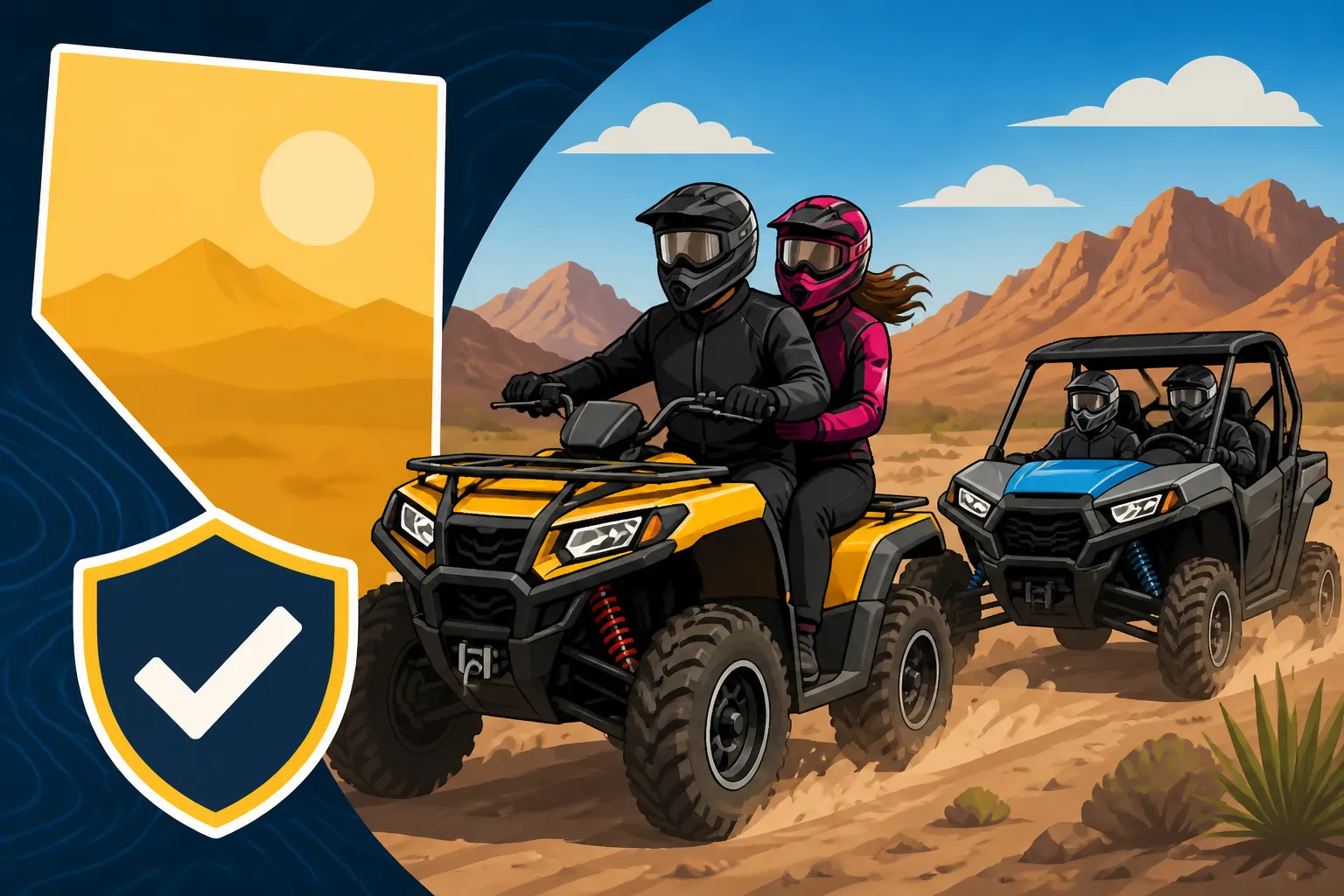
On a two-up ATV, the passenger needs a stable position with feet on the intended footrests and hands on the designated grips or handholds. The operator should be able to reach and use the controls without the passenger interfering. A passenger who cannot hold on securely or keep their feet in position may be safer riding in a separate machine.
For a UTV, use only the manufacturer’s designated seats. Do not let occupants ride in the cargo bed, sit on a door or fender, or exceed the labeled seating capacity. Seat belts and other installed restraints should be used as directed by the manufacturer. Never assume an added seat or improvised restraint makes a vehicle safe for another occupant.
Check the manual before adding a passenger
The owner’s manual is especially important if the machine has been modified, has an aftermarket seat, or is an older model. A change to the seat, suspension, tires, or cargo setup can affect how the machine behaves with extra weight. If you cannot confirm that the machine was designed to carry a passenger, ride it as a single-rider vehicle.
That distinction matters even on a short, familiar route. A passenger can shift their weight unexpectedly, and rough ground, loose sand, rocks, or a sudden stop can make an unstable setup more dangerous.
Passenger safety depends on age, fit, and riding conditions
A passenger needs to be able to sit securely, hold on, and follow instructions throughout the ride. Being willing to ride is not the same as being physically ready for the machine or terrain.
Before setting off, explain how to hold on, where to keep feet and hands, and what to do when the machine slows, turns, or climbs. Passengers should avoid sudden movements and should not lean against the direction of a turn. The operator should ride smoothly and choose a pace that leaves room to stop or change direction safely.
Helmets and protective gear
Nevada has helmet requirements for young OHV riders, and helmets are a sensible safety choice for adult passengers as well. Check current state requirements for the passenger’s age and the type of machine, and use a helmet intended for off-road riding that fits properly and is in good condition. A loose, damaged, or poorly fitting helmet offers less protection.
Protective gear should suit the terrain and weather. Consider eye protection, gloves, long sleeves, long pants, and sturdy boots that cover the ankles. Sand, dust, branches, and flying debris can be uncomfortable or injure an exposed passenger. For more on the difference between off-road and road requirements, see Nevada Helmet Rules Off-Road Versus On-Road.
If you are buying a helmet or replacement goggles, fit and safety markings matter more than a low price. Amazon can help you compare styles, but check the product details carefully and make sure the helmet is appropriate for the rider and intended use.
Children need special care
A child should not ride as a passenger simply because they fit in the seat. They need to be able to sit upright, reach the intended handholds, keep their feet on the footrests, and remain secure over the expected terrain. If they cannot do those things for the whole ride, wait until they are ready or use a different arrangement.
Do not rely on an adult holding a child in place. An adult cannot safely substitute for a designated seat, restraint, or a machine’s required passenger setup. Follow the manufacturer’s age, height, and weight guidance, and keep the ride short and controlled when a young passenger is involved.
Rules for riding on a public road are a separate issue. A passenger who is allowed on an off-road trail may not meet the requirements for road use. For that distinction, see Nevada Rules for a Child Passenger on a Road. If a young rider is using their own machine rather than riding as a passenger, review Nevada Rules for a Youth Machine on Public Land as well.
Match the ride to the passenger
A passenger may have little control over the machine, but they still need to be comfortable and able to respond to instructions. Before starting, agree on a simple signal to stop if the passenger feels unsafe, cold, overheated, or unwell. Stop promptly if they need a break.
Choose a route appropriate for both occupants. Deep sand, steep slopes, uneven rock, wash crossings, and fast traffic can be a poor fit for an inexperienced passenger. Avoid pushing ahead because the operator is comfortable with terrain that the passenger has never ridden.
Passenger rules do not replace registration or route rules
Having a proper passenger seat does not authorize a machine to ride anywhere. Nevada OHV registration, land access, closures, and local restrictions still apply. Riders also need to distinguish off-road travel from riding on a road or highway, where different equipment and operating rules may apply.
Nevada’s OHV decal and visitor rules are separate from the question of how many occupants a machine can carry. If the vehicle is registered in another state, check whether its registration qualifies for Nevada reciprocity and whether any time limits or other conditions apply. The details are covered in Nevada OHV Reciprocity With Other States.
Before leaving, make sure the machine has the registration documentation it needs and that the decal is current and correctly displayed. See Nevada OHV Registration and Proof of Ownership for more on carrying proof. If you are riding a rental, ask the company what the vehicle is designed to carry, which seats may be used, and what its agreement says about passengers. Rental terms may be more restrictive than what a particular machine could otherwise accommodate; Nevada Rules for Riding a Rented ATV explains the rental-specific checks.
A passenger also does not change where the vehicle may be ridden. Check land-management maps, posted signs, and current closures before traveling. On a public trail or riding area, follow the designated route and avoid closed ground, private property, and restricted areas. If your route might include pavement, do not assume that an OHV decal or passenger-capable vehicle makes the machine road legal. Review the separate requirements before crossing or traveling along a road.
A practical pre-ride check
Use this checklist before carrying a passenger:
- Confirm in the owner’s manual or manufacturer information that the machine is designed to carry a passenger.
- Make sure the passenger has a designated seat, secure footing, and the required handholds or restraints.
- Check the vehicle’s occupancy and payload limits, including the weight of cargo and accessories.
- Confirm the passenger can sit securely and follow instructions for the entire ride.
- Check helmet and protective-gear requirements, especially for a passenger under 18.
- Verify registration, decal placement, land access, and any route closures.
- If the machine is rented, confirm the passenger setup and restrictions with the rental operator.
- Choose terrain and speed that suit the passenger’s experience and comfort.
For night rides, passengers also need suitable visibility and gear, and the vehicle must meet the applicable requirements. Review Nevada Rules for Riding After Dark before planning an evening trip.
Common mistakes to avoid
Treating a long seat as proof that the ATV is two-up. A seat that appears wide enough does not establish that the manufacturer designed the machine for a passenger. Check the vehicle’s specifications.
Carrying a passenger on a rack or in a cargo bed. These areas are for cargo, not occupants. A passenger needs a designated seating position.
Letting a passenger ride without secure footing. If the passenger cannot keep their feet on the intended footrests, they may lose balance or contact moving parts.
Assuming a helmet makes an unsafe setup acceptable. Protective gear reduces some risks; it does not make a single-rider machine suitable for two people or a cargo bed suitable as a seat.
Riding beyond the machine’s capacity. Include the weight of the operator, passenger, and gear when checking the limits. Extra load can change handling even when the vehicle has a passenger seat.
Confusing off-road permission with road permission. Passenger capacity and OHV registration do not automatically satisfy rules for public-road travel. Check those requirements separately.
Ignoring rental restrictions. A rental agreement may limit where the machine can go, which occupants it can carry, or how it must be operated. Ask before the ride rather than resolving a disagreement at the trailhead.
The safest approach is straightforward: carry a passenger only when the machine is designed for one, use the designated seating and restraints, and choose a route that fits the passenger as well as the driver. When the machine’s capacity or the current rule is unclear, verify it before riding.
Disclaimer
This article is for general informational purposes only and does not constitute professional advice. Laws, prices and regulations vary by location and change over time. Consult a qualified professional for guidance on your specific situation.