Logandale Trails With Kids
Taking kids to Logandale Trails can turn into a wonderful family ride—or a stressful day if the route is too difficult, the weather is harsh, or everyone arrives without a plan. This guide helps you prepare for the terrain, choose a kid-friendly pace, pack for desert conditions, and make sensible decisions before and during your ride near Overton.
Plan a Family Ride Before You Arrive
Match the ride to your youngest rider
Logandale’s open desert scenery can make the area look easy to navigate, but a family ride still needs to suit the least experienced person in the group. A child who is confident on a familiar machine may feel very different on unfamiliar ground, around dust, or near other riders. Start by thinking about your youngest rider’s comfort and skill—not how far the adults hope to go.
Before choosing a route, consider whether your child can maintain a steady pace, follow basic hand signals, and stop safely when asked. Think about how they handle bumps, loose ground, noise, and time in the saddle. If the answer is uncertain, keep the first ride short and treat it as a chance to learn how your group manages the conditions.
It also helps to agree on a simple turnaround rule before you unload. For example, the group can head back if a child becomes tired, the route gets rougher than expected, or visibility drops in dust. Having that conversation at the staging area is easier than trying to negotiate it while everyone is hot, hungry, or separated by a trail junction.
For a first visit, look at [Logandale Trails Difficulty Ratings] alongside the area’s maps and route information. Difficulty labels are a starting point, not a promise that every stretch will feel comfortable to every rider. A family may find one section manageable and another tiring, especially if the ground, traffic, or weather changes.
Get oriented before setting out
Do not rely on memory or a phone signal to guide the group. Before leaving home, look over the route information and identify where you plan to start, how you expect to loop back, and what landmarks may help you stay oriented. The article [Nevada Trail Maps Worth Downloading] can help you think through map preparation, while [Planning a Ride With Trail Finder] is useful background for checking routes before you go.
A mapping app such as onX Offroad can be one part of your planning, particularly if you want to review routes and save map information before driving into an area with limited connectivity. Test your setup before the trip: download what you need, confirm that the device can display it offline, and make sure the person navigating knows how to use it. A map app is a planning aid, not a substitute for posted closures, local directions, or good judgment.
Keep a second way to navigate, such as a paper map or a clearly understood written route plan. Before the ride, point out the starting area and agree on what the group will do if riders become separated. Children should know to stop somewhere safe and stay with their assigned adult rather than trying to find the trailer or take an unfamiliar turn.
Prepare Children and Machines for Desert Riding
Make safety gear part of the plan
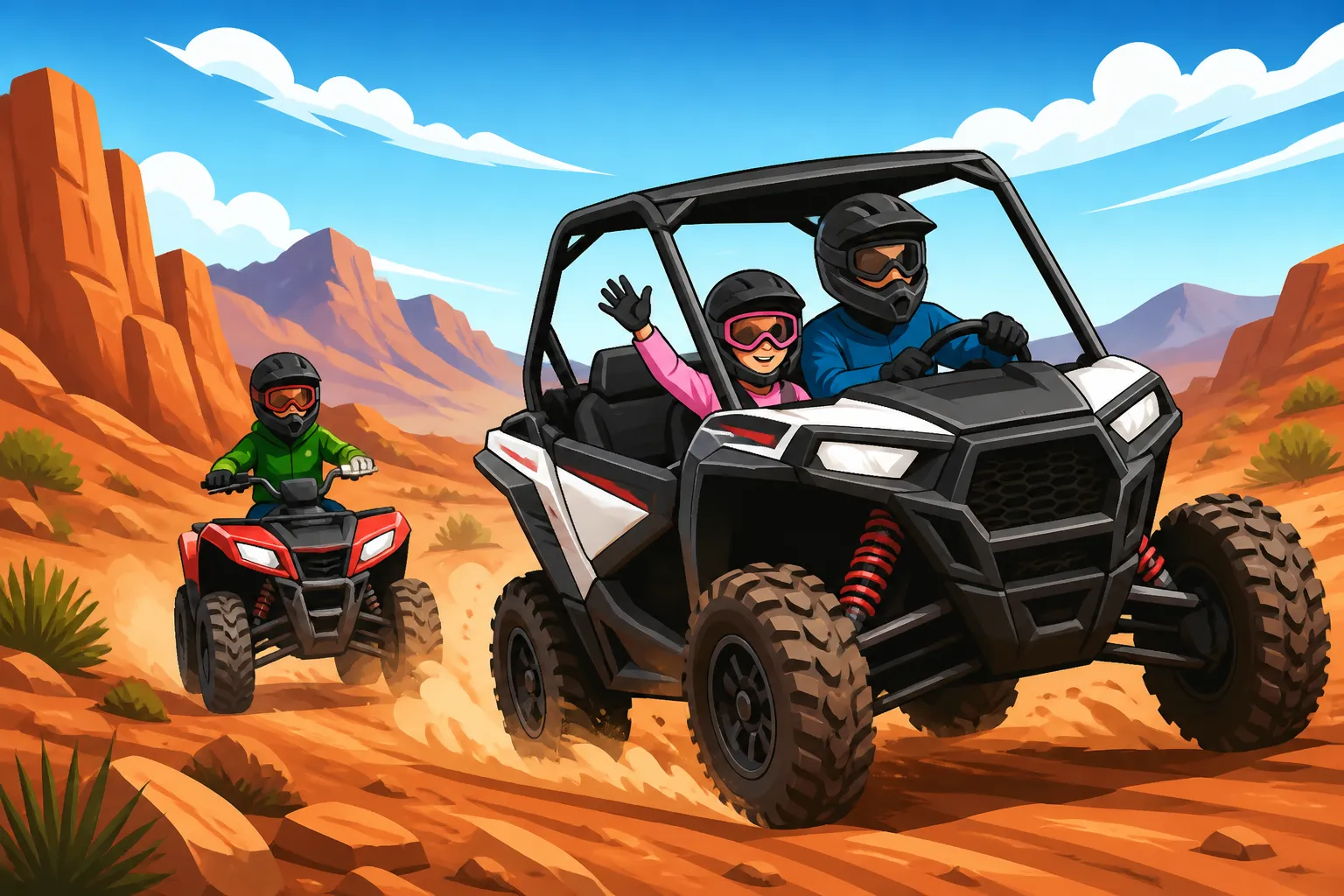
A good family ride begins with properly fitting gear, not with the engine starting. Each rider should have a helmet that fits securely, eye protection, gloves, sturdy clothing, and closed-toe footwear suited to riding. Loose clothing and unsecured items can catch on equipment, while exposed skin can be vulnerable to sun, dust, and scrapes.
Check that children can comfortably reach and use the controls on their own machine, if they are riding one. An adult should inspect the machine before departure and confirm that the brakes, tires, throttle, steering, and other basic components are in sound working condition. If a child is a passenger, check that the vehicle is designed for passengers and that the child can be secured correctly. Never assume that a child can safely ride on a machine simply because there is room.
Review the relevant rules before the trip, including [Nevada Rules for a Youth Machine on Public Land] and [Nevada Sand Dune Flag and Whip Rules]. Requirements and safe practices can depend on the machine, location, and riding situation. Make sure your group understands what applies to its particular setup rather than treating another family’s equipment as a reliable example.
Pack for heat, dust, and delays
The desert can make an outing feel tougher than it looked on the map. Pack more water than you expect to use, along with snacks, sun protection, and an extra layer for changing conditions. Keep supplies accessible rather than buried under luggage. A child who is thirsty or overheated may become quiet before they clearly explain what is wrong, so plan regular stops and check in often.
Dust is another practical concern, especially when several machines are traveling together. Leave enough space between vehicles to see clearly, and wait for dust to settle before continuing if visibility becomes poor. Eye protection helps, but it does not make it safe to ride when the person ahead has disappeared in a thick cloud.
Bring basic first-aid supplies, a charged phone, and a backup communication plan appropriate for your group. Tell someone who is not riding where you expect to go and when you plan to return. For more ideas on preparing for harsh conditions, see [Nevada Desert Riding in Summer Heat] and [Water and Fuel Planning in Nevada]. Both are helpful reminders that a short ride can take longer than expected when the group needs frequent breaks.
| Family need | What to prepare | Why it matters |
|---|---|---|
| Navigation | Offline map, route plan, and backup map | Connectivity may be unreliable, and families may need to change plans |
| Hydration | Water for every rider and regular drink breaks | Children may not notice or communicate thirst early |
| Visibility | Eye protection and spacing between machines | Dust can quickly block a rider’s view |
| Safety gear | Properly fitting helmets, gloves, and protective clothing | Comfort and fit matter throughout the ride |
| Communication | Meeting point and separation plan | A child should know what to do if the group gets split |
| Flexibility | Short route option and an early turnaround plan | Fatigue, weather, or terrain can change the day |
Choose Routes and Ride at a Family Pace
Keep the first outing conservative
A family’s first ride at Logandale is not the time to prove how much ground everyone can cover. Begin with a modest plan, pause to assess how the children are doing, and leave room to turn around. A shorter trip that ends with everyone still feeling comfortable is a better introduction than a long ride that becomes a struggle near the end.
Set a pace that lets the group stay together without pressuring the least experienced rider. Adults should position themselves so they can keep children in view, and the group should stop at safe places rather than bunching up in a way that blocks other users. Agree on simple signals for stopping, slowing down, and needing help before setting out.
Make breaks part of the route rather than treating them as a reward after a long stretch. Use them to drink water, check for discomfort, and ask children how they feel about continuing. If a child says they are tired, take that seriously. Fatigue can affect attention and control, and a rider who is struggling may not be able to safely complete the route adults had planned.
Respect other riders and the landscape
Logandale is a shared riding area, so keep an eye out for other machines and give everyone room. Avoid sudden stops around blind corners, and do not assume that an approaching rider has seen your group. Dust, uneven ground, and noise can make it harder for people to notice one another. Slow down when visibility or the situation calls for it.
Stay on routes that are open to riding and follow signs or closures. Cutting across unfamiliar ground can create problems for your group and damage areas that should be protected. Before the trip, review [Nevada Rules for Riding Federal Land] and [Nevada Rules for Riding a Closed Route] so the family understands why route boundaries matter.
Talk with children about what they see along the way. The rocks, desert plants, and changing landscape can make the ride more engaging without needing to push for speed or distance. Keep the group respectful of wildlife and other visitors, and pack out anything you bring in. [Nevada Trail Etiquette on Shared Dunes] offers additional perspective on sharing popular riding areas responsibly.
Make the Day Easier at the Trailhead
Set realistic expectations for facilities and breaks
Before leaving home, check what facilities are available and what you need to bring yourself. Do not assume there will be drinking water, food, or a convenient place to rest when the children need one. The guide to [Nevada OHV Areas With Vault Toilets] can help you plan around one practical family need, but it is still wise to confirm conditions and prepare as if services may be limited.
Give yourself time to unload, gear up, review the route, and explain the plan. A rushed departure can leave someone without gloves, eye protection, or enough water. Keep a simple checklist in the vehicle so the same essentials are not forgotten on a future trip.
If you are deciding whether to ride for a few hours or make a day of it, [Logandale Trails for a Day Trip] can help you think through the outing. Build in extra time for breaks and unexpected delays. Children often enjoy the day more when there is no pressure to finish a long route before heading home.
Have a plan for changing conditions
Desert weather and trail conditions can change the feel of a ride. If rain has passed through, ground conditions may be different from what you expected, and some routes may be unsuitable. Check local information before departing and be prepared to postpone or shorten the outing rather than trying to make a fixed plan work. [Riding the Logandale Trails After Rain] is a useful topic to review before setting out.
Heat, wind, dust, fatigue, or mechanical trouble can also be reasons to stop. Agree as a family that changing the plan is a normal part of safe riding—not a disappointment or a failure. If a child is uncomfortable, a machine is behaving oddly, or the group cannot see well, pause somewhere safe and decide what to do next.
A family ride at Logandale works best when the route serves the people riding it. Plan conservatively, keep children involved in the decisions, and be willing to turn back early. With realistic expectations and thoughtful preparation, the day can be about exploring together rather than trying to cover every trail.
Disclaimer
This article is for general informational purposes only and does not constitute professional advice. Laws, prices and regulations vary by location and change over time. Consult a qualified professional for guidance on your specific situation.