Paddle Tires at Sand Mountain
Sand Mountain’s soft, shifting dunes near Fallon can make an ordinary trail tire feel frustratingly underpowered, especially when you’re climbing or trying to keep momentum. Paddle tires can help a machine float and drive through loose sand, but the wrong setup can make steering, braking, and harder-packed trails more difficult. This guide explains how to choose, fit, and use paddle tires for a Sand Mountain ride.
What paddle tires do in Sand Mountain sand
How paddles create traction
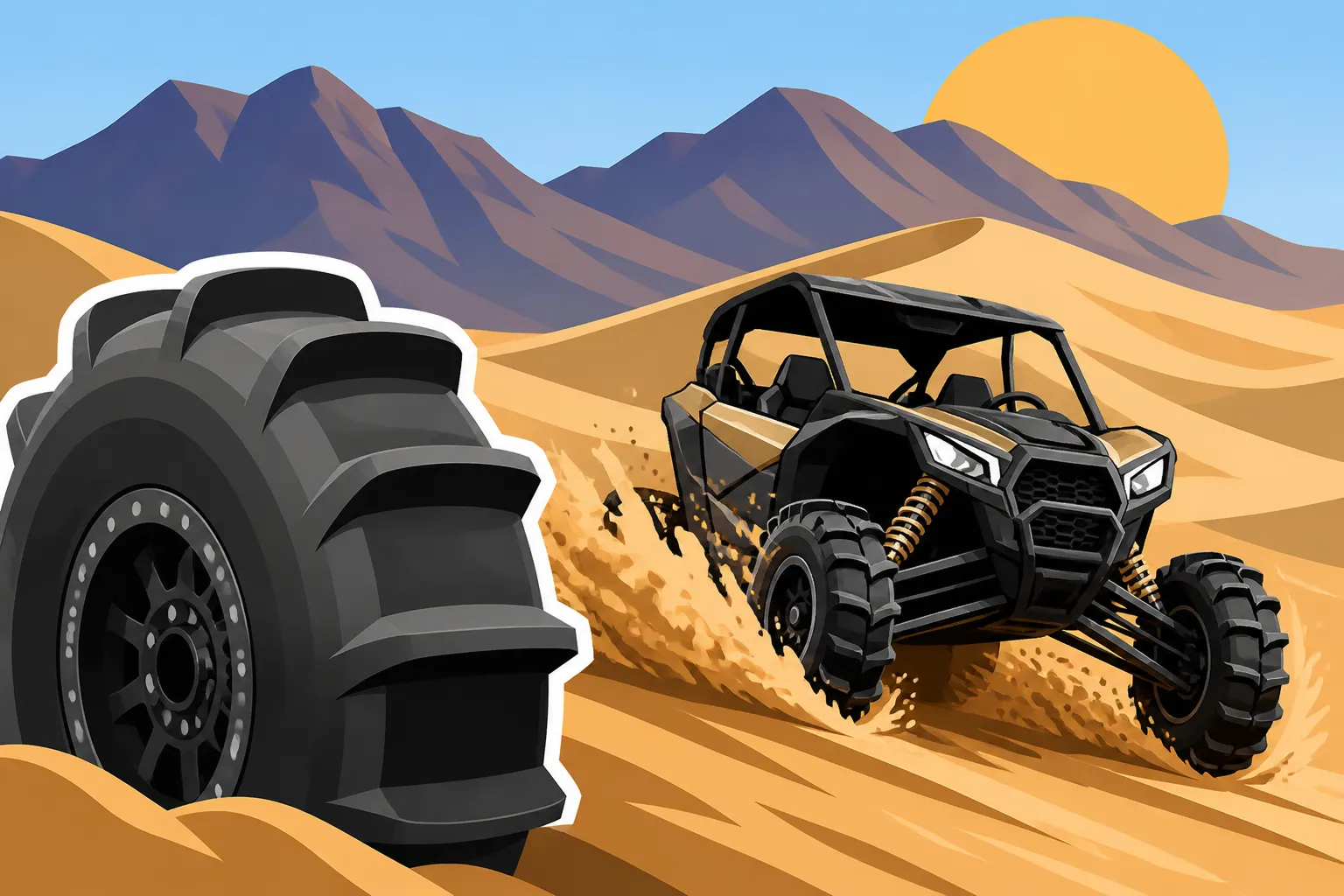
A paddle tire has raised bars across its tread. As the tire turns, those bars push against loose sand and help propel the machine forward. That extra bite can make a noticeable difference when you’re climbing a dune, accelerating through soft terrain, or trying to avoid bogging down in a sandy bowl.
Paddles are not a magic fix for every stuck machine. Tire choice still needs to match your vehicle, riding style, and conditions. Too much throttle can dig the rear tires down rather than move you forward, while abrupt turns can unsettle a machine in soft sand. Smooth throttle and sensible lines matter as much as the tread.
The terrain at Sand Mountain is not uniform. A section that feels soft and deep may sit close to firmer tracks, rutted approaches, or areas with a different slope. For a broader picture of the riding area, see [Sand Mountain: Nevada's Great Basin Dune] and [The 600-Foot Dune Near Fallon].
Why the right tire matters more than the most aggressive tire
It can be tempting to choose the tallest or most aggressive paddle tire available, particularly if you expect to spend the day climbing. But more paddle is not automatically better. A tire that is too aggressive for your machine or experience can make acceleration abrupt, put additional strain on the drivetrain, and feel less predictable when you transition to firmer ground.
Think about the ride you actually plan to have. A rider spending most of the day in soft dunes may prioritize flotation and forward drive. Someone mixing sand with harder approaches may value a less extreme setup that feels manageable across changing surfaces. Your machine’s manual and a knowledgeable tire or powersports shop can help you confirm suitable fitment and operating guidance.
Before choosing, consider the vehicle, wheel size, tire clearance, power, passenger load, and the kind of terrain you expect. If you are new to dune riding, a conservative setup paired with patient riding is usually a better learning experience than chasing maximum traction.
Choosing paddle tires for your machine
Match tire size and construction to the vehicle
Start with the size and fitment requirements for your ATV or UTV. A tire that does not clear the suspension, bodywork, or other components can create problems even before you reach the sand. Check the vehicle manufacturer’s guidance and confirm that the tire and wheel combination is appropriate for your specific machine.
Tire construction also affects how a setup behaves. Weight, sidewall stiffness, and tread design can influence ride feel and how the machine responds to throttle. The right balance is not identical for a light sport quad, a utility ATV, and a heavier side-by-side. If you are unsure, bring the vehicle’s make, model, and current tire details to a qualified shop rather than relying on a generic online recommendation.
Do not assume that a tire advertised for dunes is suitable for every Sand Mountain route or every rider. Consider where you will ride, how much experience you have, and whether you need to travel over firmer ground to reach the dunes. If your plan involves a mixed surface, ask specifically how the tire is expected to behave away from deep sand.
Think through the front and rear setup together
Rear paddles provide much of the forward drive in loose sand, but the front tires still matter for steering and stability. Front tires designed for sand may have a different tread pattern from rear paddles, because their job is more about tracking and directional control than pushing the machine forward.
A mismatch can make a vehicle feel unpredictable. For example, a machine with strong rear drive but poor front tracking may feel as if it wants to continue straight when the rider is trying to turn. That does not mean every rider needs the same front setup; it means the complete tire combination should be chosen as a system, not as isolated purchases.
If you are comparing options, ask a shop how the front and rear combination is intended to handle acceleration, cornering, and deceleration. A setup that works well for an experienced rider on a powerful machine may not be the easiest choice for a beginner or a family outing.
| Riding situation | Tire setup to consider | Main trade-off |
|---|---|---|
| Mostly soft dunes | Sand-focused rear paddles with a compatible front tire | Stronger drive in loose sand, but less versatile on firmer terrain |
| Mixed sand and firmer approaches | A less aggressive sand setup suited to the vehicle | More manageable across surfaces, with less specialized dune traction |
| New to dune riding | A predictable, vehicle-appropriate combination | Easier learning; it may not deliver maximum climbing performance |
| Heavier side-by-side | Fitment and load suitability confirmed for the machine | More attention needed to vehicle-specific recommendations |
Preparing for a Sand Mountain ride
Inspect the machine and tires before leaving
A tire change is a good reason to do a careful pre-ride inspection. Confirm that the tires are mounted correctly, seated as intended, and free of visible damage. Check wheel fasteners and inspect the surrounding components for anything that could contact the tire as the suspension moves. If you notice rubbing, a bulge, a cut, or a loose component, address it before riding.
Follow the vehicle and tire manufacturers’ guidance for inflation and operation. There is no single pressure that is right for every machine, tire, load, and riding condition. Avoid copying a setting from another rider without understanding whether their vehicle and tires are comparable. If you are not sure how to adjust or check pressure safely, ask a qualified service professional.
Pack basic recovery and emergency supplies, and make sure everyone knows the plan for the day. Sand can hide ruts and change how a slope feels, so ride with room to react and avoid following another machine too closely. A group should agree on a meeting point and a simple way to regroup if riders become separated.
Plan the route and check conditions
Sand Mountain is a large riding area, and wind can change the feel of exposed dunes. Soft sand, shifting surfaces, and reduced visibility can make familiar-looking terrain harder to read. Before riding, check local conditions and any current area guidance. For context on the scale of the area, see [Sand Mountain's 4,795 Acres]. If you want to understand how wind may affect a day on the dunes, read [Sand Mountain When the Wind Picks Up].
Route planning is also useful when your group has different experience levels. A first-time dune rider may be more comfortable starting with an uncomplicated route and watching how the machine responds before attempting steeper terrain. [Sand Mountain for a First Dune Trip] offers a useful starting point for thinking about that first outing.
A mapping app such as onX Offroad can help you review routes and orient yourself before you set out. Download or prepare the information you may need before losing cell coverage, and treat map data as a planning aid rather than permission to ride anywhere. Follow posted boundaries and local land-use rules. For additional preparation, see [Staying on Sand Mountain's Marked Trails] and [Riding Around Protected Dune Habitat]. If flags or whips are relevant to your machine and ride, review [Nevada Sand Dune Flag and Whip Rules] before heading out.
Riding paddle tires safely
Use smooth inputs and choose conservative lines
Paddle tires reward controlled throttle. Apply power smoothly and avoid sudden bursts that can dig the rear tires into soft sand. If the machine begins to bog, adding more throttle immediately may make the situation worse. Ease off, assess the machine’s position, and use a safe recovery approach rather than spinning the tires deeper.
Look ahead and choose a line that matches your experience and the machine’s capability. Avoid blindly following another rider’s track; the route may lead toward a steeper face, hidden rut, or changing surface. Keep a comfortable distance from other machines, especially where riders may crest a dune or change direction with limited visibility.
For side-by-sides, account for the vehicle’s size, weight, and turning behavior. A heavier machine may carry momentum differently from a quad, and passengers can affect how the vehicle feels. Talk with your group before attempting a climb or crossing a slope, and leave room for each rider to make a safe choice rather than feeling pressured to follow.
Remember what paddles cannot do
Paddles improve drive in loose sand, but they do not replace good judgment, suitable protective gear, or basic machine control. They do not guarantee that a steep climb is safe, and they will not prevent a rollover or collision. Choose terrain within your ability, avoid risky maneuvers near other riders, and turn back if conditions or visibility become uncomfortable.
They can also be less suitable on firmer ground. Depending on the tire and surface, a paddle setup may feel less composed or provide less useful traction away from soft sand. If your trip includes a significant amount of firmer terrain, plan for that trade-off and ask how your chosen tires should be used beyond the dunes.
Finally, keep your ride plan realistic. Fuel, water, daylight, weather, and the group’s energy all affect how far you should go. Check practical details such as [Where to Fuel Before Sand Mountain] and [Sand Mountain Day Use Hours] before leaving. A well-matched tire setup can make sand riding more enjoyable, but thoughtful preparation is what helps the whole day go smoothly.
Disclaimer
This article is for general informational purposes only and does not constitute professional advice. Laws, prices and regulations vary by location and change over time. Consult a qualified professional for guidance on your specific situation.