Nevada OHV Registration Grace Period After Purchase
There's nothing quite like the thrill of bringing home a new-to-you off-highway vehicle, whether it's a zippy ATV or a rugged side-by-side. But that initial excitement can quickly turn into a nagging worry: how long do you really have to get it registered in Nevada before you're breaking the rules? It's a common question that leaves many new owners scratching their heads, and riding with that anxiety hanging over you isn't fun for anyone. This guide will walk you through Nevada's specific grace period for OHV registration after a purchase, detailing what you need to do, what to carry with you, and what happens if you miss the deadline.
Understanding Nevada's 30-Day Registration Window
The state of Nevada understands that you can't always walk off the dealership lot or shake hands with a private seller and instantly have your OHV registered. There's a practical window built into the law, but it's not unlimited. This designated period is crucial for new owners to gather their paperwork, get any necessary inspections done, and submit their application without immediately facing penalties.
The Specifics of the "Grace Period"
In Nevada, you have a clear 30-day window from the date of purchase to register your off-highway vehicle. This isn't a suggestion; it's a legal requirement. The clock starts ticking the moment you take ownership, whether you bought it new from a dealership, inherited it from a family member, or picked it up from a private seller in a dusty transaction out in a remote corner of the state. This 30-day period is often colloquially referred to as a "grace period," but it's really more of a mandatory deadline. It’s designed to give you ample time to comply with the law without having to worry about an immediate citation on your first ride out. This is why understanding [Nevada's Thirty-Day Registration Deadline] is so important for every OHV enthusiast.
This timeframe applies to virtually all OHVs that fall under Nevada's registration requirements, which typically includes ATVs, UTVs, dirt bikes, and other machines designed for off-road use. It's not just about getting a shiny new decal; it's about making sure your machine is properly documented with the state. Neglecting this could lead to complications down the line, not just with law enforcement, but also with proving ownership should your machine ever be stolen or involved in an accident.
Why This Deadline Matters So Much
You might be thinking, "What's the big deal? I'm just riding on private land," or "I'll get to it when I have time." But this 30-day rule isn't just bureaucratic red tape; it's there for several important reasons that benefit everyone. Firstly, it ensures that there’s a clear record of ownership, which is paramount in preventing theft and aiding in recovery. Without a timely registration, proving that the machine is yours can become a real headache, especially if you're dealing with a lost title or unclear paperwork.
Secondly, timely registration directly contributes to the maintenance and expansion of the trails and riding areas we all love. A portion of your registration fees goes towards the Nevada Off-Highway Vehicle Program, funding things like signage, restroom facilities, and trail grants. When people delay registration, or simply don't bother, that crucial funding is diminished, impacting the very places we enjoy riding. So, while it feels like a personal task, it has a broader community impact. Understanding [Where Nevada OHV Registration Money Goes] can really put things into perspective.
What Constitutes Proof During Your Grace Period
Okay, so you know you have 30 days. But what happens if you want to take your new toy for a spin on day 15, and a park ranger or deputy pulls you over? You can't just say, "I just bought it!" and expect to be let off the hook. You need to carry tangible proof that you're within that 30-day window and actively working towards legal registration. This is where your paperwork becomes your best friend.
The Indispensable Bill of Sale
The most critical document you need to carry with you during this grace period, especially if you haven't received your official registration decal yet, is a valid bill of sale. This isn't just a scribble on a napkin; it needs to be a comprehensive document that clearly states the date of purchase, the purchase price, a description of the OHV (make, model, year, VIN), and the printed names and signatures of both the buyer and the seller. If you bought it from a private party, ensuring you have a detailed bill of sale is absolutely essential. Many private sellers might not have one handy, so it's a good idea to come prepared with your own, or use a template from a reputable source. Services like LawDepot offer templates that can help you create a legally sound bill of sale, ensuring all necessary information is captured. This can be a lifesaver if you ever need to prove the exact date of purchase to law enforcement.
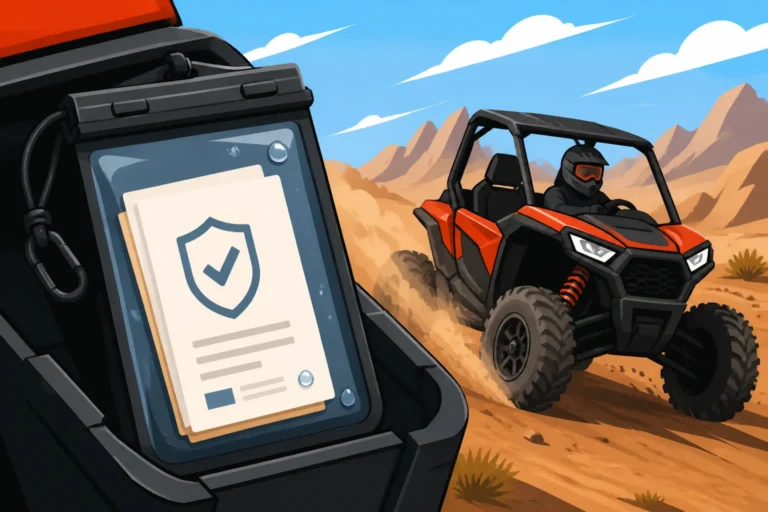
Imagine this scenario: you've just bought a pristine used side-by-side from a private seller in Pahrump. You're eager to try it out at Nellis Dunes, and on your first outing, a ranger approaches for a routine check. You don't have a decal yet. If you can present a clear, dated bill of sale, signed by both parties, with the VIN matching your machine, that's your proof. Without it, you could be facing a citation for an unregistered vehicle. Always make sure to carry the original or a clear copy, keeping it safe from the elements in a waterproof bag. For a private sale, knowing [What a Nevada ATV Bill of Sale Should Carry] is crucial for your protection.
Other Supporting Documents
While the bill of sale is king, other documents can certainly help your case during this 30-day period. If the seller provided you with the signed-over title at the time of purchase, carry that with you as well. The title, clearly dated and signed by the seller, further solidifies your ownership and the purchase date. Sometimes, a dealership will provide a temporary registration document or a specific form indicating a pending registration. If they do, keep that handy.
Also, be ready to show your personal identification, such as your driver's license. This helps confirm that you are indeed the buyer listed on the bill of sale. The goal is to provide a complete picture to any official who might question your unregistered OHV: you've recently purchased it, you're within the legal timeframe, and you're in the process of getting it registered. Think of it as your temporary license plate, but for an OHV. Keep all these papers together, preferably laminated or in a waterproof pouch, because dust and moisture are no friends to important documents out on the trail.
Navigating the Registration Process Within 30 Days
The "grace period" isn't a time to relax; it's a call to action. You've got your new machine, and now it's time to gather everything needed to complete the registration. Being proactive and understanding the steps will make the entire process smooth and stress-free.
Step-by-Step for a Smooth Registration
Here's a breakdown of what you'll typically need to do within those 30 days:
- Gather Your Proof of Ownership: This will primarily be your title, signed over by the previous owner. If the machine was never titled (perhaps it was acquired before titling became mandatory or falls under an exemption), you'll need the bill of sale. For new machines, the Certificate of Origin (MCO/MSO) will be your proof.
- Complete the Application: You'll need to fill out the correct Nevada OHV registration application. There are a few different versions depending on your situation, so make sure you're using the right one, often found on the DMV website or at an OHV dealer. You can learn more by understanding [Why Nevada Has Five Registration Applications].
- Get a VIN Inspection: Most machines bought used or from out of state will require a VIN inspection. The Nevada DMV typically doesn't perform these for OHVs, so you'll need to find a licensed Nevada OHV dealer or a sworn law enforcement officer to complete it. This crucial step verifies that the VIN on your machine matches your paperwork. Knowing [Which Dealers Can Inspect a VIN in Nevada] or how to go about [Asking a Sworn Officer to Verify a VIN] can save you a lot of time and frustration.
- Pay the Fees: There will be a registration fee, which can be for one year or three years, and potentially a title fee if you're titling it for the first time. The [Nevada OHV Registration Fee for One Year] and the [Nevada OHV Registration Fee for Three Years] are standard, but always check the most current figures.
- Submit Your Paperwork: You can submit your complete application and supporting documents either by mail, online (for renewals, but sometimes initial applications can be handled by a dealer electronically), or in person at a participating OHV dealer. For a brand-new registration, often going through an authorized dealer is the easiest way to ensure everything is correct and processed efficiently.
Dealer-Assisted Registration vs. Self-Service
You have a couple of avenues for registration, and understanding the pros and cons of each can help you choose the best path within your 30-day window.
Dealer-Assisted Registration:
Many authorized OHV dealers in Nevada offer registration services. When you buy a new machine from them, they will typically handle all the initial paperwork for you, including submitting the application and fees. Even for a used machine purchased privately, some dealers will process the registration for a small fee, often called a [What Nevada's $2 Dealer Submission Fee Pays For].
- Pros: Convenience, expertise in ensuring all forms are correct, often includes the VIN inspection right there, and sometimes faster processing.
- Cons: A small service fee might apply.
Self-Service (Mail or Online):
You can opt to handle the entire process yourself by mailing your application to the Nevada DMV OHV Section or, if applicable, using their online portal.
- Pros: No dealer submission fee.
- Cons: Requires you to be meticulous with paperwork, find a separate VIN inspector, potential for delays if forms are incomplete, and you'll wait longer for your decal to arrive in the mail.
If you're buying from a Nevada dealer, they are usually your best bet for a smooth, quick process. They're set up to handle [Registering an ATV Bought From a Nevada Dealer] efficiently.
| Aspect | During the 30-Day Grace Period | After the 30-Day Grace Period |
|---|---|---|
| Legal Status | Permitted to operate (with proper proof) | Considered unregistered; subject to penalties |
| Required Proof | Valid Bill of Sale (dated), signed Title (dated), MCO/MSO | Valid OHV Decal and Registration Card |
| Penalties | None, if carrying valid dated proof of purchase | [Nevada's $10 Late Fee on an Expired OHV Decal] (if applicable), citation, potential impound |
| Riding Risk | Low, if you have your purchase documents | High, as you are in violation of state law |
| Next Steps | Actively gather documents, complete VIN inspection, submit application | Submit application with late fees immediately, avoid riding |
What Happens When the 30 Days Are Up
The 30-day window isn't a soft suggestion; it's a hard deadline. Once those days pass, the state views your OHV as unregistered, and that can lead to some uncomfortable situations, not to mention a hit to your wallet. It’s definitely not a situation you want to find yourself in when you’re out trying to enjoy the desert trails.
Penalties for Missed Deadlines
If you haven't completed your registration by the 31st day, your OHV is officially unregistered. The primary consequence is a late fee. Nevada assesses a specific fee for expired OHV decals or for failing to register a newly acquired machine within the allotted time. While the exact amount can change, it's typically a set, non-negotiable charge added to your regular registration fees. This is why understanding [Nevada's $10 Late Fee on an Expired OHV Decal] is important. This fee isn't just a minor inconvenience; it's an extra cost you could have easily avoided by being proactive.
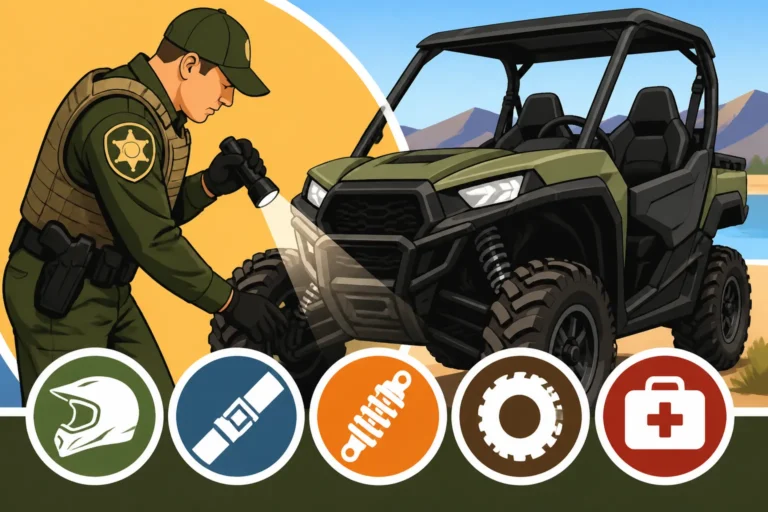
Beyond the late fee, you also open yourself up to potential citations from law enforcement. Riding an unregistered OHV on public lands or designated trails is a violation of Nevada law. A deputy from the Lincoln County Sheriff's office or a BLM ranger at Sand Mountain is fully within their rights to stop you, verify your registration status, and issue a ticket. Depending on the severity and specific circumstances, this could range from a warning to a significant fine, or even having your machine impounded. It’s certainly not the kind of story you want to be telling around the campfire after a ride.
The Risks of Riding Unregistered
Riding your OHV after the 30-day grace period without proper registration carries more than just financial penalties; it comes with practical risks too.
- Legal Consequences: As mentioned, you could be cited. These citations become part of your record and can lead to escalating penalties for repeat offenses. It can also sour your experience if you get pulled over during a fun ride.
- Impoundment: In some cases, especially for blatant or repeated violations, law enforcement has the authority to impound your unregistered vehicle. Getting an impounded machine back is not only costly due to towing and storage fees but also a time-consuming hassle that could sideline your riding for weeks.
- Proof of Ownership Issues: While you might still have your title and bill of sale, the lack of current registration can complicate matters if your OHV is stolen. Official registration helps law enforcement track ownership and return recovered vehicles. Without it, the process becomes much more convoluted.
- Access Restrictions: Many popular OHV areas, especially those managed by the Bureau of Land Management (BLM) or State Parks, have rangers actively checking for valid registration decals. Without one, you could be turned away from an area you planned to ride, or worse, cited on the spot. [Riding Nellis Dunes on an Expired Decal] or [What Rangers Check at Sand Mountain] are real-world examples of where you need to be compliant.
The takeaway here is simple: respect the 30-day grace period. Use it wisely to get your paperwork in order and secure that Nevada OHV decal. It’s a small investment of your time and money that ensures you can enjoy your machine legally and without worry for years to come. Don't let a simple deadline turn your off-road adventures into a legal headache.
Disclaimer
This article is for general informational purposes only and does not constitute professional advice. Laws, prices and regulations vary by location and change over time. Consult a qualified professional for guidance on your specific situation.