Registering an ATV in Nevada
It’s a common scenario: you’ve just bought that dream ATV or UTV, or maybe you’ve moved to Nevada with your trusty off-highway vehicle (OHV) in tow, and now you’re staring down the confusing path of registration. Dealing with the Nevada DMV and understanding the specific requirements for off-road machines can feel like navigating a maze blindfolded, especially when you just want to hit the trails. This comprehensive guide is here to demystify the entire process, walking you through every step of registering an ATV or UTV in Nevada so you can ride legally and with peace of mind.
Why Registering Your ATV or UTV in Nevada is Non-Negotiable
Let's be honest, nobody loves government paperwork, and sometimes it feels like just another hurdle between you and the open desert. But when it comes to off-highway vehicles in Nevada, registration isn't just a suggestion; it's a legal requirement with real consequences if you skip it. Riding an unregistered ATV or UTV on public lands in Nevada can lead to fines, citations, and a whole lot of unnecessary headaches that could put a serious damper on your weekend adventure.
Nevada's OHV registration program serves several crucial purposes, not the least of which is funding the very trails and amenities we all enjoy. When you pay your registration fees, a significant portion of that money goes directly back into maintaining and improving the OHV trail system across the state, adding things like new signage, vault toilets, and even law enforcement patrols to keep everyone safe. It’s a bit of a "pay to play" system, but it ensures the longevity and quality of our beloved riding areas.
Beyond funding, registration also provides a layer of accountability and identification. In the unfortunate event of theft, having your ATV or UTV properly registered makes it much easier for law enforcement to track and potentially recover your machine. It also helps manage public land use, ensuring that everyone is aware of the rules and contributing their fair share to the upkeep of Nevada's incredible landscapes. For a deeper dive into where your hard-earned money goes, check out [What Nevada OHV Registration Fees Pay For].
The Consequences of Riding Unregistered
Picture this: you're out enjoying a fantastic ride on the Logandale Trails, the sun is shining, and your machine is humming along perfectly. Suddenly, you see a sheriff's deputy or a BLM ranger signaling you to pull over. Your heart sinks a little, even if you think you haven't done anything wrong. One of the first things they'll ask for is your registration. If you don't have a valid Nevada OHV decal or proof of a valid out-of-state registration, you're looking at a citation.
These aren't just polite warnings either; the fines for riding an unregistered OHV can be substantial, and they quickly add up. Beyond the immediate financial penalty, repeated offenses or particularly egregious situations could even lead to your machine being impounded, which is a costly and time-consuming nightmare to resolve. It's simply not worth the risk when the registration process is relatively straightforward once you know the steps.
It's also important to remember that law enforcement officers, whether they're from the local sheriff's department, the Nevada Highway Patrol, or federal agencies like the Bureau of Land Management, are specifically tasked with enforcing OHV laws. They are frequently patrolling popular riding areas like Sand Mountain, Nellis Dunes, and the Silver State Trail, so the chances of being caught without proper registration are quite high, especially during peak riding seasons and holidays. They're not out to ruin your fun, but they are there to ensure everyone is playing by the rules and contributing to the system.
Who Needs to Register and Who is Exempt
The general rule of thumb in Nevada is that if you operate an OHV on public lands, it needs to be registered. This applies to most ATVs, UTVs (side-by-sides), dirt bikes, and even snowmobiles. However, like most rules, there are a few notable exceptions that might apply to your specific situation. Understanding these exemptions can save you time and money, but it's crucial to ensure you genuinely qualify before assuming your machine is exempt.
One common exemption is for machines used solely for agricultural husbandry purposes on private land, such as a ranch quad used exclusively on a farm or ranch property. There are specific criteria for this, and simply owning a ranch doesn't automatically mean all your machines are exempt from public land use registration. Another exemption applies to very small machines, specifically those with an engine displacement of 70cc or less, like youth ATVs often ridden by young children. This is because these smaller machines are typically considered less impactful on public lands and are often used in controlled environments.
Furthermore, machines manufactured before January 1, 1976, are generally exempt from registration. The thinking here is that these older machines often don't meet modern emissions standards or have the same usage patterns as newer machines. It's important to have proof of the manufacturing year if you're claiming this exemption. If you're a visitor to Nevada with an OHV registered in another state, you might be temporarily exempt under reciprocity agreements, but there are strict time limits for this, typically 15 days, after which you're expected to register in Nevada. For a complete list and detailed explanation, you'll want to review [Machines Nevada Exempts From Registration].
The Step-by-Step Nevada OHV Registration Process
Alright, let's get down to the nitty-gritty of actually getting that decal on your machine. The process generally involves gathering documents, getting a VIN inspection, filling out the right forms, and submitting them to the Nevada DMV's OHV section. It might sound like a lot, but by breaking it down, you'll find it's quite manageable. The key is to be prepared and have all your ducks in a row before you head to the dealer or mail in your paperwork.
The state of Nevada has made efforts to streamline the process, but it still requires diligence on your part. You can't just walk into any DMV office for OHV registration; it's often handled by specific DMV offices or, more commonly, by authorized OHV dealers. This is a common point of confusion for new OHV owners, as they might assume the standard DMV counter is equipped for this. Knowing where to go and what to expect is half the battle.
Keep in mind that Nevada is serious about its 30-day clock. Once you purchase an OHV, you generally have a limited window to get it registered. Missing this deadline can result in additional fees, so it's always best to start the process as soon as possible after acquiring your machine. This 30-day period begins from the date of purchase or, if you're a new resident, the date you establish residency in Nevada. For more on this critical timeline, see [Nevada's Thirty-Day Registration Deadline].
Gathering Your Essential Documents
Before you do anything else, you need to compile a specific set of documents. Think of this as your personal OHV registration checklist. Having everything organized beforehand will prevent frustrating delays and multiple trips or phone calls. The exact documents can vary slightly depending on how you acquired your machine (new from a dealer, used from a private seller, or bringing it from out of state), but there are some core items everyone will need.
First and foremost, you'll need proof of ownership. This typically means the original Certificate of Title for the OHV. If you bought it new from a dealer, they might handle the title application for you, but you'll still need to ensure it's processed. If you purchased it from a private seller, they should sign over the existing title to you. If there's no title for an older machine, you'll need a bill of sale and possibly other supporting documents. A well-drafted bill of sale is crucial when buying privately; services like LawDepot can help you create a comprehensive one that protects both buyer and seller, detailing the vehicle, price, and terms of sale. It's much more than just a handwritten note.
You'll also need a valid form of identification, like your Nevada driver's license. If you're a new resident, you'll need proof of your Nevada residency. Beyond these, you might need a lien release if there was a loan on the vehicle, or a power of attorney if someone is registering on your behalf. Don't forget that proof of a valid VIN inspection will be required, which brings us to the next crucial step. To ensure you have everything, review [Nevada OHV Registration Paperwork Checklist].
The All-Important VIN Inspection
This is often where new OHV owners hit their first snag. Unlike regular vehicles, the Nevada DMV typically does not perform VIN inspections for OHVs. You can't just drive your ATV or UTV to the local DMV office and expect them to sign off on the VIN. This is a common misconception that leads to wasted trips and frustration. The state relies on a network of authorized inspectors to verify your vehicle's identification number.
So, who can perform an OHV VIN inspection in Nevada? Your primary options are licensed OHV dealers within Nevada or a sworn law enforcement officer. Many OHV dealerships offer this service, often for a fee, and it's usually the most straightforward route, especially if you bought your machine from them or a similar dealer. They have the training and authority to complete the necessary paperwork. If you bought privately or need an alternative, you can contact your local sheriff's department or city police to inquire about having an officer perform the inspection. Some departments are more willing or equipped than others, so it's always best to call ahead. Remember to bring the machine and all your ownership documents with you to the inspection. Getting this step wrong can cause significant delays in your registration. For more information, see [The VIN Inspection Nevada DMV Will Not Do].
A common scenario is buying a used ATV from a private seller. You've got the title in hand, signed over to you, and a bill of sale. Now you need that VIN inspection. You might call up a few local dealerships, explain your situation, and schedule an appointment. They'll typically have a technician visually verify the VIN on the frame of your ATV matches your title documents, fill out the specific VIN verification form (often OHV-002), and stamp it. This verified form is then submitted with your other registration paperwork. This ensures that the machine you're registering is indeed the one you claim to own and helps prevent the registration of stolen vehicles.
Filling Out the Right Forms
Once you have your ownership documents and a completed VIN inspection form, it's time to tackle the actual registration application. Nevada has several specific forms for OHV registration, and choosing the correct one depends on your situation. Don't worry, it's not as complicated as it sounds, but paying attention to the details will save you a headache later. The most common form you'll encounter is likely the "Application for Registration and Title of an Off-Highway Vehicle." However, there are different versions or accompanying forms depending on whether you're a new resident, transferring ownership, or registering a brand-new machine.
The primary forms you might encounter include OHV-001 (general application), OHV-012 (for out-of-state purchases), or others specifically for title-only applications. Each form will ask for detailed information about your OHV, including the VIN, make, model, year, and engine size. You'll also need to provide your personal information as the owner. Be meticulous when filling these out. Any missing information or discrepancies between your forms and your supporting documents can lead to your application being rejected, sending you back to square one.
If you're unsure which form applies to you, it's always a good idea to consult the Nevada OHV section of the DMV website or contact them directly. Some OHV dealers who process registrations can also guide you to the correct paperwork. Remember, accuracy is key here. Double-check all numbers and names against your title and VIN inspection forms. A simple typo can delay your registration for weeks while the DMV contacts you for corrections. You might find this helpful: [Why Nevada Has Five Registration Applications].
Understanding Nevada OHV Fees and Costs
Let's talk about money. Nobody likes unexpected costs, so it's good to have a clear understanding of what you'll be paying to register your ATV or UTV in Nevada. The fees involved are generally quite reasonable, especially when you consider where that money goes towards maintaining our riding areas. However, there are a few different components, and some optional choices that will affect the total.
The main fee is for the OHV decal itself, which typically comes with options for one year or three years of validity. The three-year option is often a better value in the long run if you plan on keeping your machine in Nevada for a while. Beyond the decal fee, you'll also pay a separate fee for titling your OHV, which is a one-time cost unless you need a replacement title down the road. There can also be small administrative fees, like a dealer submission fee if you register through an authorized dealer.
It's also important to be aware of potential late fees. As mentioned earlier, Nevada has a 30-day window for registration after purchase. If you miss this deadline, a late fee will typically be assessed on top of your standard registration costs. This is one of the easiest fees to avoid, simply by being proactive. For a detailed breakdown, you can check out [Nevada Title Fees for a Resident Machine] and [Nevada OHV Registration Fee for One Year].
Decal and Titling Fees
The cost of your Nevada OHV decal is fairly standardized. As of my experience, you usually have the option to purchase either a one-year or a three-year decal. The one-year decal is a good option if you're uncertain about how long you'll keep the machine or if you're a seasonal resident. However, most riders find the three-year decal to be the more convenient and cost-effective choice in the long run, as it saves you the hassle of annual renewals and often provides a slight discount compared to buying three separate one-year decals. Your choice will depend on your personal riding habits and how permanent your Nevada stay is. For specific figures, always check the current Nevada DMV OHV website.
Beyond the registration decal, there's also the titling fee. This is a separate, one-time fee to officially record your ownership with the state and receive your Certificate of Title. The titling fee is generally modest, but it's an essential part of the process, especially if you ever plan to sell your machine or need to prove ownership for insurance purposes. If you're bringing an OHV into Nevada that was previously titled out-of-state, the titling fee might be slightly higher to cover the additional administrative work involved in transferring that record. Be prepared for this potential difference if you're relocating.
When you go through an authorized OHV dealer for registration, they might also charge a small dealer submission fee. This covers their administrative costs for processing your paperwork and submitting it to the DMV on your behalf. While it's an extra cost, many riders find it well worth it for the convenience and expertise the dealer provides, ensuring all forms are filled out correctly and submitted promptly. This is especially true if you're not comfortable navigating the paperwork yourself. For more insights on the long-term value, read [One Year or Three Years in Nevada].
Avoiding Late Fees and Penalties
Nobody wants to pay more than they have to, and avoiding late fees is one of the easiest ways to keep your registration costs down. As mentioned, Nevada is quite firm about its 30-day registration deadline after you purchase an OHV or establish residency in the state. If you don't submit your completed application and fees within this window, you will likely be assessed a late fee. This penalty is not just a slap on the wrist; it adds an unnecessary expense to a process that could have been simpler and cheaper.
The late fee is typically a set amount, and it applies to each period of late registration. For example, if you're just a few days over the 30-day mark, you'll still incur the full late fee. It's not prorated. This is why it's so important to gather your documents, get that VIN inspection, and submit your application as quickly as possible after acquiring your machine. Don't procrastinate, thinking you have plenty of time. Life happens, and before you know it, that 30-day window has closed.
Another penalty to be aware of, beyond the late registration fee, is the citation you can receive for riding an unregistered OHV. This is a separate fine from the late registration fee and is typically issued by law enforcement officers out on the trails. An expired decal is just as problematic as no decal at all, so keeping track of your renewal date is paramount. Always aim to renew your registration before it expires to avoid both late fees and potential citations on the trail. For specifics on the financial impact, look at [Nevada's $10 Late Fee on an Expired OHV Decal].
Special Scenarios and Common Questions
The world of OHV ownership isn't always a straight line, and sometimes you'll encounter situations that deviate from the standard new-from-dealer registration. Whether you're moving from another state, buying a used machine privately, or dealing with a lost title, there are specific procedures and considerations you'll need to navigate. These special scenarios often lead to the most confusion and frustration for riders.
One of the most common special scenarios involves bringing an OHV from out-of-state. Many new Nevada residents arrive with their machines already registered elsewhere, and wonder if their existing registration is valid. While there's a short grace period, Nevada expects you to register your machine here once you become a resident. Similarly, buying a used OHV from a private party often introduces questions about bills of sale, VIN inspections, and ensuring a clear title transfer.
Another frequent question revolves around machines that might not have a traditional title, perhaps due to their age or how they were acquired. Nevada has provisions for these situations, but they usually require additional documentation or steps to prove ownership. Knowing these specific requirements beforehand can save you a significant amount of time and effort.
Registering an Out-of-State OHV
Moving to Nevada with an OHV you've loved for years, currently registered in another state, brings a unique set of questions. "Do I need to re-register it immediately?" "Will my California Green Sticker or Arizona decal be honored?" The short answer is that Nevada does offer a brief grace period for out-of-state registered OHVs, typically 15 days, provided your out-of-state registration is current and valid. This allows you a little time to settle in before tackling the Nevada specific paperwork. However, once you become a Nevada resident, or after that 15-day window closes, you are generally required to register your OHV in Nevada.
The process for registering an out-of-state machine is similar to registering a used machine bought privately, but with an added layer of documentation. You'll definitely need your current out-of-state title (or equivalent proof of ownership), your Nevada driver's license or ID, and proof of Nevada residency. A VIN inspection will be mandatory, just as it is for any OHV being newly registered in Nevada. The titling fee might be slightly higher than for a machine that's always been in Nevada, reflecting the administrative work to transfer the record.
It’s tempting to try and ride on your out-of-state registration indefinitely, especially if you're only here part-time. But remember, once you establish residency, the expectation is that your OHV complies with Nevada's laws. Law enforcement is very aware of the residency rules, especially in communities popular with part-time residents or those bordering other states. Always err on the side of caution and get your Nevada decal to avoid any issues. For further reading, consult [Registering an Out-of-State Machine in Nevada] and [Nevada Registration After You Move In].
Buying a Used ATV Privately
The thrill of finding a great deal on a used ATV or UTV from a private seller is undeniable. However, it also comes with a unique set of responsibilities and potential pitfalls that you need to navigate carefully to ensure a smooth registration process. The biggest difference here is that there's no dealer to handle the paperwork for you, so all the heavy lifting falls on your shoulders.
Your absolute top priority when buying privately is to ensure you get a clean title, properly signed over by the seller. Without a valid, clear title, you could face significant challenges in proving ownership and ultimately registering the machine. Always check the VIN on the title against the actual VIN on the machine to ensure they match. If the seller claims there's no title because it's an older machine, you'll need a comprehensive bill of sale, and possibly other documentation like a past registration card, to prove the chain of ownership. This is another situation where a robust bill of sale from a reputable source like LawDepot can be incredibly helpful, as it provides a clear record of the transaction and can include details like "as-is" clauses.
Once you have the signed title and a solid bill of sale, you'll need to schedule that all-important VIN inspection. Remember, this usually means taking the machine to a licensed OHV dealer or arranging for a law enforcement officer to inspect it. After the inspection, you'll combine your title, bill of sale, VIN inspection form, and your application forms, then submit them to the Nevada DMV. Don't forget that 30-day clock, which starts ticking the moment you take possession of the machine. For a more detailed guide, see [Buying a Used ATV Privately in Nevada] and [Checking an ATV VIN Before You Buy].
Lost Titles and Bills of Sale
What happens if you've owned your ATV for years, lost the title in a move, and now want to register it in Nevada? Or perhaps you've bought a used machine without a formal bill of sale, and the seller has vanished? These situations, while frustrating, are not insurmountable, but they do require additional steps and patience. The key is to be able to establish a clear chain of ownership to the satisfaction of the Nevada DMV.
If you have a lost title, the first step is usually to apply for a duplicate title. This typically involves filling out a specific form (often the same one used for initial titling, but marked for a duplicate), paying a fee, and providing proof of your identity and the vehicle's VIN. If you previously registered the machine in Nevada, the DMV should have a record of your ownership, making this process relatively straightforward. If the original title was from another state, you might need to apply for a duplicate from that state's DMV first. You might find guidance in [Replacing a Lost Nevada OHV Title].
If you lack a bill of sale for a machine you bought privately, and particularly if there's no title, things become more complex. The DMV may require you to submit additional evidence, such as old registration cards in your name, sworn affidavits from previous owners (if you can locate them), or even a court order establishing ownership. In some extreme cases, for very old machines without any paper trail, you might need to apply for a bonded title, which is a process designed to protect previous owners and the state in case of future claims. The more documentation you can provide, even if it's not the ideal title or bill of sale, the better your chances are. Sometimes, simply having consistent information across multiple, albeit informal, documents can make a difference.
Maintaining and Renewing Your OHV Registration
Getting your initial registration and decal is a great feeling, but the journey doesn't end there. Just like with any other vehicle, your Nevada OHV registration needs to be maintained and renewed periodically. Neglecting this step can lead to expired decals, late fees, and potential citations on the trails, all of which we want to avoid. Staying on top of your renewal dates and understanding the process for ordering replacement decals or updating your information is crucial for continued, hassle-free riding.
Nevada's OHV decals are typically valid for either one or three years, depending on which option you chose at the time of initial registration. Unlike cars, which often have staggered renewal dates based on your birthday, OHV decals usually expire on the last day of the month they were issued. For example, if you registered in June, your decal would expire on June 30th of the applicable year. It's a good idea to mark this date on your calendar or set a reminder on your phone.
Beyond renewals, there are other aspects of maintenance, such as ensuring your decal remains readable and properly affixed, or updating your address if you move. Small details can make a big difference in avoiding issues when you're out enjoying the trails.
The Renewal Process
Renewing your Nevada OHV decal is generally a much simpler process than the initial registration. Often, the Nevada DMV will send you a renewal reminder notice in the mail a few weeks before your decal is set to expire. This notice will include instructions on how to renew and often a pre-filled application form. However, don't solely rely on receiving this reminder; mail can get lost, or your address might be out of date. It's always best to keep track of your expiration date yourself.
You typically have a few options for renewing your OHV registration. Many people find the online renewal portal to be the most convenient, allowing you to complete the process from the comfort of your home. You'll need your OHV decal number and often your VIN to access your records. Alternatively, you can renew by mail, sending in your completed renewal form and payment. Some authorized OHV dealers might also offer renewal services, which can be helpful if you're already there for service or parts.
Regardless of the method you choose, make sure you submit your renewal well before the expiration date to avoid any lapse in registration and, of course, those pesky late fees. Once your renewal is processed, you'll receive a new decal in the mail, which you then need to affix to your OHV in the designated location. For detailed renewal options, see [Renewing Nevada OHV Registration Online] and [Renewing a Nevada OHV Decal by Mail].
Replacing Lost or Damaged Decals and Documents
Life happens, and sometimes decals get scratched, peel off in the harsh desert sun, or simply go missing. The same goes for your registration card or even your Certificate of Title. Don't panic! Nevada has a clear process for replacing these essential items, ensuring you can continue to ride legally without major disruptions. The most important thing is to address the issue promptly rather than waiting until you're pulled over on the trail.
If your OHV decal becomes unreadable, is lost, or falls off, you'll need to apply for a replacement. This typically involves filling out a specific application for a duplicate decal, often available through the DMV's OHV section or at authorized dealers. There will be a small fee for the replacement decal, and you'll generally receive a new decal in the mail after your application is processed. It's crucial to have a clearly visible and current decal on your machine, as this is the first thing law enforcement officers look for.
Similarly, if you lose your registration card, you can also apply for a duplicate. This card often contains important information about your OHV and serves as proof of registration when you're out riding. While a physical card is ideal, some officers might accept a clear photograph of your current registration on your phone, but it's always safer to have the physical document. For more information on getting a new decal, check out [Ordering a Replacement Decal From Carson City].
Where to Affix Your Nevada OHV Decal
You've done all the hard work: gathered your documents, got your VIN inspected, filled out the forms, paid the fees, and now your shiny new Nevada OHV decal has arrived in the mail. The final step is crucial: properly affixing it to your machine. This isn't just about aesthetics; there are specific rules about where the decal needs to be placed to ensure it's easily visible to law enforcement and rangers out on the trails. Misplaced or obscured decals can still lead to questions or even citations.
The placement rules are designed for quick and clear identification. Imagine a ranger trying to check decals as riders pass by; they need to be able to spot it without difficulty. Improper placement, or a decal that's peeling or covered in mud, can raise suspicion and invite a stop, even if your machine is technically registered. Taking a few moments to understand and correctly apply your decal can save you hassle down the road.
Always make sure the surface where you're applying the decal is clean and dry. Dirt, dust, or grease will prevent the adhesive from sticking properly, leading to peeling. In Nevada's desert climate, decals can take a beating from sun and sand, so a good initial application is key to its longevity.
Decal Placement on ATVs and Dirt Bikes
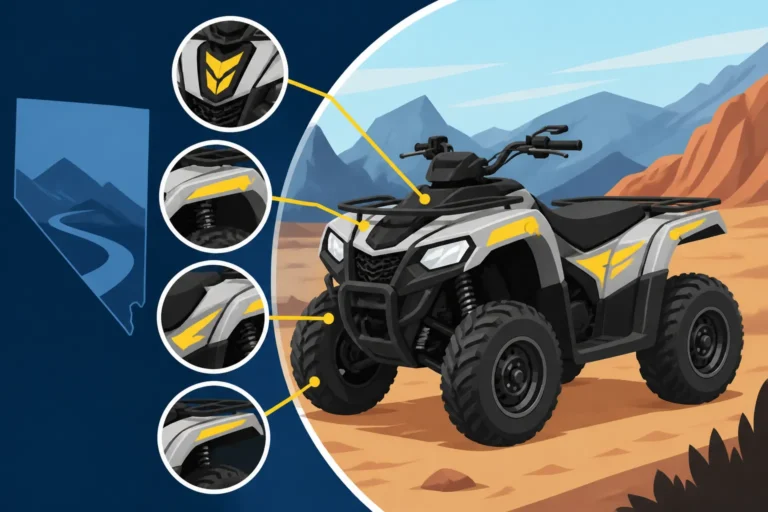
For ATVs (quads), the Nevada OHV decal should generally be affixed to the left side of the machine. This is typically on the left-hand side of the front fender or the left-hand side of the main bodywork, in a location that is clearly visible. The key here is "clearly visible." It shouldn't be hidden by accessories, aftermarket parts, or your riding gear. It needs to be easily read by someone approaching the machine.
For dirt bikes, the placement is similar. The decal usually goes on the left side of the machine, often on the left fork tube, the left side of the front fender, or the left side plate. Again, the emphasis is on visibility and accessibility for inspection. You want to make sure it's not going to get rubbed off by your knee braces, boot, or any other part of your riding equipment during normal operation.
It’s always a good practice to ensure the decal is as high up and forward as possible on the designated side without being in the way of controls or critical functions. The goal is to make it easy for a ranger to spot it without having to contort themselves or ask you to move your machine. Take a moment to step back and look at your machine from a law enforcement perspective – can you see the entire decal clearly? If the answer is yes, you've likely found a good spot. For more precise instructions, check out [Left Side or Rear: Where the Decal Goes].
Decal Placement on UTVs and Side-by-Sides
UTVs, or side-by-sides, offer a bit more flexibility due to their larger bodywork, but the principle of clear visibility remains paramount. For these machines, the Nevada OHV decal is typically affixed to the rear of the vehicle, often on the rear fender, the rear of the bed, or a structural component at the back. Some riders opt for the rear of the roll cage, provided it’s a flat surface and the decal isn’t obscured by bags, coolers, or other gear.
The specific location should be a flat, clean surface where the entire decal can be easily seen. Avoid placing it in an area prone to mud splatter or direct impacts, as this will quickly obscure or damage the decal. If your UTV has a rear window or a bed that often carries gear, consider a spot that remains exposed even when the vehicle is loaded. Think about how a ranger would view your machine from behind – the decal needs to jump out at them.
Some riders place it on the rear license plate frame area if they have one, or on the lower rear panel. The main thing is that it’s on the rear and unobstructed. Just like with ATVs, ensure the surface is thoroughly cleaned before application. The desert environment is tough on adhesives, and a poorly applied decal will not last. A properly placed and maintained decal ensures you comply with Nevada law and avoid any unnecessary interactions with law enforcement on the trails.
Navigating Specific Locations and Jurisdictions
Nevada is a vast state with diverse landscapes, and where you ride your ATV or UTV can sometimes influence how your registration is viewed or enforced. While the state's OHV registration laws are generally uniform, local jurisdictions, specific recreation areas, and federal lands (like those managed by the Bureau of Land Management or the U.S. Forest Service) might have their own nuanced rules or emphasis on enforcement. Understanding these local variations can help you avoid surprises, especially if you venture to popular spots.
For instance, iconic riding areas like Sand Mountain are known for active enforcement of OHV regulations, including registration. Rangers and deputies regularly patrol these areas, and expired or missing decals are easily spotted. Similarly, designated OHV trail systems like Logandale Trails, which have seen significant investment from OHV registration funds, are places where officials expect compliance.
It's not just about federal lands; county roads and private property also have their own set of rules. While your Nevada OHV decal proves you're registered for off-highway use, it typically doesn't automatically grant you permission to ride on public roads or through private property without explicit permission. Always know where you're riding and what rules apply to that specific piece of land.
Riding Popular Nevada OHV Areas
When you head out to famous Nevada OHV destinations, expect to encounter rangers and deputies who are well-versed in OHV laws. Places like Sand Mountain Recreation Area, a popular dune riding spot near Fallon, are regularly patrolled by BLM rangers and local law enforcement. They are looking for valid Nevada OHV decals, proper safety equipment like whips and flags (especially on the dunes), and adherence to general OHV rules. Riding at Sand Mountain with an expired decal or no decal is a surefire way to receive a citation. While there's a weekly or annual pass fee for Sand Mountain, that's in addition to your state registration; the pass covers the special recreation permit, not the OHV decal itself. Check out [Sand Mountain: Nevada's Great Basin Dune] for more details on that area.
Logandale Trails, just an hour north of Las Vegas, is another prime example. This extensive trail system, managed by the BLM and benefiting directly from OHV registration funds, sees frequent patrols by local sheriff's deputies. They're not just checking for registration but also ensuring riders stay on marked trails and respect environmental boundaries. The red rock formations and diverse terrain make it a fantastic place to ride, but compliance with the rules is expected. If you plan a trip there, review [Logandale Trails Outside Las Vegas].
Even less formal riding areas, like those accessed from county roads or near small towns, are subject to enforcement. Deputys from sheriff's offices in counties like Lincoln, Nye, or Elko often patrol rural areas where OHV use is common. Their primary goal is safety and ensuring legal operation, so a valid Nevada OHV decal is a basic requirement. Don't assume that because an area feels remote, the rules don't apply.
Crossing Private Land or County Roads
While your Nevada OHV registration decal is your ticket to ride on most public lands, it doesn't automatically grant you free rein on every surface. A common point of confusion arises when riders need to cross a paved county road to get from one section of a trail to another, or when they inadvertently stray onto private property. Understanding the limitations of your OHV registration in these scenarios is vital to avoid trespassing charges or traffic violations.
Generally, riding an OHV on paved public roads in Nevada is restricted. There are specific exceptions for "large ATVs" (UTVs meeting certain criteria) on designated minor county roads, but a standard ATV or dirt bike cannot legally cruise down a paved highway, even for a short distance. Your OHV registration is for "off-highway" use. If you need to cross a paved road, it should be done perpendicular to the flow of traffic, in the safest possible manner, and only if permitted by local ordinances. Never assume you can ride along the shoulder or in the ditch of a paved road. For comprehensive guidance, refer to [Riding County Roads Legally in Nevada] and [Crossing a Highway on an ATV in Nevada].
Regarding private land, your OHV registration has no bearing. If a piece of land is privately owned, you need explicit permission from the landowner to ride on it, even if there's an existing trail. Trespassing with an OHV can lead to serious legal consequences, including fines and potential impoundment of your machine. Always be aware of property boundaries, marked with fences, signs, or other indicators, and respect them. When in doubt, stay on clearly marked public trails or roads.
Disclaimer
This article is for general informational purposes only and does not constitute professional advice. Laws, prices and regulations vary by location and change over time. Consult a qualified professional for guidance on your specific situation.